
What Happens If You Drive with Low Brake Fluid?
Brake fluid is one of the most important components in a vehicle’s braking system. Although it is often overlooked compared with brake pads or brake discs, brake fluid plays a critical role in transferring hydraulic pressure and ensuring safe braking performance.
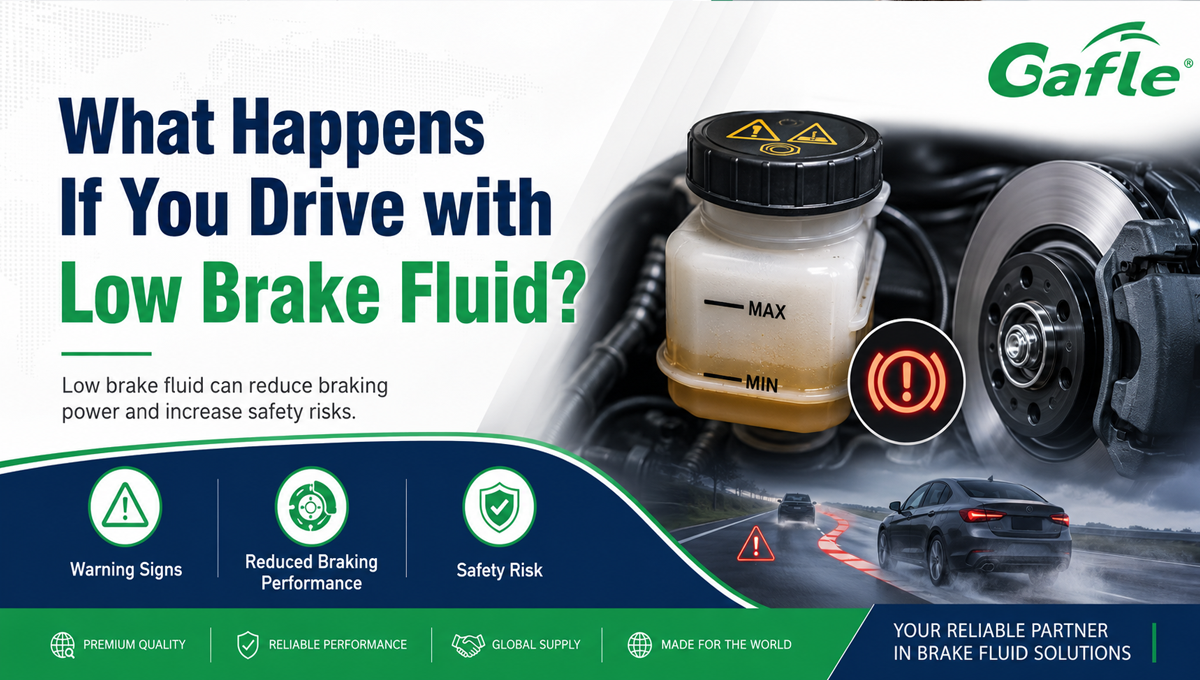
When the brake fluid level becomes too low, the braking system may not work as effectively as expected. Drivers may experience warning signs such as a soft brake pedal, reduced braking response, or a brake warning light.
For vehicle owners, repair shops, and automotive brands, understanding the risks of low brake fluid is essential.
As a professional Brake Fluid Manufacturer, Gafle Brake Fluid Factory focuses on producing reliable brake fluid solutions with strict quality control, advanced testing, and OEM support for customers worldwide.
Why Brake Fluid Level Matters for Vehicle Safety
The braking system relies on hydraulic pressure to transfer the force from the brake pedal to the wheels.
When the driver presses the brake pedal:
- The master cylinder creates pressure.
- Brake fluid transfers this pressure through brake lines.
- Brake calipers or wheel cylinders activate.
- Brake pads create friction against the brake disc.
- The vehicle slows down or stops.
If the brake fluid level is too low, the hydraulic system may not operate properly, affecting braking performance and vehicle safety.
What Happens If Brake Fluid Is Low?
Driving with low brake fluid can create several potential problems.
1. Reduced Braking Performance
Low brake fluid may affect the ability of the braking system to generate and maintain proper hydraulic pressure.
Possible results include:
- Slower brake response
- Reduced braking efficiency
- Longer stopping distance
- Less confidence while driving
Because brake fluid directly transfers braking force, maintaining the correct fluid level is important.
2. Soft or Spongy Brake Pedal
One common Low Brake Fluid Symptom is a soft or spongy brake pedal.
A healthy braking system should provide a stable pedal feel. However, when brake fluid levels are low, air may enter parts of the hydraulic system, reducing pressure consistency.
Drivers may notice:
- Brake pedal feels softer than usual
- More pedal travel is needed
- Braking response feels different
These signs should not be ignored.
3. Brake Warning Light Activation
Many vehicles include a brake warning system that monitors brake fluid levels.
When the brake fluid reservoir drops below the recommended level, the warning light may appear on the dashboard.
A brake warning light can indicate:
- Low brake fluid level
- Possible leakage
- Brake system inspection required
Drivers should check the system as soon as possible.
Why Does Brake Fluid Level Become Low?
There are several reasons why brake fluid levels may decrease.
Brake Fluid Leak
A Brake Fluid Leak is one of the most common causes of low fluid levels.
Possible leakage areas include:
- Brake lines
- Brake hoses
- Master cylinder
- Brake calipers
- Seals and connections
A leaking brake system can seriously affect braking performance and should be inspected by professionals.
Brake Pad Wear
As brake pads wear down, the brake caliper position changes, which can sometimes affect brake fluid level appearance in the reservoir.
Regular brake inspections help identify whether the issue is normal wear or a potential system problem.
Long-Term Maintenance Issues
Brake fluid can deteriorate over time due to:
- Moisture absorption
- Contamination
- Aging
- High-temperature exposure
This is why regular Brake Fluid Replacement is an important part of vehicle maintenance.
How to Check Brake Fluid Level Correctly
Checking brake fluid level is a simple but important maintenance step.
Drivers should:
1. Locate the Brake Fluid Reservoir
The reservoir is usually located near the brake master cylinder under the hood.
2. Check the MIN and MAX Marks
The fluid level should normally stay between the minimum and maximum markings.
If the level is below the recommended range, further inspection may be needed.
3. Check Brake Fluid Condition
Besides the level, drivers should also observe:
- Fluid color
- Cleanliness
- Signs of contamination
Dark or dirty brake fluid may indicate aging or contamination.
Why Brake Fluid Quality Affects Safety
Low fluid level is not the only concern. Brake fluid quality also has a major impact on braking performance.
High-quality brake fluid should provide:
High Temperature Stability
During braking, especially under heavy loads or repeated braking conditions, brake fluid must resist high temperatures.
Moisture Resistance
Brake fluid can absorb moisture over time. Excess moisture may reduce performance and increase corrosion risks.
Corrosion Protection
Good brake fluid helps protect internal brake components, including:
- Brake lines
- Cylinders
- Calipers
- ABS components
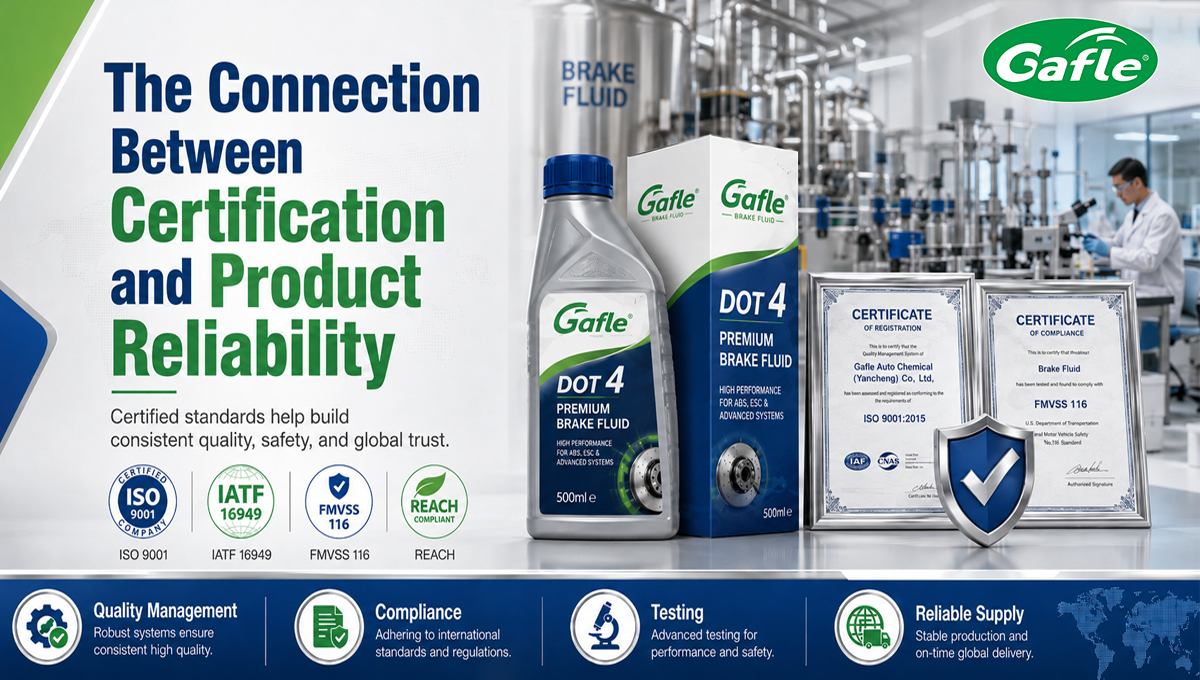
How Gafle Ensures Reliable Brake Fluid Quality
At Gafle Brake Fluid Factory, we understand that brake fluid is directly connected to vehicle safety.
That is why we focus on strict quality control throughout the entire manufacturing process.
Our quality management includes:
Raw Material Inspection
Before production, raw materials are carefully evaluated to ensure consistency and reliability.
Production Process Control
During manufacturing, Gafle monitors:
- Formula mixing
- Filtration
- Filling process
- Packaging quality
This helps maintain stable product performance between different batches.
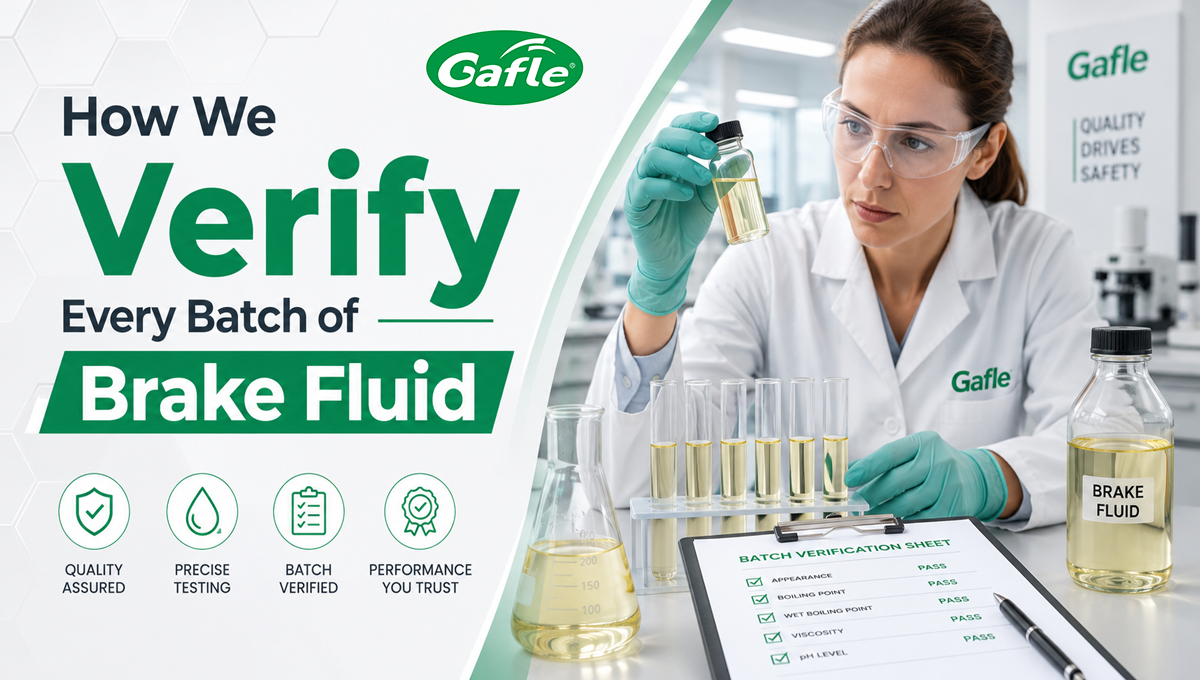
Laboratory Testing
Professional testing helps verify important brake fluid performance characteristics, including:
- Boiling point
- Viscosity
- Corrosion resistance
- Moisture performance
- Chemical stability
Through continuous testing, Gafle ensures that every batch meets customer expectations.
Why Choose Gafle Brake Fluid Factory?
For global automotive customers, choosing the right Brake Fluid Manufacturer is an important decision.
Gafle Brake Fluid Factory provides:
✅ Professional brake fluid manufacturing experience
✅ DOT 3, DOT 4, and DOT 5.1 brake fluid solutions
✅ Strict quality control system
✅ Laboratory testing capability
✅ OEM and Private Label services
✅ Custom packaging solutions
✅ Global export support
Whether customers are importers, distributors, automotive brands, or aftermarket companies, Gafle provides reliable brake fluid solutions designed for international markets.
Conclusion
Driving with low brake fluid can affect braking performance and vehicle safety.
Low brake fluid levels may lead to:
- Reduced braking response
- Soft brake pedal
- Warning light activation
- Increased maintenance risks
Regular inspection and choosing high-quality brake fluid are important steps for maintaining reliable braking performance.
At Gafle Brake Fluid Factory, we combine professional manufacturing, strict quality control, and advanced testing to deliver dependable brake fluid products for customers worldwide.
Reliable brake fluid supports safer vehicles. Professional manufacturing builds stronger trust.