Why Mineral Oil Contaminated Brake Fluid Is a Serious Workshop Problem
Mineral Oil Contaminated Brake Fluid is not a minor fluid mix-up. In a hydraulic brake system, the wrong chemistry can quickly turn into soft pedals, seal swelling, internal leakage, and a brake system that behaves unpredictably. For engineers, sourcing managers, and repair teams, the real issue is not just cleaning up the mistake. It is deciding how far the contamination has spread, what components may already be damaged, and whether a partial service is safe or a full replacement and flush is the only sensible route.
This matters because brake systems rely on fluid compatibility. Most conventional automotive brake systems use glycol brake fluid, while mineral oil belongs to a different family of hydraulic fluids entirely. They are not interchangeable. Even a small amount of cross-contamination can compromise rubber compatibility and brake performance. In practice, this is one of those mistakes that is easier to prevent than to fix.
Quick takeaway: what changes when the wrong fluid gets in
If mineral oil enters a system designed for glycol brake fluid, the consequences may not appear instantly. The brakes might still operate for a short time, which is part of the danger. But seals can soften or swell, fluid passages can hold residue, and the system may lose consistent pressure under heat and repeated use. The immediate decision is whether the contamination is isolated to a reservoir, or whether it has circulated through master cylinders, calipers, wheel cylinders, hoses, and ABS components.
That distinction drives cost, labor, and risk. A bottle swap at the reservoir is one thing. A contaminated hydraulic circuit is another matter entirely.
Why the chemistry is incompatible
Glycol brake fluid and mineral oil are built for different material systems. Conventional brake fluid is hygroscopic and intended for brake components designed around that behavior. Mineral oil, by contrast, is used in some specific systems that require different elastomers and design assumptions. When the two are mixed, the system’s seals and flexible parts may react badly. The most common concern is brake seal damage, but the practical effect is broader: degraded sealing, sticky components, uncertain pedal feel, and a higher chance of failure after the vehicle returns to service.
It is tempting to think a “strong flush” solves everything. Sometimes it does not. Mineral oil can cling to residues inside hoses and valves, and once elastomers have been exposed, flushing alone will not reverse material damage.
What a repair shop should inspect first
Good repair shop brake fluid troubleshooting starts with identifying the source and scope of the contamination. The first question is simple: what fluid was added, and where? From there, technicians typically need to check the reservoir, master cylinder, flexible hoses, calipers or wheel cylinders, and any modulator or ABS unit if the system has one.
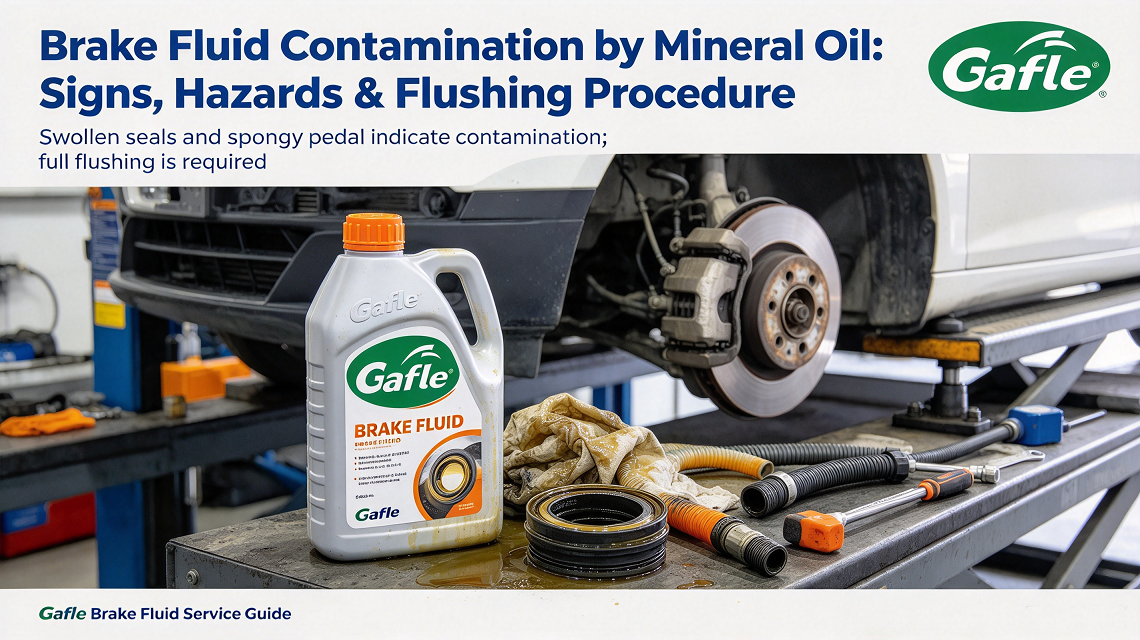
Look for signs that go beyond color change. Soft or inconsistent pedal feel, unusual residue in the reservoir, swollen seals, sluggish return of pistons, or a system that cannot hold pressure are all warning signs. If the vehicle was driven after the contamination, the chances of spread are higher. That is one reason workshop documentation matters; the failure mode often depends on how long the wrong fluid circulated.
Full Brake System Flush Guide: when flushing is enough, and when it is not
A Full Brake System Flush Guide sounds straightforward, but contamination changes the rules. If mineral oil was introduced accidentally and detected immediately, a controlled drain and flush may be the first step. That said, flushing is only part of the answer. All affected rubber parts should be evaluated for compatibility and deformation, and any component showing seal damage should be replaced rather than reused.
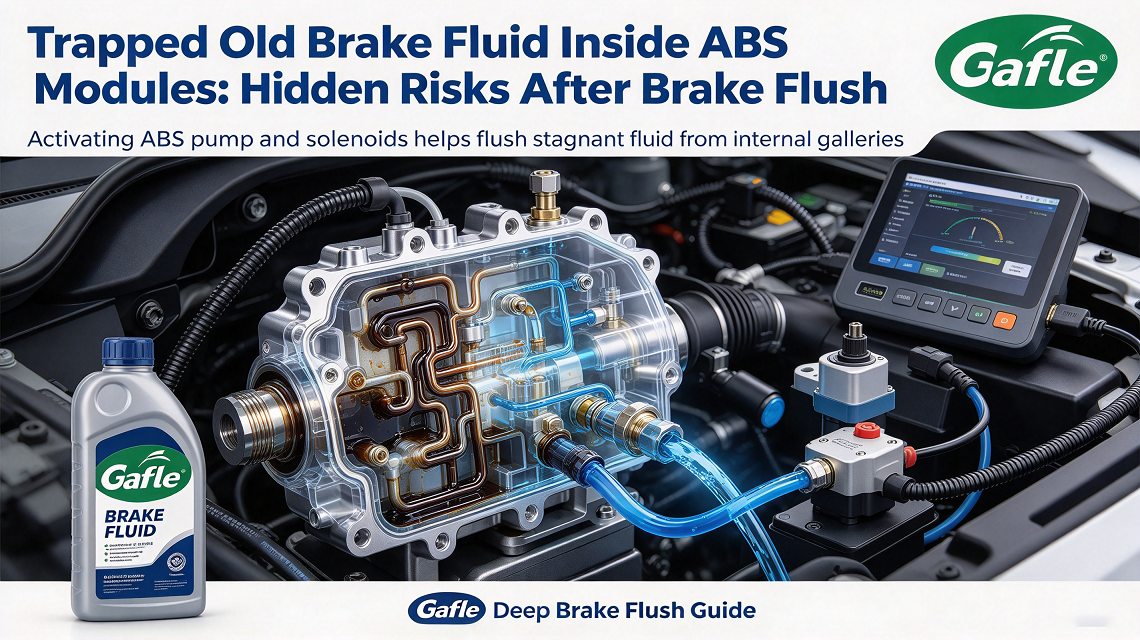
For systems with ABS, the task can be more complicated. Fluid trapped in valves and modulators may not be removed by a basic bleed procedure. Some systems require diagnostic activation or manufacturer-specific service steps. In other words, the job may move from a fluid service to a full hydraulic restoration.
Practical caution
Do not assume that clear fluid means clean fluid. Residual mineral oil can remain in low-flow areas, and a vehicle may pass a quick visual check while still being unsafe. This is a common buyer-facing issue for fleet operators and service managers: the repair looks complete until the brake performance test tells a different story.
Risks that matter to fleet and workshop decision-makers
The Risks are not limited to one failed stop. Contamination can create repeat comebacks, liability exposure, and unnecessary parts replacement if the diagnosis is sloppy. For fleets, the operational risk is downtime; for repair shops, it is comebacks and reputation damage. A contaminated brake system that is returned to service too early may work on the lift and fail on the road, especially after heat builds up.
From a sourcing perspective, the important point is material control. Brake fluid containers need clear labeling, segregation, and housekeeping discipline. A mistake can happen during topping off, maintenance, or bulk handling. Once wrong fluid is in the chain, the cost of correction rises fast.
How to prevent a repeat event
The best prevention is basic but unglamorous: label containers clearly, store glycol brake fluid and mineral oil separately, and train technicians to verify the fluid specification before opening a reservoir. In workshops that service mixed fleets or bicycles, motorcycles, and specialty equipment, this matters even more because fluid types can differ across platforms. One bay mistake can affect an entire job ticket.
It also helps to keep disposal procedures tidy. Leftover fluid in unmarked bottles is a common source of confusion. A few minutes of labeling can save a full brake overhaul later.
What buyers should ask before approving a repair
Before signing off, ask whether the contamination was localized or system-wide, whether elastomer parts were inspected for compatibility damage, and whether the bleeding procedure covered all trapped sections of the hydraulic circuit. If the answer is vague, the job is not really done.
Ask for the service logic, not just the parts list. That is often the difference between a temporary cleanup and a durable repair.
FAQ
Can mineral oil and brake fluid be mixed safely?
No. In systems designed for glycol brake fluid, mineral oil is incompatible and can damage seals and reduce braking reliability.
Is a flush always required?
Usually yes, but flushing alone may not be enough if the wrong fluid has already affected seals or internal components.
What is the biggest mistake after contamination?
Assuming the problem is solved because the pedal still feels acceptable. Brake systems can mask contamination until the next demand for hard braking.
Next step
If you are dealing with Mineral Oil Contaminated Brake Fluid, treat it as a system integrity issue, not a simple service task. Verify the fluid type, inspect every affected component, and decide early whether the repair needs a full flush, part replacement, or both. That decision is cheaper when made on the bench than after a failed road test.
Welcome to contact GAFLE for more information & cooperation!
peter
ZHEJIANG GAFLE AUTO CHEMICL CO.,LTD
Tel:86-579-8222 1665
Fax:86-579-8246 4690
Cel/Wechart:86-13335993986
E-mail:peter@gafle.net
Web:www.gafle.net