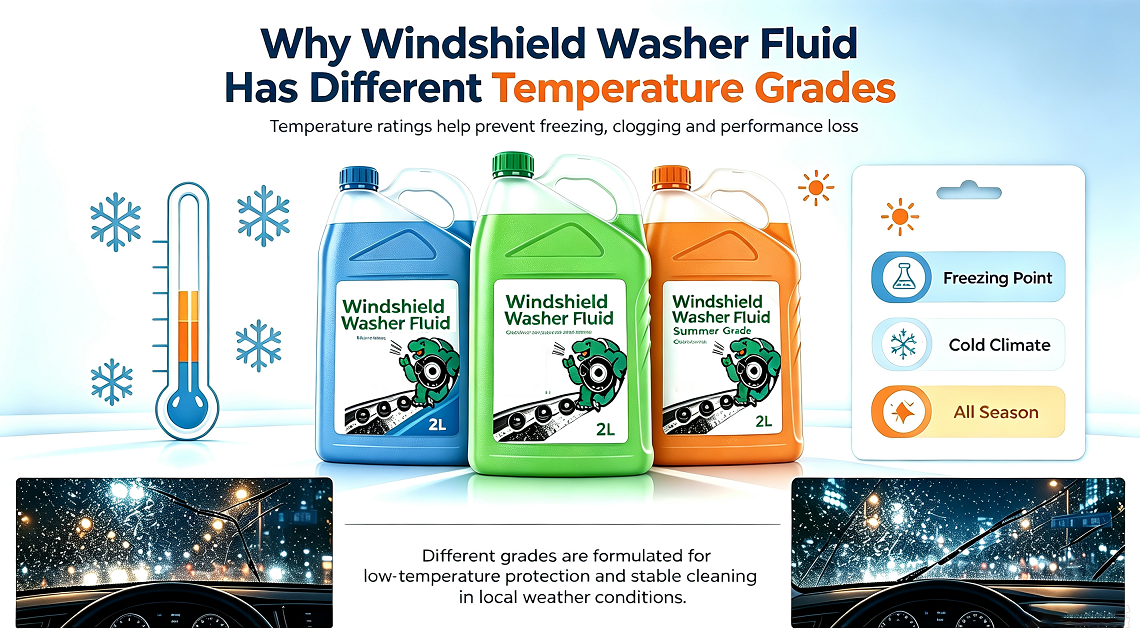
Why washer fluid needs different freezing points
Engineers and fleet buyers often treat washer fluid as a minor consumable, but washer fluid need different freezing points is not a trivial question once vehicles are expected to operate across seasons, regions, and duty cycles. A fluid that works fine in mild weather can turn into a maintenance problem the first cold snap hits. Nozzle blockage, pump strain, poor visibility, and cracked reservoirs are all small failures with outsized consequences.
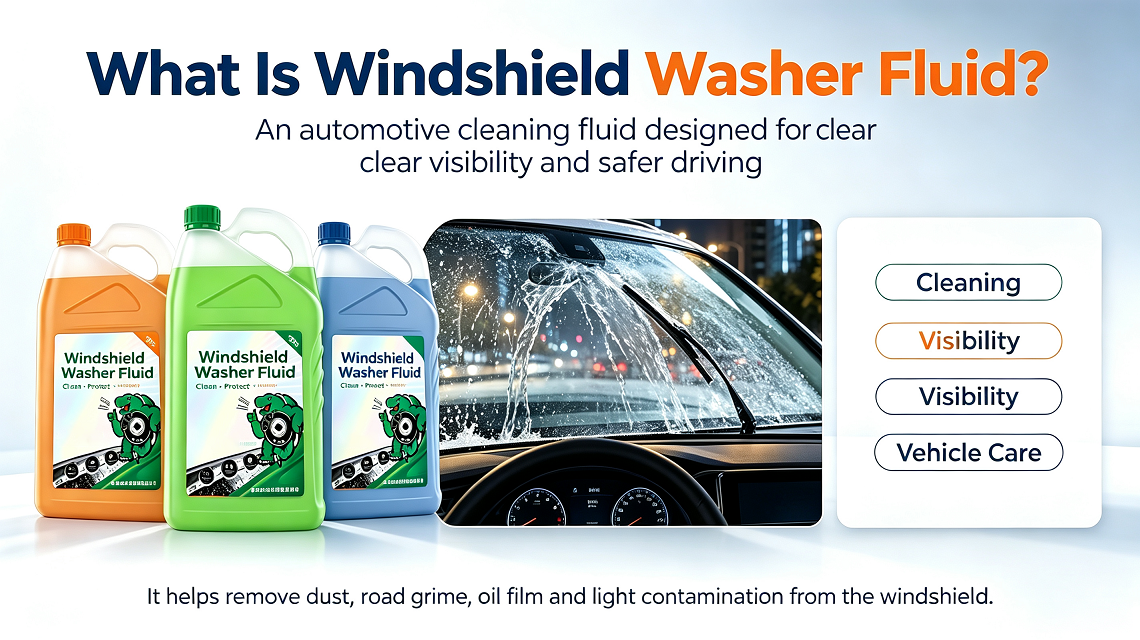
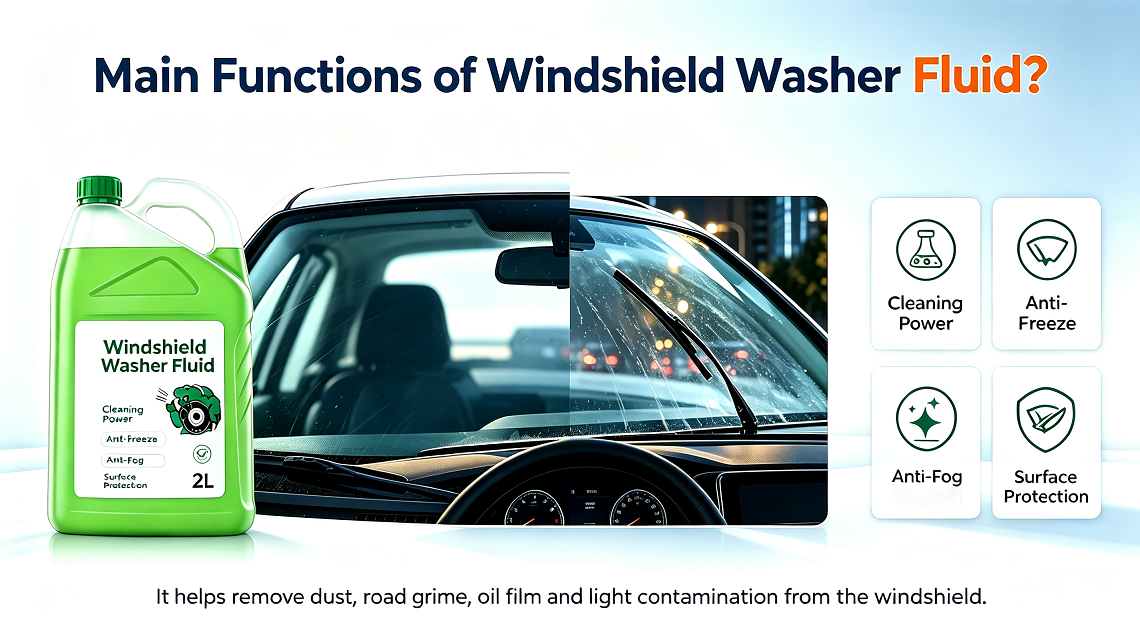
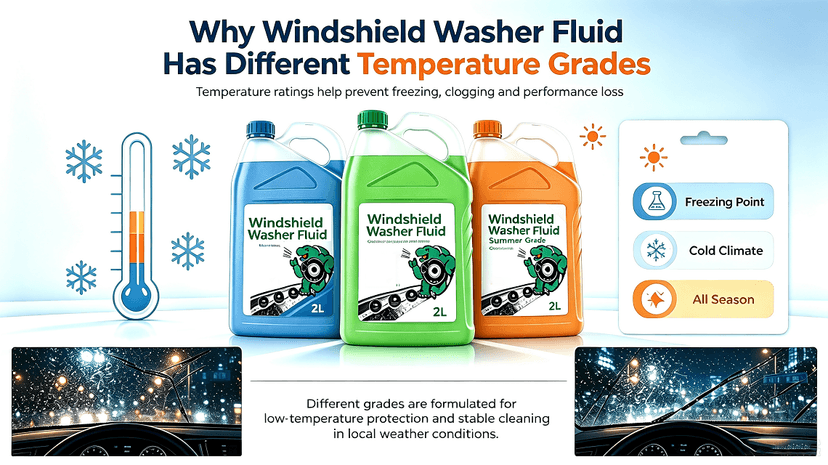
The basic reason is simple: windshield washer fluid is not just water. It is a blend designed to clean glass, resist freezing, and remain stable enough to flow through the system. If the formulation does not match the ambient temperature, the vehicle may lose washer function exactly when road spray, slush, and salt make visibility worse.
What the freezing point actually changes
The freezing point determines how low the fluid can go before it begins to crystallize or gel. In practical terms, that affects whether the fluid can stay liquid in the reservoir, move through the pump, and exit the spray nozzles. Once ice forms, it is not only a fluid problem. The system can become mechanical damage waiting to happen, especially if the driver keeps trying to activate the washers.
There is also a performance trade-off. A low-freezing-point formula usually relies on alcohols or other antifreeze components, which can evaporate faster and may behave differently on grime, bug residue, or winter salt film. A warmer-weather formula may prioritize cleaning and cost efficiency, but it is not meant to survive deep cold. That is why buyers should not treat all washer fluid as interchangeable.
Summer and winter formulas are not the same product
The difference between summer and winter windshield washer fluid is more than a label on a jug. Summer blends are generally aimed at dirt, pollen, insects, and routine road film. They are often adequate where freezing is not a concern, though exact formulations vary. Winter blends are built around freeze resistance first, with cleaning performance tuned to remain usable in cold conditions.
For procurement teams, this distinction matters because mixed fleets often span warehouses, depots, and operating sites with very different freezing points. A single “one-size-fits-all” purchase can be wasteful in warm climates and risky in cold ones. The better buying decision is usually to match product performance to the lowest expected service temperature, then check whether the cleaning package still meets the fleet’s visibility requirements.
How to choose the right washer fluid for a fleet
Selection starts with operating climate, but that is only the first filter. Consider where vehicles are parked overnight, how quickly they move between regions, and whether the same stock will be used by passenger cars, light trucks, or work vans. A vehicle parked outside in a northern yard has very different needs from one kept in a heated facility.
Buyer criteria that actually matter
Look at freeze protection first, then container size, compatibility with existing washer systems, and any material concerns around rubber seals or plastics. If the fleet uses heated nozzles or advanced sensor cleaning systems, the fluid should be checked for compatibility with those components as well. That sounds obvious, but it is a common place where purchasing decisions get simplified too aggressively.
Another practical caution: do not assume a fluid marketed as antifreeze washer fluid will perform equally across all conditions. Some products are formulated for moderate winter use, while others are intended for severe cold. The label may give a freeze point claim, but the real question is whether that claim matches the worst-case site conditions your vehicles will face.
Common mistakes buyers make
The first mistake is using the same fluid year-round without checking local weather patterns. The second is assuming water dilution is harmless. In warmer months, dilution may seem cost-effective, but it lowers freeze resistance and can shorten the useful range of the product. The third is waiting until a cold snap to swap stock. Once frozen product is already in circulation, the cleanup becomes a maintenance issue, not a purchasing one.
There is also a subtle supply-chain issue. If a distributor sends mixed seasonal stock without clear labeling, the warehouse can end up with the right product in the wrong season. That kind of mismatch causes more downtime than most buyers expect, because washer fluid failures are usually discovered only when drivers need them most.
Practical takeaway for sourcing and maintenance teams
Use the operating climate as the starting point, but make the final decision based on the lowest service temperature the vehicle is likely to see. Then verify whether the product is a summer or winter blend, what its intended freeze protection range is, and whether your maintenance team can keep seasonal stock separated.
For mixed or multi-site fleets, a simple purchasing rule helps: stock winter-grade fluid where freezing is possible, and reserve warmer-weather fluid for sites that will not see cold exposure. That approach is not glamorous, but it reduces avoidable failures and keeps visibility systems working when conditions deteriorate.
FAQ
Can I use winter washer fluid in summer?
Usually yes, though it may not be the most cost-efficient option for warm-weather use. The bigger issue is whether the formulation matches your cleaning needs and purchasing budget.
Can summer washer fluid freeze?
Yes. If the product does not have sufficient freeze protection for the ambient conditions, it can freeze in the reservoir or lines.
Is all washer fluid the same?
No. The difference between summer and winter windshield washer fluid matters because the cleaning package and freeze resistance are not the same.
If you are selecting washer fluid for a fleet, the next step is straightforward: map the coldest operating sites, confirm seasonal requirements, and buy to the worst-case freezing points rather than the average day on the calendar.
Welcome to contact GAFLE for more information & cooperation!
peter
ZHEJIANG GAFLE AUTO CHEMICL CO.,LTD
Tel:86-579-8222 1665
Fax:86-579-8246 4690
Cel/Wechart:86-13335993986
E-mail:peter@gafle.net
Web:www.gafle.net