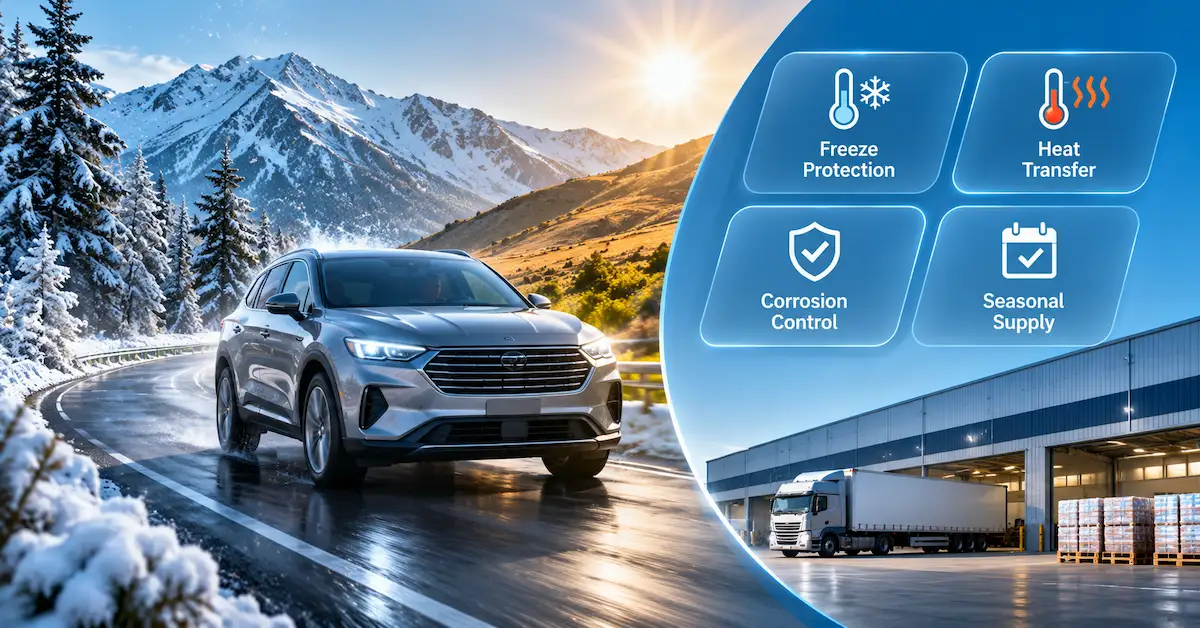
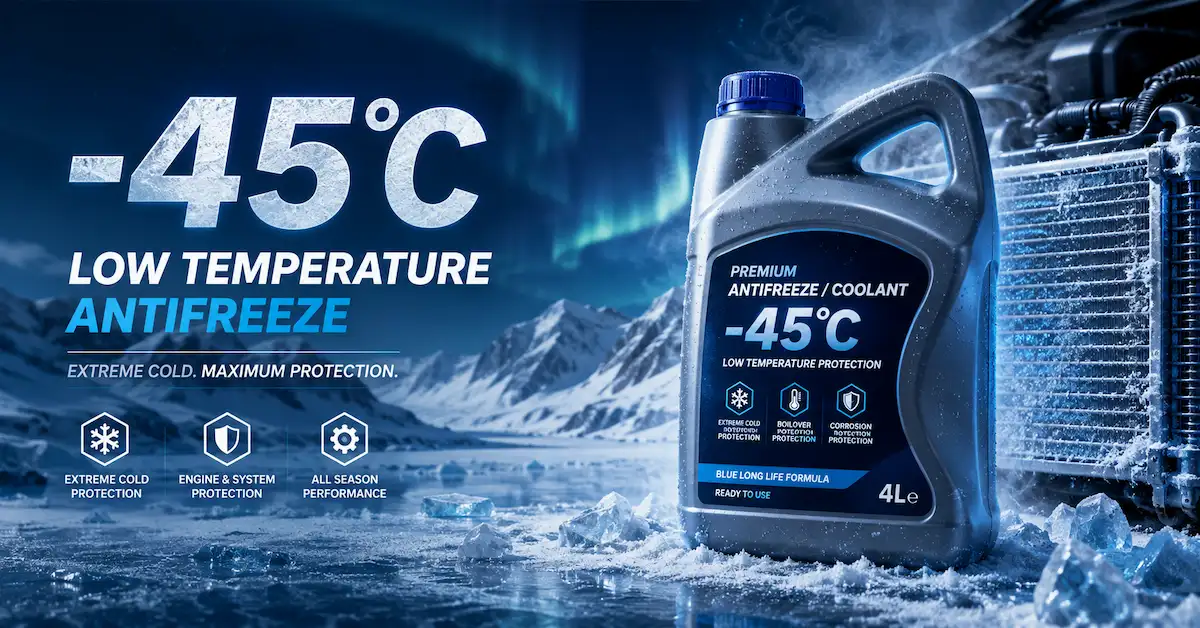
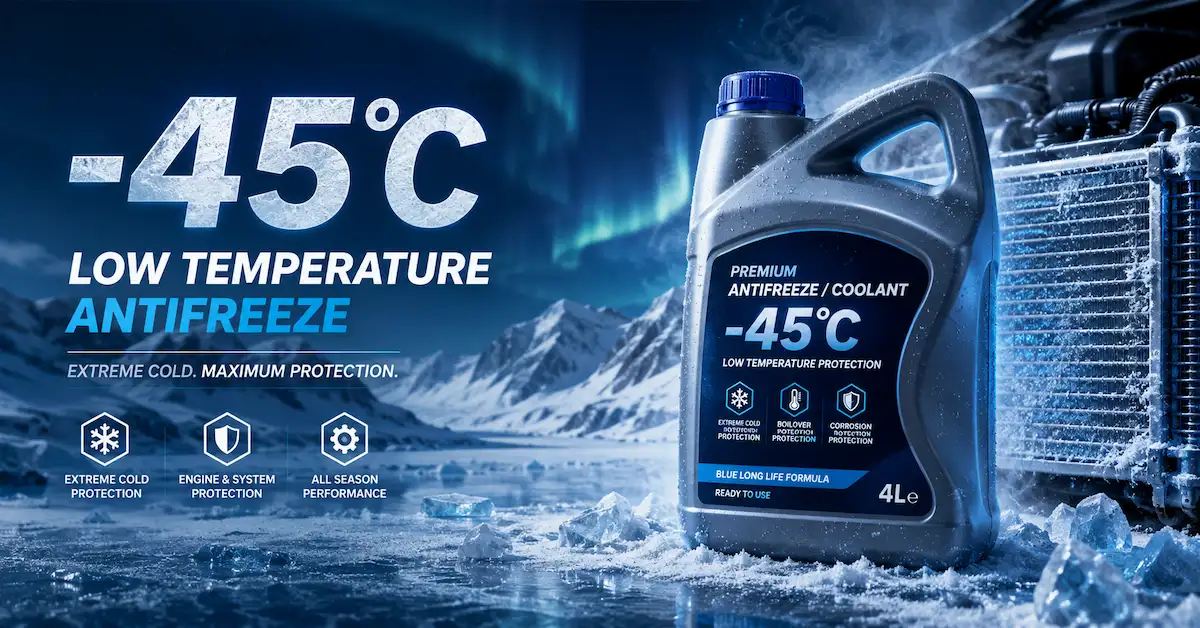
-45℃ Low Temperature Antifreeze is a high-performance engine coolant specially formulated for extremely cold environments where standard antifreeze products may not provide sufficient freeze protection.
Unlike conventional coolant designed for moderate winter conditions, -45℃ antifreeze provides stronger low-temperature performance to help prevent coolant freezing, expansion damage, and cooling system failure in severe winter climates.
This type of antifreeze is commonly used in:
- Cold climate regions
- Heavy-duty vehicles
- Commercial fleets
- Construction equipment
- Agricultural machinery
- Industrial engines
- Professional automotive maintenance markets
For global buyers operating in regions with severe winters, selecting the right low temperature antifreeze is essential for protecting engines and reducing maintenance risks.
GAFLE provides automotive chemical solutions including antifreeze/coolant, brake fluid, refrigerant gas, and windshield washer fluid.
Explore GAFLE products:
https://www.gafledp.com/products
Why Extreme Cold Protection Matters for Engine Coolant
Preventing Coolant Freezing Damage
When coolant freezes inside the engine cooling system, it expands and may cause damage to:
- Radiators
- Cooling pipes
- Water pumps
- Engine passages
- Reservoir tanks
A -45℃ Low Temperature Antifreeze formula helps maintain liquid flow and protects the cooling system during extreme winter operation.
Supporting Reliable Vehicle Operation
Cold weather creates additional challenges:
- Difficult engine startup
- Higher mechanical stress
- Reduced fluid performance
- Increased maintenance requirements
High-performance winter coolant helps vehicles maintain stable operation in harsh environments.
Reducing Fleet Downtime
For commercial fleets, equipment downtime can create significant financial losses.
Low temperature antifreeze helps support:
- Reliable vehicle operation
- Reduced emergency repairs
- Longer cooling system service life
- Better fleet maintenance planning
How -45℃ Low Temperature Antifreeze Works
Extreme cold antifreeze uses a higher-performance glycol-based formula combined with advanced inhibitor technology.
The formula works through several mechanisms:
Lower Freezing Point Protection
The antifreeze mixture lowers the freezing point of coolant, allowing the liquid to remain stable under extremely low temperatures.
This helps prevent:
- Coolant solidification
- Expansion damage
- Blocked coolant circulation
Stable Heat Transfer Performance
Even in cold environments, engines still generate heat.
A reliable coolant must balance:
- Freeze protection
- Heat transfer efficiency
- Temperature control
Corrosion Protection
Cold environments can still create corrosion risks because coolant systems contain multiple metals.
Advanced formulas help protect:
- Aluminum
- Copper
- Brass
- Steel
- Cast iron components
Main Applications of -45℃ Low Temperature Antifreeze
Vehicles Operating in Cold Climate Regions
-45℃ antifreeze is suitable for regions with severe winter temperatures.
Typical markets include:
- Northern Europe
- Canada
- Northern United States
- Russia
- High-altitude regions
- Cold industrial areas
Heavy Duty Trucks and Fleets
Commercial vehicles often operate long distances in changing weather conditions.
Applications include:
- Freight trucks
- Logistics fleets
- Buses
- Service vehicles
Benefits:
- Improved winter reliability
- Reduced coolant freezing risk
- Better fleet uptime
Construction Equipment
Construction machinery often works outdoors throughout winter.
Applications include:
- Excavators
- Loaders
- Cranes
- Mining equipment
Extreme cold coolant helps protect equipment during:
- Snow conditions
- Frozen environments
- Long idle periods
Agricultural Machinery
Agricultural equipment may operate seasonally and remain exposed to outdoor temperatures.
Applications include:
- Tractors
- Harvesters
- Irrigation equipment
Low-temperature antifreeze helps protect engines during operation and storage.
Industrial Engines and Generators
Industrial equipment operating in cold environments requires reliable coolant protection.
Applications include:
- Backup generators
- Power systems
- Industrial engines
- Remote equipment
-45℃ Antifreeze vs Standard Antifreeze
| Item | Standard Antifreeze | -45℃ Low Temperature Antifreeze |
|---|---|---|
| Main Purpose | General winter protection | Extreme cold protection |
| Freeze Protection | Moderate | Very low temperature protection |
| Best Application | Normal winter climates | Severe cold regions |
| Target Users | Passenger vehicles | Fleets, machinery, industrial users |
| Product Positioning | Standard coolant | Premium winter coolant |
For buyers serving cold regions, -45℃ antifreeze provides stronger market differentiation.
-45℃ Antifreeze vs -35℃ Antifreeze
| Item | -35℃ Antifreeze | -45℃ Antifreeze |
|---|---|---|
| Cold Protection | Strong | Extreme |
| Climate Application | Cold winter areas | Severe cold environments |
| Buyer Demand | General winter markets | Professional cold climate markets |
| Typical Users | Cars and fleets | Fleets, machinery, industrial applications |
The correct choice depends on local climate conditions and customer requirements.
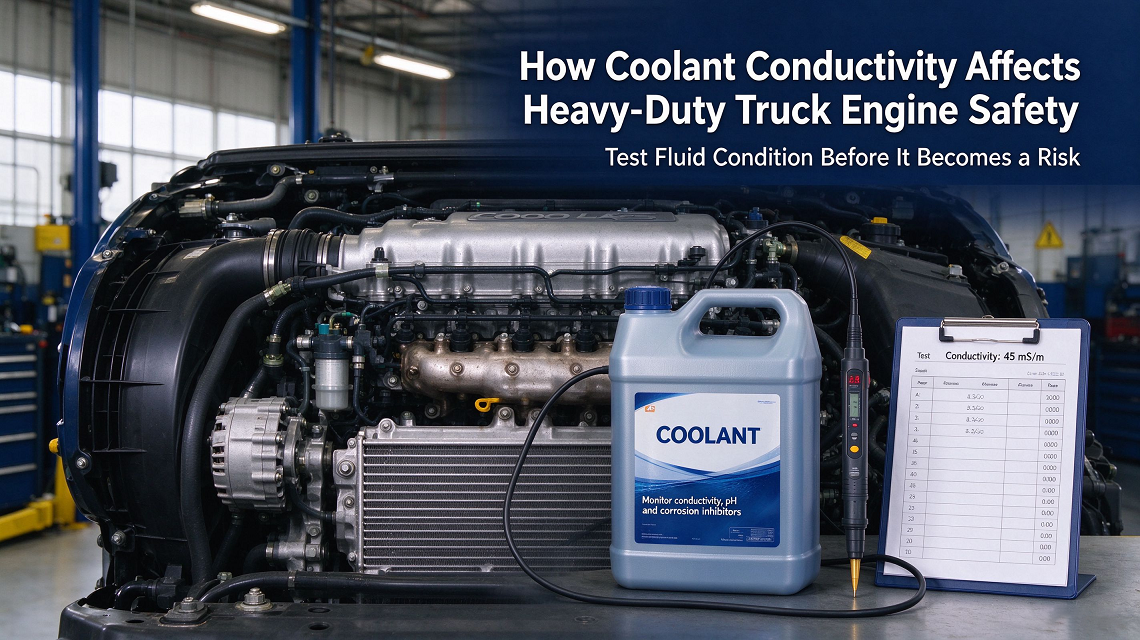
Key Technical Factors Buyers Should Check
When sourcing -45℃ Low Temperature Antifreeze, buyers should evaluate more than freezing point.
Freezing Point Performance
Confirm:
- Actual tested freezing point
- Formula concentration
- Climate suitability
Glycol Formula Quality
The glycol base affects:
- Freeze protection
- Heat transfer
- Long-term stability
Corrosion Protection
Cold-weather coolant should also protect:
- Radiators
- Engine blocks
- Water pumps
- Metal components
Boiling Protection
Even winter coolant must provide:
- Stable heat transfer
- Overheating protection
- Temperature control
Premixed Water Quality
For ready-to-use coolant, suppliers should use:
- Purified water
- Deionized water
This helps reduce:
- Scale
- Deposits
- Cooling system contamination
Packaging Reliability
Export buyers should check:
- Bottle strength
- Cap sealing
- Label durability
- Carton protection
- Pallet loading
Suggested Specification Table for -45℃ Low Temperature Antifreeze
| Item | Specification |
|---|---|
| Product Name | -45℃ Low Temperature Antifreeze |
| Product Type | Ready-to-use or concentrated |
| Base Fluid | Glycol-based formula |
| Freezing Point | -45℃ |
| Application | Cars, trucks, fleets, machinery |
| Protection | Freeze, boil, corrosion protection |
| Technology | OAT / HOAT / Customized |
| Color Options | Green, red, blue, customized |
| Packaging | 1L, 4L, 5L, 1 gallon, 18L, 200L |
| OEM Support | Formula, label, bottle, carton customization |
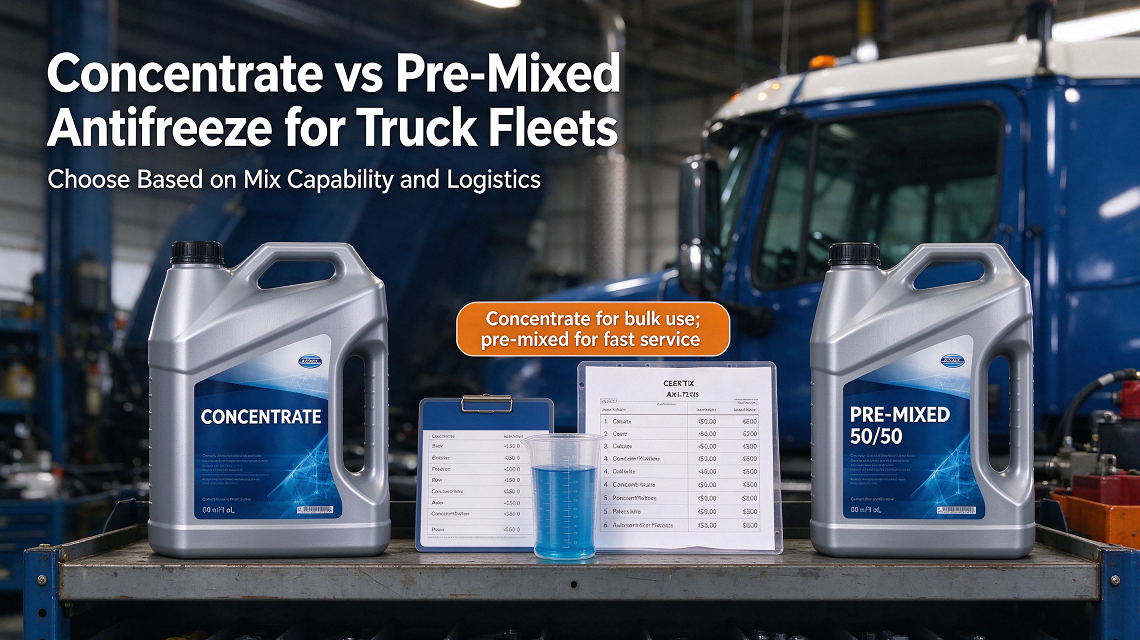
Ready-to-Use or Concentrated -45℃ Antifreeze?
Ready-to-Use Low Temperature Coolant
Advantages:
- Direct application
- No mixing required
- Lower user error
- Suitable for workshops and fleets
Best for:
- Repair centers
- Vehicle owners
- Fleet operators
Concentrated Low Temperature Antifreeze
Advantages:
- Flexible dilution
- Efficient transportation
- Suitable for professional users
Best for:
- Importers
- Distributors
- Technical buyers
| Type | Advantage | Best Buyer |
|---|---|---|
| Ready-to-use coolant | Easy operation | Workshops and fleets |
| Concentrated antifreeze | Flexible usage | Distributors and OEM buyers |
OEM and Private Label -45℃ Antifreeze Solutions
For international buyers, extreme cold antifreeze is suitable for premium OEM projects.
GAFLE can support:
- Customized -45℃ antifreeze formulas
- Cold climate coolant solutions
- Coolant color customization
- Bottle design
- Label development
- Carton packaging
- Multi-language labels
- Private label branding
Suitable customers:
- Automotive brands
- Importers
- Distributors
- Fleet suppliers
- Workshop chains
How to Choose a Reliable Low Temperature Antifreeze Supplier
Before selecting a supplier, buyers should evaluate:
Formula Development Capability
Check whether the supplier can provide:
- Extreme cold formulas
- Stable performance
- Customized requirements
Quality Testing
Confirm:
- Freezing point testing
- Corrosion testing
- Stability testing
- Batch inspection
Export Experience
Evaluate:
- Packaging capability
- Documentation support
- Shipping experience
OEM Capability
Check:
- Label customization
- Bottle options
- Product development support
GAFLE supports global buyers with automotive chemical solutions.
About GAFLE:
https://www.gafledp.com/about-us
Common Buying Mistakes to Avoid
Avoid these mistakes:
- Choosing antifreeze only by color
- Ignoring actual freezing point testing
- Buying based only on price
- Not checking climate suitability
- Using unsuitable coolant technology
- Not requesting samples
- Ignoring packaging quality
- Not confirming OEM capability
- Ignoring corrosion protection
- Choosing suppliers without stable production
Who Should Buy -45℃ Low Temperature Antifreeze?
Automotive Distributors
Suitable for distributors serving cold regions and winter markets.
Fleet Operators
Helps reduce winter vehicle downtime.
Construction Companies
Suitable for outdoor machinery operating in cold environments.
Industrial Equipment Suppliers
Supports generators and industrial engines.
Private Label Brands
Provides premium winter coolant product opportunities.
Why Work with GAFLE for -45℃ Antifreeze?
GAFLE provides automotive chemical products including:
- Antifreeze/Coolant
- Brake Fluid
- Refrigerant Gas
- Windshield Washer Fluid
For -45℃ Low Temperature Antifreeze buyers, GAFLE offers:
- Automotive chemical manufacturing experience
- Customized winter coolant solutions
- OEM and private label support
- Flexible packaging options
- Export supply capability
- Solutions for distributors, fleets, workshops, and brands
Contact GAFLE:
https://www.gafledp.com/contact-us
FAQ About -45℃ Low Temperature Antifreeze
1. What is -45℃ Low Temperature Antifreeze?
It is an extreme cold engine coolant designed to protect vehicles and equipment in very low temperature environments.
2. Why choose -45℃ antifreeze instead of standard coolant?
Because it provides stronger freeze protection for severe winter climates.
3. What vehicles use -45℃ antifreeze?
It is commonly used in trucks, fleets, construction equipment, industrial engines, and vehicles operating in cold regions.
4. Can -45℃ antifreeze prevent engine freezing?
It helps prevent coolant freezing when the correct formula is used according to climate requirements.
5. Can GAFLE provide OEM -45℃ antifreeze?
Yes. GAFLE supports OEM and private label extreme cold antifreeze projects.
6. What packaging sizes are available?
Common sizes include 1L, 4L, 5L, 1 gallon, 18L, and bulk containers.
7. Can coolant color be customized?
Yes. Green, red, blue, and customized colors are available.
8. Can freezing point be customized?
Yes. Different freezing points can be developed according to market needs.
9. What should distributors check before buying?
Check freezing point, formula technology, packaging, testing, OEM capability, and supply stability.
10. How can I request a quotation?
Contact GAFLE with product requirements, packaging needs, quantity, and target market information.
https://www.gafledp.com/contact-us
Conclusion
-45℃ Low Temperature Antifreeze is a premium coolant solution designed for extreme cold climates, commercial fleets, construction machinery, industrial engines, and professional automotive applications.
For global B2B buyers, selecting the right supplier requires evaluating freezing point performance, corrosion protection, formula stability, packaging reliability, OEM capability, and long-term supply support.
GAFLE provides customized antifreeze and coolant solutions for distributors, importers, fleets, workshops, and private label brands.
Contact GAFLE to discuss -45℃ Low Temperature Antifreeze cooperation, product specifications, and supply solutions.