The Metallurgy Shift Under the Hood
Specifying the correct aluminum safe coolant for truck engines used to be a secondary concern for heavy-duty fleet operations. Cast-iron blocks, brass-copper radiators, and simple inorganic additive chemistry ruled the commercial transportation sector for decades. Over the last two decades, however, emissions mandates, thermal efficiency targets, and weight-reduction imperatives have completely altered heavy-duty engine design. Radiators, heater cores, oil coolers, and EGR coolers are now predominantly fabricated from aluminum alloys, specifically brazed 3000- and 6000-series materials.
This structural change creates a strict chemical demand on the truck's cooling system. Aluminum forms a protective oxide layer naturally, but that microscopic barrier is highly sensitive to fluid pH, localized cavitation, and reactive chemistry. Using legacy formulations or an unverified formulation can strip this passivating layer in short order, turning an expensive radiator into a porous liability within a few hundred thousand miles. For maintenance superintendents and procurement specialists, selecting the right coolant is no longer just about freeze protection—it is an exercise in metallurgy preservation.
Coolant Chemistries: Understanding Passivation and Additive Depletion
Corrosion inhibitors behave differently when exposed to mixed-metal environments that place wet-sleeve iron liners in the same fluid loop as thin-wall aluminum tubes. Navigating the three primary inhibitor families helps clarify which products actually safeguard modern engines.
Inorganic Additive Technology (IAT)
Traditional IAT relies heavily on silicates and borates. Silicates act rapidly by forming a glass-like barrier across exposed aluminum surfaces, functioning as an effective antifreeze to protect aluminum radiators in short-cycle applications. The operational catch is longevity. Silicates deplete quickly through sheer mechanical stress and temperature fluctuations. Once depleted, they tend to drop out of suspension, forming an abrasive silicate gel that chokes narrow radiator passages and abrades dynamic water pump seals. For modern fleets targeting 600,000-mile drain intervals, pure IAT is essentially obsolete.
Organic Acid Technology (OAT) and NOAT
Organic Acid Technology uses carboxylate salts rather than sacrificial inorganic minerals. Instead of blanketing the entire surface indiscriminately, carboxylates react chemically at anodic sites where micro-corrosion initiates. Standard OAT provides exceptional Aluminum Safe Coolant performance over prolonged lifecycles without building thick insulating deposits on heat-transfer surfaces.
In heavy-duty applications, Nitrited Organic Acid Technology (NOAT) adds nitrites and sometimes molybdates to handle cylinder liner pitting caused by high-frequency vibration cavitation. Fleet managers must verify whether their OEM engine specs permit nitrites; some European-derived designs explicitly require nitrite-free OAT because nitrites can prematurely degrade specific aluminum brazing fluxes over sustained thermal cycles.
Hybrid Organic Acid Technology (HOAT)
HOAT formulations blend a small, stabilized reserve of low-silicate or phosphate chemistry with organic carboxylates. This hybrid approach delivers the immediate protective film build of an inorganic inhibitor alongside the extended-service durability of an organic acid package. When balanced correctly, HOAT represents a versatile compromise for mixed fleets managing both older iron-heavy powertrains and newer lightweight aluminum assemblies.
Critical Failure Modes in Aluminum Heat Exchangers
When an improper fluid circulates through a high-mileage truck, aluminum failure does not usually manifest as general wall thinning. Instead, it occurs in concentrated, hard-to-detect modes:
- Caustic Pitting: Aluminum is an amphoteric metal. It dissolves in acidic conditions (pH below 4.0) and corrodes rapidly in alkaline environments (pH above 9.0 to 9.5). Many older heavy-duty coolants operated at a high pH (around 10.5) to protect iron liners. In modern systems, this basicity aggressively attacks the radiator's braze joints and tube walls.
- Galvanic Couple Erosion: When iron, copper, and aluminum share an electrolyte, aluminum functions as the sacrificial anode. Depleted corrosion inhibitors allow minute electrical currents through the fluid, rapidly dissolving the aluminum core near mounting brackets and weld seams.
- Erosion-Corrosion at High Velocities: Modern high-flow water pumps push fluid across thin radiator tube walls at substantial velocities. If suspended solids—such as precipitated mineral salts—enter the stream, the physical scouring tears away the self-healing oxide film faster than the chemistry can repair it.
Procurement Realities: Sourcing via a Coolant Bulk Supplier
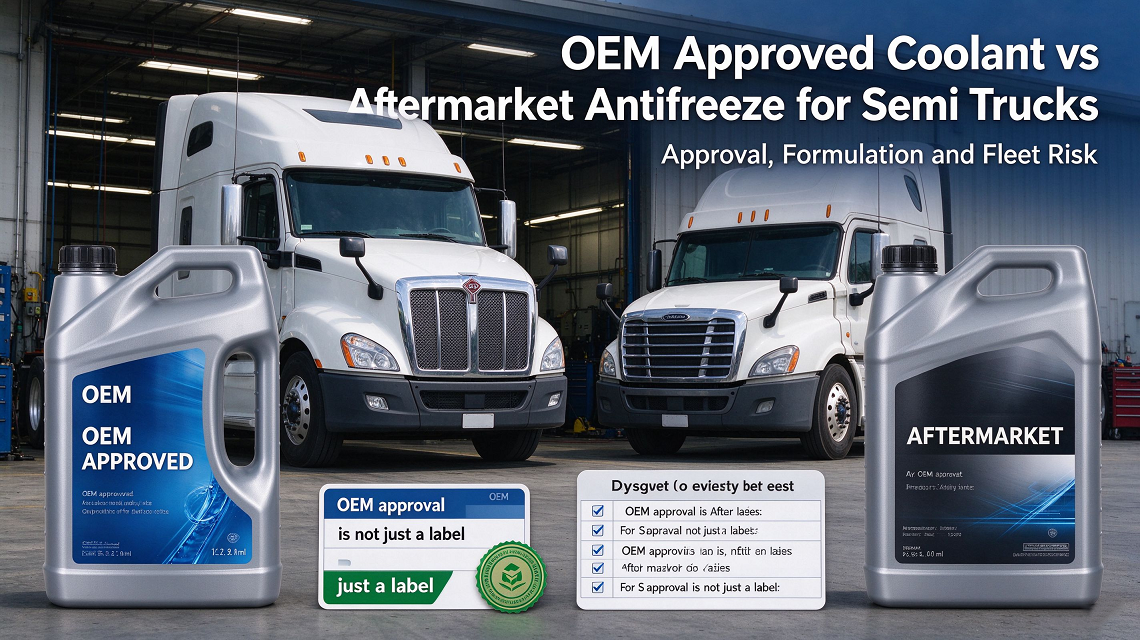
For operations purchasing in 55-gallon drums, 275-gallon totes, or tanker volumes, fluid consistency determines asset lifespan. A reputable coolant bulk supplier should provide clear documentation verifying ASTM D6210 compliance—the baseline standard for heavy-duty, fully-formulated coolants requiring no supplemental coolant additives (SCAs) at initial fill—alongside specific OEM approvals like Cummins CES 14603, Detroit Diesel 93K217, or Mack EOS-4.5.
One operational trap in bulk procurement is deciding between full concentrate and ready-to-use 50/50 premix. While buying concentrate reduces freight overhead per fluid ounce, it introduces water quality risk onto the shop floor. Mixing concentrate with unconditioned municipal water introduces chlorides, sulfates, and hard calcium ions into the engine. Chlorides attack aluminum aggressively, undermining even the highest-grade additive packages. Unless a facility possesses an industrial-grade reverse osmosis or deionization plant on site, 50/50 pre-diluted fluid remains the safer financial hedge against premature radiator leaks.
Frequently Asked Questions
Can automotive universal coolant be used in an aluminum-block truck engine?
Generally, no. While passenger-car coolants protect aluminum, they often lack the cavitation resistance chemistry required to stop wet-sleeve liner pitting found in heavy-duty commercial diesels. Look specifically for heavy-duty ASTM D6210 compliant products.
How often should pH and reserve alkalinity be tested in aluminum systems?
Test the fluid at every PM (preventative maintenance) interval using dedicated multi-way chemical test strips or a digital refractometer and pH meter. For aluminum safety, heavy-duty OAT fluid should generally sit between 7.5 and 8.5. Any drop toward 7.0 signals fluid degradation and imminent acid exposure.
Does mixing different coolant colors damage aluminum radiators?
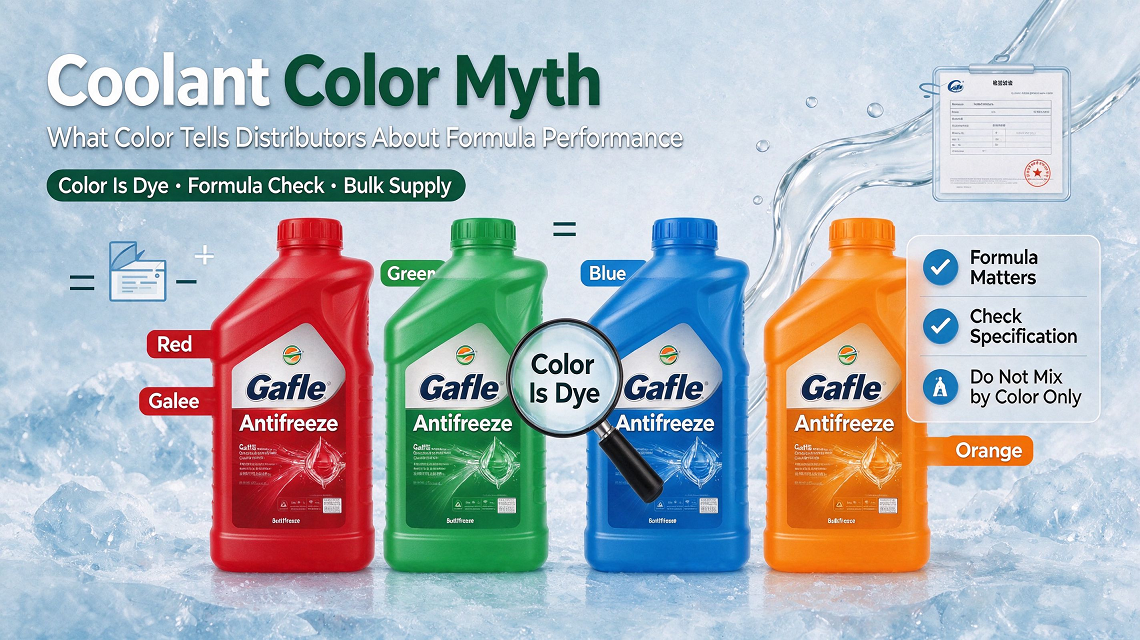
Color is purely a dye added by the chemical manufacturer and does not guarantee chemical compatibility. Mixing a silicate-based fluid with an OAT fluid causes additive drop-out, forming precipitates that can clog radiator cores and leave aluminum surfaces exposed to corrosion.
Refining the Fluid Specification Process
To eliminate premature cooling component failures across a fleet, start by auditing current inventory against engine OEM service bulletins rather than fluid colors. Transitioning to an engineered, pre-diluted extended-life OAT or HOAT platform minimizes shop-level mixing errors and protects sensitive aluminum heat exchangers. Discuss bulk testing programs with your chemical distributor, ensuring that fluid condition monitoring receives the same operational discipline as engine oil analysis.
Welcome to contact GAFLE for more information & cooperation!
peter
ZHEJIANG GAFLE AUTO CHEMICL CO.,LTD
Tel:86-579-8222 1665
Fax:86-579-8246 4690
Cel/Wechart:86-13335993986
E-mail:peter@gafle.net
Web:www.gafle.net