Why brake fluid OEM sourcing deserves more attention than it usually gets
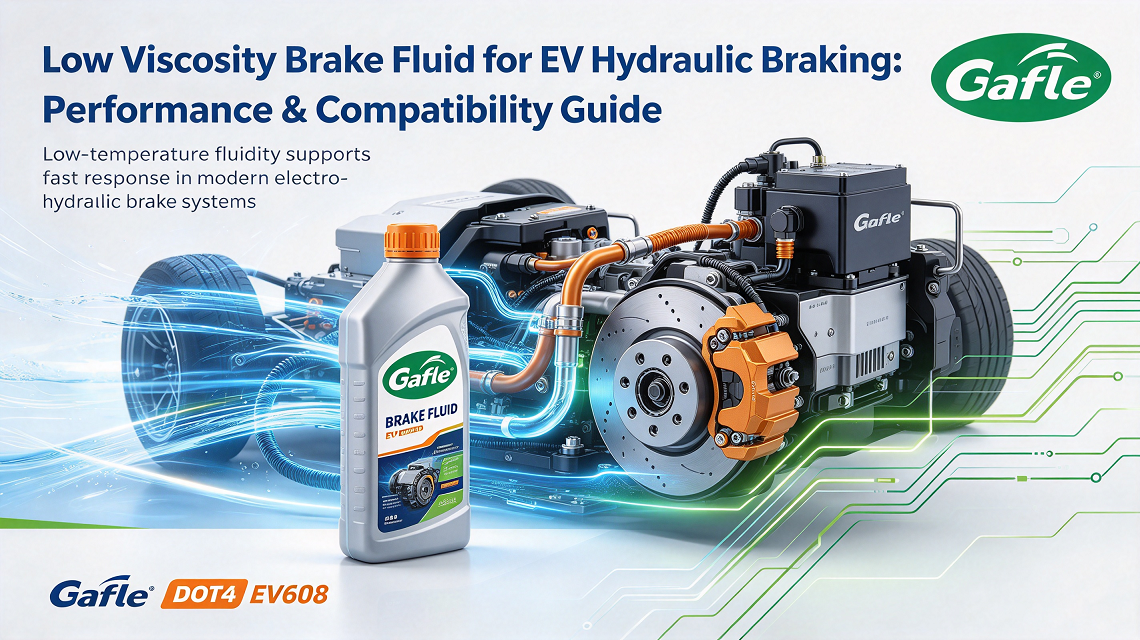
For many sourcing teams, brake fluid OEM programs sit in the same bucket as other automotive consumables: necessary, price-sensitive, and easy to underestimate until a field issue appears. That is a mistake. Brake fluid is one of those products that looks simple on a spec sheet but becomes unforgiving in the real world. It has to support consistent braking performance, resist moisture uptake, behave predictably across temperature swings, and stay stable through storage and transport. If you are comparing suppliers, the question is not just who can fill bottles. It is who can keep formulation control, packaging integrity, and batch consistency in line with the demands of your market.
That is why a brake fluid OEM decision is less about procurement convenience and more about risk management. A weak program can create complaints that are hard to trace: soft pedal feel, vapor-lock concerns, discoloration, or incompatibility with service expectations. And because brake fluid is handled by distributors, repair networks, and end users in different environments, the margin for ambiguity is small.
What buyers should look for first
A practical sourcing review starts with the basics: formulation type, packaging, labeling, and traceability. Brake fluid is not a one-size-fits-all category. Different markets may expect different performance grades, and buyers need to confirm that the supplier understands the intended application rather than assuming a generic “meets demand” answer will be enough.
For OEM and private-label programs, batch control matters as much as the product itself. Even when a supplier offers strong branding support, the real value is whether the factory can keep records that let you trace raw materials, blending lots, and filling runs. That is the part importers often discover too late when a complaint lands on the desk and someone asks for the batch history.
Quick buyer checklist
Before you commit, ask for the supplier’s quality documents, production flow, and batch identification method. Check whether they can support consistent container filling, cap sealing, and label application. If they also handle other automotive chemicals, the same discipline should be visible there too. A factory that understands auto chemical OEM batch testing usually has a more mature way of managing records and sample retention, even if the exact process differs by product.
How brake fluid OEM compares with other private-label chemical programs
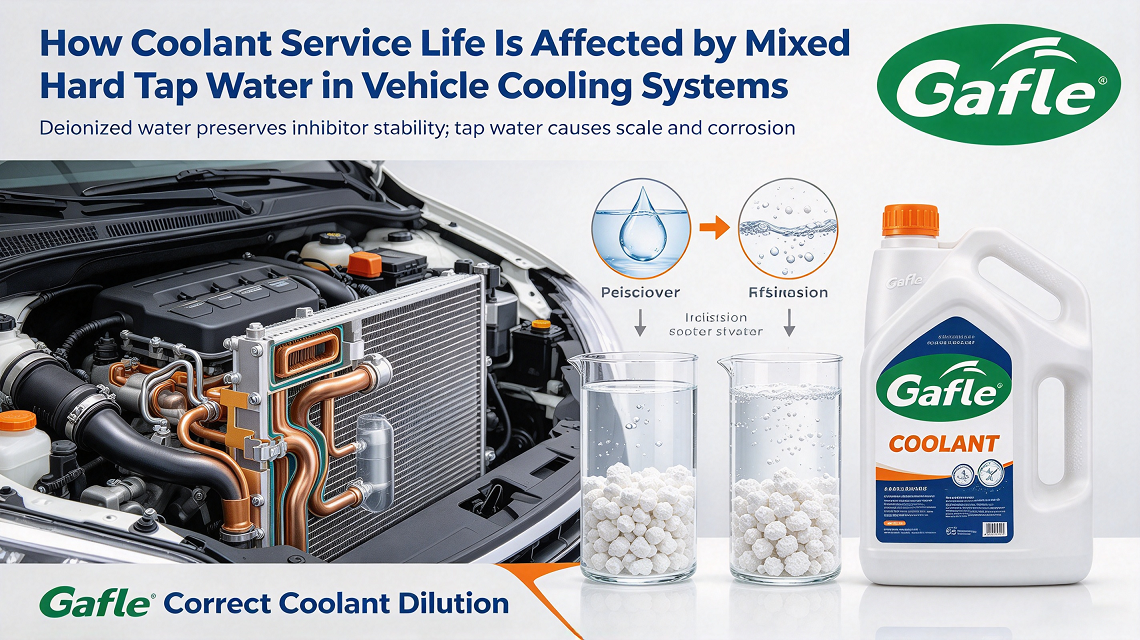
There is a useful comparison here with coolant private label projects. Both categories depend on formulation discipline, packaging consistency, and clear labeling. Both can be damaged by contamination, poor storage, or weak importer oversight. The difference is that brake fluid is often more sensitive to performance expectations tied directly to safety and service behavior, while coolant programs may place more emphasis on thermal stability, corrosion control, and system compatibility.
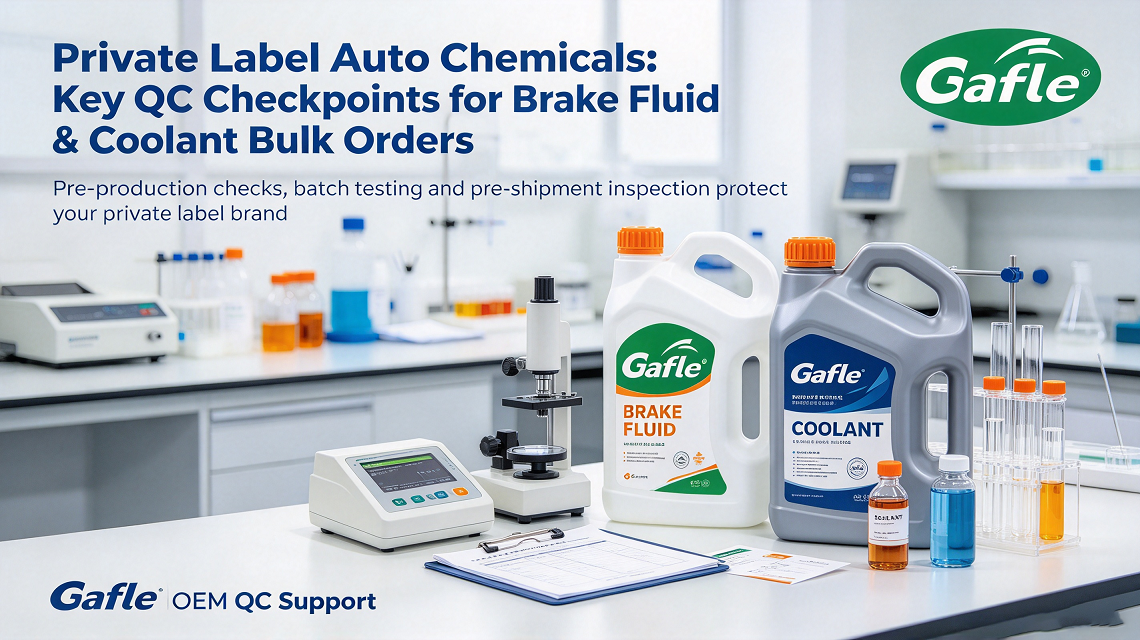
That comparison is useful for sourcing managers because it highlights a broader principle: if a supplier struggles with one automotive liquid category, they may struggle with the rest. A solid QC Checklist for Importers should not stop at visual inspection of cartons. It should include incoming document review, container condition checks, seal integrity, and sample retention for every lot that moves through the supply chain.
Quality inspection: what can go wrong and where to catch it
Importers sometimes focus on the finished bottle and forget the journey that got it there. That is where many avoidable problems start. A label may look fine, but the closure could be loose. The carton may be intact, but the contents may not match the approved sample. Or the batch code may be present, but not useful for real traceability. None of these issues is glamorous, and that is precisely why they matter.
Practical inspection points
Use an import private label antifreeze quality inspection mindset even when the product is brake fluid: verify packaging condition, confirm fill levels, compare artwork against approved references, and inspect for leakage or contamination signs. It sounds basic, but basic controls are often the difference between a manageable exception and a costly return.
Also, do not let a supplier skip over documentation because “the product is routine.” Routine products still fail. In fact, routine products sometimes fail more quietly because teams assume the risk is low. A buyer should insist on clear communication about testing, hold-release rules, and what happens if a lot falls outside the agreed specification or presentation standard.
Selection criteria that actually affect long-term performance
The best brake fluid OEM partner is not always the one with the longest brochure or the most polished sales pitch. Look for a factory that can explain its process in plain language. Can they separate raw material handling from filling? Do they understand how storage conditions affect finished product appearance and stability? Can they support private-label artwork changes without mixing up revisions? These are the kinds of operational details that separate a capable supplier from a risky one.
It also helps to review how the supplier handles nonconformities. A good partner will not pretend defects never happen; they will show how issues are isolated, documented, and prevented from repeating. That response tells you more about their reliability than a stack of marketing claims.
Common mistakes buyers still make
The most common mistake is treating brake fluid as a commodity purchase with no need for technical follow-up. The second is approving samples without checking whether the sample truly represents the production line. Another frequent problem is weak artwork control, especially in markets where multiple languages or regulatory text must be managed carefully. One misplaced label detail can create more friction than a modest price difference ever saved.
A smaller but important mistake is ignoring storage and handling after shipment. Even a well-made product can be undermined by poor warehouse practices or long exposure to unsuitable conditions. That is not always the supplier’s fault, but it still affects the buyer’s brand reputation.
FAQ for sourcing teams
Is brake fluid OEM only about private label packaging?
No. Packaging is visible, but the real work is formulation control, traceability, and production discipline.
Should buyers use the same inspection approach for brake fluid and antifreeze?
Not exactly, but the same importer mindset applies: verify documents, packaging, batch identity, and sample consistency before release.
What is the safest way to compare suppliers?
Use a structured QC Checklist for Importers and review it against actual factory capability, not just samples or sales promises.
A practical next step
If you are building or renewing a brake fluid OEM program, start with a short, disciplined supplier audit. Ask for the production flow, batch records, packaging controls, and inspection method in writing. Then compare that against your own market requirements and the realities of your distribution channel. The right partner should make those answers easy to verify, not difficult to pin down. That is usually the clearest sign you are dealing with a supplier built for repeat business, not just a one-time shipment.
Welcome to contact GAFLE for more information & cooperation!
peter
ZHEJIANG GAFLE AUTO CHEMICL CO.,LTD
Tel:86-579-8222 1665
Fax:86-579-8246 4690
Cel/Wechart:86-13335993986
E-mail:peter@gafle.net
Web:www.gafle.net