What coolant really has to do in an engine or industrial system
Coolant is often treated as a simple fluid you top off when the level drops, but in practice it is doing several jobs at once. It needs to move heat away from hot components, protect metal surfaces from corrosion, help control boil-over in demanding operating conditions, and remain stable across a wide temperature range. For sourcing managers and engineers, that means the choice is not just about freezing protection. It is about system life, maintenance burden, and whether a machine can keep running without avoidable downtime.
In automotive, off-highway, fleet, and industrial equipment, the wrong fluid mix can accelerate wear in ways that are hard to see at first. A system may appear fine until deposits build up, seals age faster, or pitting starts inside water jackets and passages. That is why coolant selection deserves the same attention as filtration, lubrication, and hose compatibility.
Coolant versus antifreeze: useful distinction, but not the whole story
People still use coolant and antifreeze as if they mean the same thing, and in casual conversation they often do. Strictly speaking, antifreeze usually refers to the freeze-protection function, while coolant refers to the broader heat-transfer fluid in the system. In the real world, the product has to do both.
That matters because a fluid that prevents freezing is not automatically good at preventing coolant corrosion or managing long service intervals. The additive package is what makes the difference. Ethylene glycol and propylene glycol bases are common in many formulations, but base fluid alone does not tell you enough. You also need to know what inhibitors are present, how the formulation behaves with the metals in your system, and whether the product is intended for passenger vehicles, heavy-duty engines, or mixed-material industrial circuits.
Why corrosion control is the part buyers should not skim past
Corrosion is one of the most expensive quiet failures in a cooling system. It does not usually announce itself with a loud event. It starts with mild surface attack, scaling, or contamination in the fluid, then progresses to reduced heat transfer and component damage.
Coolant corrosion can affect cast iron, aluminum, copper alloys, solder, brass, and even some polymers indirectly when deposits and heat stress begin to add up. If the wrong chemistry is used, or if a product is diluted incorrectly, the protective layer on metal surfaces may become weak or uneven. That is where electrochemical issues start to matter.
Coolant electrolysis risks in mixed-metal systems
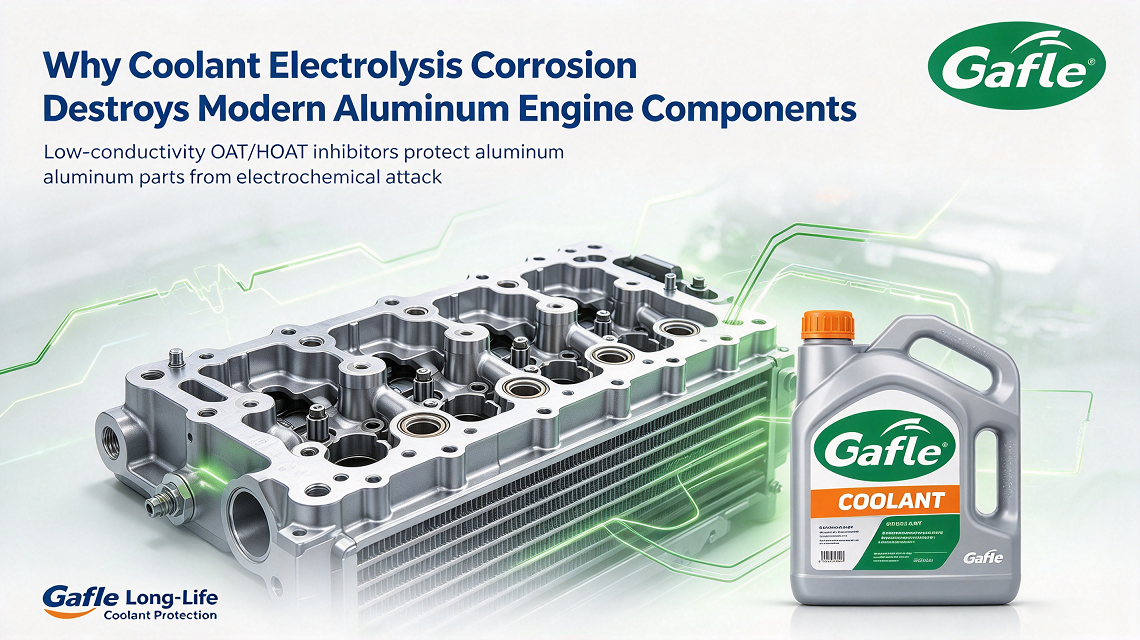
Coolant electrolysis risks are worth paying attention to whenever a system contains mixed metals, poor grounding, or contaminated fluid. Stray electrical current can accelerate metal loss in places that look mechanically sound. It is not a problem every buyer sees every day, but when it appears, it can be frustratingly persistent.
To reduce that risk, maintenance teams often focus on clean fluid, correct concentration, sound electrical grounding, and regular testing. If a supplier claims you can prevent electrolysis with premium coolant, the claim should still be read carefully. Premium chemistry can help by maintaining inhibitor protection, but it is not a substitute for a damaged electrical system or badly maintained equipment.
What good coolant selection looks like in practice
The best choice depends on the application, not a universal rule. A buyer should start with the equipment maker’s requirements, then look at the operating environment. Cold climates demand reliable freeze protection. High-load engines need boil-over resistance and stable heat transfer. Long-life service schedules call for inhibitor packages that hold up over time.
A few practical selection points usually matter most:
- Base fluid type and recommended dilution
- Compatibility with aluminum and other metals in the system
- Corrosion inhibitor chemistry and service interval
- Whether the fluid is intended for light-duty, heavy-duty, or industrial use
- Water quality used for mixing, if the product is not pre-mixed
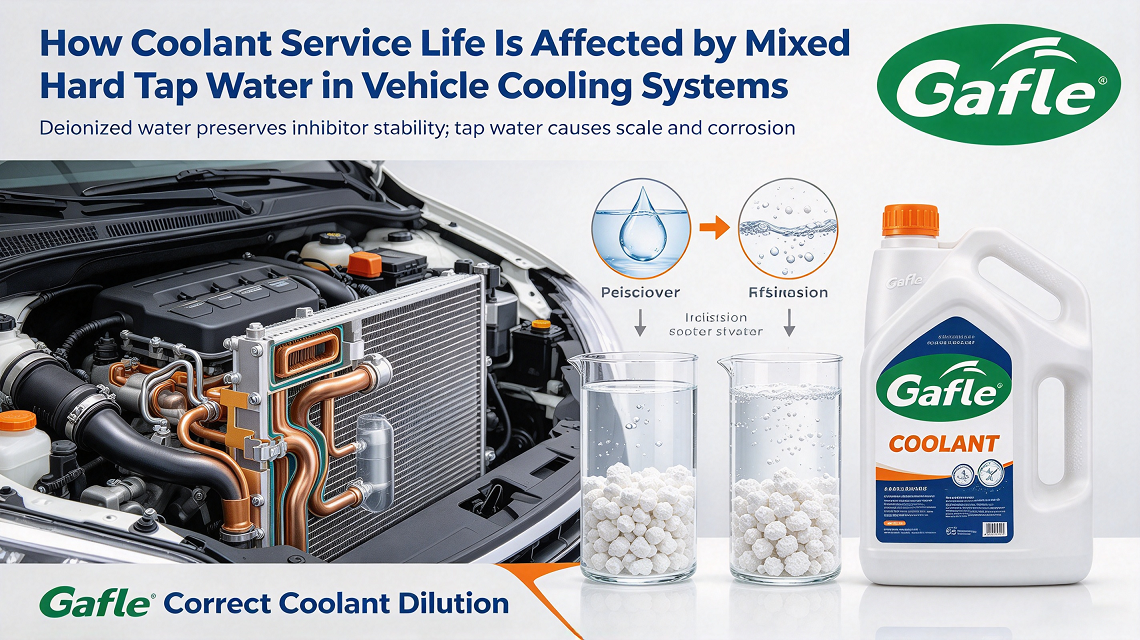
That last point is easy to overlook. Hard water or contaminated top-off water can undermine even a well-formulated product. Buyers sometimes chase the label and ignore the water supply, which is a common mistake.
Where heavy-duty formulations fit
In trucks, construction equipment, generators, and other hard-working systems, a heavy duty coolant anti-corrosion additive package can be especially important. These systems often face higher thermal stress and longer idle periods, both of which make fluid chemistry more consequential. Heavy-duty products are typically chosen for their ability to maintain protection under load and resist the kinds of deposits that shorten radiator and pump life.
That said, “heavy-duty” should not be treated as a synonym for “better” in every case. The product still has to match the engine design and service guidance. Using a strong additive package in the wrong system can create compatibility issues, and that is not a shortcut anyone wants.
Common buyer mistakes that cost more later
The biggest mistake is mixing incompatible formulations without checking whether the chemistry is intended to blend. Another is using tap water by default. A third is assuming color alone tells you what the fluid will do. Color is a convenience for identification, not a technical spec.
It is also easy to ignore test intervals. Coolant chemistry changes over time, especially in demanding service. If the fluid is not checked, a cooling system can look healthy until a repair becomes necessary. For fleets and industrial operators, that means a small maintenance discipline can prevent a much larger outage.
Buyer checklist before you source coolant
Before placing an order, confirm the equipment requirements, the expected operating temperature range, compatibility with metals and seals, and the maintenance interval your team can realistically support. If the application includes mixed metals or electrical sensitivity, ask specifically about corrosion inhibitors and electrolysis protection. If the system is high-duty or long-life, review whether a heavy duty coolant anti-corrosion additive package is appropriate.
Final practical note for engineering and procurement teams
Coolant is not a commodity purchase to handle on instinct. The fluid sits at the intersection of thermal control, corrosion protection, and service planning. A careful selection can extend component life and reduce unplanned maintenance; a careless one can create a slow, expensive problem.
If you are comparing options, start with the machine specification, then look closely at inhibitor chemistry, compatibility, and service conditions. That usually gives you a better answer than shopping by price or color alone.
Welcome to contact GAFLE for more information & cooperation!
peter
ZHEJIANG GAFLE AUTO CHEMICL CO.,LTD
Tel:86-579-8222 1665
Fax:86-579-8246 4690
Cel/Wechart:86-13335993986
E-mail:peter@gafle.net
Web:www.gafle.net