Why old brake fluid deserves attention
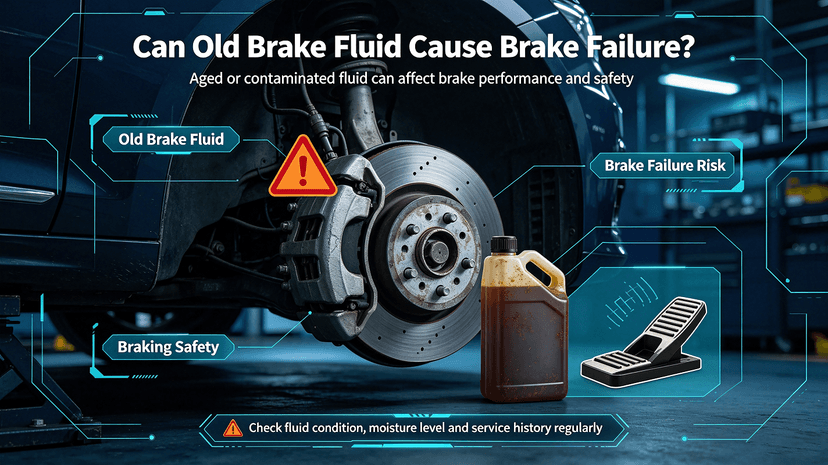
Old brake fluid is one of those maintenance items that sits out of sight until the pedal feels wrong. By then, the problem may already be moving from nuisance to safety risk. For engineers, fleet managers, and everyday vehicle owners, the real question is not whether the fluid looks dirty in the reservoir. It is whether its age and moisture content are starting to undermine braking performance.
Brake fluid works under heat, pressure, and repeated cycling. Over time, it absorbs moisture from the air, picks up contamination, and loses some of the stable performance that made it dependable in the first place. That is where the risk begins. In practical terms, the issue is less about color and more about what happens when the system is asked to stop a vehicle hard, downhill, or repeatedly.
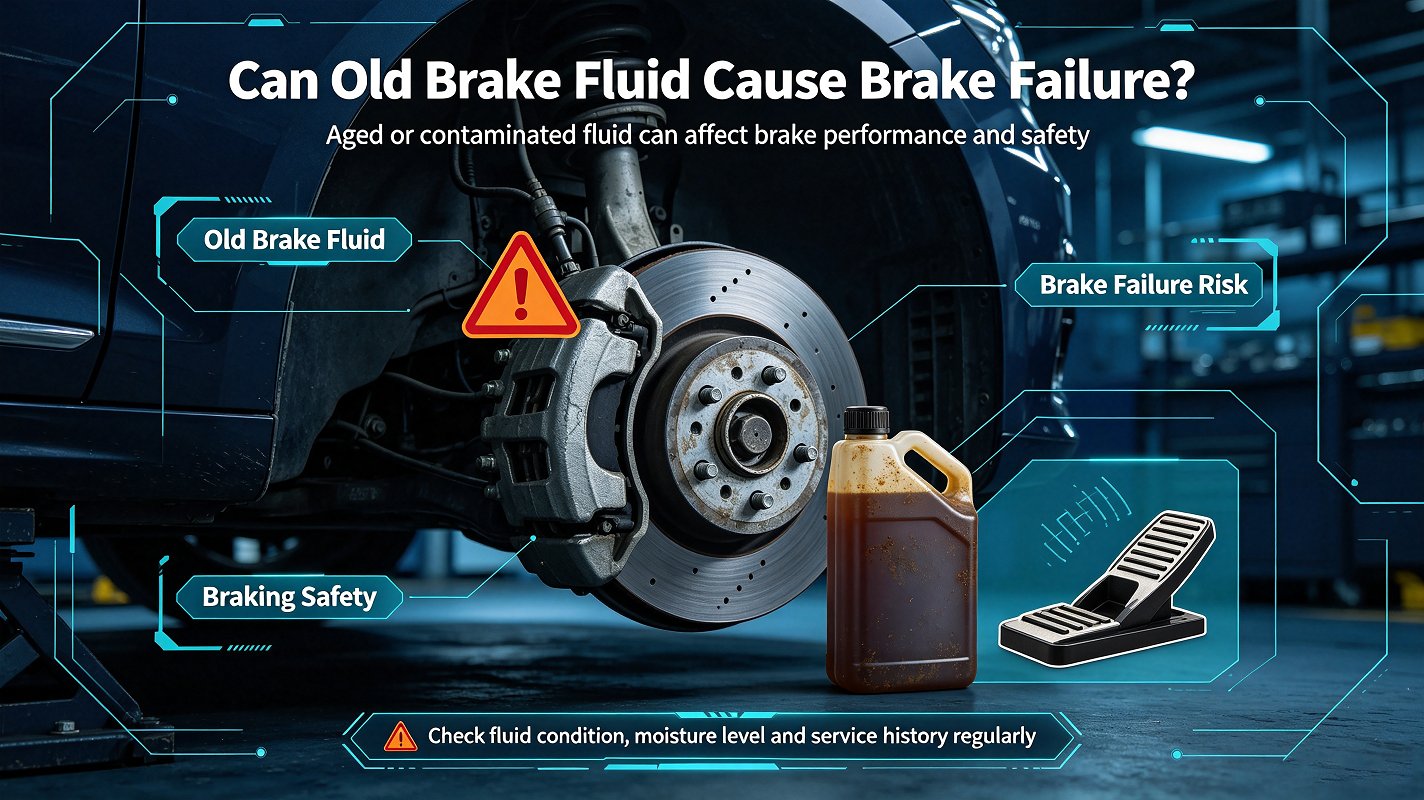
Can old brake fluid cause brake failure?
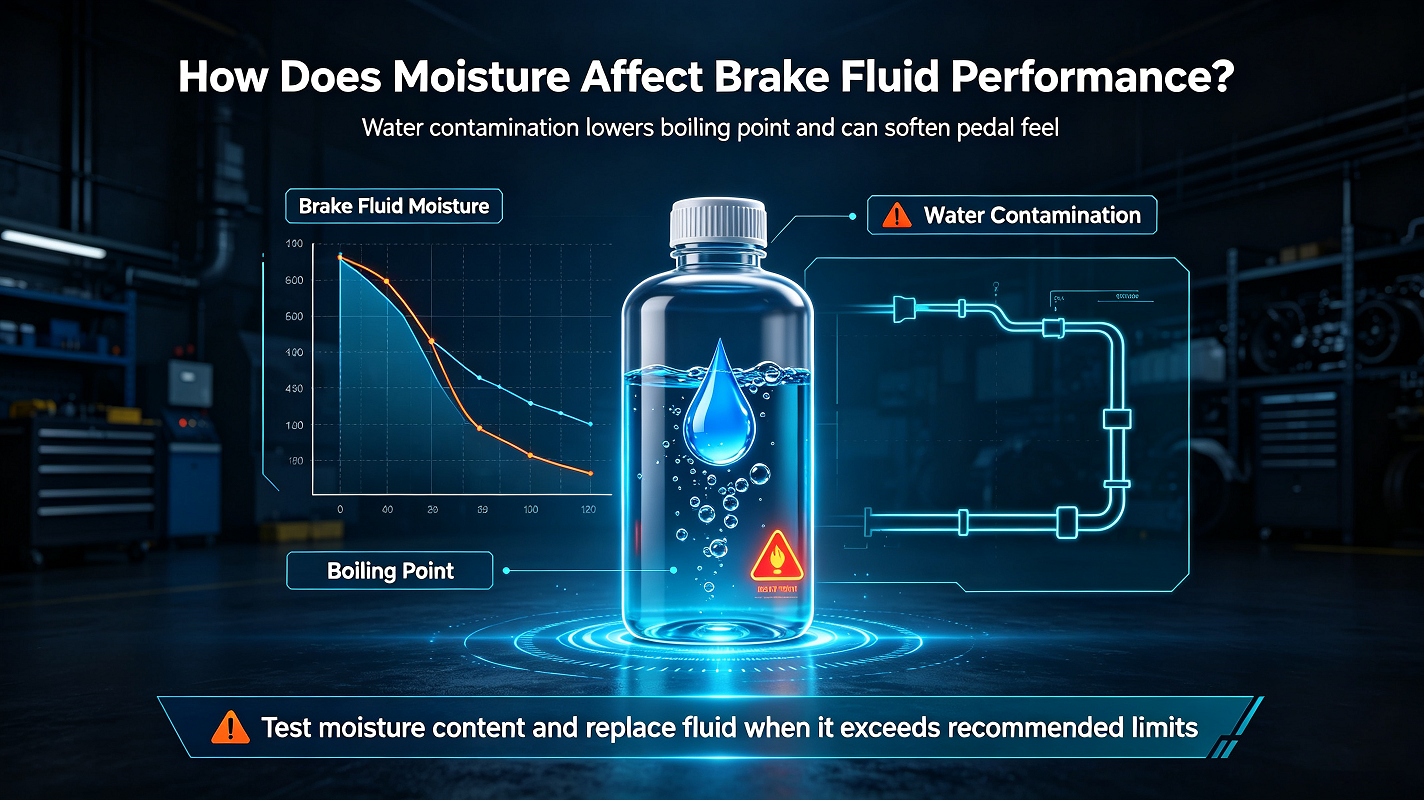
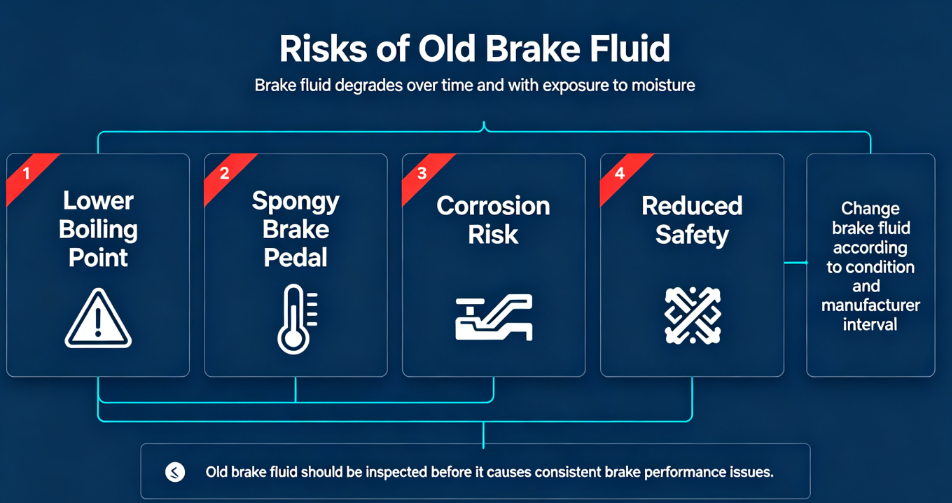
Yes, old brake fluid can contribute to brake failure, although the failure mode is often gradual rather than sudden. The most common problem is reduced boiling point. When moisture builds up in the fluid, it can boil sooner under high brake temperatures, creating vapor in the hydraulic system. Vapor compresses. Liquid does not. That difference can leave the pedal feeling spongy or sinking lower than expected, which is a real brake failure risk even if the system is still technically functioning.
There is also the corrosion side of the story. Water contamination can damage master cylinders, calipers, wheel cylinders, ABS components, and internal seals. The damage may not announce itself immediately. Instead, it shows up as uneven braking, sticking parts, or a long-term repair bill that is much bigger than a routine fluid change. That is why the risks of not changing brake fluid are not limited to safety alone; they also affect maintenance cost and component life.
What changes as brake fluid ages
Moisture absorption
Most common automotive brake fluids are hygroscopic, meaning they absorb moisture over time. That moisture does not stay harmlessly separate. It changes the fluid’s performance and can accelerate internal corrosion. In wet climates, coastal areas, or vehicles that sit for long periods, the process can move faster than some owners expect.
Heat stress
Brakes generate heat every time the vehicle slows. On mountain descents, in stop-and-go delivery routes, or during repeated high-load stops, heat stress becomes more serious. Old fluid is more likely to reach the point where pedal feel changes just when the driver needs confidence most.
Contamination
Debris, rubber wear particles, and degraded seals can all affect brake fluid quality. The fluid may still look serviceable at a glance, which is part of the problem. Appearance alone is not a reliable test.
Warning signs buyers and service teams should watch
There is no single symptom that proves the fluid is the culprit, but several signs should prompt a closer look. A soft or spongy pedal, longer stopping distances, brake fade during repeated stops, and dark or murky fluid are worth investigating. If the brakes pull unevenly or ABS behavior seems inconsistent, the fluid should be part of the diagnosis. Of course, brake complaints can come from pads, rotors, hoses, calipers, or hydraulics too, so it is better to inspect systematically than guess.
How often should brake fluid be changed?
There is no universal interval that fits every vehicle and duty cycle. Manufacturers set service guidance for a reason, and those recommendations should be the starting point. Heavy use, towing, high humidity, and long idle periods can justify earlier service. A commuter car in a dry climate may age differently from a van that spends its life in traffic or a machine that sees thermal cycling and long storage. The point is to manage fluid condition, not just calendar time.
What a proper brake fluid service should include
A good brake fluid service is more than a quick top-off. The old fluid should be removed in a controlled flush or exchange process, using the correct fluid type for the system. Mixing incompatible fluid types is a mistake that can create seal issues or unpredictable performance. The technician should also check for leaks, inspect rubber components, and confirm that the pedal feel and braking response are normal afterward.
For shops and sourcing teams, this is where quality control matters. Cheap shortcuts can leave contaminated fluid in low points of the system, especially in vehicles with ABS modules or complex hydraulic routing. It is worth treating the job as a system maintenance task rather than a fluid swap.
Common mistakes that increase risk
One common mistake is waiting until symptoms are obvious. Another is assuming brake fluid does not matter because the vehicle still stops. Brakes are a safety system, and small changes in hydraulic behavior can become important under load. A third mistake is relying on color alone. Dark fluid often signals age, but clear-looking fluid is not automatically healthy.
It is also a mistake to dismiss fluid service as optional on low-mileage vehicles. Low mileage does not necessarily mean low moisture exposure. Vehicles that sit for long periods can still accumulate problems. That is one of those practical realities that gets overlooked until a repair visit reveals more than expected.
Practical buyer advice
If you are evaluating a vehicle, a fleet maintenance plan, or a repair quote, ask when the brake fluid was last changed and what method was used. Ask whether the service included a full flush or only a reservoir exchange. If the answer is vague, that is a small warning sign. For engineering and purchasing teams, it helps to tie brake fluid maintenance to the operating environment rather than treating it as a generic calendar item.
If a vehicle is showing any braking symptom, do not rule out old brake fluid just because the pads or rotors are newer. Hydraulic condition can be the hidden variable.
FAQ: quick answers
Does old brake fluid always cause brake failure? Not always, but it can create the conditions for reduced braking performance, especially under heat and heavy use.
Can you tell if brake fluid is bad by looking at it? Not reliably. Visual inspection helps, but moisture content and performance matter more than color.
Is flushing brake fluid worth it? In most cases, yes. It is a relatively modest maintenance task compared with the cost and risk of hydraulic damage.
What to do next
If brake service is due, or if the pedal feel has changed, inspect the fluid condition before the problem grows. Old brake fluid is not dramatic until it is. Then it becomes a brake failure issue, a repair issue, and sometimes a roadside issue all at once. A timely fluid change is one of the simpler ways to protect both safety and hardware.
Welcome to contact GAFLE for more information & cooperation!
peter
ZHEJIANG GAFLE AUTO CHEMICL CO.,LTD
Tel:86-579-8222 1665
Fax:86-579-8246 4690
Cel/Wechart:86-13335993986
E-mail:peter@gafle.net
Web:www.gafle.net