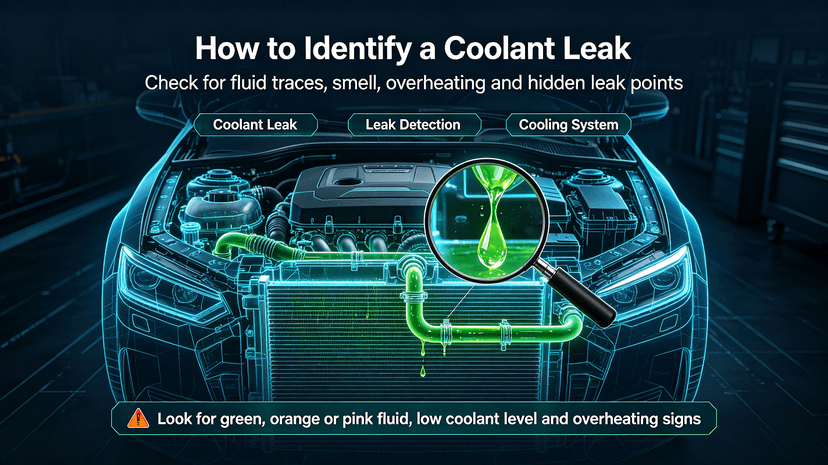
How to Identify a Coolant Leak Before It Turns Into a Bigger Repair
How to Identify a Coolant Leak is one of those maintenance questions that sounds simple until a vehicle starts running hot, a puddle appears under the front end, and the driver is left guessing whether the problem is minor or the beginning of a serious cooling-system failure. For fleet managers, service technicians, and buyers supporting automotive programs, the real issue is not just spotting lost fluid. It is deciding where the leak is coming from, how urgent it is, and whether the vehicle can be safely returned to service.
Engine coolant does more than manage temperature. It protects metal components from corrosion, supports stable operating temperatures under load, and helps prevent head-gasket and turbocharger damage in modern engines. When coolant escapes, the system loses both fluid volume and pressure. That is why even a small leak can matter more than it first appears.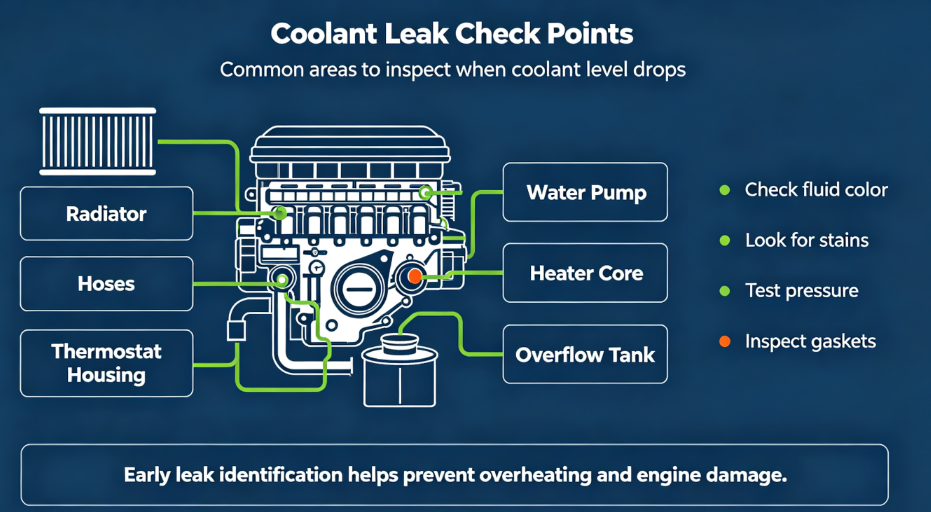
What a Coolant Leak Usually Looks Like
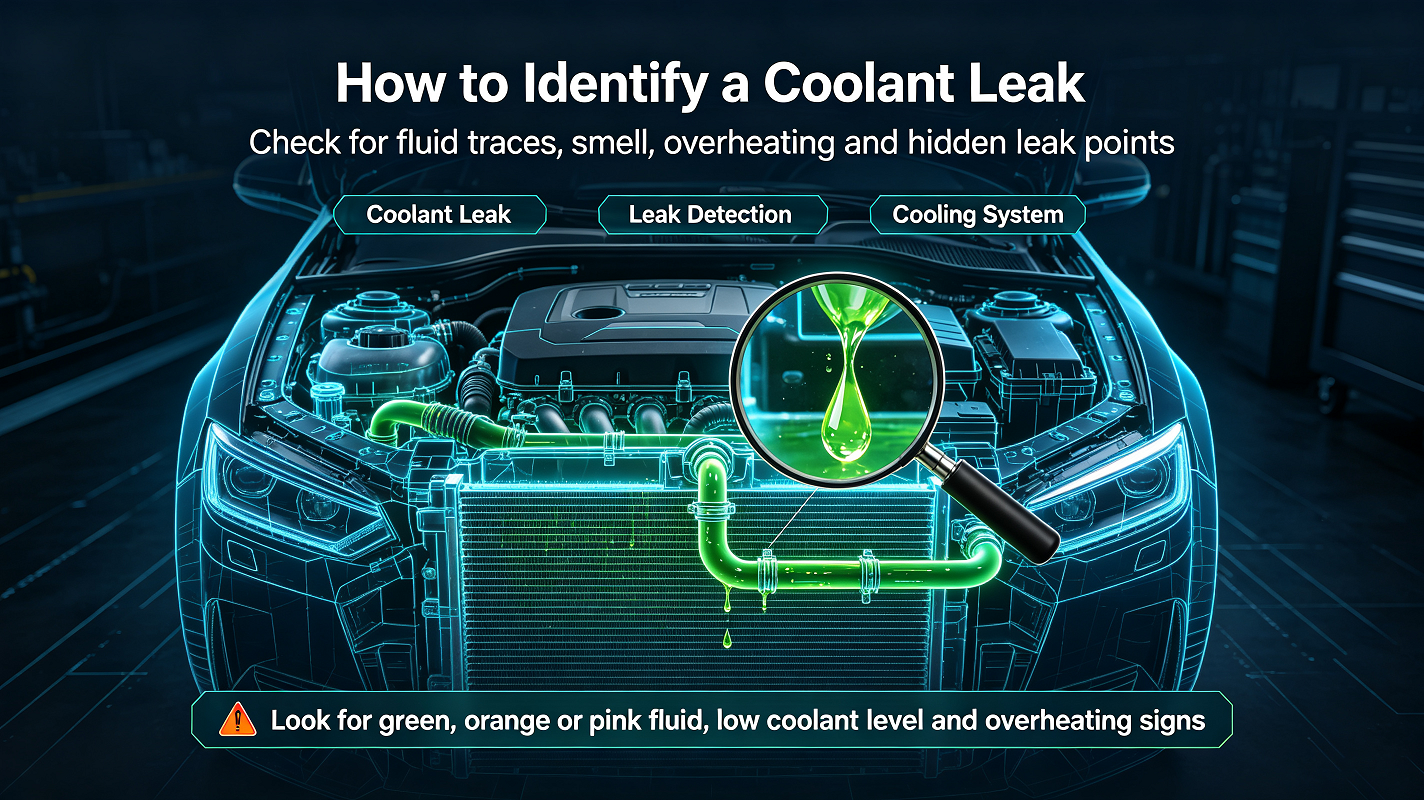
The common signs of leak are often visible before any dashboard warning appears, although not always. A sweet odor around the engine bay, a damp hose connection, crusty residue near a radiator seam, or a low coolant reservoir are all clues. Some leaks leave a colored stain, but the exact appearance depends on the coolant formulation and what it has dripped onto.
A radiator leak may show up as wet fins, residue at the tank crimp, or a drip at the lower corner after shutdown. Hoses, clamps, water pumps, heater cores, and the thermostat housing can also fail. On some vehicles, the leak is not dramatic; it may only appear as slow loss over several heat cycles, which is why routine inspection matters more than waiting for an obvious puddle.
How to Check the Cooling System Step by Step
If you are trying to figure out how to check a suspected problem, start with the engine fully cool. Opening a pressurized cooling system when hot is a bad trade for a few minutes saved.
First, inspect the overflow reservoir and radiator cap area for obvious wetness or dried residue. Then look along the upper and lower hoses, the clamp points, and any plastic fittings. Check under the vehicle after it has been parked overnight. Fresh coolant often leaves a distinct stain on concrete or pavement, though a small leak may evaporate before it becomes a puddle.
Next, look around the radiator core, end tanks, and fan shroud area. If the vehicle has a visible undertray, remove it only if access is safe and necessary; coolant can collect there and make the source look worse than it is. Finally, inspect the water pump weep hole if reachable. A pump that is beginning to fail may show dampness or a trace of dried coolant around that area.
Quick isolation checks that help in the field
A cooling-system pressure test is often the fastest way to confirm a small leak, especially when the vehicle does not show symptoms at idle. Dye tracing can also help when the leak is intermittent or hidden behind components. Those methods are common shop practices, but they require care and proper equipment. If the leak only appears under load or after long drive cycles, a static visual check may miss it entirely.
Common Leak Points and What They Suggest
Not every leak means the same repair.
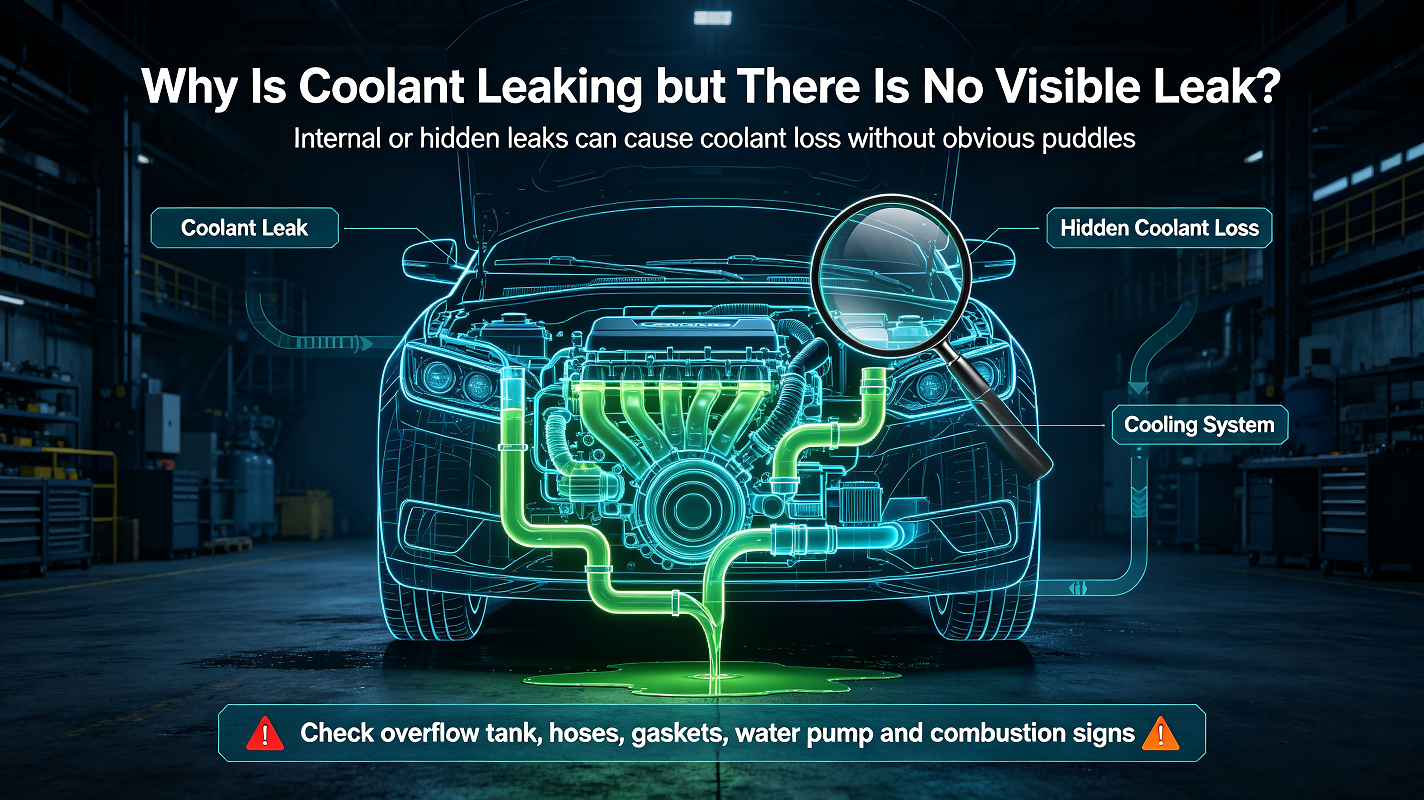
If the loss comes from a hose end, the fix may be a clamp, hose, or mating surface issue. If coolant appears at the radiator seam, the radiator may be degrading internally or the plastic tank may be aging. If the heater core is involved, symptoms may include fogged windows, damp carpet, or a sweet smell in the cabin. Water-pump leakage often points to bearing or seal wear. And if there is no visible external leak but the coolant level keeps dropping, the buyer needs to consider internal consumption, which can signal a more serious engine problem.
That last point is worth pausing on. A lot of people assume coolant loss always means a visible drip. It does not. Internal leaks can be harder to find and more expensive to resolve.
Why Early Identification Matters for Buyers and Maintenance Teams
An unresolved coolant leak can snowball into overheating, gasket damage, warped components, and downtime that far exceeds the cost of the original repair. For procurement teams and service planners, that changes the decision from “Can we top it off?” to “What failure mode are we actually dealing with, and how fast will it worsen?”
In practice, the right response depends on rate of loss, operating duty, and vehicle value. A slow seep on a low-mileage vehicle may be repairable on schedule. A recurring leak on a commercial unit that hauls under load is a different matter. Reliability usually declines before the vehicle fully quits, which is why maintenance logs and repeated top-off history matter.
Buyer Advice: What to Ask Before Approving Repair
Before authorizing work, ask three practical questions: Where is the coolant going? Under what conditions does the leak appear? And is the issue external, or does the engine show signs of internal coolant loss?
Those questions help separate a basic radiator leak from a broader cooling-system failure. They also reduce guesswork when comparing repair quotes. A shop that can show the leak under pressure or after a road test is giving you better evidence than a vague “it’s probably the radiator” statement.
Common Mistakes to Avoid
Do not rely only on the temperature gauge; by the time it climbs, damage may already be underway. Do not open a hot system cap. And do not assume every wet spot is engine coolant. Washer fluid, oil, and condensation can mislead a rushed inspection.
A final caution: if a vehicle repeatedly needs coolant and no external source is found, stop treating it as a topping-off problem. That approach can hide a real fault.
FAQ
Can a coolant leak be small and still matter?
Yes. Slow leaks can become major failures if the vehicle runs hot or loses pressure over time.
What is the first thing to inspect?
Start with the reservoir, radiator cap area, hoses, and visible connections when the engine is cold.
Do all coolant leaks leave a puddle?
No. Some evaporate, some drip only after shutdown, and some are internal.
Next Step
If you are evaluating a suspected cooling-system issue, document the signs of leak, check the engine coolant level cold, and confirm the source before approving parts replacement. That small bit of discipline usually saves time, money, and a second repair visit.
Welcome to contact GAFLE for more information & cooperation!
peter
ZHEJIANG GAFLE AUTO CHEMICL CO.,LTD
Tel:86-579-8222 1665
Fax:86-579-8246 4690
Cel/Wechart:86-13335993986
E-mail:peter@gafle.net
Web:www.gafle.net