
Why trapped air causes trouble in a cooling system
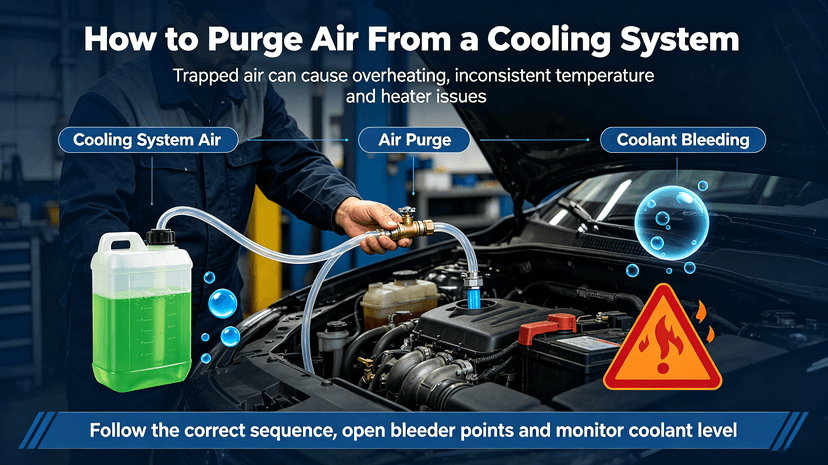
If you are looking for how to remove air from a cooling system, the real issue is usually not the air itself but what it does once it gets trapped. Air pockets interrupt circulation, create hot spots, and can make a system behave unpredictably even when the pump, coolant, and controls are otherwise fine. In plant rooms, production equipment, and vehicle applications alike, the symptoms tend to look familiar: temperature swings, weak flow, noisy pumps, and a system that seems to need constant attention.
That matters because trapped air can mask a larger problem. A technician may top up coolant and reset a control alarm, but if the underlying air ingress point is not found, the same complaint returns. For maintenance teams, the practical decision is not just whether to bleed the system once, but how to purge it properly and confirm it stays full of liquid.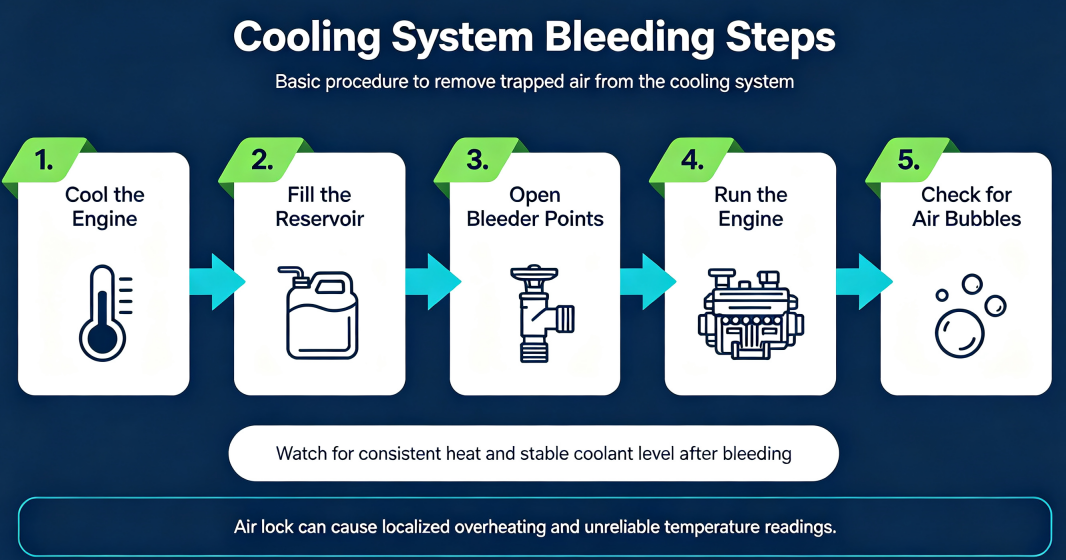
Quick reference: what the air purge is trying to accomplish
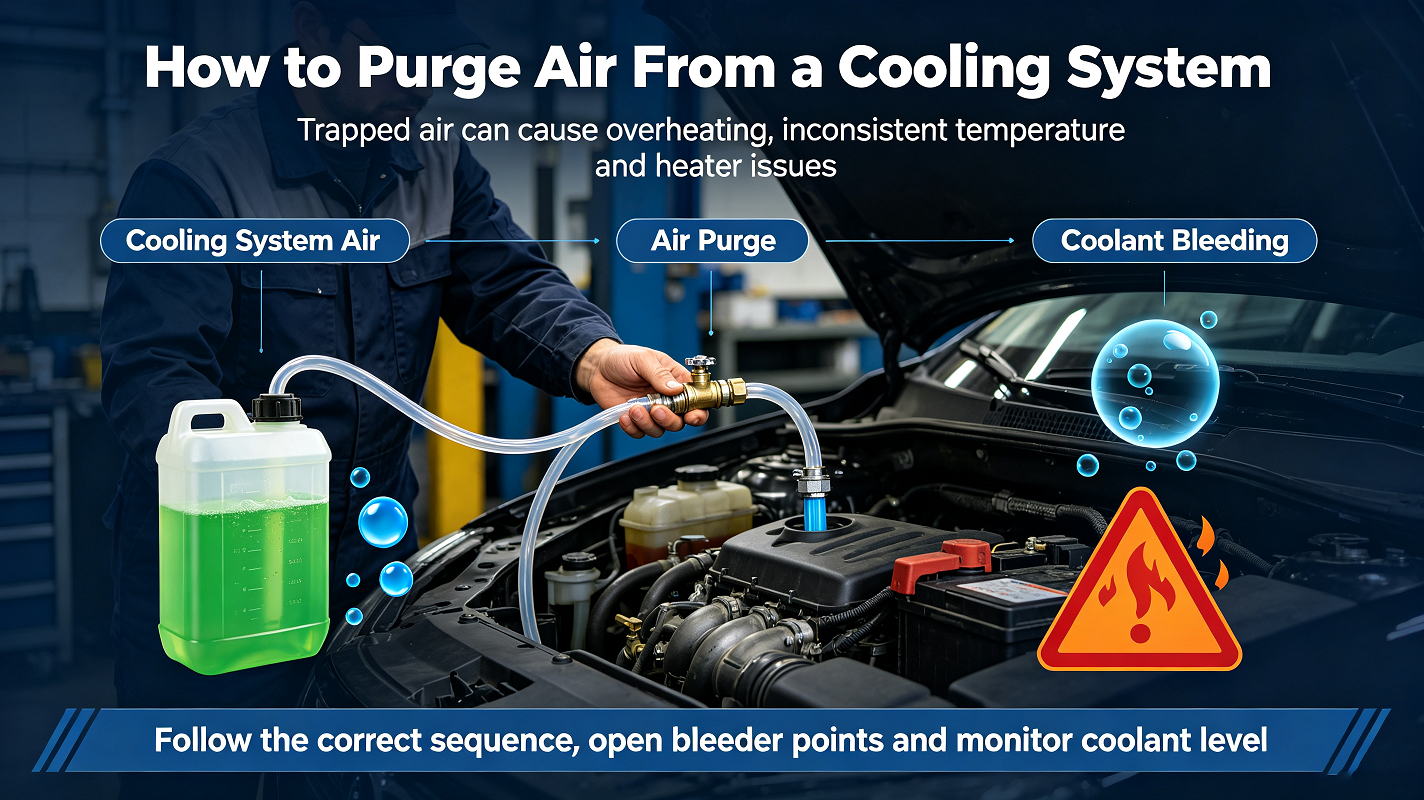
An effective air purge does three things. It removes free air from high points, helps dislodge smaller bubbles that cling to internal surfaces, and restores continuous liquid flow through the circuit. In some systems, that is done with manual bleed valves. In others, the design includes automatic vents, separators, or service ports that simplify the task.
The basic goal is straightforward, but the method depends on system layout. A compact jacketed cooler behaves differently from a large distributed cooling system with multiple branches, elevation changes, and long hose runs. What works on a small loop may leave air trapped in a larger one.
How to remove air from a cooling system in practice
A sensible bleeding air procedure starts with inspection. Before opening any vent or cap, check for obvious leaks, loose clamps, damaged hoses, or low reservoir level. If the system has recently been serviced, air often enters through the points that were opened during maintenance.
Once the circuit is safe to work on, refill to the recommended level and open the highest bleed points first. That is where air naturally collects. Let coolant move slowly through the circuit so bubbles can migrate rather than being chopped into smaller pockets by sudden pump start-up. In many systems, cycling the pump briefly while observing the reservoir helps release stubborn pockets, but only if the equipment can be operated safely in that condition.
A common practical warning: do not assume one bleed point is enough. Long horizontal runs, plate exchangers, and components mounted above the main reservoir can hold air after the first purge. It is often worth repeating the process after the system has warmed up and cooled down, because temperature changes can move trapped air into different locations.
Manual bleed valves versus automatic vents
Manual bleed valves give the operator more control and are common on serviceable equipment. They are useful when technicians need to hear or see when air gives way to coolant. Automatic vents reduce routine labor, but they are not a cure-all. If the vent is contaminated, poorly placed, or undersized for the installation, it may not clear the system completely. Buyers sometimes overestimate how much an automatic feature can compensate for poor piping design.
Common causes of recurring air in a cooling system
If air keeps returning, the issue is usually upstream of the purge step. Typical causes include low coolant level, poor sealing at fittings, a pump drawing air on the suction side, or maintenance ports that were not properly closed. In some installations, dissolved gases come out of solution as the coolant heats up, which is why a system may seem fine cold and noisy once operating.
Another overlooked cause is the fill method itself. Fast filling can trap air in narrow passages and high points. A slower fill, with attention to venting, usually gives better results than repeatedly topping up a partially purged loop.
Selection criteria for maintenance teams
If you are deciding how to manage air removal on a new build or retrofit, the main questions are practical:
1. Where are the high points?
Any elevation above the reservoir or fill point is a potential air trap.
2. How serviceable is the equipment?
If routine access is awkward, choose a design with clear vent points and easy visual checks.
3. Is the system sensitive to flow interruptions?
Some heat exchangers and compact process loops tolerate small amounts of air poorly, so a more robust purge strategy is worth the time.
4. Will the system be opened often?
Frequent service means more opportunities to introduce air, which argues for better venting and more disciplined refill procedures.
Buyer-facing mistakes that cause repeated problems
The most common mistake is treating air removal as a one-time task. In reality, if the cooling system is repeatedly opened, repaired, or topped up, air management becomes part of normal maintenance. Another mistake is ignoring noise. A pump that sounds slightly gravelly or a line that gurgles under load is often telling you something before temperature alarms start.
It is also easy to overlook documentation. A short internal note on bleed points, fill sequence, and post-service checks can save a lot of unnecessary troubleshooting later. That may sound minor, but in a busy workshop it often makes the difference between a clean restart and a second callout.
FAQ: practical questions engineers ask
Should the system be bled when cold or hot?
Usually cold first, then checked again after warm-up. Heat can move residual air into bleed points.
How do I know if air is still trapped?
Look for unstable temperatures, intermittent flow, pump noise, and coolant level changes after shutdown.
Can too much bleeding cause problems?
Yes. Over-opening vents or running a pump improperly can introduce more air or create unsafe operating conditions.
What to do next
If you are dealing with repeated air issues, treat the purge as part of the system design review, not just the maintenance task. Review fill points, vent locations, hose routing, and leak-prone joints. The right bleeding air procedure is the one that clears the circuit reliably and makes the next service easier, not the one that only works for a single shift.
Welcome to contact GAFLE for more information & cooperation!
peter
ZHEJIANG GAFLE AUTO CHEMICL CO.,LTD
Tel:86-579-8222 1665
Fax:86-579-8246 4690
Cel/Wechart:86-13335993986
E-mail:peter@gafle.net
Web:www.gafle.net