logo

Can You Mix Regular Engine Antifreeze With EV Battery Cooling Coolant?

logo

Published

Nov 10 2026

  • Antifreeze / Coolant
  • Buying Guide

Follow us

can-you-mix-regular-engine-antifreeze-with-ev-battery-cooling-coolant

ev battery coolant

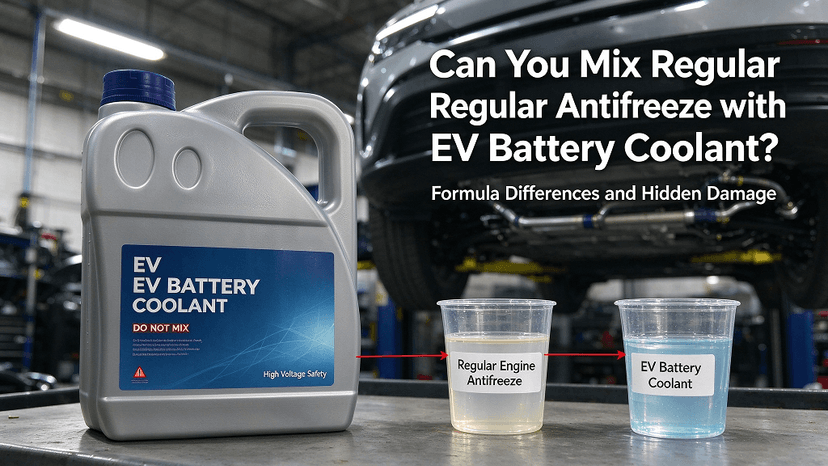
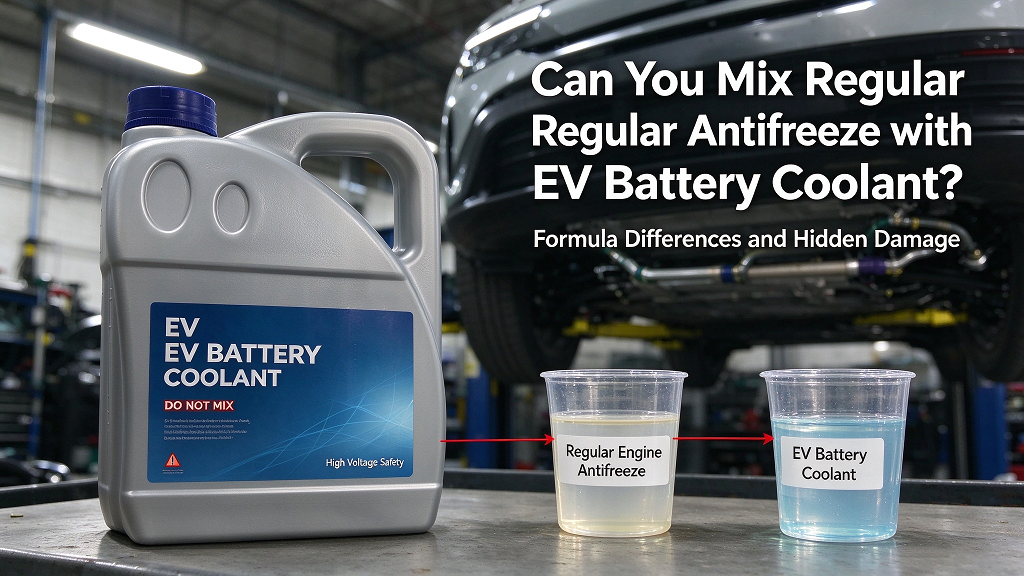
When an electric vehicle alerts low coolant level, some mechanics grab ordinary antifreeze they use for gasoline cars and top it off directly. This quick fix will lead to expensive battery pack damage. Regular engine antifreeze and EV battery coolant are not interchangeable, even if they look similar in color. Our coolant factory reminds all distributors and fleet partners to separate these two products strictly.

Regular engine antifreeze is designed for combustion engine working conditions. Its main tasks are preventing freezing in winter, raising boiling point under engine heat, and forming anti-corrosion film on cast iron, aluminum engine blocks. Its additive package contains ionized corrosion inhibitors, which work well for low-voltage engines but are not suitable for high-voltage battery packs.

EV battery cooling coolant is built around high-voltage safety first. Its formula removes excess ionized additives to keep conductivity low. It focuses on stable heat transfer within a mild temperature range for lithium batteries, rather than resisting extreme engine combustion heat. The anti-corrosion additives selected will not introduce extra conductive ions into the cooling circuit.

Mixing these two fluids triggers a series of negative reactions. The ion-rich additives from regular antifreeze will push conductivity far above the safe limit. Chemical incompatibility may create solid sediment that blocks narrow cooling channels inside the battery pack. It will erode the insulating coating of cooling plates and trigger insulation fault alarms, which can void the vehicle warranty.

Repair shops and distributors should manage inventory separately and cooperate with a professional EV coolant supplier. Clearly label the storage barrels and bottles. Train service teams to identify EV thermal fluid and engine antifreeze. A responsible manufacturer will provide product training materials to help your team avoid this costly mistake.

If mixing has already happened, draining and simple topping-up is not enough. The whole cooling circuit needs full flushing with dedicated cleaning fluid, then vacuum filling with matching EV coolant. You must re-test insulation and conductivity after the service before returning the vehicle to service. Partial draining will leave residual mixed fluid and hidden risks.

Q1: Why do regular antifreeze and EV coolant look the same color? A: Dye is only for visual identification and has no connection with conductivity or formula. Manufacturers add similar colored dyes for easy leak detection. Never judge whether a coolant is suitable for EV battery just by its color.

Q2: Will a small amount of mixed antifreeze damage the battery right away? A: It may not fail immediately, but the risk starts once mixed. Even a tiny volume of conventional antifreeze will raise conductivity gradually. The hidden fault may show up after weeks or months, leading to expensive battery pack repair.

Q3: Can I flush the EV cooling system with tap water? A: No. Tap water contains massive mineral ions, which will make conductivity spike. Only deionized water or dedicated EV cooling system flush fluid approved by your coolant manufacturer can be used for cleaning.

Q4: Are all EV coolants compatible with each other? A: Not all EV coolants are interchangeable. Different brands adopt different inhibitor systems. Mixing two different EV coolants may produce sediment, block tiny cooling channels and break the low-conductivity property. Stick to one specified coolant.

Q5: Does EV coolant need a special filling tool? A: Yes. EV high-voltage cooling loops require vacuum filling tools to remove air bubbles. Air pockets will cause uneven heat transfer and accelerate coolant degradation. This tool is standard equipment for professional EV repair workshops.

Q6: Will mixing antifreeze void my EV manufacturer warranty? A: In most cases, yes. If the inspection report finds incompatible coolant inside the battery cooling loop, the automaker can reject warranty claims for battery damage caused by fluid mismatch.

Welcome to contact GAFLE for more information & cooperation!
peter
ZHEJIANG GAFLE AUTO CHEMICL CO.,LTD
Tel:86-579-8222 1665
Fax:86-579-8246 4690
Cel/Wechart:86-13335993986
E-mail:peter@gafle.net
Web:www.gafle.net
Featured Blogs
How Long Does EV Battery Coolant Last?

How Long Does EV Battery Coolant Last?

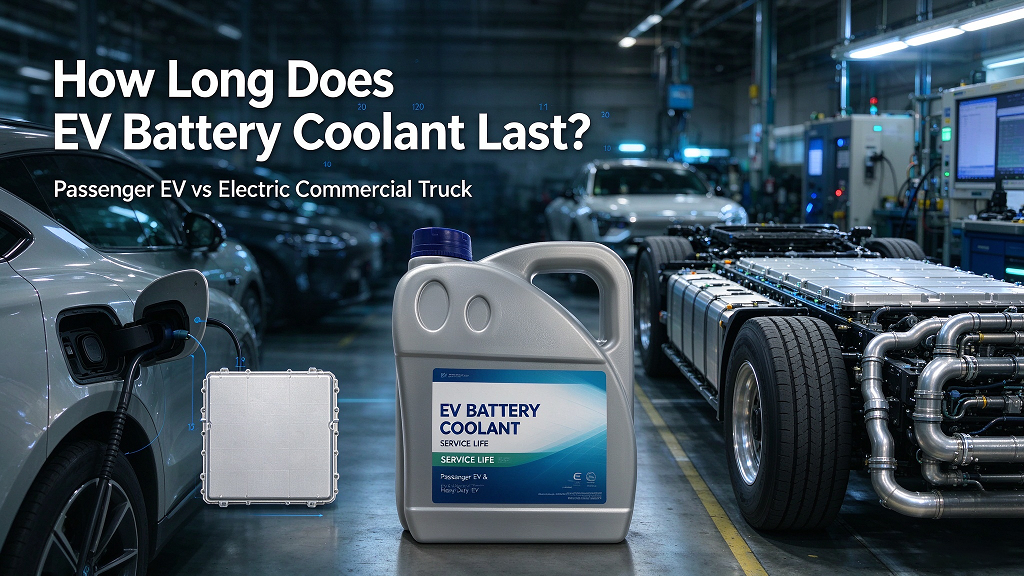
1. Most people know the replacement interval of engine antifreeze, but EV battery coolant service life is often confused, especially between passenger cars and electric trucks. 2. Temperature swings, circulation pressure, sealing condition and battery load all decide how fast EV coolant degrades. 3. Passenger EV coolant has a relatively long service interval with clear monitoring indicators. 4. Electric commercial trucks run under heavy continuous load, so their coolant degrades much faster. 5. Buyers should confirm application scenarios with the coolant manufacturer to pick passenger or heavy-duty EV formulas. 6. EV fleets need sample testing plans instead of only following fixed mileage replacement rules.

Can You Mix Regular Engine Antifreeze With EV Battery Cooling Coolant?

Can You Mix Regular Engine Antifreeze With EV Battery Cooling Coolant?

1. Many technicians add regular engine antifreeze to EV battery cooling systems for convenience, which is a dangerous misunderstanding. 2. Traditional engine antifreeze is formulated to handle high combustion temperature and engine metal corrosion. 3. EV battery coolant is engineered for high-voltage environments with strict low conductivity requirements. 4. Mixing the two fluids will cause sharp conductivity rise, sediment clogging, corrosion and battery insulation failure. 5. Distributors and repair shops need separate inventory and buy dedicated EV coolant from a reliable supplier. 6. There is a standard cleaning and replacement procedure if the two coolants are mixed by accident.

Why EV Battery Coolant Requires Low Conductivity & What Risks High Conductivity Brings

Why EV Battery Coolant Requires Low Conductivity & What Risks High Conductivity Brings

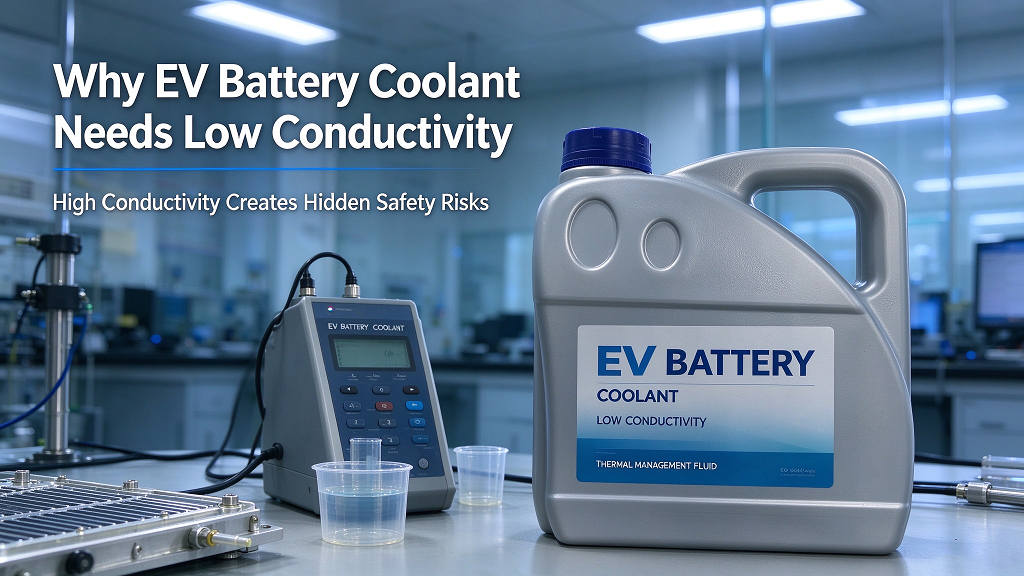
1. EV battery coolant differs greatly from traditional antifreeze, and low conductivity is a critical safety indicator that many technicians overlook. 2. Conductivity refers to the fluid’s ability to carry electric current, which has special meaning inside high-voltage EV battery cooling loops. 3. Coolant with high conductivity may trigger electric leakage, short circuit and accelerated battery cell degradation. 4. Contamination, foreign impurities and formula degradation will raise the conductivity of qualified EV coolant over time. 5. When sourcing EV thermal fluid, buyers should ask the coolant manufacturer for official conductivity test reports. 6. Regular conductivity testing during maintenance helps keep the battery cooling system safe and stable.

Can Bad Antifreeze Cause Your Car Air Conditioner To Stop Working

Can Bad Antifreeze Cause Your Car Air Conditioner To Stop Working

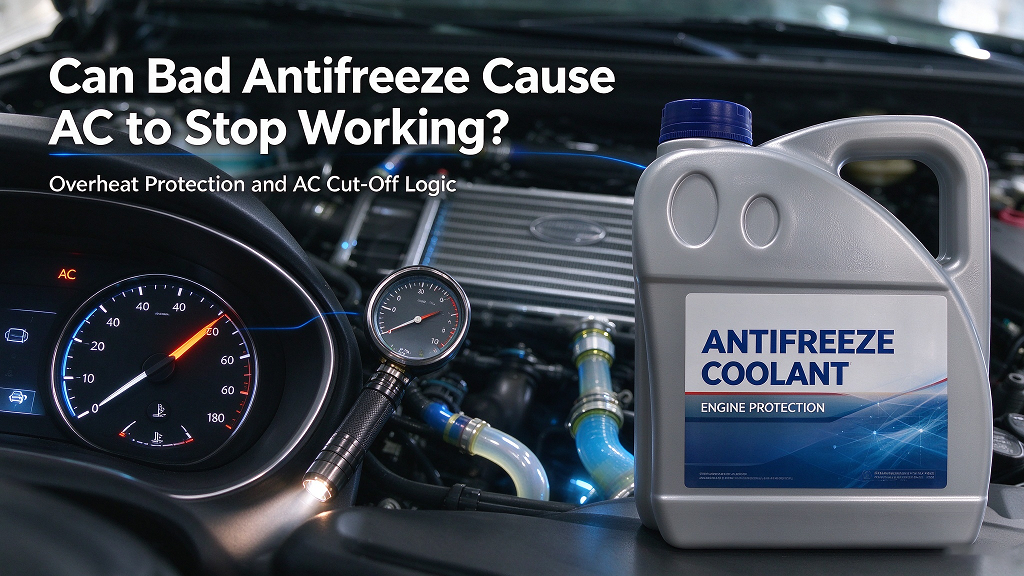
1. Modern vehicle ECU is programmed to shut down the AC compressor automatically to reduce engine load once coolant temperature exceeds safe limits. 2. Degraded, contaminated or incorrectly mixed antifreeze loses heat exchange efficiency and fails to remove engine heat, leading to rising temperature. 3. AC shutdown triggered by bad coolant is an engine safety protection reaction, and AC hardware like compressor and condenser may still be intact. 4. Checking the dashboard temperature gauge is a fast diagnostic method: high temperature together with AC cut points to cooling system issues. 5. Our factory reminds repair shop suppliers to check coolant status first when customers report intermittent AC cut-off complaints.

Does Cold Weather Speed Up Antifreeze Degradation

Does Cold Weather Speed Up Antifreeze Degradation

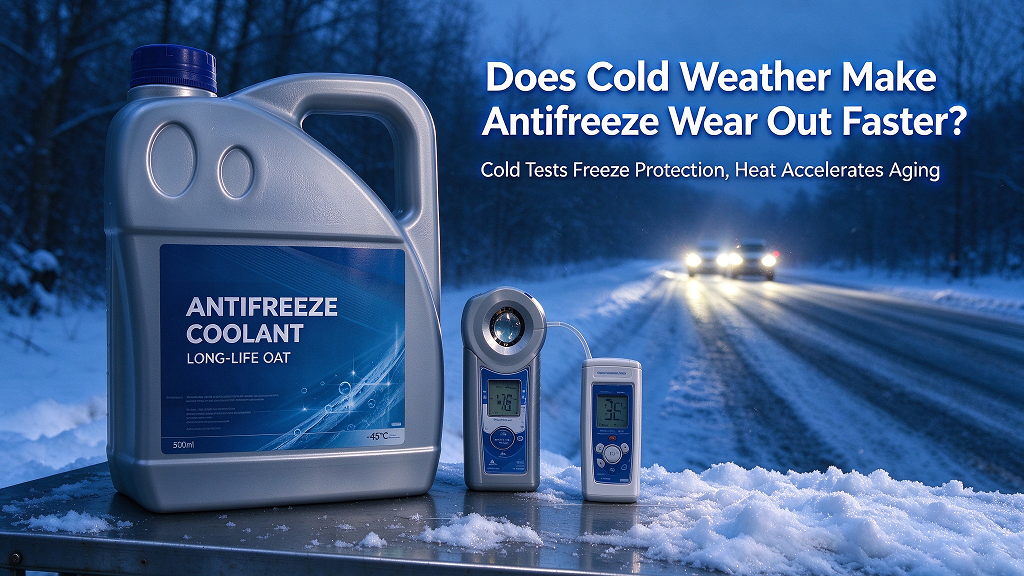
1. High engine temperature and oxidation reaction are the main drivers that consume antifreeze corrosion inhibitors, and consumption speeds up at higher temperatures. 2. Low temperature alone will not break down corrosion inhibitors inside qualified OAT and HOAT antifreeze; the formula stays chemically stable. 3. Cold weather brings indirect risks including freezing from wrong dilution, repeated thermal cycling stress on seals and increased leakage chances. 4. Antifreeze degrades and loses inhibitors much faster in continuously hot tropical regions than in cold climate zones. 5. Our factory develops low-freeze-point long-life antifreeze for extreme cold markets, and suppliers can add freeze point testing services.

Antifreeze vs Coolant: Are They the Same Product

Antifreeze vs Coolant: Are They the Same Product

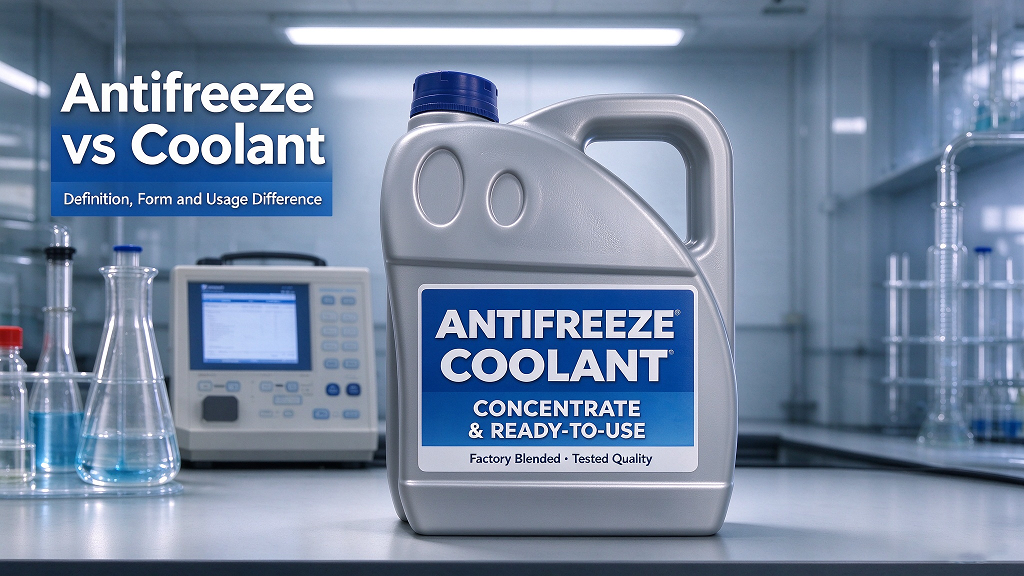
1. In auto parts industry terminology, antifreeze usually refers to undiluted concentrated antifreeze base fluid containing glycol and full corrosion inhibitor packages. 2. Coolant means the finished working liquid that circulates inside the vehicle cooling system and performs heat transfer. 3. Ready-to-use coolant is pre-blended and tested by the manufacturer inside the factory, and end users can pour it directly without mixing. 4. Concentrated antifreeze and finished coolant share identical core functions for freeze, boil and corrosion protection; the only difference is pre-added deionized water. 5. Purchase orders, MSDS documents and product labels must distinguish concentrate and pre-mixed coolant, and suppliers need clear confirmation before ordering.