logo

Why EV Battery Coolant Requires Low Conductivity & What Risks High Conductivity Brings

logo

Published

Nov 10 2026

  • Antifreeze / Coolant
  • Buying Guide

Follow us

why-ev-battery-coolant-requires-low-conductivity-what-risks-high-conductivity-brings

why ev battery coolant needs low conductivity

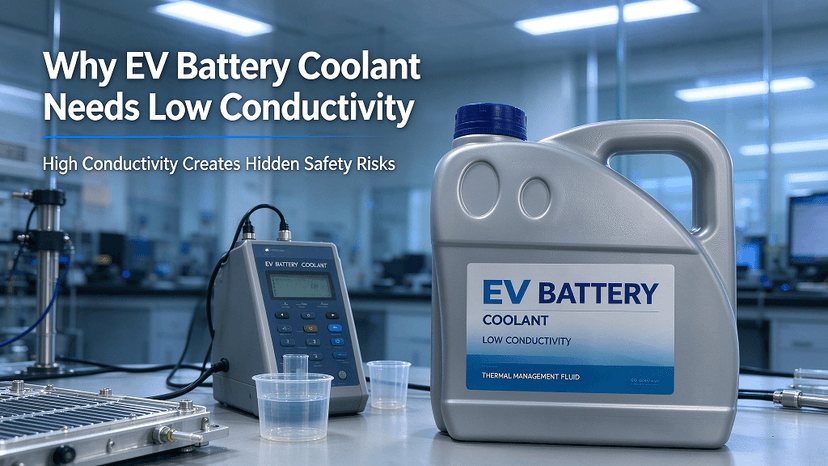
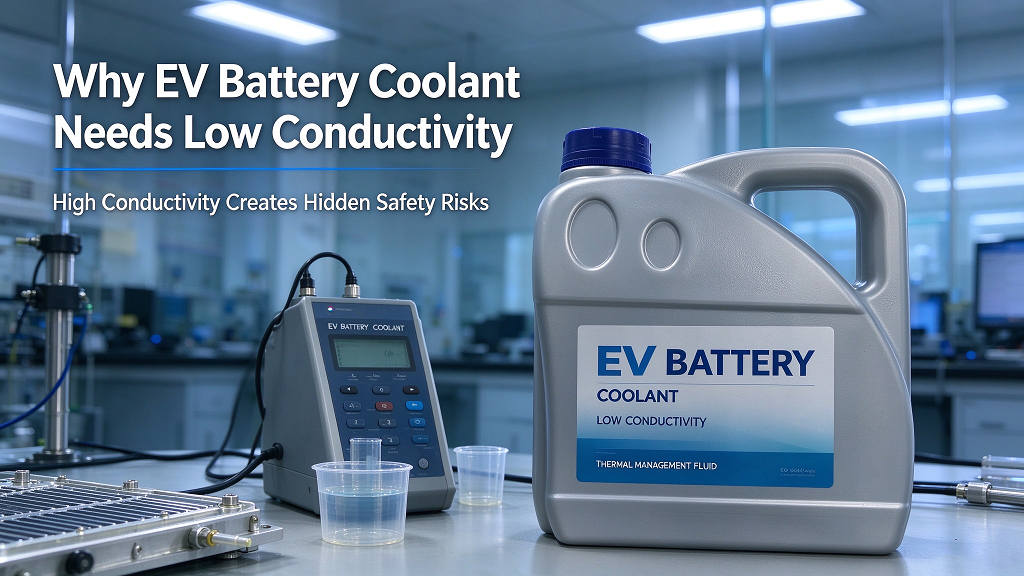
If you are familiar with internal combustion engine antifreeze, you may focus on freezing point, boiling point and anti-corrosion performance. However, for electric vehicle battery cooling systems, low conductivity becomes the top priority safety requirement. Many repair shops and fleet managers mistakenly use regular coolant for EV batteries, ignoring the high-voltage working environment. A professional EV coolant factory develops special formulas to control conductivity strictly for high-voltage battery packs.

Conductivity measures how easily electric current can flow through a liquid. Pure water has very low conductivity, while water mixed with ions, metal particles or chemical impurities becomes conductive. EV battery packs run at hundreds of volts, and the cooling channels wrap closely around battery cells. The coolant directly contacts the sealed cooling plates, so the fluid must not conduct electricity easily.

High conductivity coolant creates severe hidden dangers for EV batteries. When the coolant carries excess ions, it creates a leakage path for high voltage. This may cause electric shock risk for service staff, trigger battery insulation faults, accelerate internal cell aging, and even lead to thermal runaway in extreme cases. Unlike gasoline engine overheating problems, this fault often occurs without obvious warning signs in the early stage.

Multiple factors can push coolant conductivity above the safe threshold. Improper mixing with ordinary antifreeze is the most common mistake. Metal debris from pipeline wear, dust, moisture intrusion and additive breakdown will also release free ions into the fluid. Even if you buy qualified coolant at first, poor storage or improper filling will ruin its low-conductivity property.

Work with your EV coolant supplier to verify conductivity data before bulk purchase. Trusted manufacturer will provide third-party test certificates and batch test data. You should confirm the conductivity range under different temperature conditions, because conductivity value changes as fluid temperature rises. Cheap uncertified EV coolant often cannot maintain stable low conductivity after long circulation.

Routine conductivity testing is a necessary part of EV maintenance. Special conductivity testers are available for workshop use. Technicians can sample the coolant during regular service and compare the reading with the factory specification. Once the value exceeds the upper limit, replace the coolant immediately instead of continuing operation.

FAQ

Q1: What is the safe conductivity range for EV battery coolant?

A: Under 25°C, the standard safe conductivity for fresh EV battery coolant is below 100 μS/cm. Many premium products from professional coolant factories maintain 20–85 μS/cm out of the factory. Once the reading exceeds the OEM threshold, the coolant must be replaced to avoid high-voltage leakage risks.

Q2: Can I test EV coolant conductivity with a regular water quality tester?

A: A regular TDS or water conductivity meter can give a rough reference, but it is not calibrated for glycol-based coolant. You need a dedicated coolant conductivity tester from automotive tool suppliers to get accurate readings for high-voltage EV systems.

Q3: Will low conductivity coolant still protect metal parts from corrosion?

A: Yes. Low conductivity does not mean poor anti-corrosion performance. Professional EV coolant manufacturers select low-ion corrosion inhibitors. These additives form a protective film on aluminum, copper and alloy surfaces without introducing extra conductive ions.

Q4: How often should I check the conductivity of EV battery coolant?

A: For private passenger EVs, annual inspection is recommended. For commercial electric trucks, fleet vehicles and cars with frequent fast charging, test conductivity every 6 months. Even if the vehicle has not reached the replacement mileage, high conductivity means immediate service.

Q5: Does low conductivity coolant cost more than standard antifreeze?

A: Yes, it is generally more expensive. The production process requires high-purity raw materials and strict ion control, which increases manufacturing cost. Reputable supplier will provide batch test reports to prove its stable low conductivity performance.

Q6: Can high conductivity coolant damage the battery BMS system?

A: Definitely. High conductivity fluid may trigger insulation fault alarms, interfere with BMS signal collection, and cause the BMS to cut off power unexpectedly. Long-term operation will permanently damage the BMS circuit board and battery modules.

Welcome to contact GAFLE for more information & cooperation!
peter
ZHEJIANG GAFLE AUTO CHEMICL CO.,LTD
Tel:86-579-8222 1665
Fax:86-579-8246 4690
Cel/Wechart:86-13335993986
E-mail:peter@gafle.net
Web:www.gafle.net
Featured Blogs
How Long Does EV Battery Coolant Last?

How Long Does EV Battery Coolant Last?

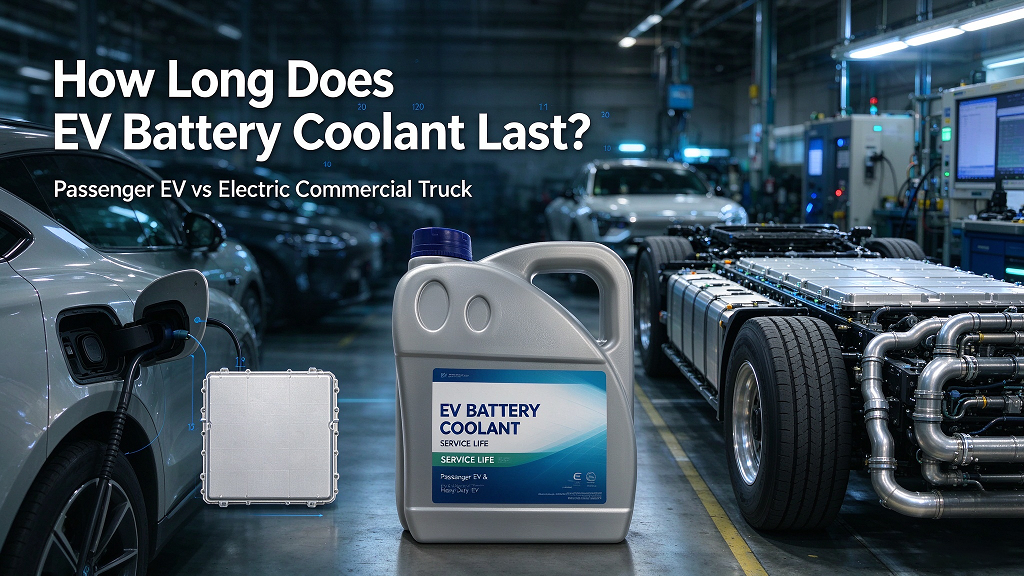
1. Most people know the replacement interval of engine antifreeze, but EV battery coolant service life is often confused, especially between passenger cars and electric trucks. 2. Temperature swings, circulation pressure, sealing condition and battery load all decide how fast EV coolant degrades. 3. Passenger EV coolant has a relatively long service interval with clear monitoring indicators. 4. Electric commercial trucks run under heavy continuous load, so their coolant degrades much faster. 5. Buyers should confirm application scenarios with the coolant manufacturer to pick passenger or heavy-duty EV formulas. 6. EV fleets need sample testing plans instead of only following fixed mileage replacement rules.

Can You Mix Regular Engine Antifreeze With EV Battery Cooling Coolant?

Can You Mix Regular Engine Antifreeze With EV Battery Cooling Coolant?

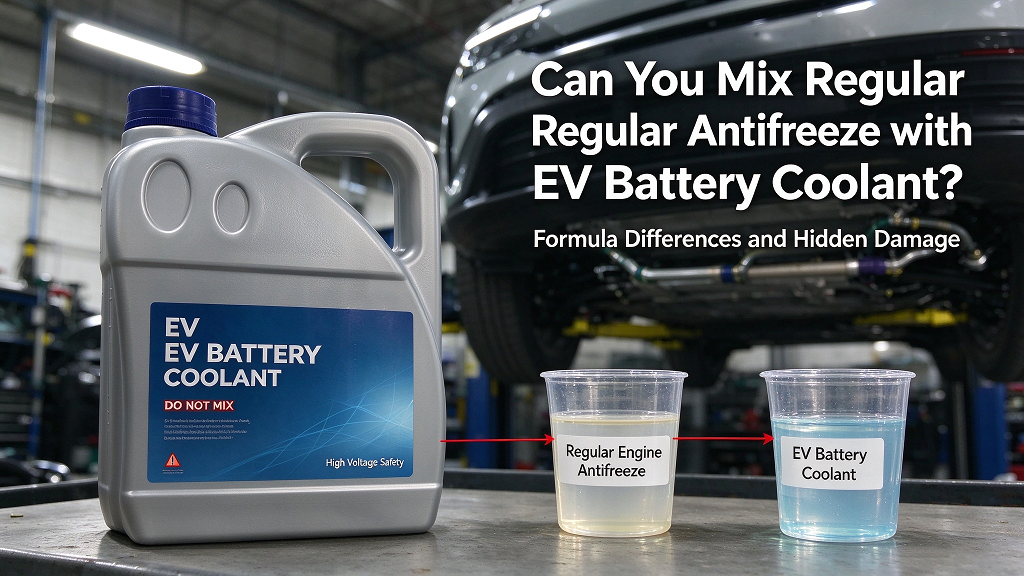
1. Many technicians add regular engine antifreeze to EV battery cooling systems for convenience, which is a dangerous misunderstanding. 2. Traditional engine antifreeze is formulated to handle high combustion temperature and engine metal corrosion. 3. EV battery coolant is engineered for high-voltage environments with strict low conductivity requirements. 4. Mixing the two fluids will cause sharp conductivity rise, sediment clogging, corrosion and battery insulation failure. 5. Distributors and repair shops need separate inventory and buy dedicated EV coolant from a reliable supplier. 6. There is a standard cleaning and replacement procedure if the two coolants are mixed by accident.

Why EV Battery Coolant Requires Low Conductivity & What Risks High Conductivity Brings

Why EV Battery Coolant Requires Low Conductivity & What Risks High Conductivity Brings

1. EV battery coolant differs greatly from traditional antifreeze, and low conductivity is a critical safety indicator that many technicians overlook. 2. Conductivity refers to the fluid’s ability to carry electric current, which has special meaning inside high-voltage EV battery cooling loops. 3. Coolant with high conductivity may trigger electric leakage, short circuit and accelerated battery cell degradation. 4. Contamination, foreign impurities and formula degradation will raise the conductivity of qualified EV coolant over time. 5. When sourcing EV thermal fluid, buyers should ask the coolant manufacturer for official conductivity test reports. 6. Regular conductivity testing during maintenance helps keep the battery cooling system safe and stable.

Can Bad Antifreeze Cause Your Car Air Conditioner To Stop Working

Can Bad Antifreeze Cause Your Car Air Conditioner To Stop Working

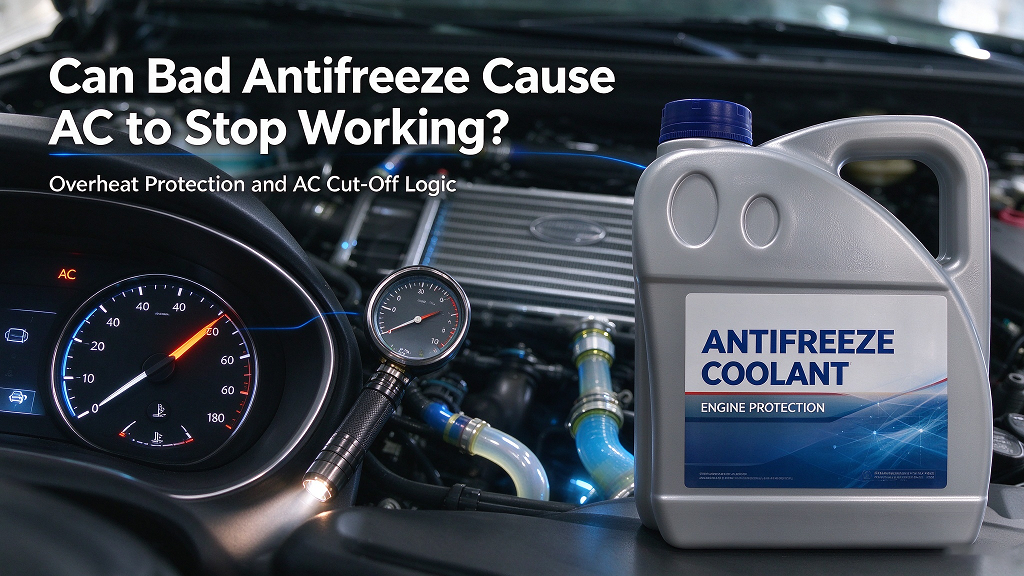
1. Modern vehicle ECU is programmed to shut down the AC compressor automatically to reduce engine load once coolant temperature exceeds safe limits. 2. Degraded, contaminated or incorrectly mixed antifreeze loses heat exchange efficiency and fails to remove engine heat, leading to rising temperature. 3. AC shutdown triggered by bad coolant is an engine safety protection reaction, and AC hardware like compressor and condenser may still be intact. 4. Checking the dashboard temperature gauge is a fast diagnostic method: high temperature together with AC cut points to cooling system issues. 5. Our factory reminds repair shop suppliers to check coolant status first when customers report intermittent AC cut-off complaints.

Does Cold Weather Speed Up Antifreeze Degradation

Does Cold Weather Speed Up Antifreeze Degradation

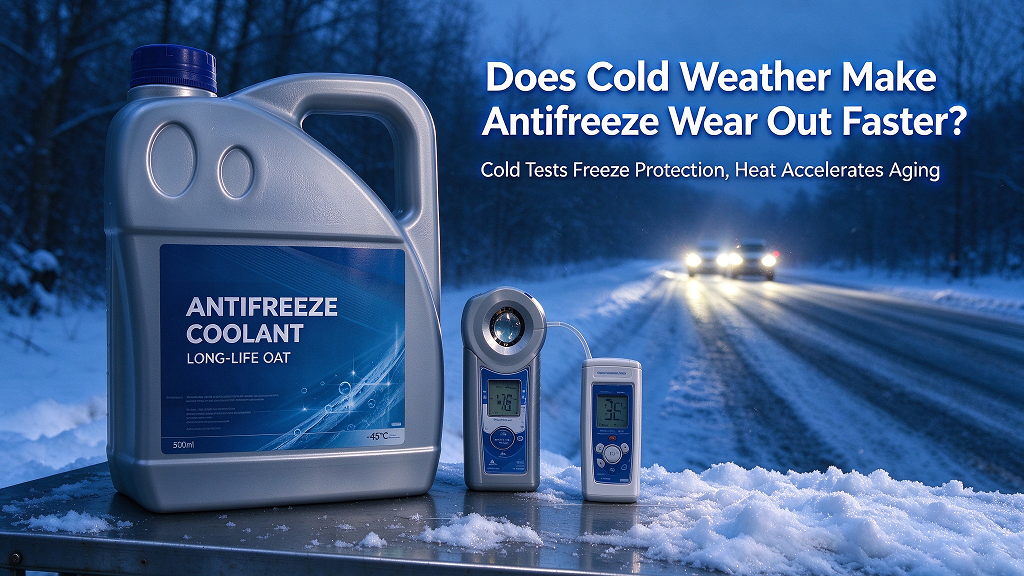
1. High engine temperature and oxidation reaction are the main drivers that consume antifreeze corrosion inhibitors, and consumption speeds up at higher temperatures. 2. Low temperature alone will not break down corrosion inhibitors inside qualified OAT and HOAT antifreeze; the formula stays chemically stable. 3. Cold weather brings indirect risks including freezing from wrong dilution, repeated thermal cycling stress on seals and increased leakage chances. 4. Antifreeze degrades and loses inhibitors much faster in continuously hot tropical regions than in cold climate zones. 5. Our factory develops low-freeze-point long-life antifreeze for extreme cold markets, and suppliers can add freeze point testing services.

Antifreeze vs Coolant: Are They the Same Product

Antifreeze vs Coolant: Are They the Same Product

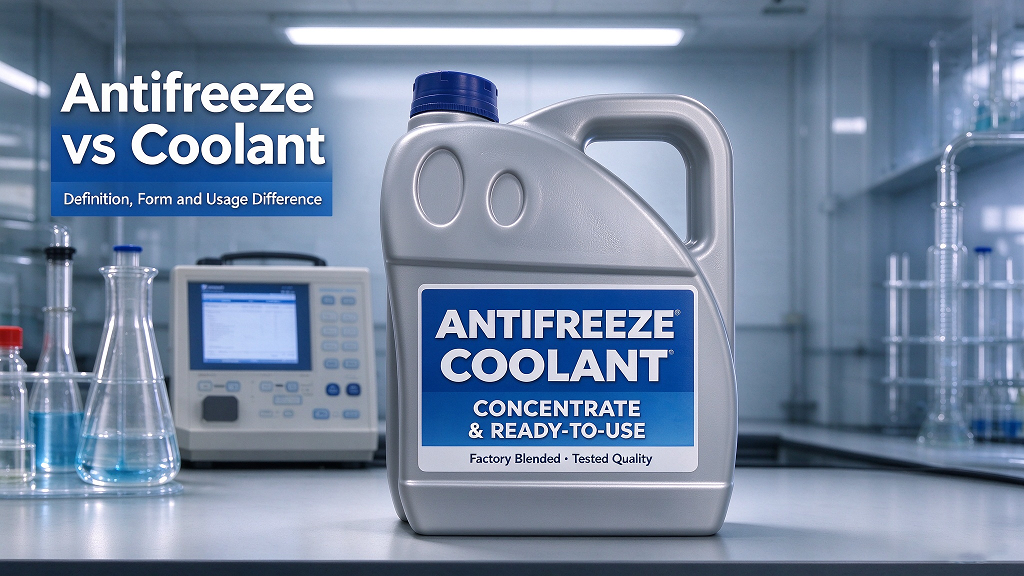
1. In auto parts industry terminology, antifreeze usually refers to undiluted concentrated antifreeze base fluid containing glycol and full corrosion inhibitor packages. 2. Coolant means the finished working liquid that circulates inside the vehicle cooling system and performs heat transfer. 3. Ready-to-use coolant is pre-blended and tested by the manufacturer inside the factory, and end users can pour it directly without mixing. 4. Concentrated antifreeze and finished coolant share identical core functions for freeze, boil and corrosion protection; the only difference is pre-added deionized water. 5. Purchase orders, MSDS documents and product labels must distinguish concentrate and pre-mixed coolant, and suppliers need clear confirmation before ordering.