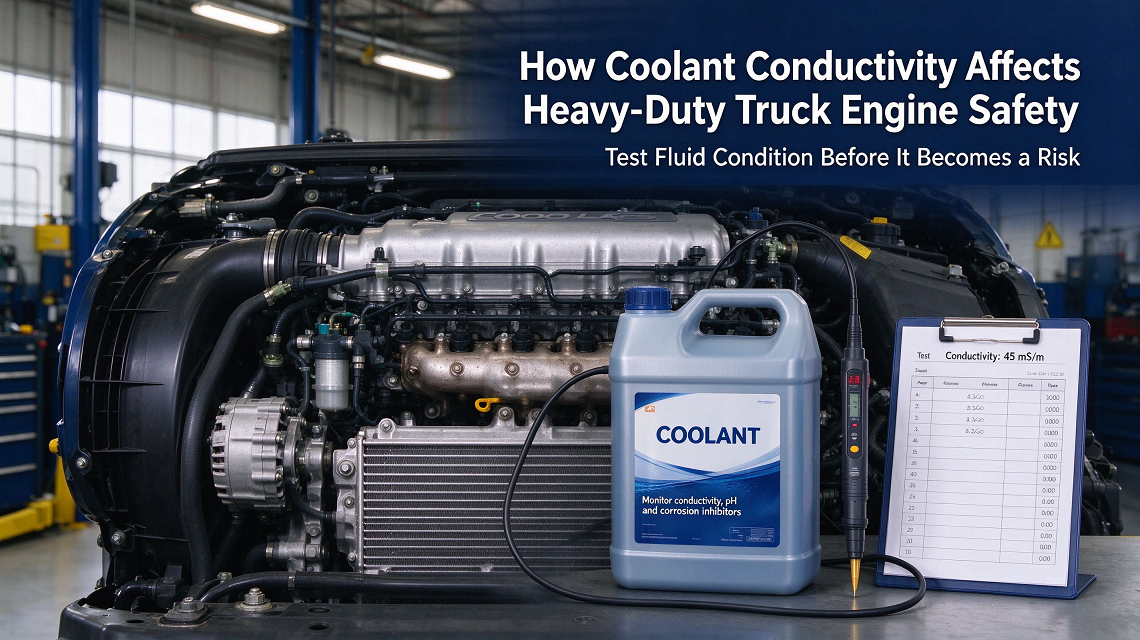
Diagnostic Blind Spots in Commercial Diesel Cooling Circuits
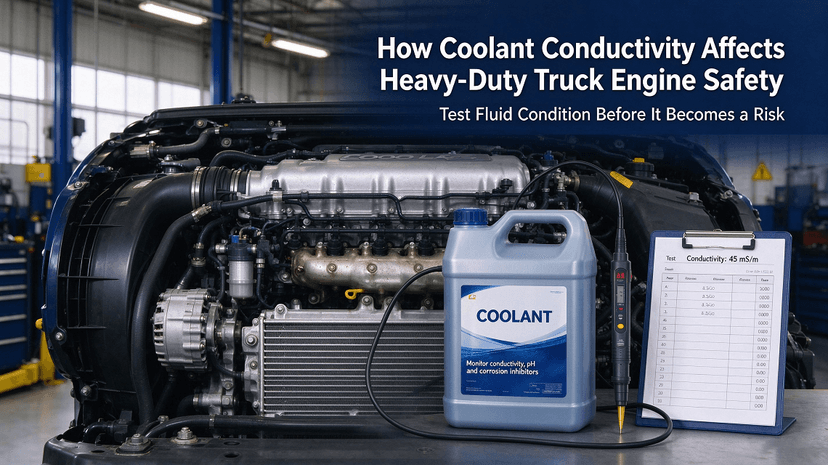
Fleet maintenance managers and commercial engine rebuilders routinely check refractometer freeze points and chemical test strips, yet ionic fluid dynamics within the cooling jacket often escape scrutiny until cavitation or pitting ruins a cylinder sleeve. Implementing a structured coolant conductivity test heavy duty truck technicians can execute during standard service intervals provides an immediate diagnostic baseline. This early-stage check detects additive drop-out, oxidation, and mineral contamination before thermal alarms sound.
Electrochemical Hazards in High-Stress Diesel Circuits
Unchecked ionic proliferation creates an environment primed for electrolysis. Documented high conductivity coolant risks extend far beyond minor scale formation; elevated ion mobility allows stray electrical currents to jump between cast-iron blocks, brass fittings, and aluminum heat-exchanger tubes. When an electrical ground path degrades anywhere on the chassis, the circulating thermal mixture becomes a convenient conductor. Over thousands of operating hours, this electrolytic pathway strips metal ions directly from cylinder liners and thin radiator tube walls, directly undermining long-term engine safety and driving unbudgeted shop downtime.
Aligning Shop Practice with a Supplier Coolant Conductivity Standard
Procurement teams frequently assume that all extended-life formulations behave identically out of the tote. In practice, virgin chemistry establishes an initial conductance baseline due to dissolved carboxylate salts and corrosion inhibitors. Establishing and cross-checking a formal supplier coolant conductivity standard provides maintenance personnel with an objective ceiling for fluid retirement.
While virgin Organic Acid Technology (OAT) formulations demonstrate a known baseline conductance (frequently measured in hundreds of microSiemens per centimeter), field samples that exceed manufacturer thresholds indicate external contamination. The most common culprit is well water or unconditioned municipal tap water introduced during top-offs, introducing hard minerals like calcium and chloride. These dissolved solids accelerate thermal breakdown, promote abrasive precipitate formation around water pump seals, and skew laboratory fluid readings.
Measurement Protocol: Portable Meters vs. Stray Voltage Checks
Evaluating fluid electrical properties in a terminal bay does not require an analytical chemistry laboratory, but it does demand proper instrumentation. Relying on basic litmus strips or visual clarity is a recipe for missed warnings.
Technicians should utilize a digital microSiemens meter with automatic temperature adjustment. A reliable workflow involves:
- Draw fluid from the expansion reservoir: Avoid taking samples from bottom petcocks where dense sludge or settled particulates create artificially high resistance readings.
- Standardize fluid temperatures: Because ion velocity accelerates under thermal loads, calibrate readings to 20°C–25°C or ensure your instrument's built-in thermistor compensates accurately.
- Grounding verification: Place one multimeter lead into the reservoir liquid and the other on the clean engine block. Any measured DC voltage above 0.1 to 0.3 volts confirms stray current grounding faults rather than pure chemical contamination.
Incorporating this routine coolant conductivity test heavy duty truck fleets require into scheduled preventative maintenance schedules prevents catastrophic component erosion.
Operational Strategies for Fleet Supervisors
Preventative fluid management requires disciplined bay practices. Purchasing premixed 50/50 drums with deionized water eliminates the human error of shop mechanics using garden hoses for top-offs. Furthermore, a single degraded battery strap or corroded alternator ground can ruin fresh fluid in a modern heavy-duty truck within weeks. Training lube technicians to monitor fluid conductance alongside routine oil sampling guarantees overall engine safety and protects warranty recovery claims when component failures occur.
Frequently Asked Questions
Can a standard optical refractometer measure electrical charge?
No. A refractometer measures light refraction to calculate the ratio of glycol to water, determining freeze and boil protection. It cannot detect ionic salt saturation, dissolved metal ions, or electrical conductance.
What causes rapid conductance spikes in highway tractors?
Spikes typically stem from two sources: unauthorized top-offs with mineral-rich tap water or internal exhaust-gas leakage through an EGR cooler weld, which acidifies the fluid with nitrates and sulfate ions.
Should fluid with high conductance always be replaced?
If stray current tests verify that the reading is chemical rather than electrical, elevated conductance signals additive breakdown and dissolved iron or aluminum. Flushing and recharging the system is far less expensive than replacing an eroded radiator or perforated liner.
Developing an Inspection Protocol for Your Fleet
Integrating fluid conductance monitoring into your maintenance program closes the gap between standard chemical spot-checks and expensive post-mortem engine repairs. Sourcing managers should request clear conductance specifications from fluid manufacturers, while maintenance superintendents must equip shop bays with calibrated meters and establish definite drain-and-flush thresholds. Taking control of fluid electrical health safeguards capital assets, extends service life, and eliminates costly roadside downtime.
Welcome to contact GAFLE for more information & cooperation!
peter
ZHEJIANG GAFLE AUTO CHEMICL CO.,LTD
Tel:86-579-8222 1665
Fax:86-579-8246 4690
Cel/Wechart:86-13335993986
E-mail:peter@gafle.net
Web:www.gafle.net