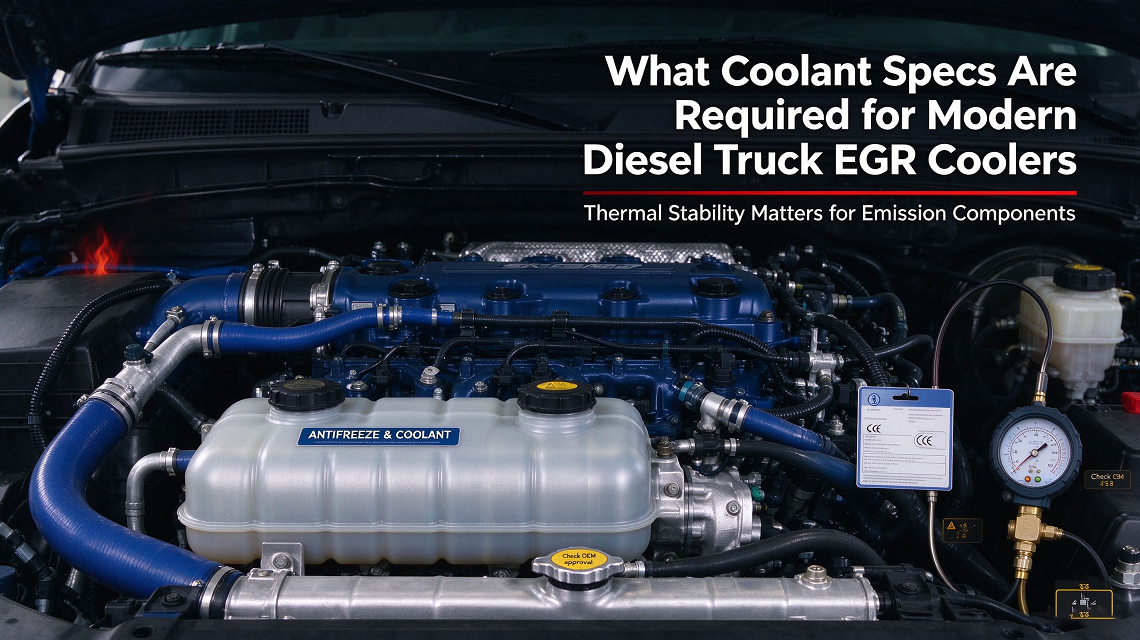
Why Coolant Chemistry Dictates EGR Cooler Lifespans
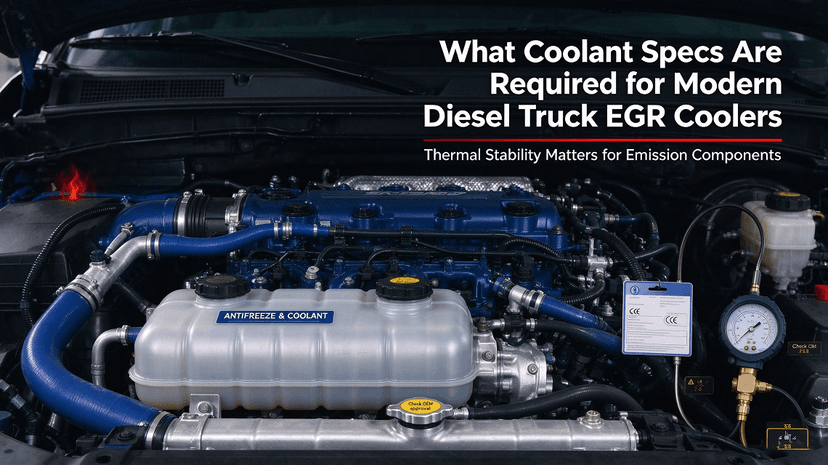
Exhaust gas recirculation (EGR) coolers are among the most thermally stressed heat exchangers in commercial powertrain and stationary power generation. Operating downstream of the exhaust manifold, these compact shell-and-tube or stacked-plate units bring raw exhaust gases exceeding 600°C into direct contact with stainless steel passages, separated by mere millimeters from circulating engine fluid. If an operator relies on generic engine formulations rather than a validated coolant specification for diesel EGR cooler assemblies, failure is not a matter of 'if'—it is simply a matter of runtime.
Thermal cracking, localized nucleate boiling, and premature additive depletion account for the majority of unbudgeted core replacements. The issue rarely stems from mechanical fatigue alone. More often, it traces back to an incompatible chemical package running through the engine's cooling system, degrading heat transfer rates precisely where local fluid temperatures spike past safe saturation margins.
The Real Chemistry: OAT, NOAT, and Hybrid Formulations
Not all extended-life formulations behave identically under localized boiling conditions. The choice of fluid dictates both core corrosion prevention and heat-shedding efficiency.
Organic Acid Technology (OAT)
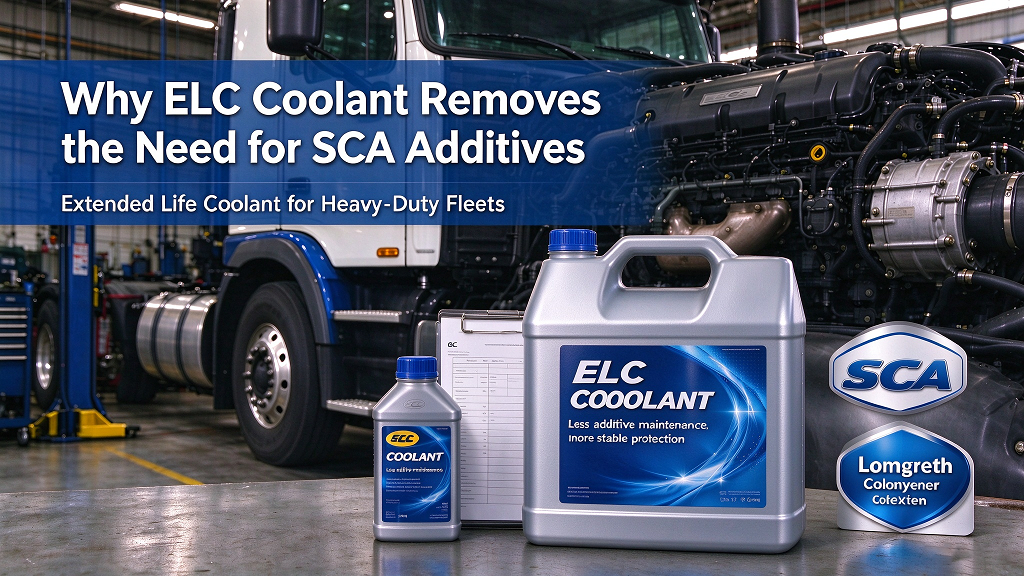
Pure OAT coolants rely on organic carboxylate inhibitors (such as sebacate and 2-ethylhexanoic acid) to protect metallic surfaces. They provide exceptional longevity—often rated up to 1,000,000 km or 12,000 engine hours without Supplemental Coolant Additives (SCAs). For stainless steel and aluminum brazed interfaces common in modern EGR cooler designs, silicate-free OAT avoids the silica drop-out that frequently clogs narrow coolant micro-channels under severe exhaust cycling.
Nitrated Organic Acid Technology (NOAT)
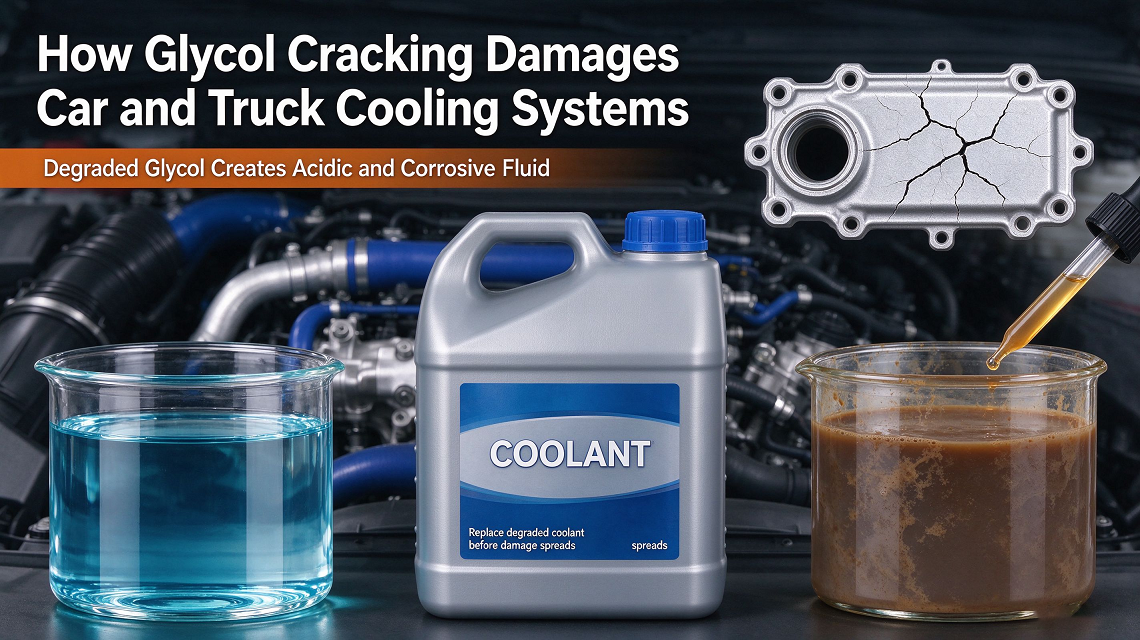
A standard throughout heavy transport, NOAT pairs organic carboxylates with nitrites (and occasionally molybdates) to guard wet-sleeve liners against cavitation pitting. While effective for traditional block architecture, high thermal flux within an antifreeze compatible with EGR cooling system requirements can cause rapid nitrite oxidation. When nitrites degrade into nitrates in the vicinity of extreme heat zones, localized pH drops, elevating the risk of localized acidic pitting on stainless steel tubes.
Hybrid OAT (HOAT)
HOAT blends low levels of silicates or borates with organic acids. While offering fast-acting surface passivity, traditional HOAT must be monitored stringently. If fluid temperatures boil locally inside the cooler jacket, silicates can gel or drop out of suspension, baking onto tube walls as an insulating glass-like scale that accelerates core cracking.
Comparative Engineering Parameters
| Parameter | Conventional IAT (Low Silicate) | Heavy-Duty NOAT | Modern Extended-Life OAT |
|---|---|---|---|
| ASTM Specification | ASTM D4985 / D6210 (with SCA) | ASTM D6210 | ASTM D6210 / D7583 |
| Thermal Stability Range | Moderate (< 108°C localized) | Good (up to ~115°C localized) | Superior (> 120°C localized) |
| Scale / Deposition Tendency | High (silicate dropout) | Moderate (nitrite turnover) | Extremely Low (carboxylate passivity) |
| Core Tube Compatibility | Prone to fouling | Requires nitrite monitoring | Preferred for 316L/304 Stainless |
Mechanism of Failure: Localized Boiling and Thermal Fatigue
When selecting a heavy duty coolant for EGR protection, the central operational vulnerability is localized film boiling. The exhaust enters the core at intense velocity and temperature. Coolant flow along the inlet tube sheets must absorb this spike without vapor blanketing.
If the fluid has an inadequate boiling point elevation or carries depleted reserve alkalinity, tiny vapor bubbles generate along the inner tube walls. Steam insulates roughly thirty times worse than liquid coolant. The metal beneath that vapor blanket overheats instantly, expands, and then gets quenched as liquid washes back over the surface. Over thousands of operational duty cycles, this cyclic thermal shock induces micro-fissures, warping brazed seams and venting acidic exhaust condensate straight into the cooling circuit.
Key Selection Criteria for Specifiers and Maintenance Leads
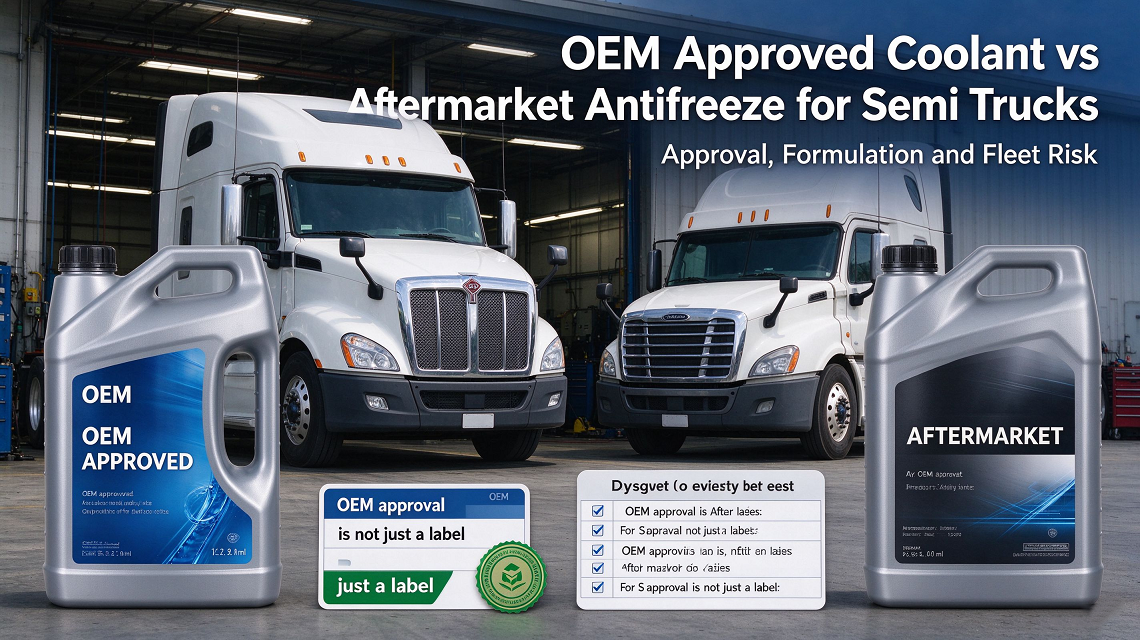
Specifying maintenance products for mixed fleet operations or heavy stationary diesel plants demands clear technical verification beyond the product drum label:
- Certified ASTM Compliance: Look for verified compliance with ASTM D6210 (fully formulated heavy-duty ethylene glycol) rather than passenger-car specs like ASTM D3306.
- Phosphate- and Silicate-Free Status: Hard water minerals react with phosphates to create calcium phosphate scale; silicates polymerize under extreme thermal stress. Both must remain near zero in high-flux heat exchangers.
- Cavitation vs. Oxidation Trade-offs: If your engine architecture requires cavitation protection for wet liners, ensure the formulation uses stabilized nitrite chemistries or fully organic nitrite-free cavitation inhibitors that do not break down into corrosive salts at the cooler face.
- Base Fluid Purity: Coolant concentrate mixed on-site must only utilize deionized or reverse-osmosis water (under 100 ppm total hardness, under 25 ppm chlorides). Ordinary tap water renders even the best inhibitor package useless within months.
Practical Buyer Advice and Field Cautions
A common field error is topping off a nitrite-free OAT system with a conventional NOAT or hybrid product. Diluting an OAT formulation past 15-20% with mismatched chemistry disrupts the delicate chemical equilibrium, destabilizing both packages and promoting rapid fall-out in the hottest core areas.
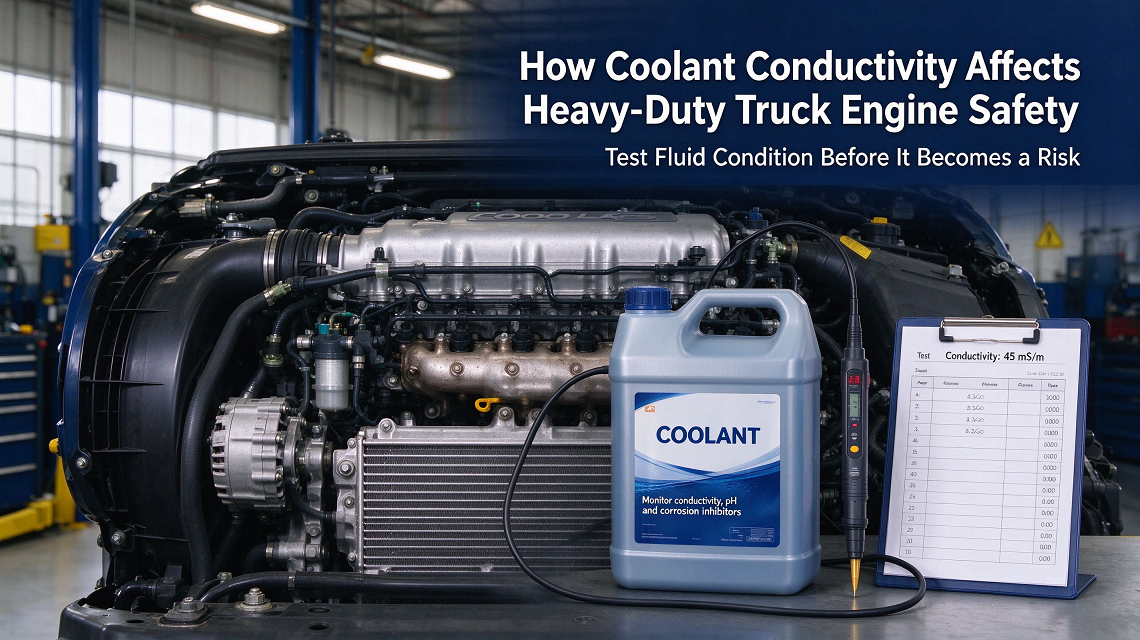
Furthermore, never gauge fluid condition by color alone. Dye additives are cosmetic and carry zero industry standardization. A technician cannot distinguish between a silicate-heavy formula and a pure carboxylate solution merely because both appear yellow or red in an inspection sight glass. Test for freeze point (refractometer only; hydrometers are notoriously unreliable for modern HD mixtures), pH level (maintaining 8.0 to 9.5), and total dissolved solids (TDS).
Frequently Asked Questions
Can I run automotive-grade antifreeze in a diesel engine with an EGR cooler?
No. Light-duty automotive formulas lack the heat-flux stabilization and liner pitting inhibitors required by heavy-duty diesel engines. Using passenger car antifreeze accelerates localized boiling and risks cracking the thin-wall stainless tubes in the cooler.
How often should EGR cooler coolant be tested?
In heavy industrial or long-haul trucking applications, test the fluid condition at every oil drain interval or quarterly. Even 'million-mile' fluids need regular checks for pH drift, freeze protection, and hydrocarbon contamination that indicates an internal core leak.
What are the symptoms of an internal EGR cooler rupture?
Unexplained fluid loss without external leaks, white exhaust vapor under load, sticky black carbon residue in the intake manifold, or sudden bubbling and pressure buildup in the expansion tank typically point to exhaust gas breaching the cooling circuit.
Welcome to contact GAFLE for more information & cooperation!
peter
ZHEJIANG GAFLE AUTO CHEMICL CO.,LTD
Tel:86-579-8222 1665
Fax:86-579-8246 4690
Cel/Wechart:86-13335993986
E-mail:peter@gafle.net
Web:www.gafle.net