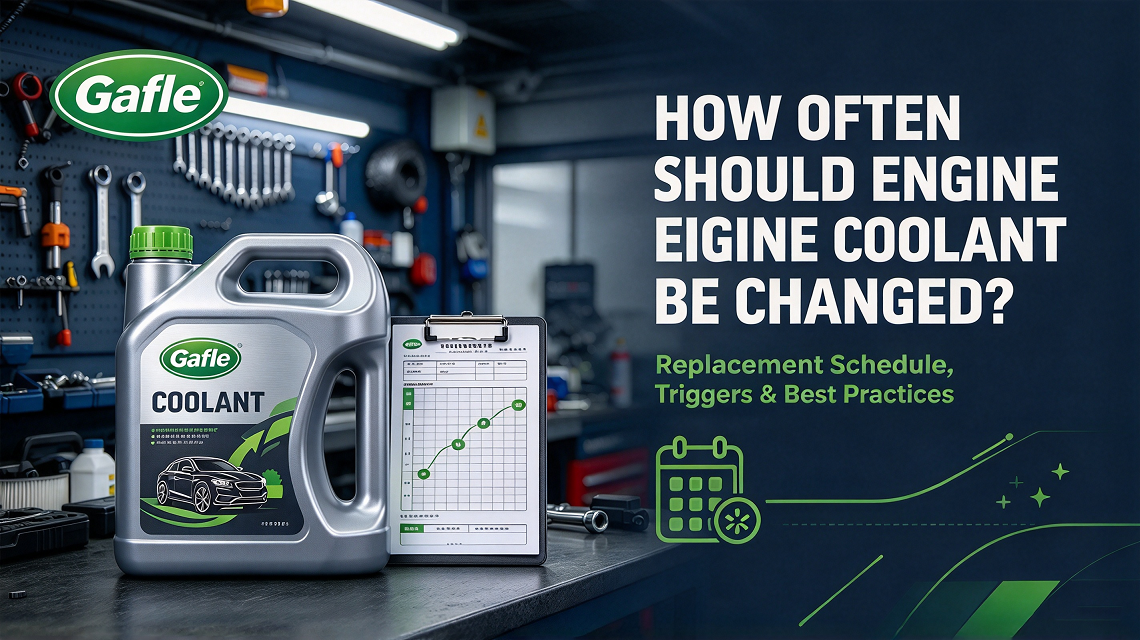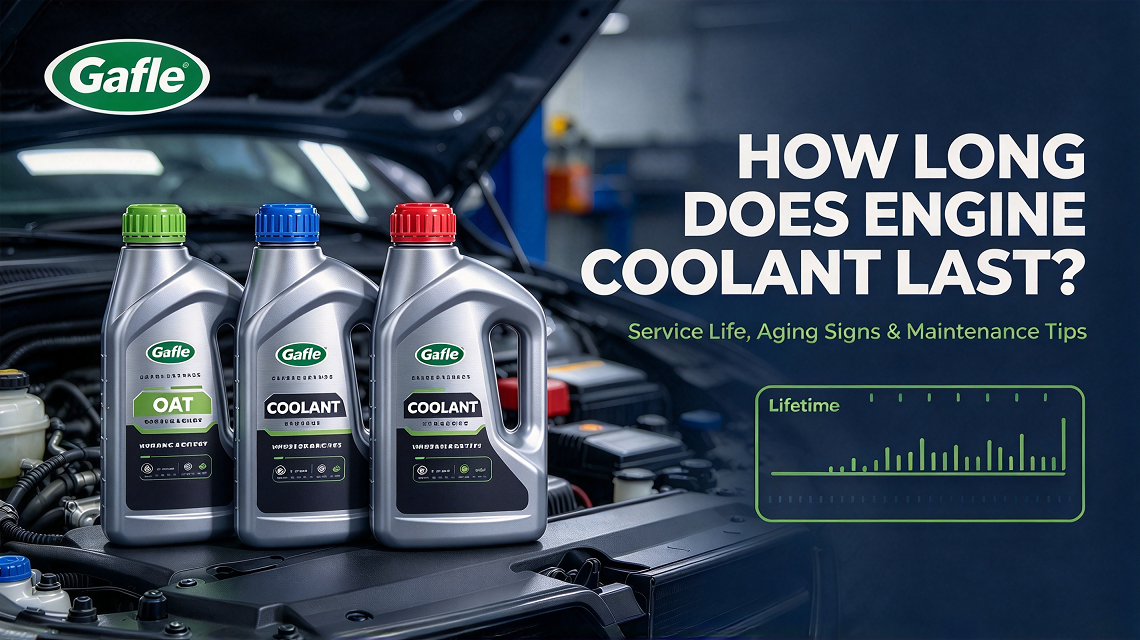
A widespread bad habit among vehicle owners is only changing coolant after overheating or cooling system failure. Many drivers believe coolant only needs topping up, not scheduled replacement. This mindset leads to slow, hidden corrosion inside engines that eventually causes expensive breakdowns. Every vehicle OEM publishes two maintenance schedules for coolant: one for normal service conditions and one for severe service conditions. As a garage owner or fleet manager, you need to apply the correct interval for each customer’s driving pattern.
Normal service intervals depend directly on the coolant formula installed in the vehicle. For older IAT inorganic coolant, normal change interval is every 2 years or 30,000 miles. HOAT hybrid coolant is scheduled for replacement every 5 years or 100,000 miles. Modern long-life OAT coolant, the most common specification for new passenger cars, follows a normal interval of 7 years or 150,000 miles. Always cross-reference the vehicle owner’s manual instead of applying a universal rule for every car. Some Asian, European and American brands have their own custom long-life requirements.
Severe service conditions require cutting the coolant change interval nearly in half. Severe service includes repeated short trips under 5 miles, heavy load and towing, constant stop-and-go city traffic, driving in dusty or extremely hot climates, and regular off-road use. In these cases, heat stress, moisture buildup and contamination happen far faster. For example, an OAT coolant rated for 150,000 miles under normal driving may need replacement at 75,000 miles if the truck tows heavy loads every day. This rule is extremely important for commercial fleet maintenance.
There is a clear difference between a simple drain-and-fill and a full cooling system flush. A drain and fill only removes coolant that flows out from the drain plug, leaving old contaminated fluid trapped inside radiators, heater cores and small cooling passages. This method is suitable for regular scheduled maintenance when the coolant condition is still acceptable. A full power flush pushes cleaning fluid through the entire closed loop to remove sediment, sludge and old coolant residue. A full flush is required if coolant is heavily contaminated, muddy, or if the cooling system has suffered internal corrosion.
Coolant replacement is required after cooling system component repairs or unexpected leaks. If you repair a leaking radiator, replace a water pump, fix a blown head gasket or replace heater hoses, air and contaminants enter the closed loop. Even if the coolant is relatively new, mixing trapped air and debris will accelerate additive failure. Most professional technicians will perform a flush and refill with fresh coolant after these major cooling system repairs.
Coolant service should never be an isolated single-step job. While draining or flushing coolant, inspect all related components. Check rubber hoses for cracking, swelling or soft spots. Inspect gaskets, clamps and water pump weep holes for early signs of leakage. Test radiator cap pressure, because a faulty cap ruins cooling system pressure control and accelerates coolant boiling and aging. Catching weak hoses during coolant service prevents repeat breakdowns for your customers.
Many auto shops struggle to explain coolant maintenance value to price-sensitive customers. Vehicle owners often see coolant service as an unnecessary extra expense. You can explain it simply: oil protects moving metal parts inside the engine, while coolant protects the whole cooling system from corrosion and overheating. Skipping coolant replacement saves small money now, but creates radiator, water pump and engine damage that costs thousands of dollars later. Showing test strip results to customers is a very effective way to prove coolant degradation.
Common coolant maintenance mistakes create repeated problems. The most frequent mistake is continuous topping-up instead of scheduled full replacement. Adding fresh coolant to heavily aged fluid cannot restore the depleted inhibitor package. Mixing incompatible coolant chemistries is another serious error; mixing IAT and OAT can form sludge and clog the cooling system. Some inexperienced users also dilute coolant with plain tap water, introducing mineral deposits and hard-water scale.
FAQ
Q1: Can I just top up coolant forever instead of changing it fully?
A1: No. Topping up only adds small volumes of new fluid. The bulk of old coolant with depleted inhibitors stays inside the system, corrosion risk remains.
Q2: What happens if I ignore the coolant change interval?
A2: Additives wear out, corrosion and scale build up, leading to clogged radiators, water pump failure, persistent overheating and even engine damage.
Q3: How do I know if a customer’s driving counts as severe service?
A3: Check if they tow loads, drive mostly short trips, work in hot dusty areas, or idle frequently. If yes, apply the shorter severe-service interval.
Q4: Is a power flush always better than drain and fill?
A4: No. Flushing can dislodge heavy sludge that blocks narrow passages in neglected radiators. Drain and fill is safer for well-maintained systems on schedule.
Q5: Do electric vehicles also need scheduled coolant changes?
A5: Yes. EV thermal coolant also has additive depletion cycles and requires periodic replacement, following the OEM maintenance schedule.
Q6: If coolant still looks clean, can I delay replacement?
A6: Visual look is not reliable. Follow the schedule or perform a reserve alkalinity test to confirm condition.
Q7: Can I change coolant myself at home?
A7: It is possible for skilled DIY users, but air trapping is a common risk. Air pockets cause overheating, so professional bleeding is recommended.
Q8: Does coolant color tell me when it needs to be replaced?
A8: No, dye color is only for identification, it does not indicate remaining protective life.
Welcome to contact GAFLE for more information & cooperation!
peter
ZHEJIANG GAFLE AUTO CHEMICL CO.,LTD
Tel:86-579-8222 1665
Fax:86-579-8246 4690
Cel/Wechart:86-13335993986
E-mail:peter@gafle.net
Web:www.gafle.net