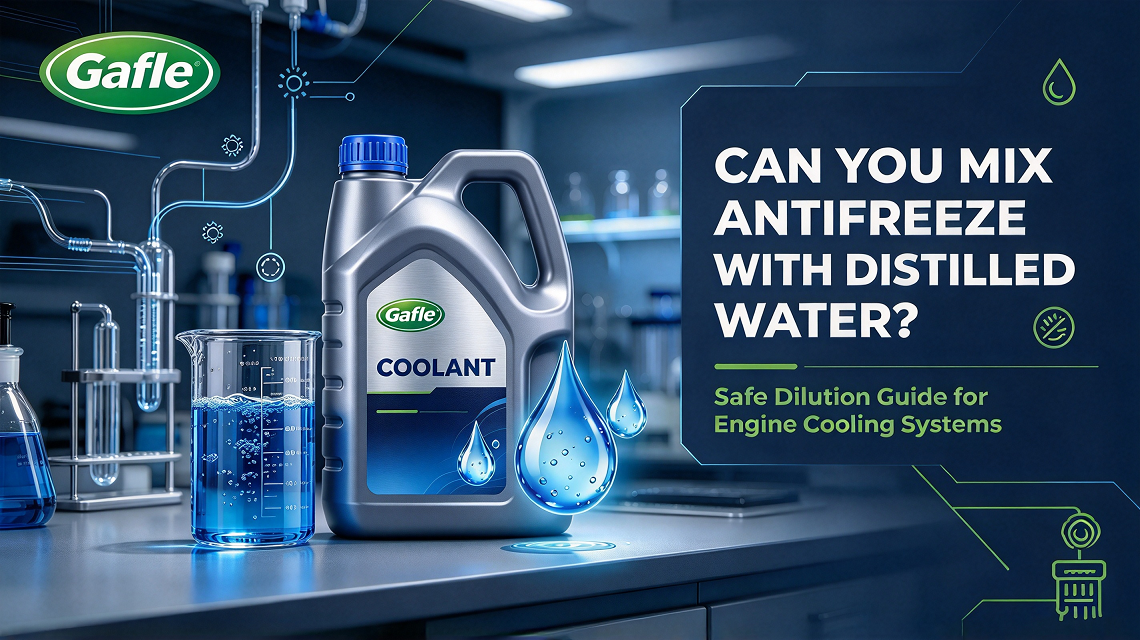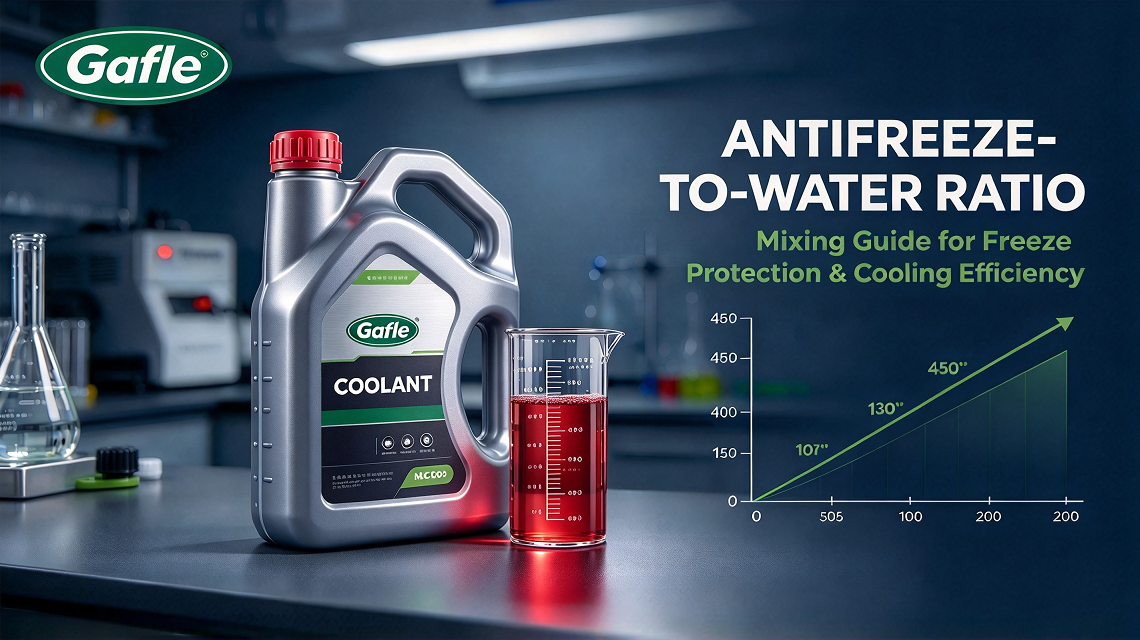
Every bulk coolant buyer faces a fundamental purchasing choice: order ready-to-use 50/50 pre-mixed coolant, or buy concentrated antifreeze and mix it locally. This decision impacts your shipping expense, warehouse space, staff workload, customer risk and profit margin. There is no universal “better” product. The right option depends entirely on your business model, customer groups, local climate range and team technical capability. Many new wholesalers make the wrong choice and lose money or receive customer complaints because of this selection.
50/50 pre-mixed coolant is diluted at the factory with high-purity deionized water before packaging. The manufacturer controls the mixing process precisely. The fluid comes ready for pouring straight into cooling systems. No measuring, no water preparation, no refractometer testing required on your side. Gafle pre-mixed coolant follows the standard balanced 50% glycol formula, consistent inhibitor concentration and stable freeze point out of the box.
The biggest advantage of pre-mixed coolant is elimination of human mixing error. New technicians, DIY retail buyers and small roadside shops often get ratio wrong when mixing concentrated coolant. Too much water creates freeze failures; too much glycol causes overheating. Pre-mixed coolant removes this variable. It is perfect for small retail sales, walk-in DIY customers and small garages without dedicated mixing stations or trained staff. Its downsides are logistics related: over half of the jug weight is pure water. Shipping water internationally or over long land transport is expensive. It takes up more pallet space in your warehouse and inside shipping containers. You also cannot adjust freeze protection for extreme cold or warm regions.
Concentrated antifreeze contains only the full-strength coolant formula, with zero added water. You or your customer adds distilled/deionized water on-site to reach the target ratio. For wholesale exporters and large fleet operators, concentrated coolant delivers major cost benefits. Since water is added locally after delivery, you only pay freight for the active chemical product, not heavy water. One barrel of concentrated coolant can make far more finished coolant after dilution. It gives full flexibility: mix 40/60 for warm markets, 50/50 for temperate areas, or 60/40 for frigid cold zones according to local weather. The main downside is operational risk. Your team or end customers must have clean deionized water, accurate measuring tools, refractometers and proper training. Poor mixing or bad water quality ruins the coolant performance.
Container shipping efficiency is a huge factor for cross-border coolant traders. A 20ft container holds much more usable coolant volume if you ship concentrated product, instead of pre-mixed. Pre-mixed coolant wastes valuable container space on water weight, pushing up per-unit landed cost for overseas buyers. This is why most large industrial importers and regional distributors prefer concentrated antifreeze. Pre-mixed coolant works best for local domestic retail distribution with short delivery distances.
We can match product type to your customer profile. If your main clients are individual car owners and small repair shops with limited technical support, stock pre-mixed 50/50 coolant to reduce support tickets and warranty issues. If you serve large fleets, trucking companies and professional workshops with trained technicians, concentrated coolant delivers higher margin and flexible climate tuning. If you export to multiple countries with very different winter temperatures, concentrated antifreeze is the smarter inventory choice.
Shelf life also differs between these two product lines, as we covered in our expiry guide. Concentrated coolant typically has a 5-year sealed shelf life, while factory pre-mixed 50/50 coolant has a 3-year shelf life because water inside slowly accelerates additive hydrolysis. This point must go into your inventory planning.
A common misconception claims concentrated coolant is higher quality, and pre-mixed coolant is diluted “weaker” product. This is false. The chemical inhibitor package and glycol raw material quality are identical for matching Gafle formula lines. The only difference is whether dilution happens at the factory or at your workshop. Quality depends on formula grade, not whether it arrives pre-mixed.
FAQ
Q1: Is pre-mixed coolant lower quality than concentrated antifreeze?
A1: No. The raw coolant formula is the same. Factory pre-mixed coolant only has deionized water added under controlled factory processes.
Q2: Which one saves more money for bulk export business?
A2: Concentrated antifreeze saves significant ocean freight cost, because you do not ship heavy water across borders.
Q3: Can I dilute pre-mixed 50/50 coolant further with extra water?
A3: Not recommended. It will dilute corrosion inhibitors below the safe minimum concentration and raise freezing point.
Q4: Do I still need a refractometer if I buy factory pre-mixed coolant?
A4: Normally not required for new sealed stock. It is still useful to test coolant recovered from customer vehicles.
Q5: What risk comes with selling concentrated coolant to untrained DIY customers?
A5: High risk of incorrect mixing, using tap water, freeze damage and overheating claims. Pre-mixed is safer for untrained end users.
Q6: Can I mix concentrated coolant and pre-mixed coolant together?
A6: Only if they are the identical formula (same OAT/HOAT/IAT chemistry). Mixing different chemistries can create sediment.
Q7: Does pre-mixed coolant have a shorter shelf life?
A7: Yes, standard 50/50 pre-mixed coolant has shorter shelf life than sealed concentrated coolant.
Welcome to contact GAFLE for more information & cooperation!
peter
ZHEJIANG GAFLE AUTO CHEMICL CO.,LTD
Tel:86-579-8222 1665
Fax:86-579-8246 4690
Cel/Wechart:86-13335993986
E-mail:peter@gafle.net
Web:www.gafle.net