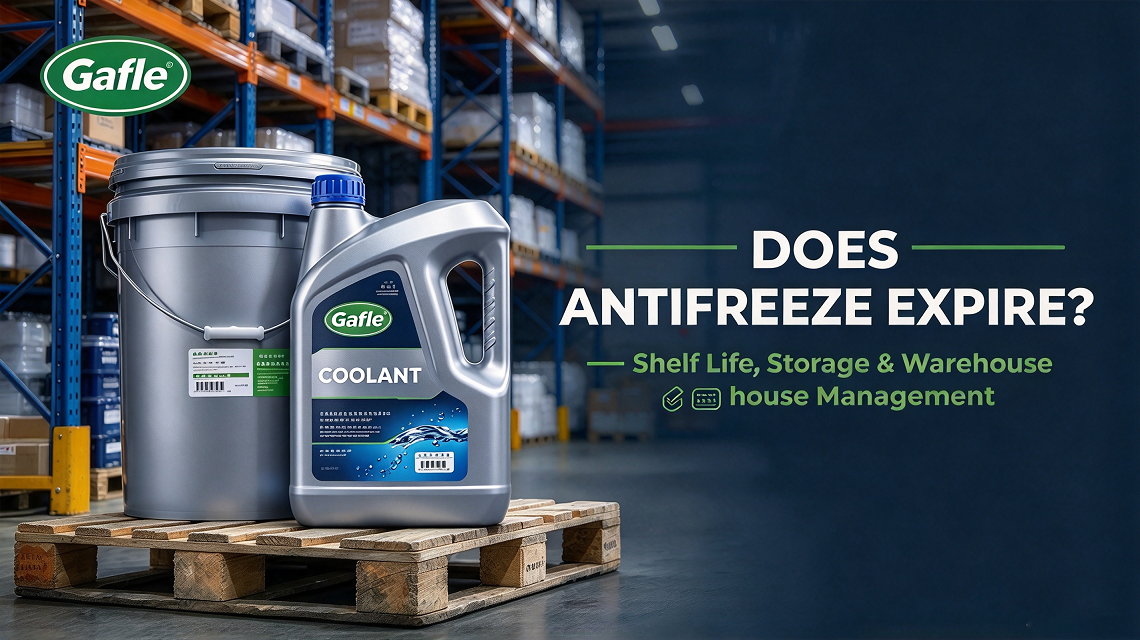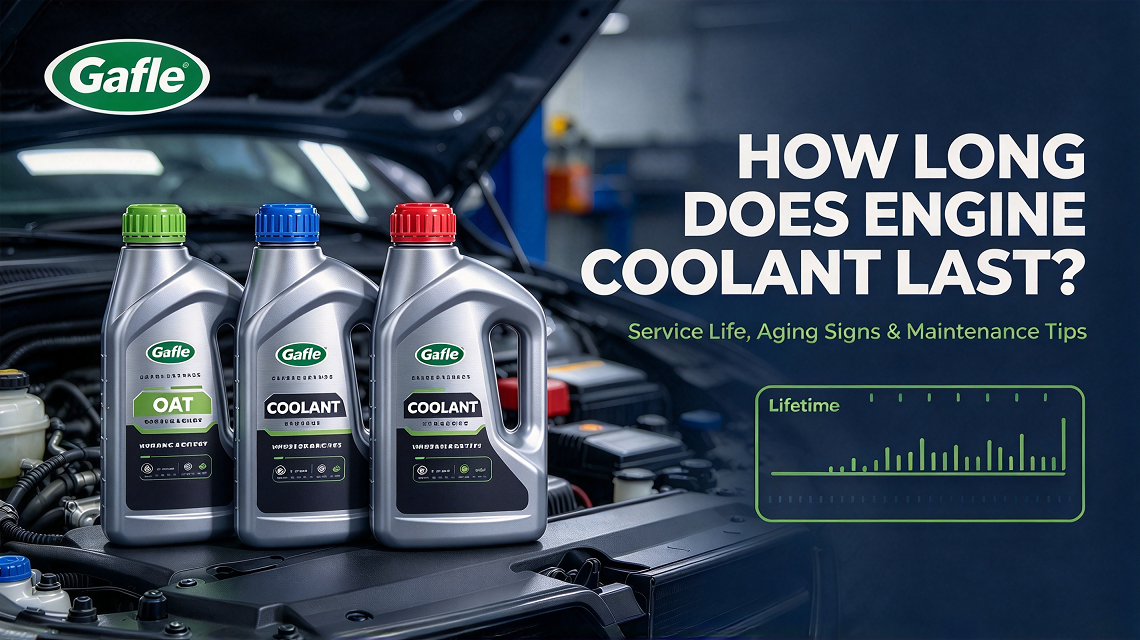
There are two completely separate lifespans for engine coolant: shelf life inside the sealed package, and active service life after filling into the vehicle cooling loop.
This confusion creates many maintenance mistakes in auto repair shops. Shelf life answers the question: how long can we store this jug in the warehouse? Service life answers: how long can this liquid reliably protect an engine after installation. Even brand-new, in-date coolant begins aging the second it circulates through a hot engine. Heat, metal contact, pressure and continuous fluid movement slowly consume its protective additives.
Coolant aging inside the engine mainly comes from gradual consumption of corrosion inhibitor additives.
When the vehicle runs, coolant flows continuously past different metal surfaces: cast iron engine blocks, aluminum cylinder heads and radiators, brass heater cores and steel water pump components. Each metal releases tiny metal ions into the fluid. These ions chemically react with inhibitor molecules inside the coolant formula. Over thousands of driving miles, inhibitor concentration drops little by little. The glycol still works to stop freezing and boiling, but once inhibitors run low, the cooling system loses anti-corrosion protection.
Three mainstream coolant chemistries have very different rated service lifespans.
Traditional IAT inorganic coolant is the oldest formula, with the shortest service cycle: normally 2–3 years or 30,000 miles. It requires frequent flushing and replacement. HOAT hybrid organic acid coolant mixes traditional inorganic inhibitors with organic acids; it balances cost and performance, rated for 5 years or 100,000 miles. Modern OAT organic acid coolant, the primary formula Gafle supplies for new passenger cars and new energy vehicles, features highly stable inhibitor packages. Under normal driving conditions, it can serve up to 7 years or 150,000 miles. It is critical to match coolant chemistry to the OEM specification of the vehicle.
Severe operating conditions greatly accelerate additive depletion and shorten coolant life.
Vehicles that tow heavy trailers, run full cargo loads, drive in desert high-temperature climates or only make repeated short trips age coolant much faster. Short trips are especially damaging. The engine never reaches its full stable operating temperature, so trapped moisture cannot evaporate out of the cooling system. Excess moisture raises acidity and speeds up additive breakdown. Electric vehicles bring another unique challenge: the thermal management system runs nonstop to warm or cool the battery pack, so the coolant circulates far more hours than coolant in a gasoline car.
Visual color inspection cannot tell technicians whether coolant still has sufficient protective additives.
Many mechanics rely on bright color as proof of good coolant condition. This method is unreliable. Coolant can stay vivid and transparent long after its reserve alkalinity has fallen below safe limits. The dye color only acts as a visual marker and does not correlate with inhibitor strength. Relying only on appearance will lead to missed maintenance and hidden corrosion damage inside the engine.
Professional testing tools measure the real protective state of coolant.
Three practical testing tools are widely used in professional garages. Coolant test strips quickly read pH level and reserve alkalinity. Refractometers measure freeze point, which only tells you glycol concentration, not corrosion protection. Electronic coolant analyzers detect acid buildup and give a full status report. Reserve alkalinity is the most important metric. It represents how much anti-acid buffer remains inside the coolant fluid. Once reserve alkalinity drops below the OEM threshold, replacement is mandatory.
Good maintenance practice combines mileage, calendar time and regular testing.
You should not only follow a fixed mileage number blindly. A car that sits parked most days will age coolant chemically over time, even with low mileage. Fleet managers and repair shops should build digital service logs for every vehicle. Adding coolant reserve alkalinity testing to every routine service check helps catch aging coolant early, before expensive cooling system failures appear.
FAQ
Q1: Will coolant last longer if I drive fewer miles every year? A1: Not entirely. Additives still degrade slowly with time, even when the vehicle sits idle. Calendar age still counts alongside mileage.
Q2: Can I extend coolant service life by adding coolant additives? A2: We do not recommend aftermarket additive boosters. Adding extra chemicals can throw off the carefully balanced formula and cause compatibility or foaming problems. Flushing and refilling with fresh coolant is the safe method.
Q3: Why do EV coolants sometimes need replacement earlier than stated? A3: EV thermal systems cycle coolant almost constantly for battery temperature control. Higher runtime hours accelerate additive consumption compared to intermittent gasoline engine operation.
Q4: Is cloudy coolant always expired? A4: Cloudiness often signals contamination or additive precipitation. It should be treated as a warning sign and tested immediately, and replacement is usually required.
Q5: Does coolant age faster in turbocharged engines? A5: Yes. Turbo engines run at higher operating temperatures, creating higher thermal stress on coolant additives.
Q6: Can different brands of OAT coolant have different service lifespans? A6: Yes, formulation quality varies between manufacturers. Always follow the published cycle from the coolant supplier and vehicle OEM.
Q7: What is reserve alkalinity? A7: It is the amount of alkaline buffer remaining in coolant to neutralize acid formed during operation. It is the primary indicator of remaining corrosion protection.
Welcome to contact GAFLE for more information & cooperation!
peter
ZHEJIANG GAFLE AUTO CHEMICL CO.,LTD
Tel:86-579-8222 1665
Fax:86-579-8246 4690
Cel/Wechart:86-13335993986
E-mail:peter@gafle.net
Web:www.gafle.net