Many bulk buyers and auto technicians hold a common misunderstanding that antifreeze never goes bad.
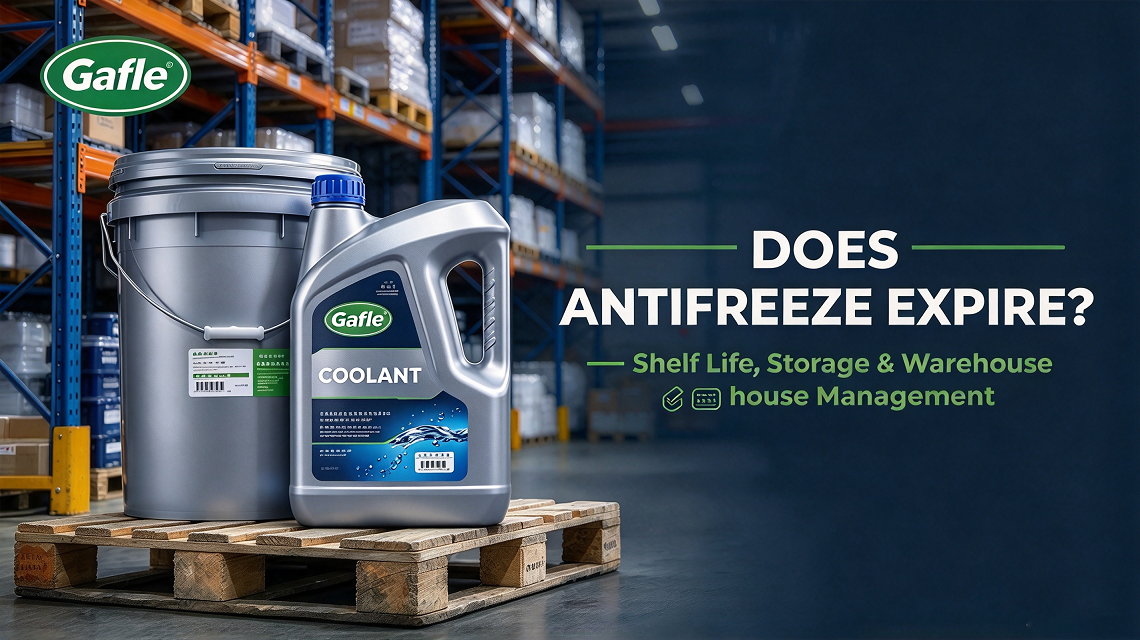
A large number of wholesalers stock coolant for years in the warehouse, assuming the glycol base will keep its protective properties forever. In fact, antifreeze has a clear shelf life whether the container is sealed or opened. It is critical to separate two core definitions: shelf life for coolant stored inside its packaging, and service life once it has been filled into a vehicle cooling system. This article focuses entirely on shelf life and warehouse storage, a topic that directly impacts your inventory quality and after-sales risk.
The glycol base of antifreeze remains chemically stable for a very long period, but functional additives degrade over time.
Ethylene glycol or propylene glycol mainly provides freeze and boil protection. The real protective power comes from a carefully balanced additive package: corrosion inhibitors, anti-foaming agents, pH buffers and hard water stabilizers. These additives are not infinitely durable. Even at stable room temperature, slow chemical reactions will gradually reduce inhibitor concentration. When these protective additives are depleted, the coolant can no longer prevent rust, cavitation and scale inside aluminum, cast iron and brass cooling system components, even though it can still resist freezing.
Concentrated coolant and 50/50 pre-mixed coolant do not share the same shelf life standard.
Unopened concentrated antifreeze from Gafle normally carries a shelf life of 5 years under proper storage. Pre-mixed 50/50 coolant already contains diluted water inside the jug, so its shelf life is shorter, generally 3 years from production date. The water inside pre-mixed products creates extra conditions for additive hydrolysis. This difference is very important for bulk purchasing planning. If you serve customers in cold regions who prefer concentrated coolant for custom mixing, concentrated stock is easier for long-term inventory turnover.
Poor warehouse storage conditions are the top factor that shortens usable shelf life.
Direct UV sunlight is one of the fastest killers of coolant additives. Strong light triggers oxidation reactions and breaks down inhibitor molecules. Frequent dramatic temperature swings also create internal pressure inside plastic jugs and metal barrels, loosening the seal and allowing moisture and air to leak in. Condensation on packaging surfaces caused by high warehouse humidity can slowly penetrate tiny seal gaps. For bulk storage, coolant containers must sit on wooden pallets, not directly on cold concrete floors. Avoid stacking heavy cargo on coolant drums to prevent cracking and permanent seal failure. The recommended stable storage temperature range is 5°C to 25°C.
Visible physical changes are obvious warning signs of degraded antifreeze, but they are not 100% reliable.
Normal fresh Gafle coolant stays transparent and uniform in its designed color. If you see suspended sediment, cloudiness, layer separation or unexpected fading, the coolant should be discarded immediately. A sour, rotten or sharp abnormal chemical odor is another clear red flag. However, a lot of aged coolant still looks clean and bright, while its reserve alkalinity and inhibitor levels have already dropped below safe thresholds. Visual inspection alone is never enough for quality control for bulk stock.
Once the coolant container is opened, its usable time window shrinks significantly.
After opening, the fluid directly contacts oxygen and moisture from ambient air. The coolant will continuously absorb water and carbon dioxide, which lowers pH value and speeds up additive consumption. We recommend finishing opened coolant within 6 months. Any leftover coolant must be tightly resealed and stored in a dark, dry area. Leaving an open jug sitting on a workshop shelf for over a year will almost certainly render it unsafe for vehicle use.
A strict FIFO inventory workflow protects wholesalers and repair shops from selling expired coolant.
Record production batch numbers and manufacturing dates for every pallet when goods arrive. Label each storage zone clearly, and place newly delivered stock behind older batches. Calculate purchasing quantity based on your monthly sales volume. Do not place oversized bulk orders if your turnover rate is slow. For fleet maintenance workshops, separate small jug retail stock and large barrel bulk stock, and check expiry status during every quarterly inventory check. This simple routine greatly reduces customer complaints and warranty claims.
Using expired antifreeze creates expensive failure risks for your end users.
Without functional corrosion inhibitors, the cooling system will gradually develop internal rust, aluminum pitting and mineral scale buildup. Scale clogs narrow radiator channels, reduces heat dissipation efficiency and causes frequent overheating. Corrosion also wears out water pump seals and heater cores prematurely. These repairs are costly for vehicle owners, and your shop or brand may face trust issues and negative reviews if expired coolant is the root cause.
FAQ
Q1: Can I still use unopened antifreeze that is past the printed expiry date? A1: It is not recommended. Even if it looks clean, its inhibitor package is likely degraded. For non-critical antique machinery some people test it first, but for passenger cars, commercial fleets and OEM applications, expired coolant should be rejected.
Q2: Does antifreeze expire faster in hot warehouse areas? A2: Yes. Constant high storage temperature accelerates additive decomposition. Coolant stored near warehouse heaters, loading bay doors or under roof metal sheets will age much faster.
Q3: Is there a test kit to check whether stored bulk coolant is still usable? A3: Yes. You can test reserve alkalinity with coolant test strips or professional coolant analyzers. Reserve alkalinity is the key metric for remaining corrosion protection.
Q4: What happens if antifreeze freezes while sitting in storage? A4: Freezing itself does not destroy glycol, but volume expansion can crack the plastic jug and break the seal. Once the seal fails, contamination and oxidation will quickly ruin the coolant.
Q5: Can I extend antifreeze shelf life by moving it into a refrigerator? A5: Cool stable temperature helps slow aging, but freezing must be avoided. Standard refrigerators around 4–8°C are acceptable for small sample storage, but it is not practical for bulk pallets.
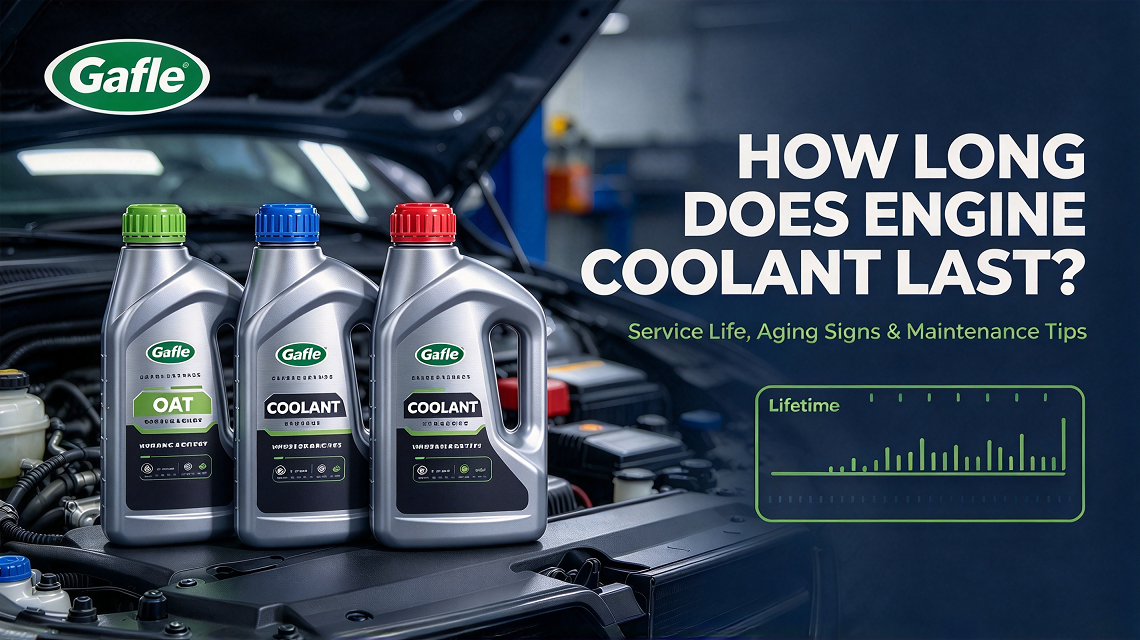
Q6: Do different colored antifreeze have different expiry timelines? A6: Color is only dye for identification. Shelf life depends on the formula (IAT / HOAT / OAT) and whether it is concentrated or pre-mixed, not the liquid color.
Q7: How long can Gafle antifreeze stay good after I open the cap? A7: Under good resealed and shaded dry storage, maximum 6 months. After this period, we suggest replacing it with fresh coolant.
Welcome to contact GAFLE for more information & cooperation!
peter
ZHEJIANG GAFLE AUTO CHEMICL CO.,LTD
Tel:86-579-8222 1665
Fax:86-579-8246 4690
Cel/Wechart:86-13335993986
E-mail:peter@gafle.net
Web:www.gafle.net