logo

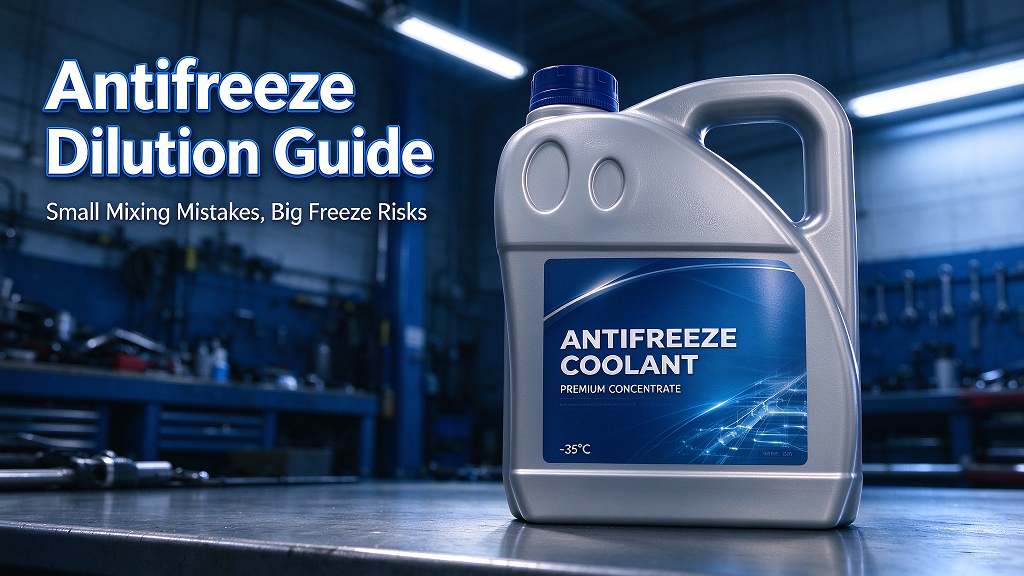
How Slight Dilution Ratio Errors Affect Antifreeze Freeze Protection

logo

Published

Nov 09 2026

  • Antifreeze / Coolant
  • Buying Guide

Follow us

how-slight-dilution-ratio-errors-affect-antifreeze-freeze-protection

what happens if antifreeze dilution ratio is slightly off

Many car owners and repair technicians take antifreeze mixing lightly and assume tiny ratio differences bring no real harm. In daily maintenance, some people add a splash more water or extra antifreeze casually, thinking the protection level will stay almost the same. However, the freeze point curve of glycol-based antifreeze is non-linear. Even a small deviation from the recommended proportion can shift freeze and boil protection quietly. When winter temperatures hit the local low record or the engine runs under heavy load, this hidden defect may turn into catastrophic engine failure. Our factory receives hundreds of technical inquiries from global suppliers and repair shops about mixing-related coolant failures every year.

The freeze protection of antifreeze comes from the physical property of glycol mixed with purified deionized water. Unlike simple dilution, ethylene glycol and water form a eutectic mixture. For most standard ethylene glycol antifreeze, the widely accepted 50/50 mix delivers balanced freeze resistance around -35°C and boil-over protection above 108°C. Some specialized formulas from the manufacturer adjust the recommended window to 40/60 or 60/40 for regions with mild winters or extreme cold. Every formula is tested repeatedly in lab conditions before leaving the production line.

Too much water in the mixture pushes the freezing point upward and weakens cold protection. For example, a coolant designed to resist -35°C at 50/50 can only reach roughly -20°C after adding extra water. In cold northern regions, this gap is dangerous. Once the liquid freezes inside the engine block, the volume expansion will crack cylinder heads, engine blocks and radiator tanks. This type of damage is usually expensive to repair and often totals the engine. Excess water also dilutes corrosion inhibitors, speeding up rust and pitting inside aluminum and cast iron components.

Excessive antifreeze concentrate without enough water also creates hidden risks. Pure glycol has poor thermal conductivity. Over-concentrated coolant traps heat inside the engine instead of transferring it to the radiator. The operating temperature will creep up gradually, even if the dashboard gauge does not show immediate overheating. Long-term high temperature exposure accelerates aging of rubber gaskets, water pump seals and heater core hoses. This is why professional suppliers never suggest running undiluted antifreeze directly into any vehicle cooling system.

A refractometer gives accurate freeze point readings within seconds. It is the standard testing tool adopted by our factory’s QC lab. When you test coolant, you only need one drop of mixed fluid on the prism surface. The scale shows the real freeze point directly. Wholesale buyers and repair shops can match test results to local climate requirements before filling coolant into vehicles. It is a low-cost tool that prevents costly winter breakdowns, and many of our supplier partners bundle refractometers together with bulk antifreeze orders.

Working with a professional antifreeze manufacturer helps simplify your stocking plan. If your end users lack mixing experience, pre-diluted ready-to-use coolant is a better retail choice. It is blended and tested inside the factory, so customers can pour it directly without extra mixing work. Concentrated antifreeze, on the other hand, cuts shipping weight and freight cost for large export orders. Our technical team can send customized mixing guides and safety documents to support suppliers selling coolant in different countries.

FAQ

Q1: Will antifreeze lose its freeze protection if the dilution ratio is slightly off?

A1: Yes. Even a small deviation changes the freeze point. More water weakens cold protection, while too much concentrate hurts heat dissipation. Always test with a refractometer after mixing.

Q2: What is the standard mixing ratio for most passenger car antifreeze?

A2: 50% antifreeze concentrate plus 50% deionized water is the universal standard for most temperate areas.

Q3: Can tap water be used for diluting antifreeze?

A3: No. Minerals, calcium and magnesium in tap water cause scaling and corrosion inside the cooling system over time.

Q4: How much deviation of ratio will become dangerous?

A4: A deviation over 5% will create obvious changes in freeze or boil protection performance.

Q5: Should I recheck the ratio after topping up coolant?

A5: Yes. Random topping up with water or concentrate will break the original balanced ratio.

Q6: Is pre-mixed coolant more suitable for retail sales?

A6: Pre-mixed coolant is user-friendly and avoids mixing errors, while concentrate saves shipping cost for bulk orders.

Welcome to contact GAFLE for more information & cooperation!
peter
ZHEJIANG GAFLE AUTO CHEMICL CO.,LTD
Tel:86-579-8222 1665
Fax:86-579-8246 4690
Cel/Wechart:86-13335993986
E-mail:peter@gafle.net
Web:www.gafle.net
Featured Blogs
Can Bad Antifreeze Cause Your Car Air Conditioner To Stop Working

Can Bad Antifreeze Cause Your Car Air Conditioner To Stop Working

1. Modern vehicle ECU is programmed to shut down the AC compressor automatically to reduce engine load once coolant temperature exceeds safe limits. 2. Degraded, contaminated or incorrectly mixed antifreeze loses heat exchange efficiency and fails to remove engine heat, leading to rising temperature. 3. AC shutdown triggered by bad coolant is an engine safety protection reaction, and AC hardware like compressor and condenser may still be intact. 4. Checking the dashboard temperature gauge is a fast diagnostic method: high temperature together with AC cut points to cooling system issues. 5. Our factory reminds repair shop suppliers to check coolant status first when customers report intermittent AC cut-off complaints.

Does Cold Weather Speed Up Antifreeze Degradation

Does Cold Weather Speed Up Antifreeze Degradation

1. High engine temperature and oxidation reaction are the main drivers that consume antifreeze corrosion inhibitors, and consumption speeds up at higher temperatures. 2. Low temperature alone will not break down corrosion inhibitors inside qualified OAT and HOAT antifreeze; the formula stays chemically stable. 3. Cold weather brings indirect risks including freezing from wrong dilution, repeated thermal cycling stress on seals and increased leakage chances. 4. Antifreeze degrades and loses inhibitors much faster in continuously hot tropical regions than in cold climate zones. 5. Our factory develops low-freeze-point long-life antifreeze for extreme cold markets, and suppliers can add freeze point testing services.

Antifreeze vs Coolant: Are They the Same Product

Antifreeze vs Coolant: Are They the Same Product

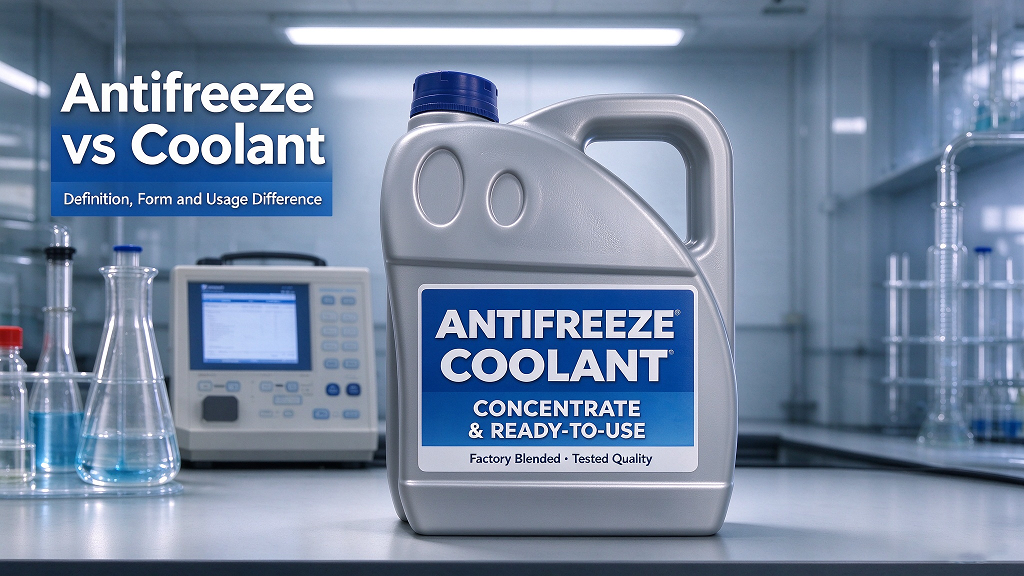
1. In auto parts industry terminology, antifreeze usually refers to undiluted concentrated antifreeze base fluid containing glycol and full corrosion inhibitor packages. 2. Coolant means the finished working liquid that circulates inside the vehicle cooling system and performs heat transfer. 3. Ready-to-use coolant is pre-blended and tested by the manufacturer inside the factory, and end users can pour it directly without mixing. 4. Concentrated antifreeze and finished coolant share identical core functions for freeze, boil and corrosion protection; the only difference is pre-added deionized water. 5. Purchase orders, MSDS documents and product labels must distinguish concentrate and pre-mixed coolant, and suppliers need clear confirmation before ordering.

Can Heavy-Duty Diesel Antifreeze Work On Regular Gasoline Cars

Can Heavy-Duty Diesel Antifreeze Work On Regular Gasoline Cars

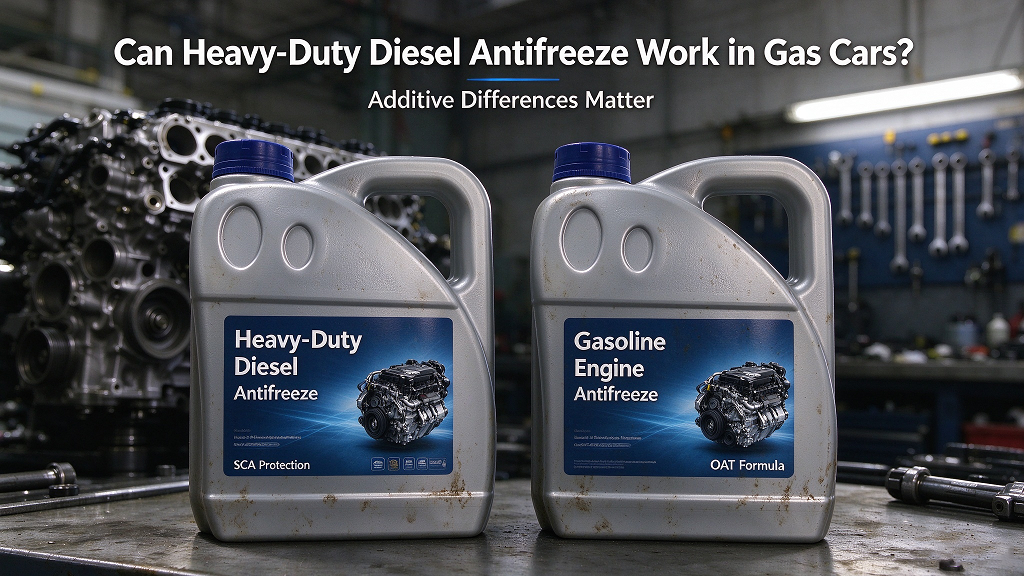
1. Heavy-duty diesel antifreeze contains high-dose SCA additives designed to prevent cylinder liner cavitation pitting for trucks and construction machinery. 2. Light-duty gasoline engines have narrow cooling passages and many aluminum parts, and they do not require high SCA levels from diesel coolant. 3. Long-term use of diesel antifreeze in gasoline cars triggers chemical reactions that form hard sediment and block radiator passages. 4. It can be used for short emergency trips only, and the whole cooling system must be fully flushed afterwards. 5. Professional factory separates gasoline coolant and heavy-duty diesel coolant into independent product lines for suppliers.

Is It Normal for Antifreeze to Change Color After Months of Use

Is It Normal for Antifreeze to Change Color After Months of Use

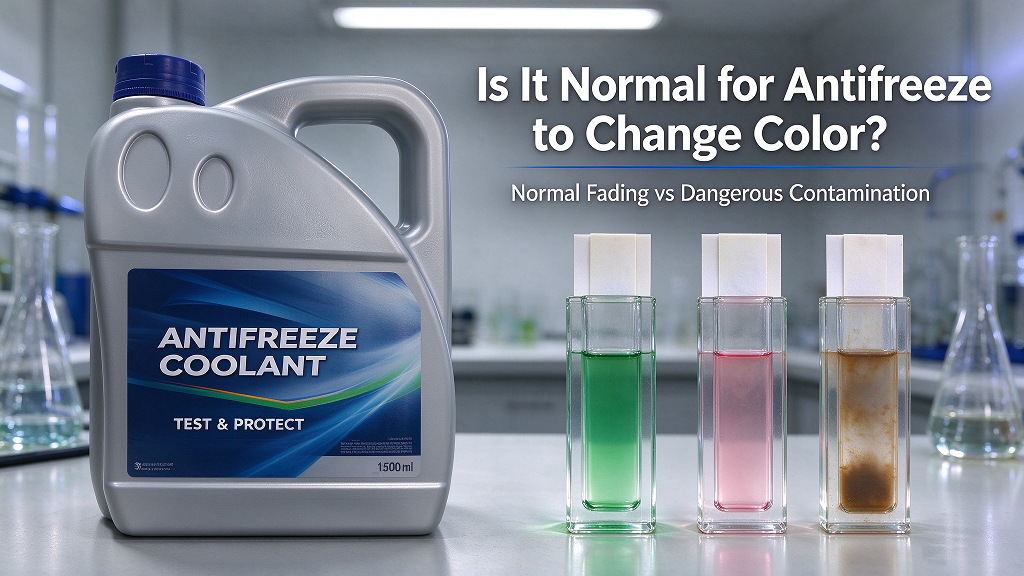
1. Antifreeze color comes from water-soluble dye added during production; dye only serves identification and leak detection, and does not determine protective performance. 2. Slow fading after long circulation is normal aging caused by inhibitor depletion and thermal decomposition of dye, and fading speed varies by formula. 3. Sudden muddy, milky or rust-brown coolant signals serious contamination inside the cooling system and requires immediate inspection. 4. Coolant test strips quickly read pH value and inhibitor concentration to judge whether coolant still provides valid protection. 5. Long-life OAT antifreeze made by reliable factory uses stable dye systems and fades slowly, ideal for retail suppliers.

How Slight Dilution Ratio Errors Affect Antifreeze Freeze Protection

How Slight Dilution Ratio Errors Affect Antifreeze Freeze Protection

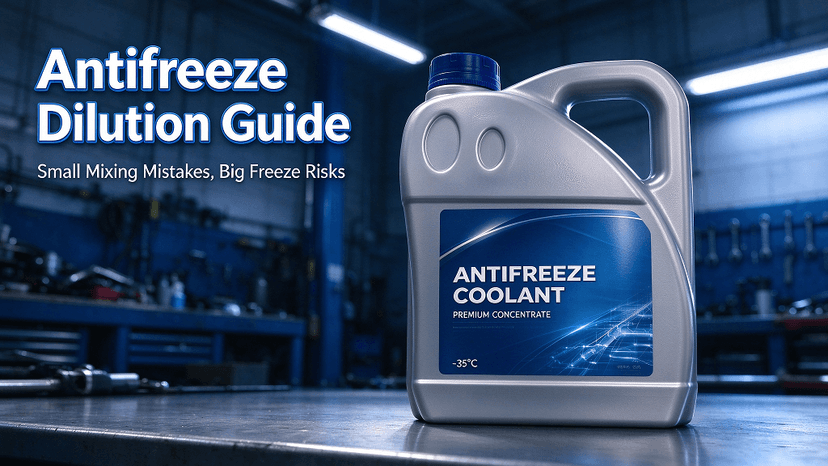
1. Antifreeze freeze protection does not rise linearly with glycol content; it relies on a balanced blend of glycol and deionized water within an optimal range. 2. Extra water in the mixture raises the freezing point significantly, raising the risk of ice formation and permanent engine damage in cold climates. 3. Over-concentrated antifreeze without enough water reduces thermal conductivity, weakens heat dissipation and accelerates seal aging and leakage. 4. A refractometer is the industry standard testing tool to read real freeze point quickly, far more reliable than rough cup measurement or guesswork. 5. Professional factory provides complete mixing charts and test standards for suppliers and recommends suitable formulas based on local climate.