Many car owners feel anxious when they notice antifreeze turns lighter or shifts shade after several months. Some rush to buy new coolant and flush the whole system right away, while others ignore the visual change completely and keep driving. Both choices are risky. Learning to distinguish harmless natural aging from dangerous contamination helps you avoid unnecessary maintenance cost or unexpected engine breakdowns. Our manufacturer receives many photos of discolored coolant from global suppliers and repair shops every month. Many of these cases are simple fading, while others point to serious internal faults.
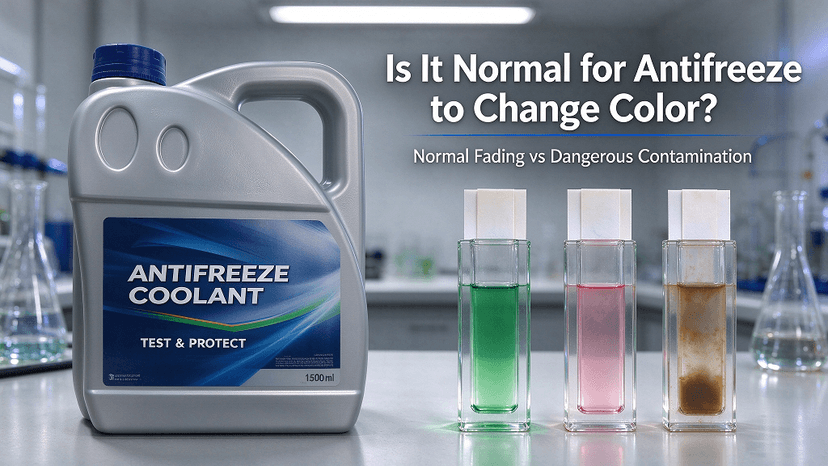
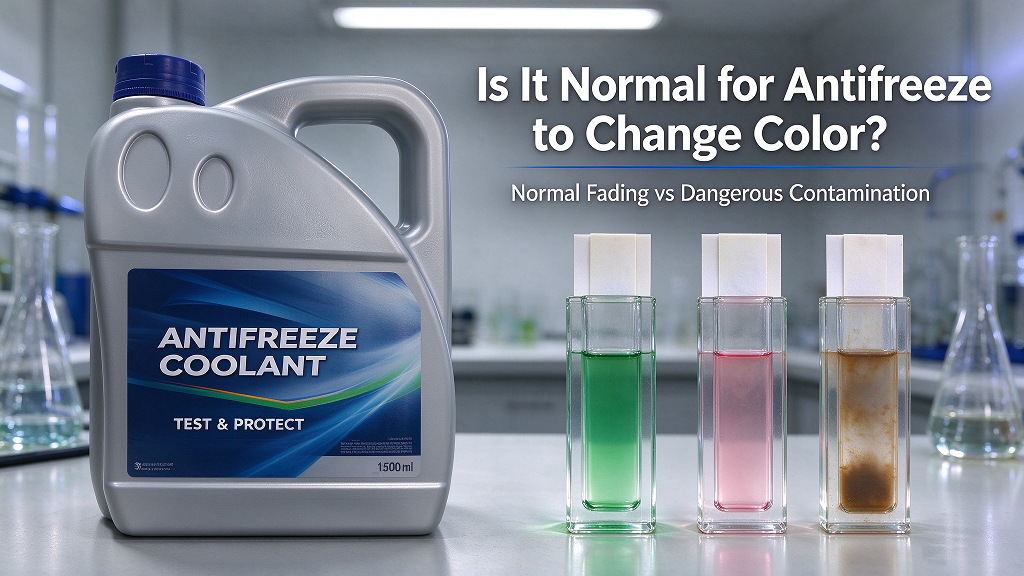
The color of antifreeze comes from special water-soluble dye added during production, not the functional protective chemistry. Green, pink, orange and blue dyes are carefully selected markers to help mechanics quickly identify coolant types and spot fresh fluid leaks. These dye molecules do not take part in freeze protection or corrosion inhibition. The real protection comes from glycol base fluid, organic or inorganic corrosion inhibitors and stabilizers blended inside our factory. You cannot judge coolant quality only by how bright the color looks.
Slow fading of dye is a common sign of additive depletion over time. As coolant circulates continuously under fluctuating engine temperature, inhibitors slowly react with metal surfaces to form protective passivation films. Meanwhile, heat and oxygen gradually break down dye molecules. Traditional IAT inorganic coolant fades much faster, usually within 2 to 3 years. Long-life OAT antifreeze keeps its color stable for 5 years or more. Slightly faded color alone does not mean the coolant fails to protect the engine.
Sudden darkening, milky texture or muddy brown coolant is not normal and requires immediate inspection. Milky creamy coolant mostly means engine oil leaks into the cooling system from a failed head gasket. Oil and coolant mix to form thick emulsion, which blocks small cooling passages and stops heat transfer. Brown sludge points to rust, metal particles and sediment circulating in the system, usually caused by poor maintenance or low-quality coolant. Both conditions will damage bearings, gaskets and cylinder liners quickly if driving continues.
Test strips are simple, affordable tools to check whether coolant is still usable. They measure pH value and inhibitor concentration within minutes. If the readings stay within factory specifications, slightly faded coolant can keep working safely. If the pH drops below the acceptable range or inhibitor levels are exhausted, you must drain, flush and refill the whole system with new antifreeze. This test is a standard check item for repair shops recommended by our technical team.
High-quality OAT antifreeze from a professional manufacturer uses stable dye formulas. For wholesale suppliers, stocking long-life coolant reduces customer complaints about color fading and extends replacement intervals for end users. Our factory also provides technical flyers that suppliers can share with their retail customers to explain color changes and reduce unnecessary after-sales questions.
FAQ
Q1: Is it normal for antifreeze to change color after months of use?
A1: Slow fading or light color loss is normal. Sudden muddy, milky or rust-brown discoloration is abnormal and shows contamination.
Q2: Can I judge freeze protection just by coolant color?
A2: No. Color is only dye. You need a refractometer to test the actual freeze point.
Q3: What makes antifreeze turn milky white?
A3: Milky coolant mostly comes from engine oil leaking into coolant due to head gasket failure.
Q4: Can I keep using faded pink antifreeze?
A4: You can keep using it if pH and inhibitor levels still meet factory standards.
Q5: Why do cheap coolants fade faster?
A5: Low-cost coolant from informal factories uses unstable dyes that fade quickly under high temperature.
Q6: When do I need to flush the cooling system?
A6: Flush the system when test results show low inhibitors or you see oil, sludge and heavy contamination.
Welcome to contact GAFLE for more information & cooperation!
peter
ZHEJIANG GAFLE AUTO CHEMICL CO.,LTD
Tel:86-579-8222 1665
Fax:86-579-8246 4690
Cel/Wechart:86-13335993986
E-mail:peter@gafle.net
Web:www.gafle.net