When purchasing antifreeze for resale or fleet maintenance, many buyers and repair technicians form a simple habit: matching the coolant color to confirm compatibility. This habit easily leads to engine complaints and after-sales losses for distributors. The colored dye is just added for visual identification, and it has nothing to do with the anti-corrosion inhibitor package. Two antifreeze products with the same color may use totally different chemical systems, while different colors can belong to the same technology route. GAFLE factory is a trusted antifreeze manufacturer for global importers, auto repair chains and fleet operators. This guide explains four mainstream coolant technologies clearly to help you guide your end customers correctly.
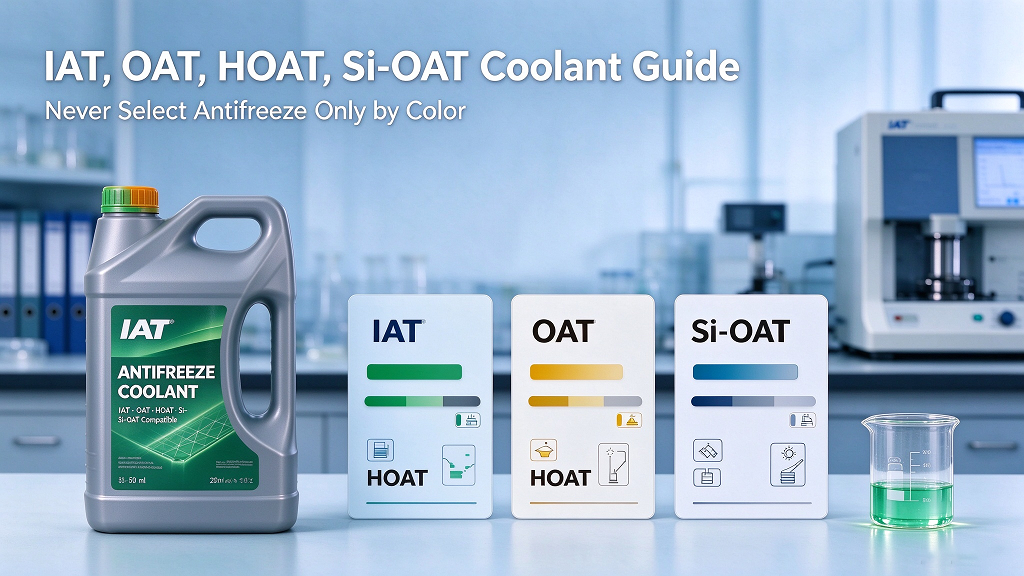
Many mechanics and B2B buyers select antifreeze according to its color, but dye is only a visual marker and cannot represent the internal inhibitor formula. No global unified industry rule binds one specific color to one coolant formula. A green antifreeze from one supplier may be OAT type, while green coolant from another factory can be classic IAT. If your customers only rely on color matching, they may mix incompatible inhibitors unconsciously. As a reliable coolant supplier, your core selling point is to remind customers to check TDS and technical specs instead of judging by appearance.
IAT coolant adopts traditional inorganic additive technology, which has short service life and is suitable for classic cars and old engineering machinery. IAT stands for Inorganic Additive Technology. Its inhibitors include silicate, phosphate and nitrite. It provides stable corrosion protection for cooling systems made of cast iron, brass and copper. However, inorganic additives deplete quickly. Its normal service life is only 2 years or 40,000 km. Without regular maintenance, scaling deposits will form inside the radiator. IAT antifreeze is still in steady demand for classic vehicles, old construction machines and markets with demand for low-cost conventional coolant.
OAT coolant uses organic acid inhibitors, features long drain intervals and is widely matched with modern European passenger vehicles. OAT means Organic Acid Technology. It relies on carboxylate inhibitors without extra silicate or phosphate. It resists hard water scaling and supports a long service cycle of 5 years or 240,000 km. OAT coolant is friendly to aluminum engine blocks and radiators, which are widely used on modern European vehicles. Most OEM factory-fill coolant for European cars is OAT formula. For distributors focusing on European vehicle repair shops, OAT antifreeze is a high-volume and high-margin product.
HOAT coolant combines inorganic and organic inhibitors, making it a flexible choice for mixed fleets with old and new vehicles. HOAT, Hybrid Organic Acid Technology, mixes selected inorganic inhibitors with organic acid components. It keeps strong silicate protection for traditional metal parts and inherits the long service interval of OAT coolant. It is a versatile middle option. If your fleet or customer group has both old gasoline trucks and new passenger cars, HOAT can simplify inventory management. Many North American light truck OEMs specify HOAT coolant in official service manuals.
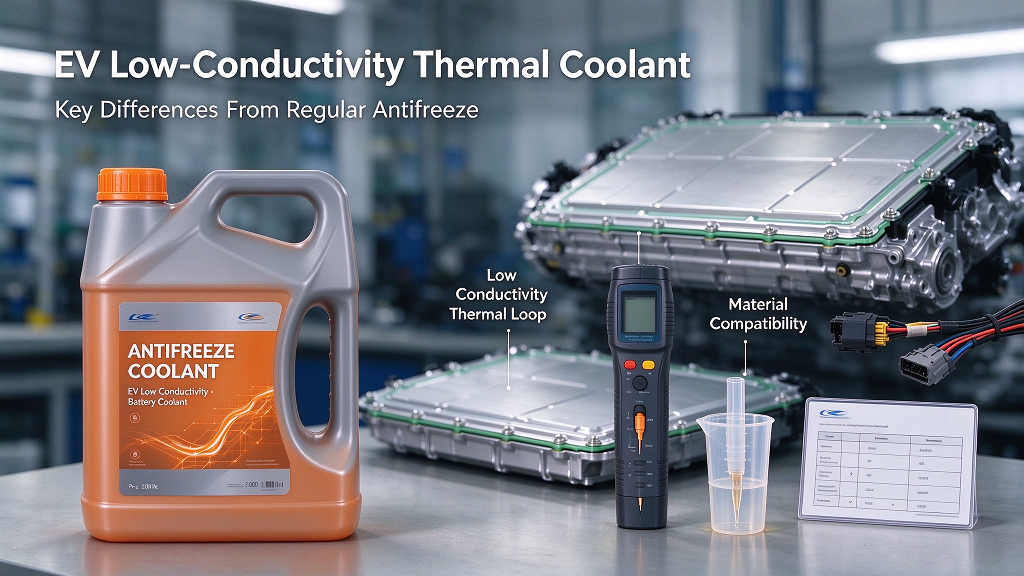
Si-OAT coolant uses silicate-stabilized organic acid formula, designed for high-load turbo engines and new energy vehicle thermal systems. Si-OAT is an upgraded branch of OAT coolant. Stabilized silicate and organic acid inhibitors work together to protect aluminum heat exchangers, high-pressure radiators and composite thermal management components. It maintains stable performance under continuous high load. This formula is increasingly specified for hybrid cars, new energy passenger vehicles and modern turbocharged gasoline engines. For suppliers targeting EV and hybrid repair markets, Si-OAT coolant is a forward-looking product line.
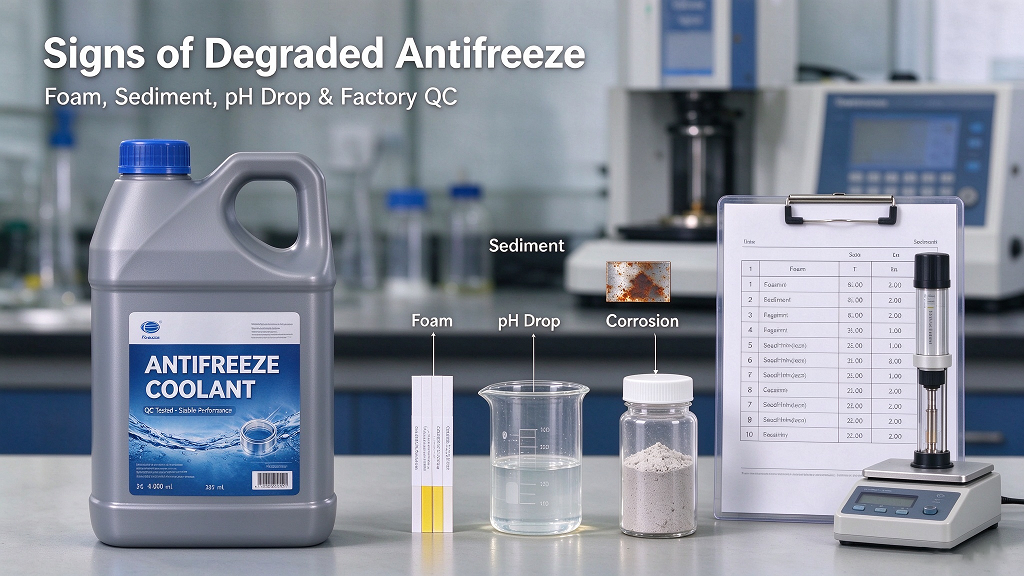
Mixing incompatible coolant types will trigger chemical reactions, consume inhibitors rapidly and cause sediment and engine corrosion. When IAT and OAT coolant are mixed, different inhibitor chemicals react and precipitate out. Fine sediment will block narrow cooling passages and wear water pump seals. The remaining fluid loses corrosion protection quickly. The vehicle may overheat, suffer cylinder liner pitting and premature water pump failure. Even if the car runs normally for a short time, hidden damage will appear after thousands of kilometers.
When you source coolant, cooperate with a professional antifreeze manufacturer that can supply multiple formulas for different market demands. GAFLE factory supports custom freeze point, private label, customized packaging and different inhibitor systems for global buyers. We provide complete SDS, TDS and batch COA for every shipment. As your long-term coolant supplier, we can help you build a complete product portfolio covering passenger cars, heavy trucks, construction machinery and new energy vehicles.
FAQ
Q1: Can I mix OAT coolant with HOAT coolant?
A1: It is not recommended unless the OEM manual clearly approves mixing. Mixing different inhibitor systems may accelerate inhibitor consumption and produce sediment.
Q2: Is red antifreeze always OAT coolant?
A2: No. Color is just artificial dye. Some manufacturers use red dye for IAT or HOAT coolant. Always check the technical data sheet from your supplier.
Q3: What is the service life of Si-OAT coolant?
A3: Normally 5 years or 240,000 km for passenger cars, subject to OEM specs and actual working conditions.
Q4: Which coolant fits old classic cars?
A4: Traditional IAT coolant is widely used for classic vehicles with brass, copper and cast iron cooling systems.
Q5: What is the biggest advantage of OAT coolant?
A5: Long service life, low scaling tendency and good compatibility with aluminum engine components.
Q6: Can this factory produce custom HOAT antifreeze for my brand?
A6: Yes. Our manufacturer team develops and produces HOAT, OAT, IAT and Si-OAT coolant with private label and customized packages.
Welcome to contact GAFLE for more information & cooperation!
peter
ZHEJIANG GAFLE AUTO CHEMICL CO.,LTD
Tel:86-579-8222 1665
Fax:86-579-8246 4690
Cel/Wechart:86-13335993986
E-mail:peter@gafle.net
Web:www.gafle.net