logo

Ethylene Glycol vs Propylene Glycol Antifreeze: Toxicity, Cost and Sourcing Guide

logo

Published

Nov 06 2026

  • Antifreeze / Coolant
  • Buying Guide

Follow us

ethylene-glycol-vs-propylene-glycol-antifreeze-toxicity-cost-and-sourcing-guide

propylene glycol vs ethylene glycol coolant safety

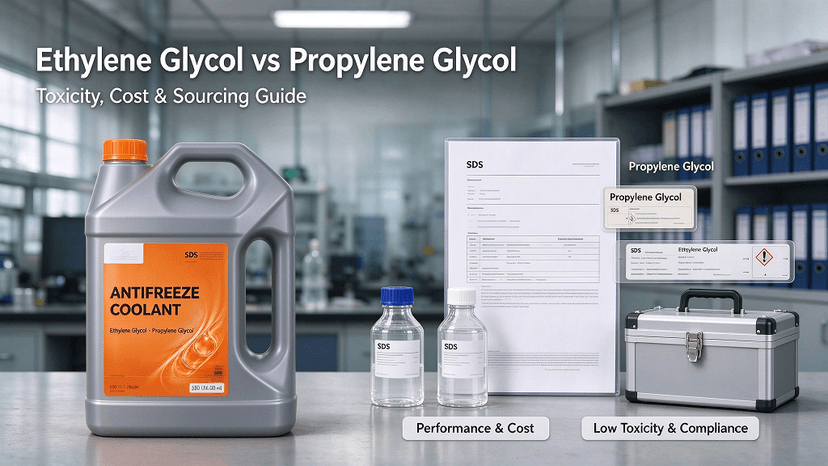
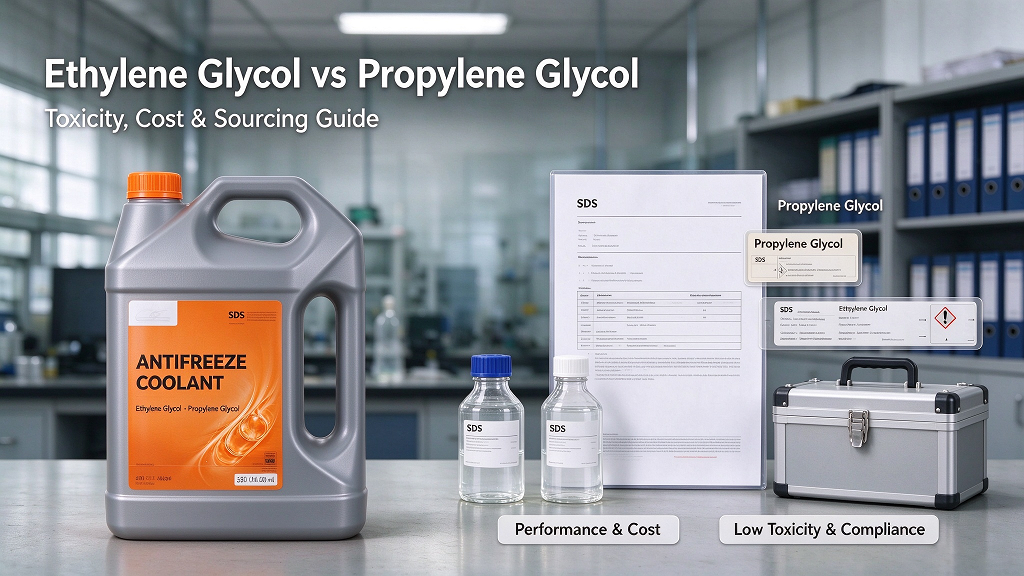
When importers check antifreeze quotations, they often see two base fluid options: ethylene glycol and propylene glycol. On the surface, both can lower freezing point and raise boiling point. But toxicity, raw material cost, hazard classification and end-use suitability are totally different. Picking the wrong base fluid may lead to customs detention, local regulatory rejection or safety complaints from end users. GAFLE factory is a professional coolant manufacturer that produces both ethylene glycol and propylene glycol antifreeze for global buyers. This detailed comparison helps B2B buyers make correct sourcing decisions.

Ethylene glycol and propylene glycol are two mainstream base fluids for commercial antifreeze, and their core difference lies in toxicity and suitable application scenarios. Both are polyol compounds that disrupt ice crystal formation when mixed with water. However, ethylene glycol is highly toxic if swallowed, while propylene glycol has much lower acute toxicity. This critical difference defines suitable markets, warning labels and shipping documentation requirements for each product.

Ethylene glycol has excellent heat transfer performance and lower raw material cost, making it the standard coolant for passenger cars and heavy-duty trucks worldwide. Ethylene glycol delivers stable thermal conductivity and keeps low viscosity at low temperatures. It is the global industry standard for automotive cooling systems, construction machinery and diesel fleets. Its raw material cost is competitive, supporting attractive wholesale prices for high-volume aftermarket distributors. Almost all conventional IAT, OAT and HOAT automotive coolant formulas use ethylene glycol as the base fluid. The main downside is acute oral toxicity, so labels must carry clear poison warning statements.

Propylene glycol antifreeze features low acute toxicity, which fits scenarios where accidental contact with humans, livestock or food surfaces may happen. Propylene glycol is widely used in food processing equipment, beverage production lines, livestock heating systems, recreational vehicles and agricultural machinery. If spilled or ingested in small amounts accidentally, the health risk is far lower. Many buyers serving farm markets, food factories and RV repair shops specifically request propylene glycol coolant. It is also popular in markets with strict child safety rules for consumer chemical products.

Propylene glycol coolant needs a higher mixing ratio for the same freeze point and has slightly weaker heat transfer performance with higher raw material cost. To reach the same freezing point, propylene glycol requires a higher mixing proportion. Its heat transfer efficiency is marginally lower, so it is not the first choice for high-load racing engines or heavy-duty diesel trucks that require maximum heat dissipation. Higher material cost also pushes up the final landed price, so it targets niche high-value segments instead of mass automotive aftermarket.

The two glycol types have different hazard classifications, shipping labels and SDS content, which matters a lot for export customs clearance. Ethylene glycol-based coolant usually has stricter hazard declarations on SDS. Some countries require special warning pictograms and poison statements. Propylene glycol coolant often falls under less restrictive transport classification. Before shipment, our factory technical team adjusts SDS and label text to match destination country chemical regulations. This is a valuable service for first-time importers who cooperate with our supplier.

Some overseas markets with strict safety regulations prefer low-toxic propylene glycol antifreeze for agricultural machines and RV equipment. Regions with large farm and RV markets often ask for low-toxic antifreeze. Even if its performance is slightly weaker, the reduced liability risk for retailers and installers brings great value. As a distributor, stocking propylene glycol coolant lets you capture these high-margin niche customer groups.

Our factory produces both ethylene glycol and propylene glycol antifreeze and acts as your reliable supplier for private label and compliant export orders. We can adjust inhibitor packages, freeze points and warning labels according to local laws of your target country. Our manufacturer team provides correct SDS, TDS and COA matching the glycol type you select. We can also help you plan your product portfolio, combining low-cost ethylene glycol automotive coolant and premium low-toxic propylene glycol coolant.

FAQ

Q1: Is propylene glycol antifreeze completely non-toxic?

A1: It is low-toxicity rather than non-toxic. It should never be drunk, but accidental ingestion carries far lower risk than ethylene glycol.

Q2: Can I mix propylene glycol coolant with ethylene glycol coolant?

A2: Mixing is not recommended. It will break the inhibitor balance and may cause corrosion protection failure.

Q3: Which one is cheaper, ethylene glycol or propylene glycol antifreeze?

A3: Ethylene glycol coolant has lower raw material cost and is more suitable for mass automotive aftermarket sales.

Q4: Can propylene glycol antifreeze be used for regular passenger cars?

A4: It works technically, but it is not the standard option. It has slightly worse heat transfer and higher cost.

Q5: What scenarios suit propylene glycol antifreeze best?

A5: Food processing equipment, agricultural heating systems, RVs, livestock facilities and regions with strict safety labeling rules.

Q6: Do ethylene glycol and propylene glycol coolant need separate SDS files?

A6: Yes. Hazard statements, classification and warning labels are different, so independent safety documents are required.

Q7: Can this factory make private label propylene glycol antifreeze?

A7: Yes. Our factory supports custom packaging, label design and formula adjustment for propylene glycol antifreeze orders.

Welcome to contact GAFLE for more information & cooperation!
peter
ZHEJIANG GAFLE AUTO CHEMICL CO.,LTD
Tel:86-579-8222 1665
Fax:86-579-8246 4690
Cel/Wechart:86-13335993986
E-mail:peter@gafle.net
Web:www.gafle.net
Featured Blogs
EV Low-Conductivity Thermal Coolant

EV Low-Conductivity Thermal Coolant

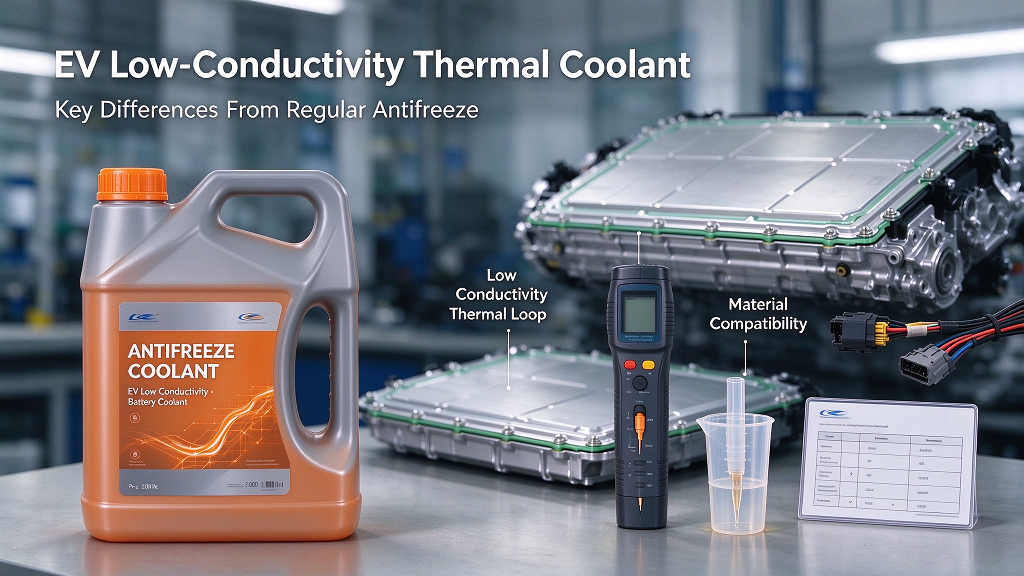
1. New energy electric vehicles have two independent cooling loops, and the high-voltage battery thermal loop requires special low-conductivity coolant instead of regular antifreeze. 2. Electrical conductivity describes how easily electric current flows through liquid, and it is the core safety index for EV battery thermal coolant. 3. Regular automotive antifreeze contains dissolved ions that raise conductivity, creating leakage current and short-circuit risks in high-voltage battery packs. 4. EV coolant is produced with ultra-pure deionized water and low-ion inhibitor packages to keep conductivity within controlled limits. 5. EV coolant must maintain excellent compatibility with special plastics, elastomers and thin aluminum heat exchangers inside battery packs. 6. EV coolant maintenance rules differ from gasoline car antifreeze; conductivity testing is the most important inspection item. 7. Our factory develops and produces customized low-conductivity EV thermal coolant and serves new energy aftermarket distributors as your reliable supplier.

Signs of Degraded Antifreeze

Signs of Degraded Antifreeze

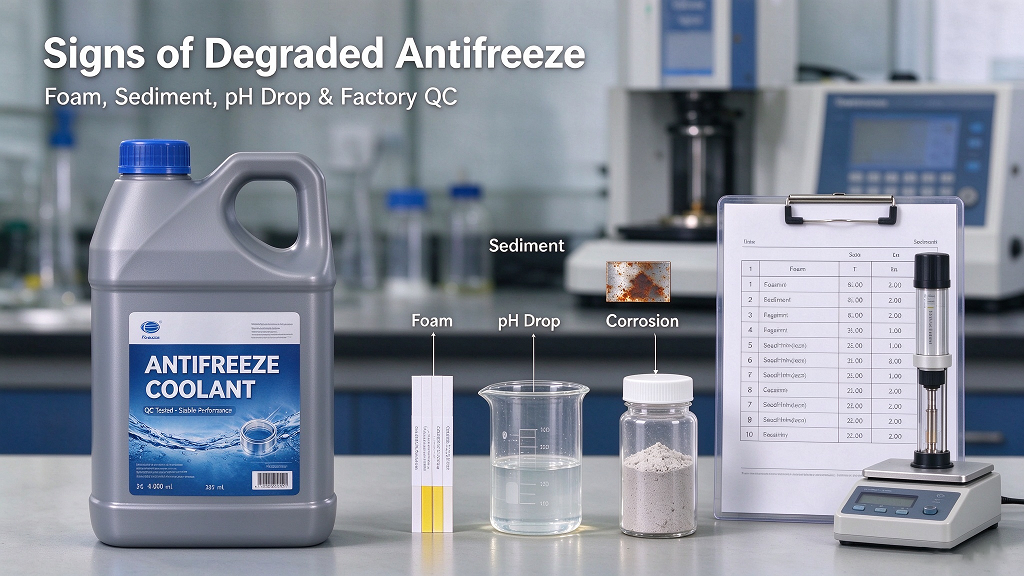
1. Antifreeze can look clear and transparent while protective inhibitors have already been depleted, so visual check alone cannot confirm coolant quality. 2. The root cause of coolant degradation is continuous consumption of corrosion inhibitors during repeated heat cycles and contact with metal surfaces. 3. Visible warning signs of degraded antifreeze include persistent foam, cloudiness, solid sediment and unexpected abnormal color shift. 4. Core laboratory QC parameters include pH value, reserve alkalinity and metal corrosion weight loss testing. 5. Our factory uses accelerated thermal cycling stability tests to simulate long-term service and verify batch quality before release. 6. Improper storage, mixing incompatible coolant and dilution with hard water will greatly speed up antifreeze degradation. 7. Choose a trusted antifreeze manufacturer that provides batch COA and full QC reports for every shipment.

What Is SCA and When Should You Add SCA Additive

What Is SCA and When Should You Add SCA Additive

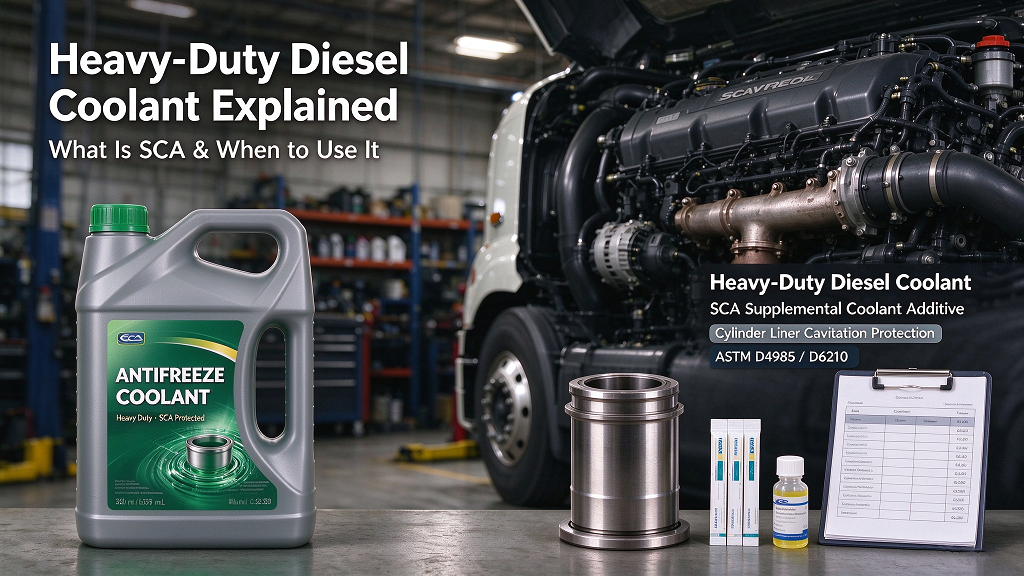
1. Standard passenger car antifreeze cannot fully protect heavy-duty diesel engines, because diesel engines face unique cylinder liner cavitation risks from strong vibration. 2. Cavitation occurs when vibration creates tiny vapor bubbles that collapse against the cylinder liner surface and finally cause pitting and liner failure. 3. SCA, Supplemental Coolant Additive, is a special inhibitor package built to form a protective film and stop cavitation on diesel cylinder liners. 4. There are two main heavy-duty coolant types: pre-charged coolant with SCA blended in factory and conventional coolant requiring regular SCA top-ups. 5. ASTM D4985 and ASTM D6210 are widely accepted industry standards for heavy-duty diesel antifreeze performance. 6. Fleet managers must test coolant regularly to monitor SCA concentration instead of replacing coolant only on fixed time schedules. 7. Work with a professional heavy-duty coolant manufacturer to get qualified products and technical support for your fleet customers.

Ethylene Glycol vs Propylene Glycol Antifreeze: Toxicity, Cost and Sourcing Guide

Ethylene Glycol vs Propylene Glycol Antifreeze: Toxicity, Cost and Sourcing Guide

1. Ethylene glycol and propylene glycol are two mainstream base fluids for commercial antifreeze, and their core difference lies in toxicity and suitable application scenarios. 2. Ethylene glycol has excellent heat transfer performance and lower raw material cost, making it the standard coolant for passenger cars and heavy-duty trucks worldwide. 3. Propylene glycol antifreeze features low acute toxicity, which fits scenarios where accidental contact with humans, livestock or food surfaces may happen. 4. Propylene glycol coolant needs a higher mixing ratio for the same freeze point and has slightly weaker heat transfer performance with higher raw material cost. 5. The two glycol types have different hazard classifications, shipping labels and SDS content, which matters a lot for export customs clearance. 6. Some overseas markets with strict safety regulations prefer low-toxic propylene glycol antifreeze for agricultural machines and RV equipment. 7. Our factory produces both ethylene glycol and propylene glycol antifreeze and acts as your reliable supplier for private label and compliant export orders.

Why Higher Glycol Concentration Does Not Equal Better Freeze Protection

Why Higher Glycol Concentration Does Not Equal Better Freeze Protection

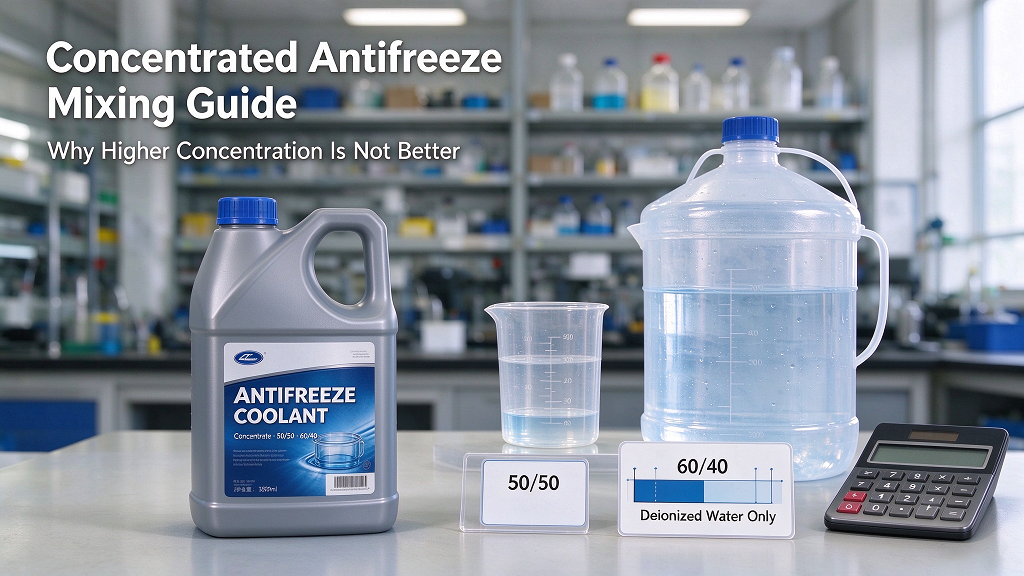
1. Many fleet managers and repair shop owners wrongly believe undiluted concentrated antifreeze delivers the strongest freeze protection, which conflicts with the physical property of glycol-water mixtures. 2. The freezing point of ethylene glycol water mixture changes along a non-linear curve and will rise again after passing the optimal concentration point. 3. The 50/50 glycol and deionized water mix is the global standard balanced formula for freeze protection, boiling protection and heat transfer. 4. A 60/40 ratio is the practical upper limit for extremely cold areas, and extra glycol beyond this ratio brings no extra benefit and causes risks. 5. Tap water contains mineral ions that form scale and trigger corrosion, so only deionized or distilled water can be used for dilution. 6. Over-concentrated coolant has higher viscosity, increases water pump workload and reduces heat transfer efficiency under heavy engine load. 7. Work with a reliable antifreeze factory to get both ready-to-use coolant and concentrated antifreeze for your different customer groups.

IAT, OAT, HOAT, Si-OAT Coolant Full Guide: Never Select Antifreeze Only By Color

IAT, OAT, HOAT, Si-OAT Coolant Full Guide: Never Select Antifreeze Only By Color

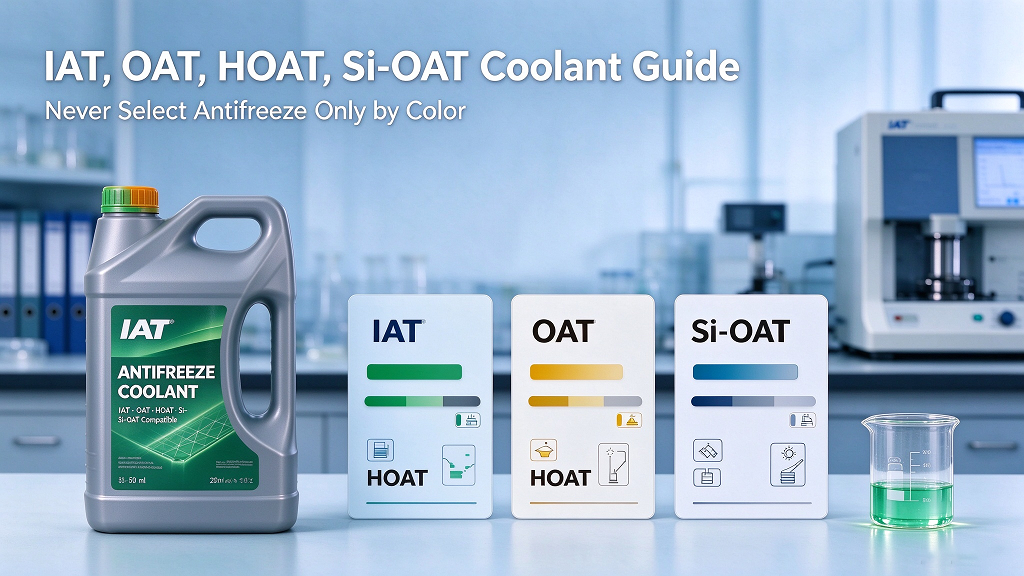
1. Many mechanics and B2B buyers select antifreeze according to its color, but dye is only a visual marker and cannot represent the internal inhibitor formula. 2. IAT coolant adopts traditional inorganic additive technology, which has short service life and is suitable for classic cars and old engineering machinery. 3. OAT coolant uses organic acid inhibitors, features long drain intervals and is widely matched with modern European passenger vehicles. 4. HOAT coolant combines inorganic and organic inhibitors, making it a flexible choice for mixed fleets with old and new vehicles. 5. Si-OAT coolant uses silicate-stabilized organic acid formula, designed for high-load turbo engines and new energy vehicle thermal systems. 6. Mixing incompatible coolant types will trigger chemical reactions, consume inhibitors rapidly and cause sediment and engine corrosion. 7. When you source coolant, cooperate with a professional antifreeze manufacturer that can supply multiple formulas for different market demands.