logo

What Is SCA and When Should You Add SCA Additive

logo

Published

Nov 06 2026

  • News
  • Antifreeze / Coolant
  • Buying Guide

Follow us

what-is-sca-and-when-should-you-add-sca-additive

what is SCA in heavy duty coolant

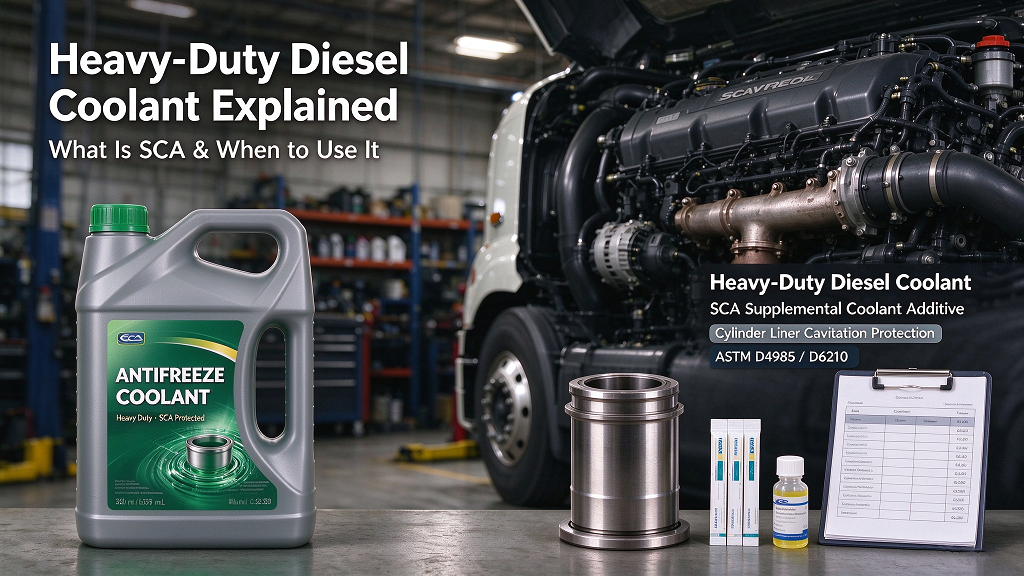
Many fleet buyers learn expensive lessons after improper coolant selection: pouring regular passenger car antifreeze into heavy-duty diesel engines triggers cylinder liner cavitation, costly engine overhaul and long downtime. Diesel engines run at higher cylinder pressure and produce stronger liner vibration during combustion. This creates cavitation damage that standard passenger car coolant inhibitors cannot prevent. SCA supplemental coolant additive is the core solution for heavy-duty cooling systems. GAFLE factory is a professional coolant manufacturer producing heavy-duty diesel antifreeze for truck fleets, mining equipment and construction machinery distributors worldwide.

Standard passenger car antifreeze cannot fully protect heavy-duty diesel engines, because diesel engines face unique cylinder liner cavitation risks from strong vibration. Gasoline engines have relatively gentle liner vibration. Heavy-duty diesel engines generate powerful mechanical vibration during every combustion cycle. The vibration disturbs the coolant layer next to the cylinder liner, creating repeated mechanical stress that standard automotive coolant formulas are not designed to resist.

Cavitation occurs when vibration creates tiny vapor bubbles that collapse against the cylinder liner surface and finally cause pitting and liner failure. Micro vapor bubbles form on the metal surface of cylinder liners. When these bubbles collapse, they release high local impact force. After thousands of working hours, this force creates pits on the liner. The pits expand into holes, coolant leaks into combustion chambers, and the engine suffers catastrophic failure. Cavitation damage can appear even if the coolant looks clean and keeps the correct freeze point.

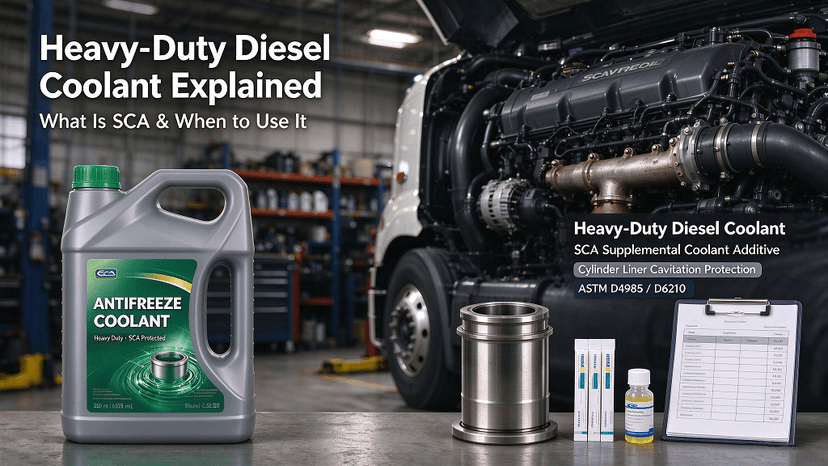
SCA, Supplemental Coolant Additive, is a special inhibitor package built to form a protective film and stop cavitation on diesel cylinder liners. SCA usually contains nitrite, molybdate and other targeted inhibitors. These ingredients build a thin, resilient protective layer on the cylinder liner surface. The layer absorbs impact force from collapsing bubbles and prevents metal pitting. SCA is not a universal coolant upgrade; it is specially developed for heavy-duty diesel applications.

There are two main heavy-duty coolant types: pre-charged coolant with SCA blended in factory and conventional coolant requiring regular SCA top-ups. Pre-charged heavy-duty coolant has SCA blended inside during production at our factory. It is easier for fleet maintenance teams, as technicians do not need to calculate and add SCA separately. Conventional heavy-duty coolant leaves the SCA addition to end users, and operators must test fluid and add SCA according to test results. This two-part system is still widely used in older fleets and large mining equipment.

ASTM D4985 and ASTM D6210 are widely accepted industry standards for heavy-duty diesel antifreeze performance. ASTM D4985 covers heavy-duty coolant that requires extra SCA addition. ASTM D6210 covers fully formulated, pre-charged heavy-duty coolant with SCA included. When buyers source heavy-duty antifreeze, checking the ASTM standard is the fastest way to confirm suitability. Many OEM heavy-duty truck brands reference these two standards in official service manuals.

Fleet managers must test coolant regularly to monitor SCA concentration instead of replacing coolant only on fixed time schedules. SCA depletes gradually during operation. Visual inspection cannot tell you the remaining SCA level. Fleet teams use test strips or lab analysis to check nitrite concentration. If SCA falls below the minimum threshold, cavitation risk rises rapidly. A good maintenance plan combines scheduled testing, SCA top-ups and periodic coolant replacement.

Work with a professional heavy-duty coolant manufacturer to get qualified products and technical support for your fleet customers. GAFLE factory supplies pre-charged heavy-duty coolant and supporting SCA additive products. We provide test guidance documents for your fleet customers. As your reliable supplier, we help you distinguish heavy-duty coolant from passenger car coolant on catalog and packaging to avoid costly misapplication.

FAQ

Q1: What does SCA stand for in heavy-duty coolant?

A1: Supplemental Coolant Additive, a special inhibitor package mainly for diesel cylinder liner cavitation protection.

Q2: Can I use regular passenger car antifreeze for heavy-duty diesel trucks?

A2: Not recommended. It lacks cavitation protection and may lead to cylinder liner pitting and engine failure.

Q3: What is the difference between ASTM D4985 and D6210?

A3: D4985 refers to coolant requiring extra SCA addition; D6210 is fully formulated pre-charged heavy-duty coolant with SCA included.

Q4: How do fleets check SCA levels?

A4: Using coolant test strips or laboratory analysis to measure nitrite concentration.

Q5: Is SCA needed for gasoline truck engines?

A5: Generally no. Cavitation risk is much lower for gasoline engines, and standard passenger car coolant works well.

Q6: Does this factory produce ASTM-certified heavy-duty diesel coolant?

A6: Yes. Our heavy-duty antifreeze meets ASTM heavy-duty standards and fits trucks, excavators and mining machinery.

Welcome to contact GAFLE for more information & cooperation!
peter
ZHEJIANG GAFLE AUTO CHEMICL CO.,LTD
Tel:86-579-8222 1665
Fax:86-579-8246 4690
Cel/Wechart:86-13335993986
E-mail:peter@gafle.net
Web:www.gafle.net
Featured Blogs
What Is SCA and When Should You Add SCA Additive

What Is SCA and When Should You Add SCA Additive

1. Standard passenger car antifreeze cannot fully protect heavy-duty diesel engines, because diesel engines face unique cylinder liner cavitation risks from strong vibration. 2. Cavitation occurs when vibration creates tiny vapor bubbles that collapse against the cylinder liner surface and finally cause pitting and liner failure. 3. SCA, Supplemental Coolant Additive, is a special inhibitor package built to form a protective film and stop cavitation on diesel cylinder liners. 4. There are two main heavy-duty coolant types: pre-charged coolant with SCA blended in factory and conventional coolant requiring regular SCA top-ups. 5. ASTM D4985 and ASTM D6210 are widely accepted industry standards for heavy-duty diesel antifreeze performance. 6. Fleet managers must test coolant regularly to monitor SCA concentration instead of replacing coolant only on fixed time schedules. 7. Work with a professional heavy-duty coolant manufacturer to get qualified products and technical support for your fleet customers.

Windshield Washer Fluid HS Code, Dangerous Goods Classification and Import Requirements

Windshield Washer Fluid HS Code, Dangerous Goods Classification and Import Requirements

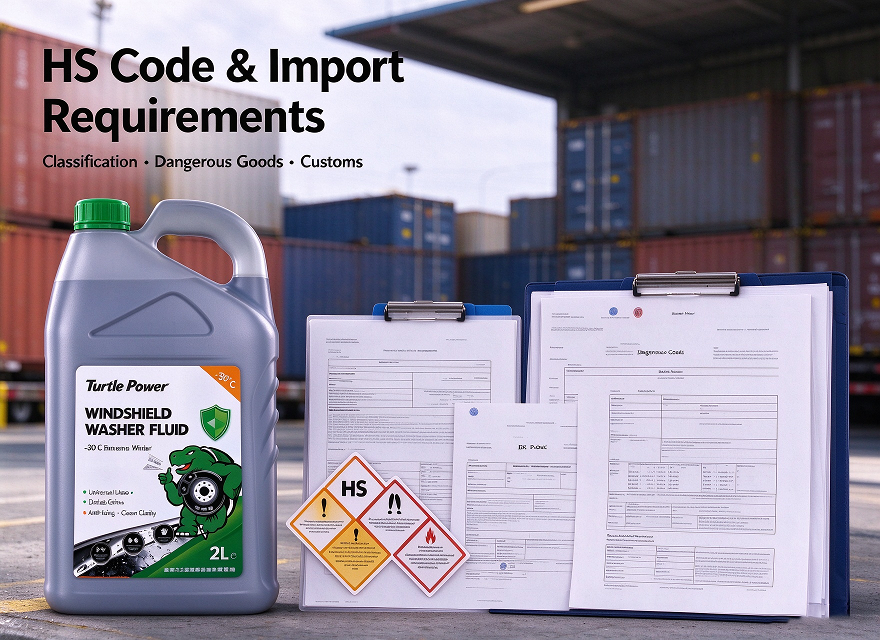
1. Exporting washer fluid goes wrong in two places, classification and dangerous goods determination, and either mistake can stop a container at the port. 2. The correct tariff classification follows composition and function, not the product name printed on the label. 3. Dangerous goods status depends on the alcohol system and its flash point, which is why formula decisions have shipping consequences. 4. Sea freight choices for washer fluid are driven by weight limits and packaging strength more than by sailing schedules. 5. US importers face composition disclosure, labelling and state-level VOC requirements that vary by destination. 6. EU importers face REACH obligations, CLP labelling rules, local-language SDS requirements and a responsible entity inside the union. 7. Clearance delays usually come from document inconsistencies rather than from cargo problems, and the inconsistencies are preventable.

Sourcing Wholesale Windshield Washer Fluid for Distribution

Sourcing Wholesale Windshield Washer Fluid for Distribution

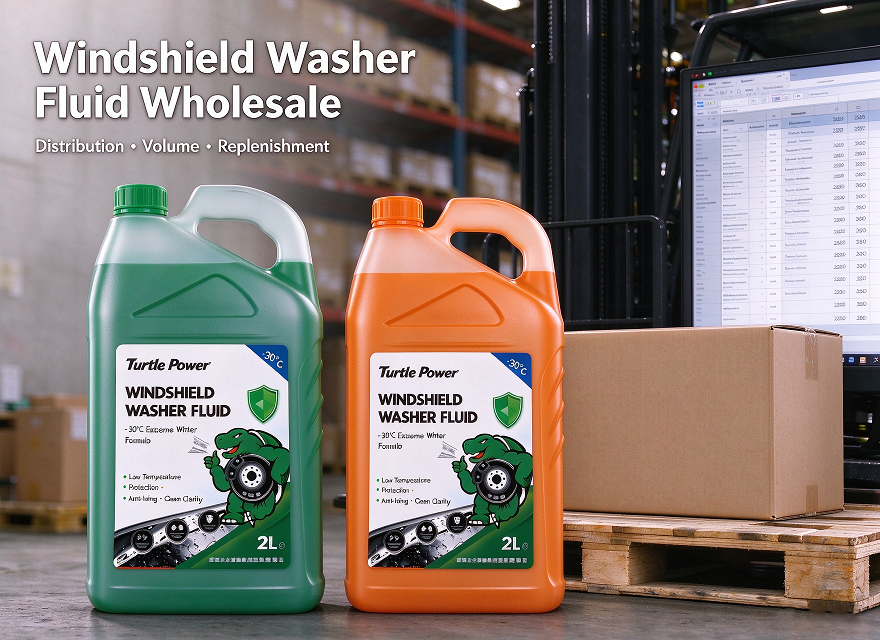
1. Buying washer fluid as a distributor is a different exercise from buying it as a retailer, because the decision is driven by turnover, SKU structure and replenishment reliability rather than by shelf appeal alone. 2. Wholesale volumes in this category fall into three practical tiers, and each tier carries its own cost structure and commitment level. 3. There are three ways to buy wholesale washer fluid, and the difference between them shows up in price, responsiveness and how much risk you carry. 4. A distributor's product range should be designed around climate and channel first, and around novelty variants last. 5. Documentation and replenishment reliability decide whether a wholesale relationship survives its second year, long after the opening price has been forgotten. 6. Territory, exclusivity and price protection are negotiable, but only if you raise them before the first container is loaded. 7. Payment terms allocate risk between buyer and seller, and the allocation should match who controls the shipping schedule.

Can you support market-specific compliance requirements?

Can you support market-specific compliance requirements?

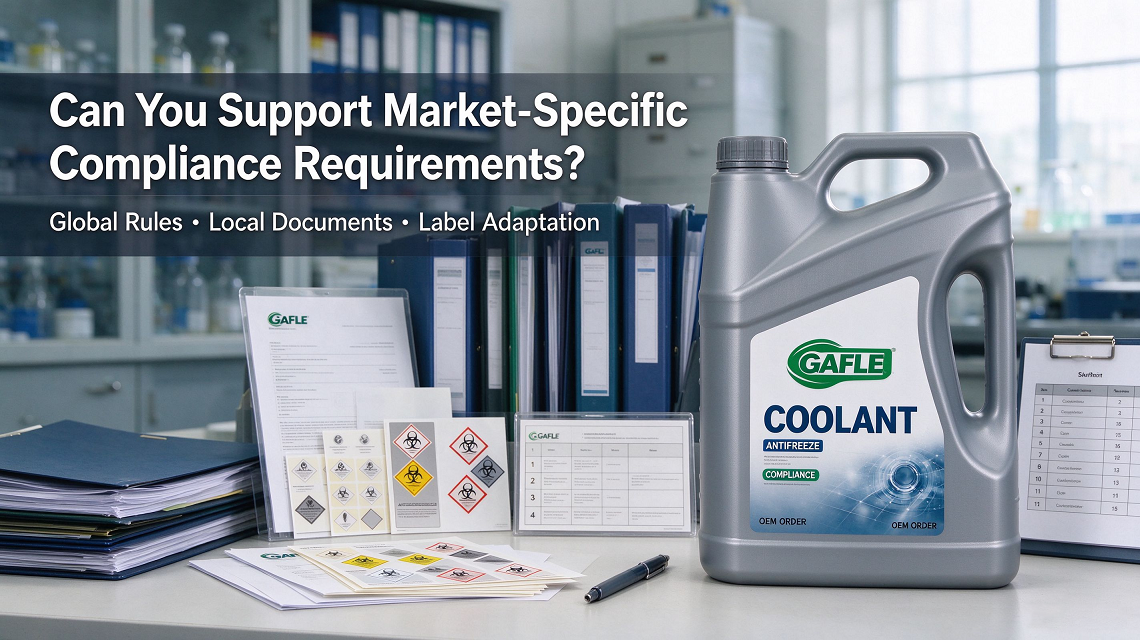
1. Different countries and regions enforce distinct chemical safety, environmental and labeling regulations for automotive brake fluid and coolant, which creates major customs clearance risks for international OEM buyers. 2. Localized label compliance means adjusting label text, warning symbols, ingredient disclosures and hazard statements strictly according to the mandatory rules of your target sales territory. 3. Standard and region-adapted technical documents including SDS, TDS and COA are prepared to match local authority requirements for import filing and inspection. 4. We adjust product testing schemes to align with mandatory industry standards in target markets, covering brake fluid DOT specifications, coolant ASTM standards and local heavy metal or volatile substance limits. 5. Our team provides auxiliary support when your shipment faces customs inspection, third-party audit or official regulatory inquiries in the destination country.

-30°C Windshield Washer Fluid: Formulation, Testing and Bulk Sourcing

-30°C Windshield Washer Fluid: Formulation, Testing and Bulk Sourcing

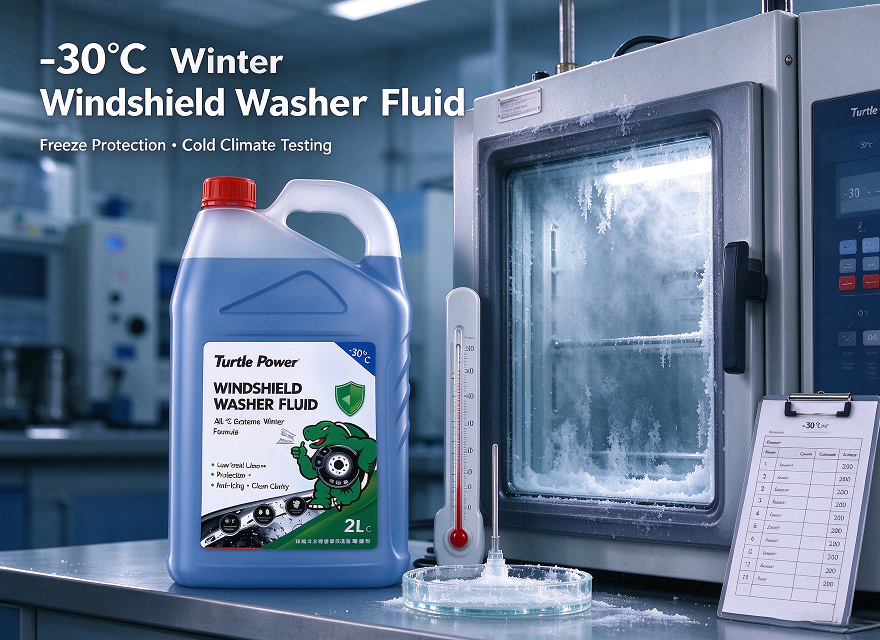
1. A genuine -30°C washer fluid is a re-engineered system, not a standard formula with extra alcohol poured in. 2. The difference between a winter fluid and a mild-climate fluid lies in the whole formulation balance, not in a single concentration number. 3. Freeze protection comes from the alcohol system, and the type of alcohol matters as much as the percentage. 4. Freeze point claims should be verified by test rather than by calculation, and every production batch should carry the evidence. 5. Low temperature exposes material weaknesses that mild conditions hide, so compatibility testing must cover the whole washer circuit. 6. Winter fluid labels carry performance claims that regulators and retail buyers both scrutinise, so the wording must match the test data. 7. Bulk winter fluid rewards careful storage planning, because cold climates are exactly where warehouse conditions are hardest to control.

Concentrate or Ready-to-Use Windshield Washer Fluid

Concentrate or Ready-to-Use Windshield Washer Fluid

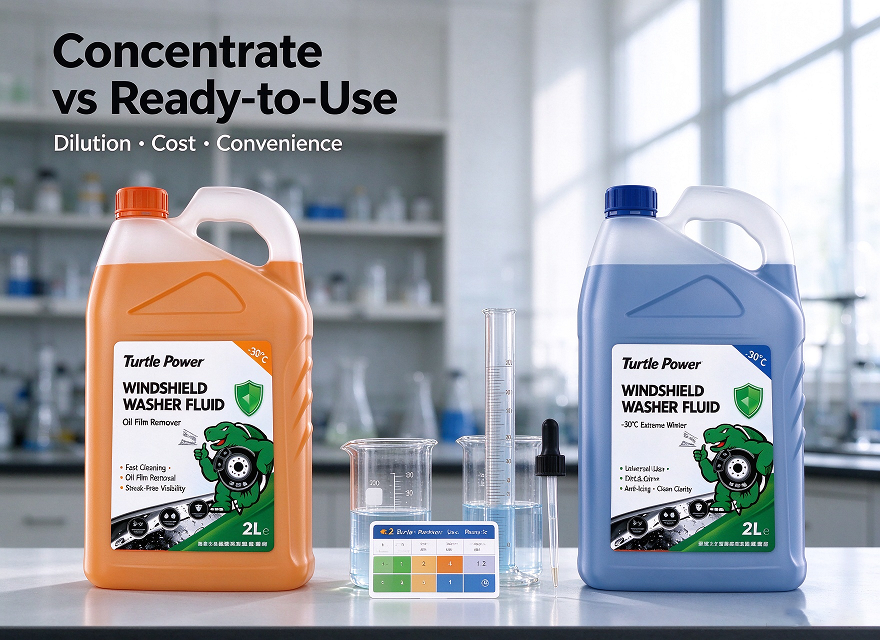
1. Concentrate and ready-to-use fluid are two different business models rather than two versions of the same product, and the choice changes your freight bill, your shelf space and your customer complaints. 2. The core difference is what travels in the container: concentrate ships the active chemistry, while ready-to-use fluid ships water alongside it. 3. A concentrate is a carefully balanced system of solvents, surfactants and inhibitors designed to be diluted at a defined ratio without losing stability. 4. Dilution ratio is the point where concentrate economics meet real-world execution, because the correct ratio depends on climate, water quality and who is doing the mixing. 5. Ready-to-use fluid wins on consistency and convenience, and that is exactly what retail buyers pay a premium for. 6. The only fair comparison between the two formats is landed cost per litre of usable fluid, calculated after freight, packaging and dilution losses. 7. Packaging and label requirements differ enough between the formats that launching both at once usually doubles the artwork and approval workload.