Distributors who enter the washer fluid category often start by comparing quotations, and just as often discover that price was the least important variable. Washer fluid is a fast-moving, low-value, high-volume product: it occupies warehouse space, it sells in bursts around seasonal weather, and its margin per unit is thin enough that a single stock-out during a cold snap costs more than a year of price negotiation. This article sets out how wholesale sourcing actually works in this category, from the volume tiers to the contract terms that protect a distributor's territory. GAFLE factory supplies wholesale windshield washer fluid programmes to importers and distributors in multiple regions, and the framework below reflects that commercial reality.
The three wholesale tiers
Wholesale volumes in this category fall into three practical tiers, and each tier carries its own cost structure and commitment level. The smallest tier is a mixed pallet programme, where a distributor buys several SKUs together to test the market. Freight is usually consolidated, unit cost is higher, and the supplier treats the order as a trial rather than a commitment.
The middle tier is a full container programme, typically one or two SKUs loaded to the weight or volume limit. This is where the economics start to work: packaging can be bought in economic batch sizes, freight per litre falls sharply, and the supplier can schedule production predictably.
The largest tier is an annual framework with rolling releases, where the distributor commits to a volume range and draws down against it quarterly. The unit price improves further, packaging stock is held against the forecast, and the risk shifts from price to forecast accuracy.
A distributor should choose the tier that matches its own reorder cycle, not the one with the lowest quoted unit price. Committing to a framework volume that the market cannot absorb creates dead stock that costs more than the price difference.
Factory, exporter or trading company
There are three ways to buy wholesale washer fluid, and the difference between them shows up in price, responsiveness and how much risk you carry. Buying directly from a manufacturer usually gives the best price at volume, direct access to technical staff and full control over formula and packaging decisions. It also requires the buyer to handle documentation, inspection coordination and logistics itself, or to appoint an agent.
Buying through an exporter is a middle path. The exporter consolidates products, handles export paperwork and often manages freight, which suits distributors without in-house trade capability. The cost is a margin layer, and the risk is that technical questions get relayed rather than answered.
Buying from a trading company is the most flexible and the least transparent. Trading companies can source small quantities of many products quickly, but they rarely control the production batch, which makes traceability and consistency harder to guarantee when a customer complaint arrives.
For a distributor building a long-term line, direct manufacturer supply is usually the right end state, even if the first order goes through an exporter.
Designing the product range
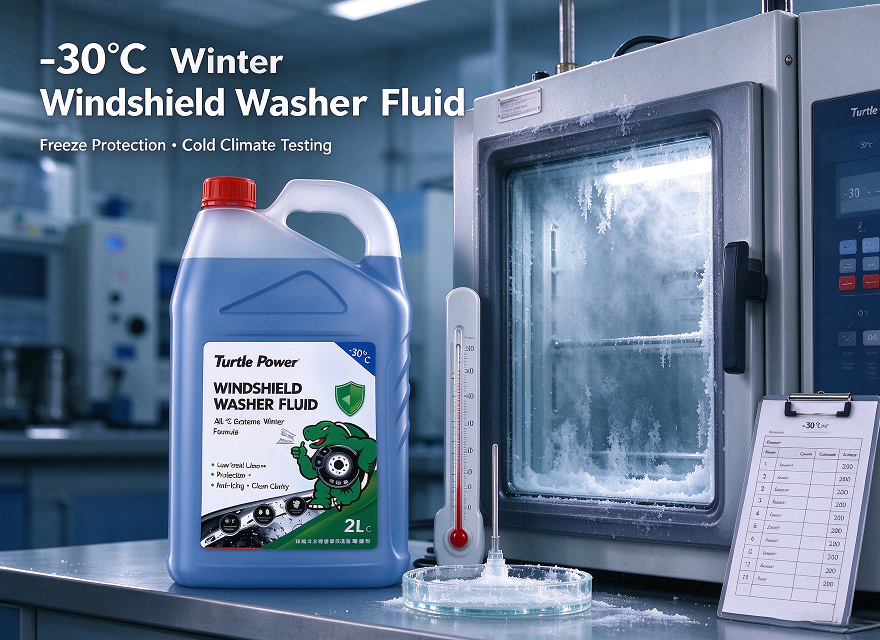
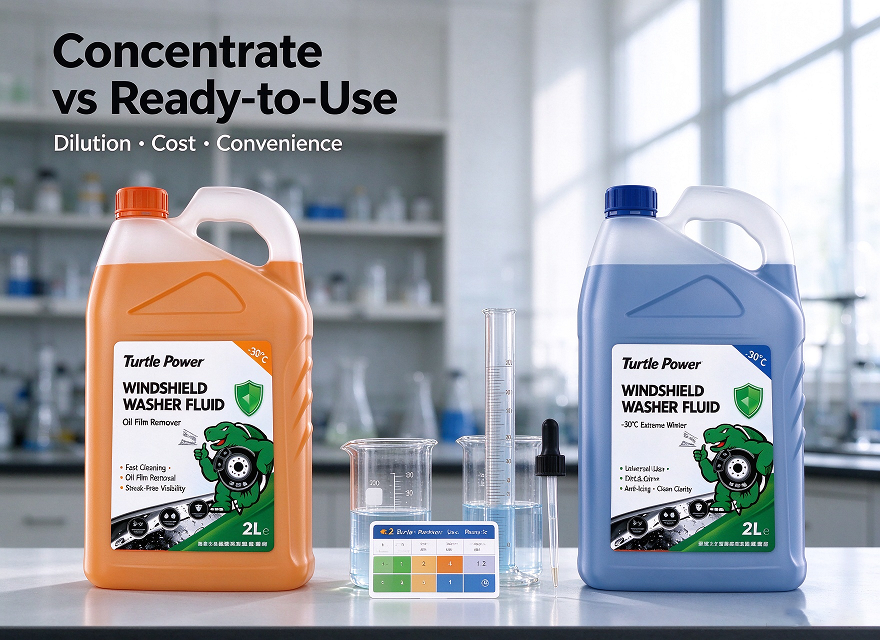
A distributor's product range should be designed around climate and channel first, and around novelty variants last. Climate defines the core freeze point grades: a cold market needs a genuine low-temperature winter product, a temperate market needs an all-season grade, and a hot market may only require a mild cleaner with a freeze margin.
Channel defines pack sizes. Convenience and fuel retail favour small bottles and multi-packs, workshops favour larger cans and drums, and fleet operators favour bulk containers. Selling the right chemistry in the wrong pack size is a common reason a new line stalls.
Function comes third. Streak-free positioning, water-repellent variants, deicing products and bug-remover fluids are genuine differentiators, but each adds a SKU to forecast, a label to approve and a batch to hold. Launch two or three core grades first, then add function variants once the base range has proven its reorder rate.
Seasonality should shape the calendar rather than the catalogue. Winter stock needs to arrive before the cold season, not during it, which means ordering in the opposite season to the one you are selling into.
Documentation and replenishment reliability
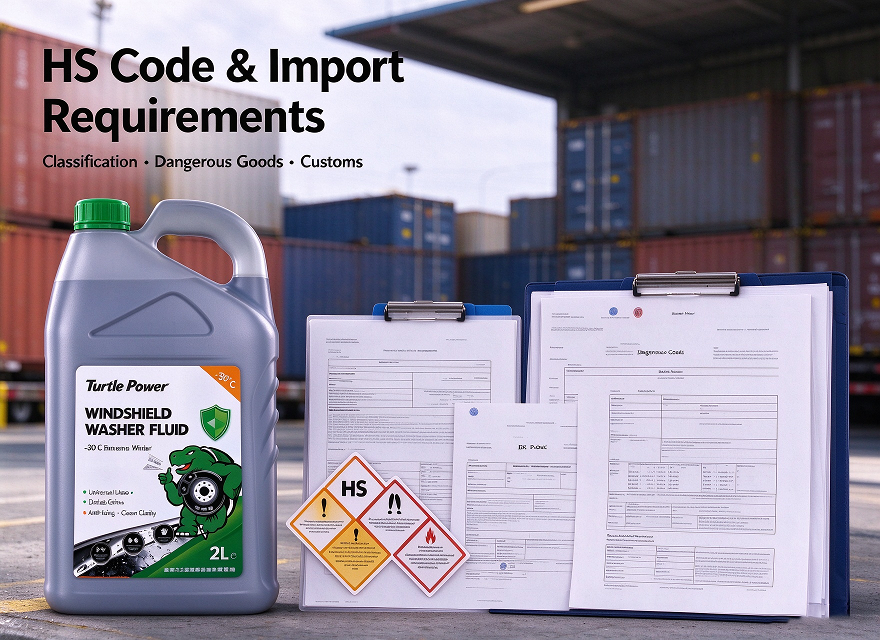
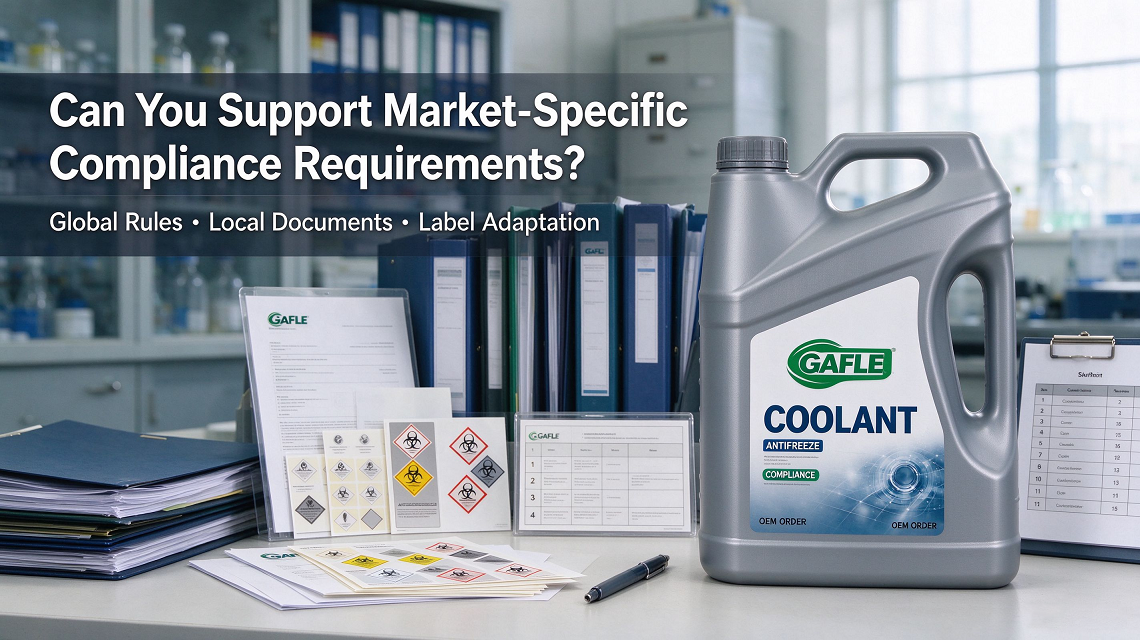
Documentation and replenishment reliability decide whether a wholesale relationship survives its second year, long after the opening price has been forgotten. A distributor needs a supplier that can produce SDS, TDS and COA consistently, in the language of the destination market, without a week of chasing for each shipment.
Replenishment reliability is harder to assess from a quotation. Ask how the factory schedules capacity for repeat customers, how it handles a sudden increase, and what notice it needs for a packaging change. A supplier that answers these questions with specific dates rather than reassurances is the one worth building on.
Stock-out risk deserves explicit treatment in the agreement. A distributor selling into a cold market cannot afford to be empty in November, so the contract should define a delivery window and a remedy if the window is missed.
Territory, exclusivity and price protection
Territory, exclusivity and price protection are negotiable, but only if you raise them before the first container is loaded. Distributors frequently discover after two years of building a market that the same supplier is selling an identical label to a competitor three streets away.
Exclusivity should be defined precisely: by product line, by pack size, by channel, by geography and by duration. A vague promise of "priority" protects nothing. Price protection matters just as much, because a distributor holding inventory needs to know that a promotional price offered to a new account will not undercut its own stock.
The trade-off is straightforward. A manufacturer will accept territorial limits in exchange for a committed annual volume, so the negotiation should link the two rather than treat them separately.
Payment terms and risk allocation
Payment terms allocate risk between buyer and seller, and the allocation should match who controls the shipping schedule. A deposit with balance against documents is the standard structure for a first container. A letter of credit shifts some risk back to the seller but adds cost and administrative friction.
Currency and freight volatility deserve a clause. If the quotation is in one currency and the freight is paid in another, a rate movement can erase the margin that justified the order. Fixing the freight component for a stated validity period is a reasonable request from a repeat buyer.
FAQ
Q1: What is the minimum order for wholesale windshield washer fluid? A1: It depends on packaging. A mixed pallet programme can start small when stock moulds are used, while a full container programme requires enough volume to fill the load economically.
Q2: Is it cheaper to buy directly from a factory or through an exporter? A2: Direct factory supply is usually cheaper at volume, but the buyer handles more coordination. Exporters add a margin in exchange for handling paperwork and logistics.
Q3: Can a distributor get territorial exclusivity? A3: Yes, usually in exchange for a committed annual volume. The exclusivity should be defined by product line, pack size, channel, geography and duration.
Q4: How should a distributor plan seasonal stock? A4: Ordering in the opposite season to the one being sold into, and reserving production capacity several months ahead for winter grades.
Q5: What documents should accompany each wholesale shipment? A5: SDS, TDS, COA for the batch, plus commercial invoice, packing list and certificate of origin. Regulated markets may require additional declarations.
Q6: How do I test a new supplier without a large commitment? A6: Start with a mixed pallet or a sample order, verify document quality and batch consistency, then move to a container programme once the reorder rate is proven.
Welcome to contact GAFLE for more information & cooperation!
peter
ZHEJIANG GAFLE AUTO CHEMICL CO.,LTD
Tel:86-579-8222 1665
Fax:86-579-8246 4690
Cel/Wechart:86-13335993986
E-mail:peter@gafle.net
Web:www.gafle.net