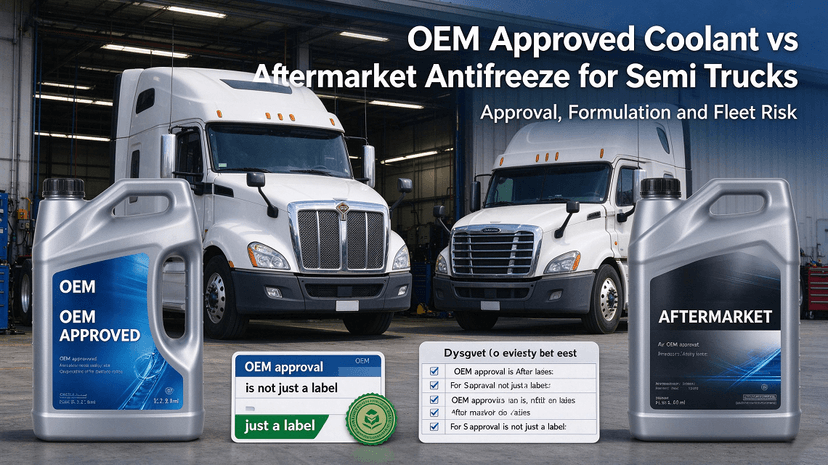
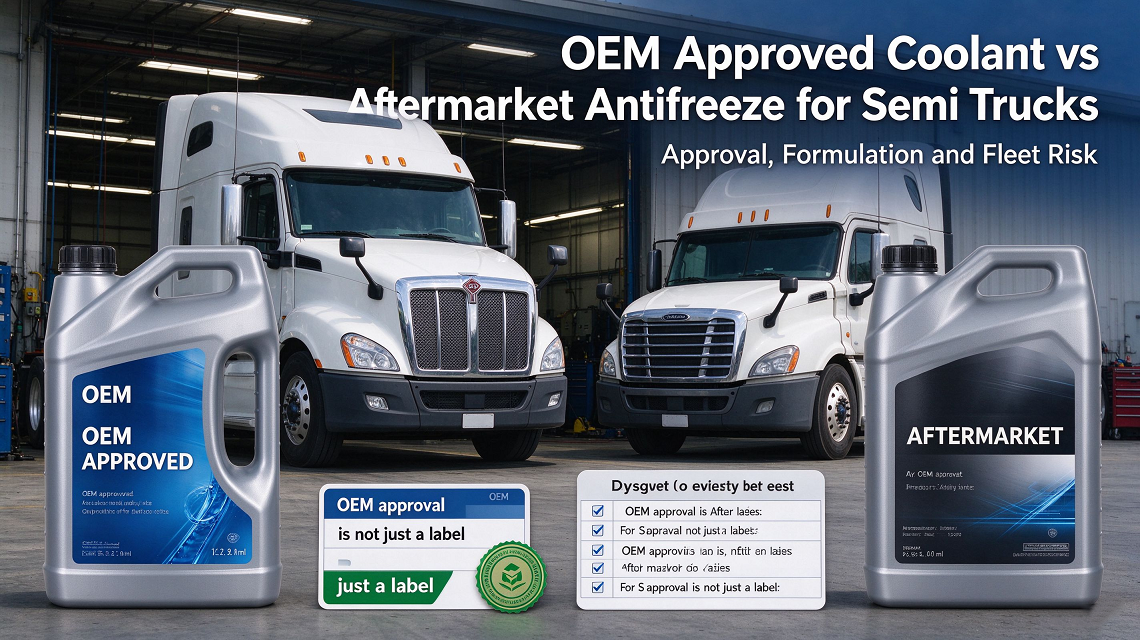
When purchasing fluids in bulk for Class 8 rigs, the price gap between factory-branded drums and generic off-the-shelf drums inevitably raises questions. Evaluating OEM approved coolant vs aftermarket antifreeze for semi trucks is rarely a matter of simple chemical preference; it is a financial risk calculation. While accounting teams often push for the lower unit cost per tote, maintenance supervisors know that an unstable chemical package can destroy wet-sleeve cylinder liners and plug EGR heat exchangers well before the next scheduled overhaul.
The Mechanical Reality: Why Commercial Diesels Demand Specialized Fluid
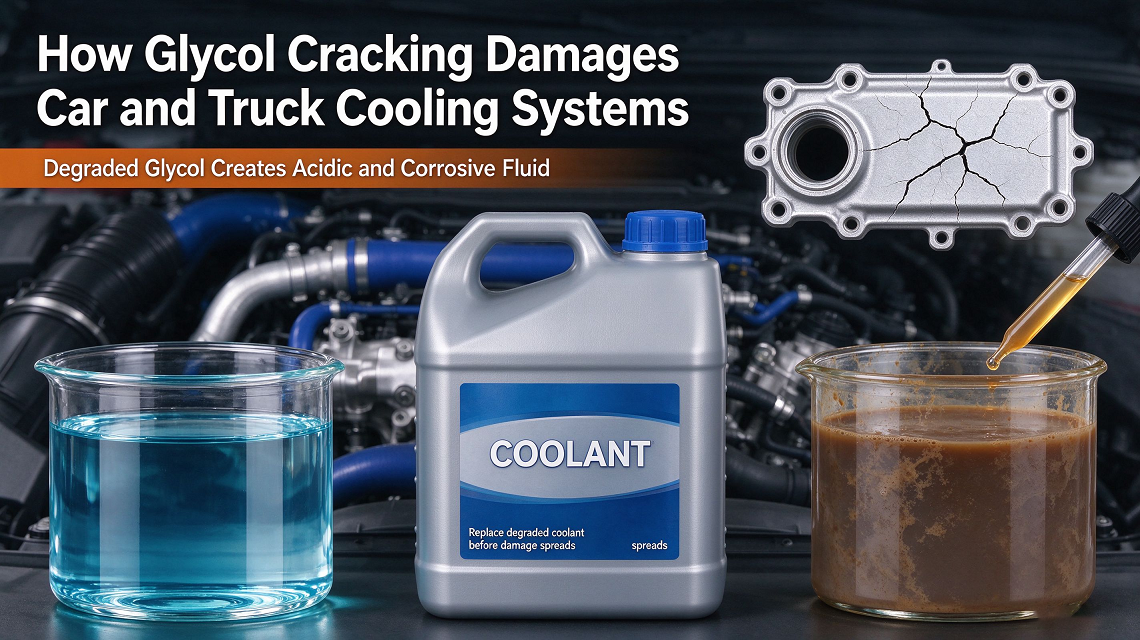
Light-duty automotive cooling systems primarily manage thermal transfer. In contrast, a heavy-duty commercial diesel engine introduces aggressive mechanical stresses that directly interact with the fluid formulation. Wet-sleeve cylinder liners flex under combustion shockwaves, creating microscopic vacuum bubbles along the liner exterior. When those bubbles violently collapse under pressure, they blast away raw cast iron if the fluid lacks an active protective passivation layer. This phenomenon—cavitation corrosion—can bore pinholes straight through a cylinder wall in under 100,000 miles.
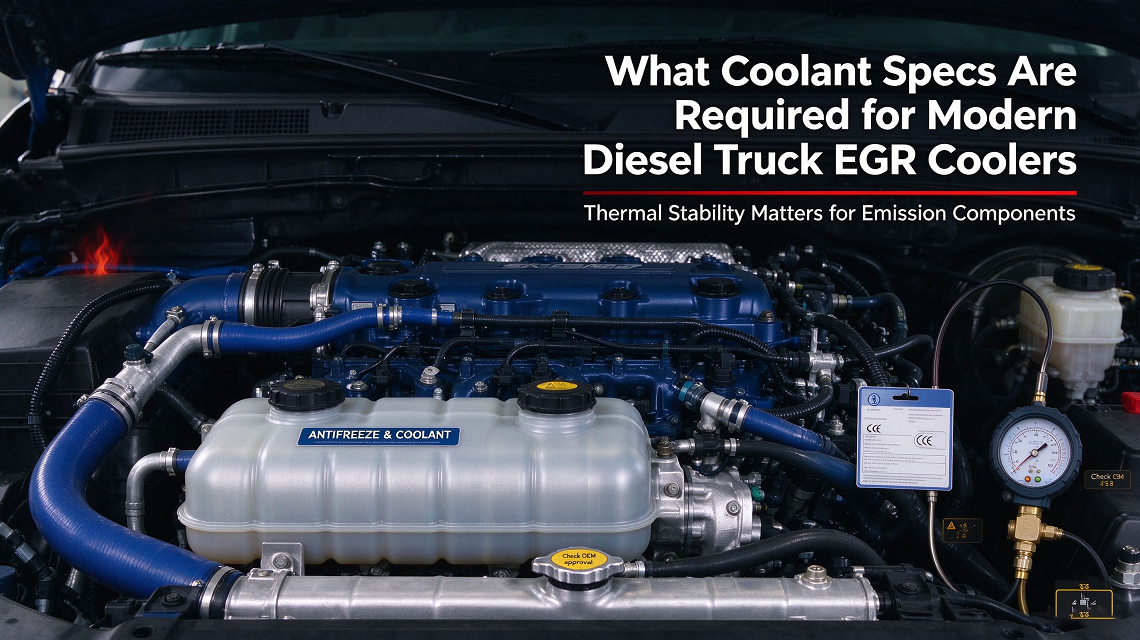
Beyond cavitation, modern Class 8 powertrains operate at tighter tolerances and higher localized operating temperatures than their predecessors. Low-temperature cooling circuits, auxiliary retarders, and aluminum-brazed radiators must coexist with high-heat EGR coolers. The coolant must suppress boiling, stop galvanic corrosion between dissimilar alloys, lubricate water pump seals, and resist oxidative degradation over hundreds of thousands of miles without dropping silicates out of solution.
The Real Difference Between OEM and Aftermarket Coolant
The primary difference between OEM and aftermarket coolant does not always come down to the base chemistry—most formulations rely on ethylene glycol and deionized water. The division lies in the additive package, OEM engineering validation, and the consistency of the manufacturing process.
Factory-approved options are formulated to satisfy strict proprietary performance specifications, such as Cummins CES 14603, Detroit Diesel 93K217, or Volvo VCS-2. These fluids undergo extensive bench tests, elastomer soak tests, and severe field trials on dynamometers to verify that corrosion inhibitors do not attack silicone hoses, degrade fluoropolymer gaskets, or leave deposits on hot EGR tubes. When an OEM coolant carries a formal approval number, the manufacturer has explicitly confirmed its compatibility with every internal surface touching the cooling circuit.
Aftermarket coolant formulations fall into two distinct operational categories:
- Certified Spec Blends: Products manufactured by established chemical blenders that specifically test to meet ASTM D6210 standards and hold explicit OEM licensing letters. These provide parity performance at a reduced price point.
- "Universal" Commercial Coolants: Fluids marketed broadly as compatible with all heavy-duty engines. These formulations frequently rely on broad-spectrum organic acid technology (OAT) or hybrid organic acid technology (HOAT) designed to pass minimum general tests. While serviceable in older or lower-stressed equipment, they may lack the exact passivation kinetics required by high-output proprietary engines.
Evaluating the Real Risks to Fleet Operations
Opting for a generic fluid to shave pennies per gallon introduces failure modes that rarely show up during the initial test run. The first sign of trouble is typically elastomeric failure. If an aftermarket blend features an aggressive sebacic acid or 2-EHA (2-ethylhexanoic acid) profile that conflicts with an engine builder’s proprietary gasket material, seal softening and weeping follow shortly after.
A second common issue is additive fallout. If a fleet tops off an OEM nitrite-free OAT system with a generic nitrate-containing aftermarket coolant, the chemical collision can destabilize the additive package. Inhibitors drop out as an insoluble abrasive gel. This residue settles in low-flow radiator tubes, plugs heater cores, and acts as liquid sandpaper against ceramic water pump seal faces.
There is also the matter of warranty preservation. Engine builders will not automatically void a warranty because a non-branded fluid is in the reservoir. However, if a liner pits through or an oil cooler ruptures, field engineers routinely draw fluid samples. If laboratory analysis reveals an unapproved additive chemistry or missing corrosion inhibitors, powertrain warranty claims for catastrophic internal damage are consistently rejected.
Procurement Checklist: Partnering with a Heavy Duty Coolant Supplier
Sourcing managers looking to control fluid spend without gambling on engine life should establish clear qualification criteria before issuing a purchase order. When auditing a heavy duty coolant supplier, demand concrete technical documentation rather than marketing assurances:
- Verify Licensed Specifications: Require the supplier to provide the current OEM approval certificate, not merely a statement that the product is "recommended for use where spec X is cited." There is a massive legal and technical distinction between a fluid being approved and being recommended by the chemical blender.
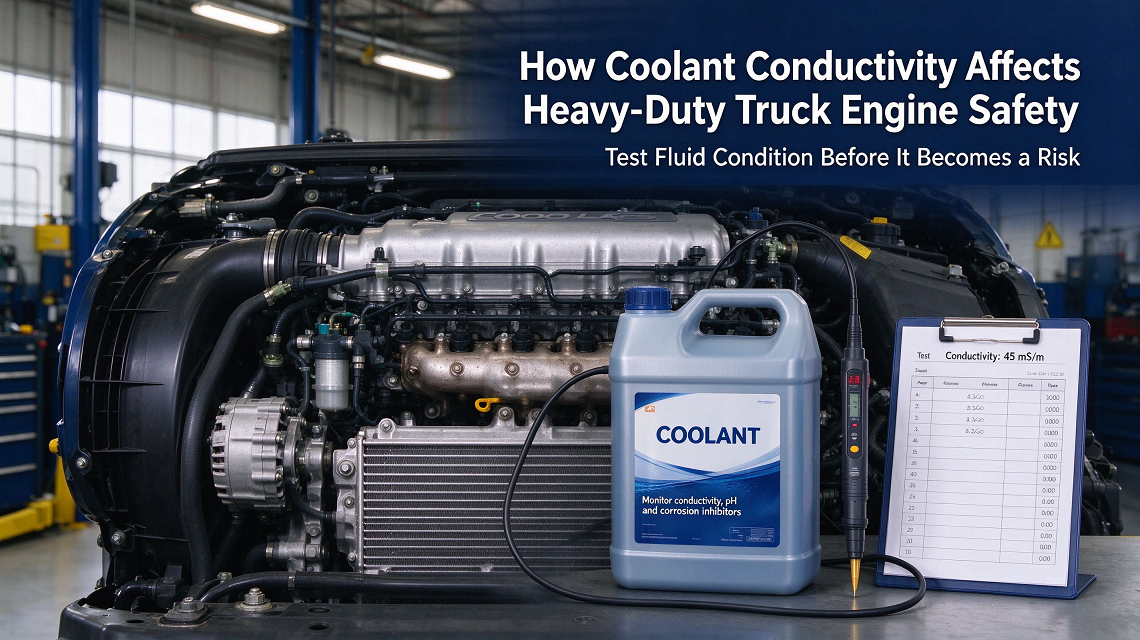
- Demand Lot Traceability: Reliable suppliers issue a Certificate of Analysis (COA) with each batch, confirming freeze point, boil point, pH levels, reserve alkalinity, and total dissolved solids.
- Audit Water Quality for Premix: If purchasing 50/50 prediluted drums or bulk totes, verify that the supplier uses deionized or reverse-osmosis purified water. High chloride or hardness levels in municipal source water quickly degrade corrosion inhibitor packages.
Frequently Asked Questions
Can I top off an OEM coolant with an aftermarket product?
Only if the aftermarket product uses identical inhibitor chemistry (for example, matching a nitrite-free extended life coolant to another verified nitrite-free formulation meeting the identical OEM specification). Mixing different chemical families—such as conventional low-silicate with extended-life OAT—neutralizes corrosion protection and risks chemical dropout.
How do I confirm if an aftermarket coolant holds real OEM approval?
Check the engine manufacturer's published service bulletins. Builders like Cummins, Detroit, and Mack maintain public or dealer-accessible approved fluid lists. If the supplier's specific product name is absent from that directory, it is not formally OEM-approved.
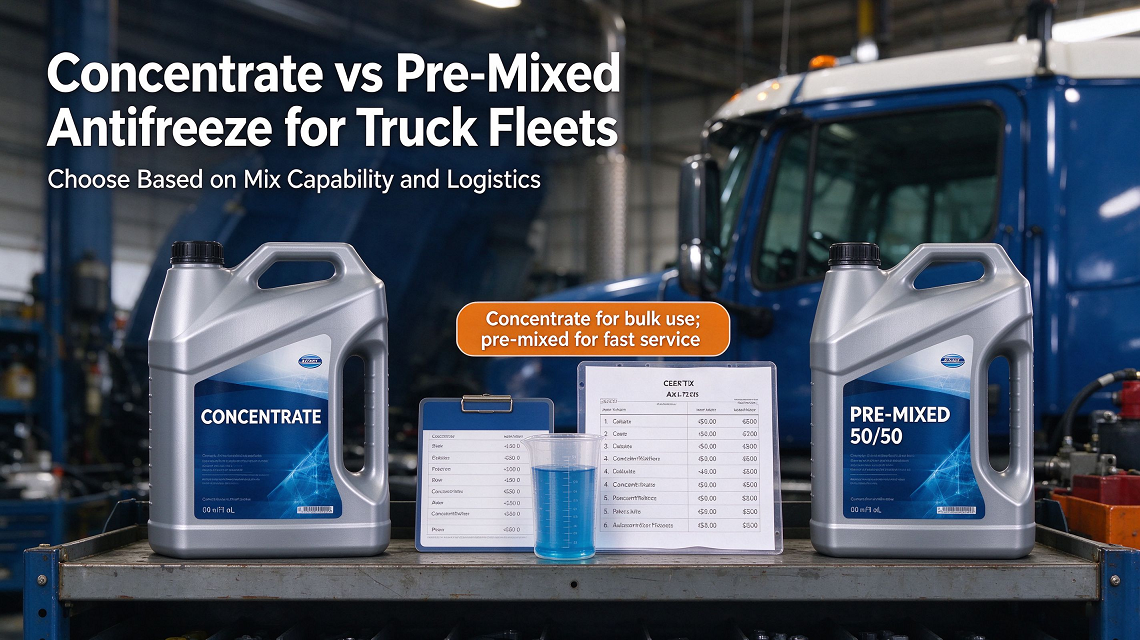
Is premixed coolant better than mixing concentrate in the shop?
For most commercial operations, yes. Shop-mixed fluid frequently introduces tap water containing calcium, magnesium, and chlorides that deplete additive reserves. Ready-to-use 50/50 premix guarantees pure deionized water and accurate glycol-to-water ratios across every bay.
Next Steps for Fleet Maintenance Teams
Before standardizing on a single cooling product, pull fluid maintenance logs across your fleet and categorize your equipment by engine make, model year, and existing warranty status. Request detailed technical data sheets and OEM confirmation letters from potential chemical suppliers. For older, out-of-warranty equipment, a fully certified ASTM D6210 aftermarket blend often yields meaningful savings; for newer, high-spec power units under primary warranty, staying strictly within the OEM's formal approval list remains the most cost-effective insurance policy available.
Welcome to contact GAFLE for more information & cooperation!
peter
ZHEJIANG GAFLE AUTO CHEMICL CO.,LTD
Tel:86-579-8222 1665
Fax:86-579-8246 4690
Cel/Wechart:86-13335993986
E-mail:peter@gafle.net
Web:www.gafle.net