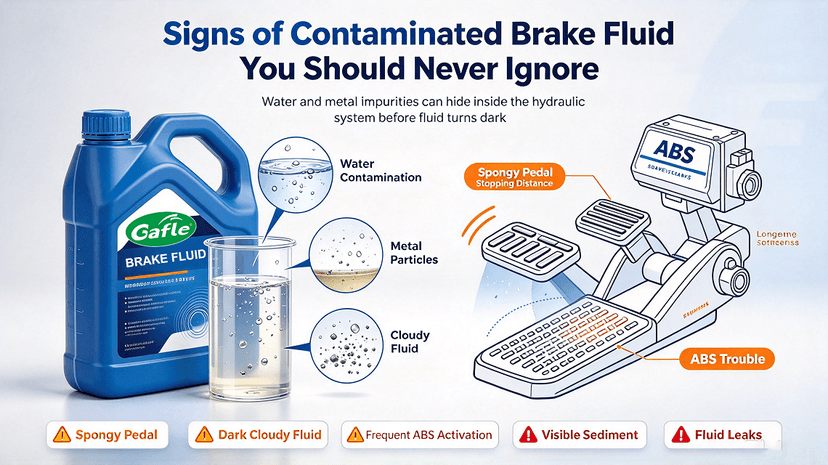
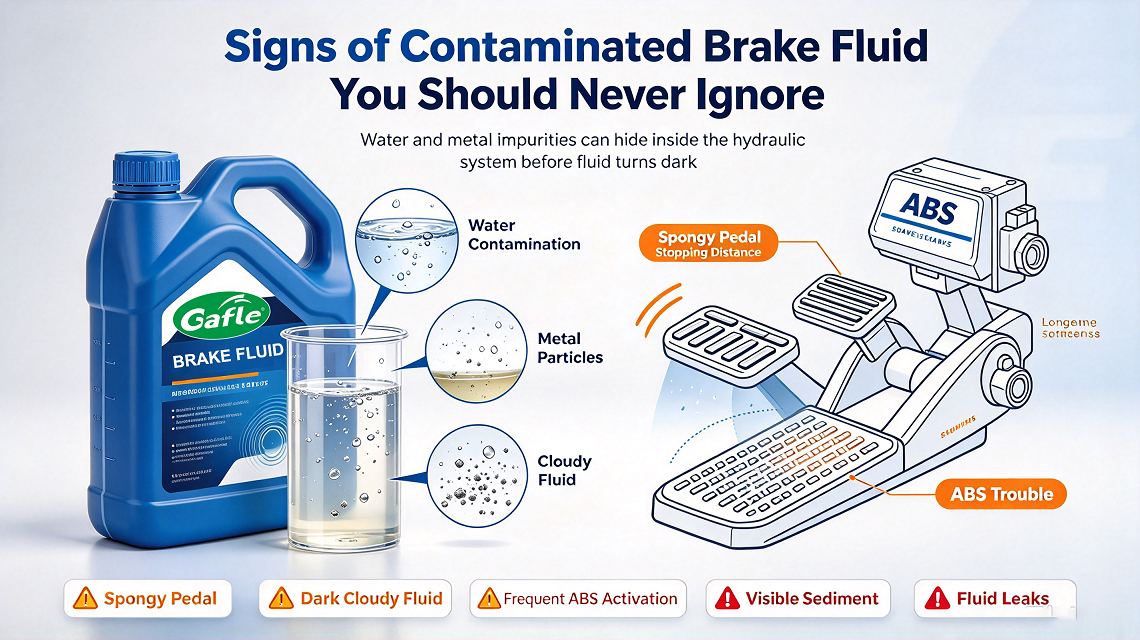
Brake fluid contamination is not only judged by dark fluid color. Water and tiny metal particles are invisible threats inside your brake hydraulic system.
Many vehicle owners and entry-level technicians rely on visual inspection alone to decide when to replace brake fluid. They open the brake fluid reservoir, look at the color of the liquid, and only schedule replacement once the fluid turns dark brown or black. This method is unreliable. Brake fluid is hygroscopic by nature. This means it actively absorbs moisture from the surrounding air over time. Moisture can enter the brake system through imperfect reservoir caps, microscopic pores in rubber hoses and small gaps at hose connections.
This moisture absorption happens gradually. Even brake fluid that still looks clean and transparent can contain dangerous levels of water long before it changes color. Visual checks cannot tell you the percentage of water suspended inside the fluid. Hidden contamination slowly erodes brake system performance and damages expensive components like ABS hydraulic modules.
Water contamination lowers boiling point and causes brake fade during continuous braking.
Water has a boiling point far lower than polyglycol brake fluid. When brake fluid absorbs water, the wet boiling point of the mixture drops steadily. During repeated braking, downhill driving or heavy load operation, brake calipers heat up and transfer heat into the brake fluid. If the fluid temperature rises above its boiling point, trapped water turns into compressible vapor bubbles.
Liquid brake fluid transfers hydraulic pressure instantly, but gas bubbles compress when you press the brake pedal. This creates the well-known spongy brake pedal feel. The pedal travels farther than normal before building firm pressure, and stopping distance becomes longer. In emergency situations, this reduction in braking performance can lead to collisions. Vehicles equipped with ABS systems are particularly vulnerable. ABS relies on precise, stable hydraulic pressure to modulate brake force hundreds of times per second. Vapor bubbles disrupt this pressure control and interfere with normal ABS operation.
Metal particle contamination scratches precision brake parts and blocks ABS valves.
Water inside brake fluid also triggers corrosion on steel brake lines, master cylinder bores, caliper pistons and internal ABS valve bodies. Tiny metal flakes peel away from corroded surfaces and remain suspended within the brake fluid. These hard microscopic particles circulate throughout the hydraulic circuit every time the brake pedal is pressed.
As metal debris flows through the system, it scratches polished piston surfaces, wears rubber seals and clogs the extremely small precision valves inside ABS units. ABS hydraulic assemblies are intricate and expensive to repair or replace. In many cases, replacing a damaged ABS module costs many times more than regular brake fluid maintenance. Metal contamination also accelerates further corrosion, creating a vicious cycle of wear and degradation within the brake system.
These warning signs tell you your brake fluid is contaminated:
- Spongy brake pedal that sinks slowly when you hold steady pressure on the brake.
- Noticeably longer braking distance, especially after repeated brake application.
- Dark, cloudy brake fluid with visible sediment collecting at the bottom of the reservoir.
- Unexpected ABS activation under normal braking conditions on dry pavement.
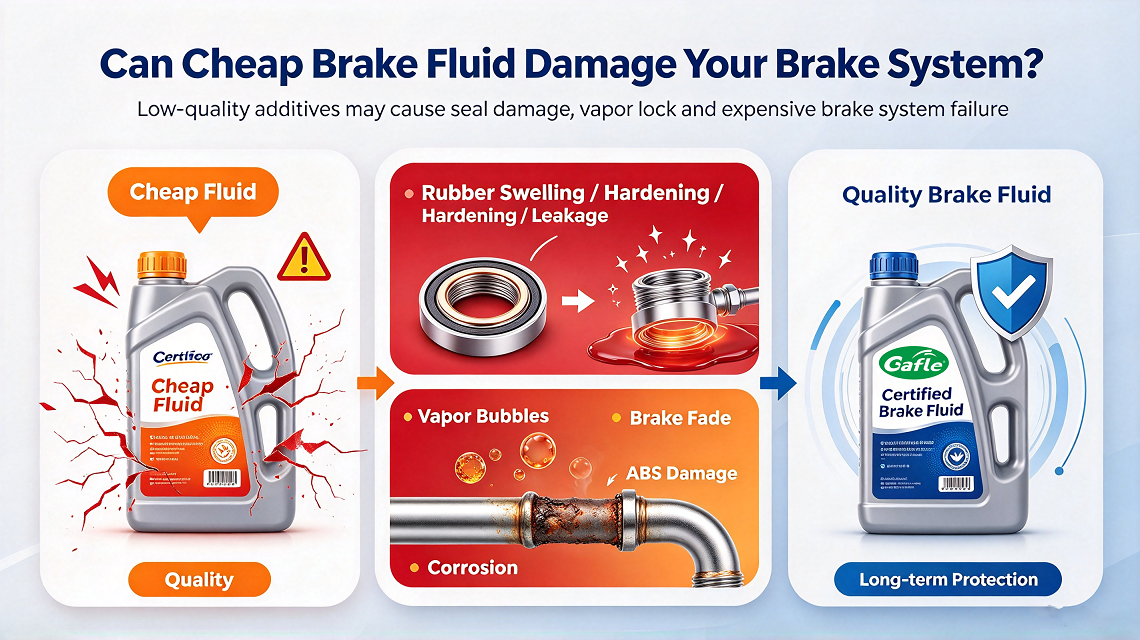
- Slow brake fluid leaks caused by worn, swollen or cracked rubber seals.
The right way to check and replace contaminated brake fluid
The most accurate method to assess brake fluid condition is using a professional brake fluid water tester. This tool measures the water content within the fluid numerically, removing guesswork from visual inspection. Industry standard guidance recommends full brake fluid replacement once water content reaches 3%.
When contamination is confirmed, a simple drain of fluid from the reservoir cap is insufficient. Old contaminated fluid remains trapped deep inside brake lines, calipers and the ABS block. A complete brake fluid flush pushes fresh fluid through the entire hydraulic circuit to expel all contaminated liquid. This full service protects every part of the brake system.
Gafle brake fluid maintains stable anti-corrosion and anti-hygroscopic performance.
Gafle brake fluid formulas incorporate high-performance corrosion inhibitors and stabilizer additives. These additives slow moisture-related corrosion and protect metal brake pipes, ABS components and rubber sealing parts. For auto repair shops and auto parts distributors, educating customers about periodic brake fluid testing creates valuable maintenance opportunities. It helps vehicle owners catch invisible contamination early and avoid costly brake system repairs and dangerous brake failures.
Final Takeaway
Do not wait until brake fluid turns dark to inspect it. Regular testing can catch invisible contamination early and protect your whole brake system. For professional technicians and fleet managers, routine brake fluid testing should be a standard part of every vehicle service inspection.
Welcome to contact GAFLE for more information & cooperation!
peter
ZHEJIANG GAFLE AUTO CHEMICL CO.,LTD
Tel:86-579-8222 1665
Fax:86-579-8246 4690
Cel/Wechart:86-13335993986
E-mail:peter@gafle.net
Web:www.gafle.net
peter
ZHEJIANG GAFLE AUTO CHEMICL CO.,LTD
Tel:86-579-8222 1665
Fax:86-579-8246 4690
Cel/Wechart:86-13335993986
E-mail:peter@gafle.net
Web:www.gafle.net