logo

What is the difference between antifreeze and coolant?

logo

Published

Oct 26 2026

  • Antifreeze / Coolant
  • Buying Guide

Follow us

what-is-the-difference-between-antifreeze-and-coolant

difference between antifreeze and coolant

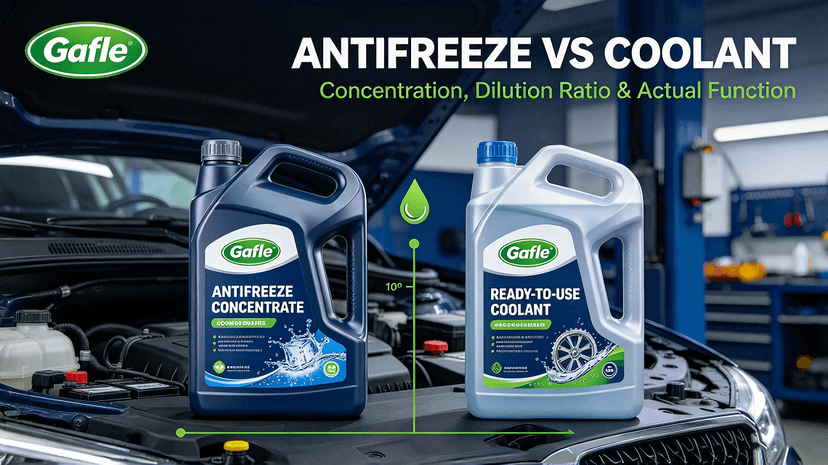
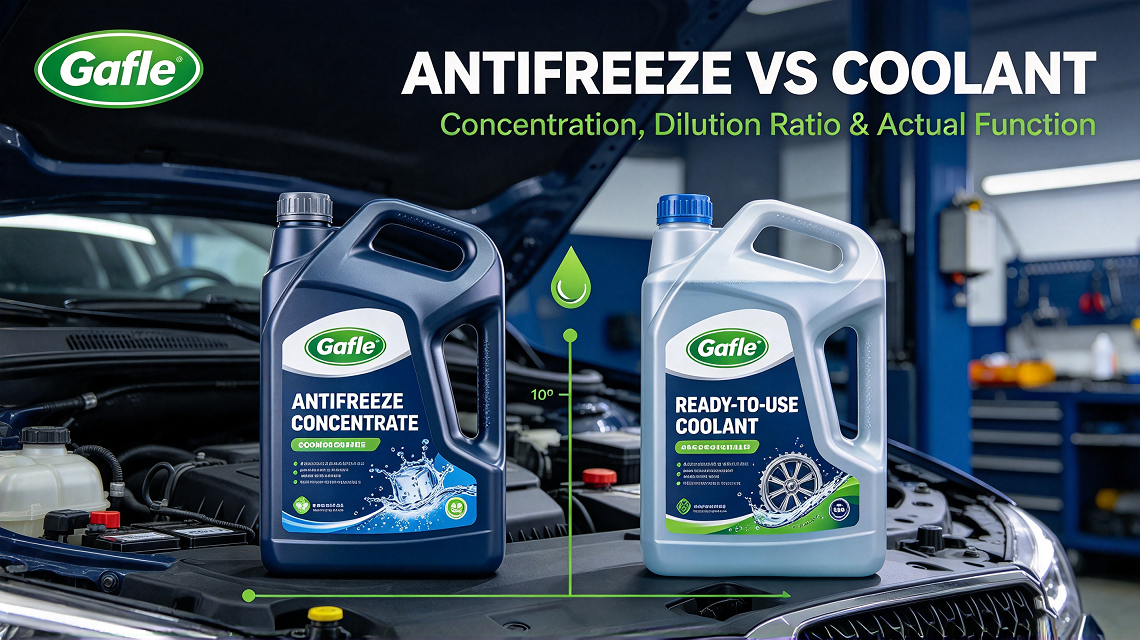
Most technicians and auto buyers use antifreeze and coolant interchangeably in daily communication, but they carry different technical definitions. The key gap lies in concentration status.

Strictly speaking, antifreeze refers to the concentrated, undiluted base fluid. Coolant means the finished working liquid that circulates inside the engine cooling circuit. In many aftermarket conversations, people use coolant as the umbrella term covering both concentrated antifreeze and pre-mixed ready-to-use liquid. This vocabulary confusion often causes wrong operation when vehicle owners or new repair staff add fluid.

Concentrated antifreeze cannot be poured directly into the radiator. It must be diluted with deionized water to reach the designed freezing and boiling protection level.

Pure antifreeze concentrate does not perform optimally alone. Ethylene glycol or propylene glycol based antifreeze works best when mixed with purified water. The famous 50:50 mix delivers freezing protection down to -37°C and raises boiling point above 108°C under standard pressure. In extremely cold markets, buyers may adjust the ratio up to 60% antifreeze and 40% water, while we do not recommend exceeding 70% glycol ratio, as it will hurt heat transfer efficiency. Tap water is forbidden for dilution due to mineral scale and ion corrosion risk.

Pre-mixed coolant is antifreeze concentrate blended with deionized water at factory. It is ready for direct filling, perfect for repair shops, while concentrated antifreeze suits bulk fleet buyers with on-site mixing capacity.

Ready-to-use pre-mixed coolant simplifies service workflow: mechanics open the jug and refill the cooling system immediately, no measuring or mixing required. This cuts human error in repair shops. Concentrated bulk antifreeze saves container space and freight cost for large fleets and industrial clients who have stable water purification equipment and standard mixing procedures.

Beyond freezing protection, antifreeze and finished coolant share three core duties: overheat boil-over prevention, multi-metal corrosion inhibition and scale deposit control. Many buyers only check freezing point and ignore these vital functions.

A good coolant package protects aluminum radiators, cast iron blocks, rubber hoses and water pump seals at the same time. When the engine runs at high load, the additive package prevents cavitation erosion and stops hard mineral deposits from clogging narrow cooling channels. A cheap concentrate with poor additives may hit the advertised freezing point, yet cause radiator clogging and pump failure within 1-2 years.

For bulk purchasers, match your stock type to your end users. Gafle supplies both concentrated antifreeze and factory pre-mixed coolant to meet different regional market demands.

If your customers are local repair shops and retail consumers, pre-mixed coolant reduces service mistakes. If you serve big fleet operators and industrial accounts, concentrated bulk antifreeze brings better cost efficiency. For tropical markets, coolant focuses more on high-temperature boil protection rather than ultra-low freezing point, while northern cold regions prioritize low-temperature formula.

Welcome to contact GAFLE for more information & cooperation!
peter
ZHEJIANG GAFLE AUTO CHEMICL CO.,LTD
Tel:86-579-8222 1665
Fax:86-579-8246 4690
Cel/Wechart:86-13335993986
E-mail:peter@gafle.net
Web:www.gafle.net
Featured Blogs
What type of coolant does my car need?

What type of coolant does my car need?

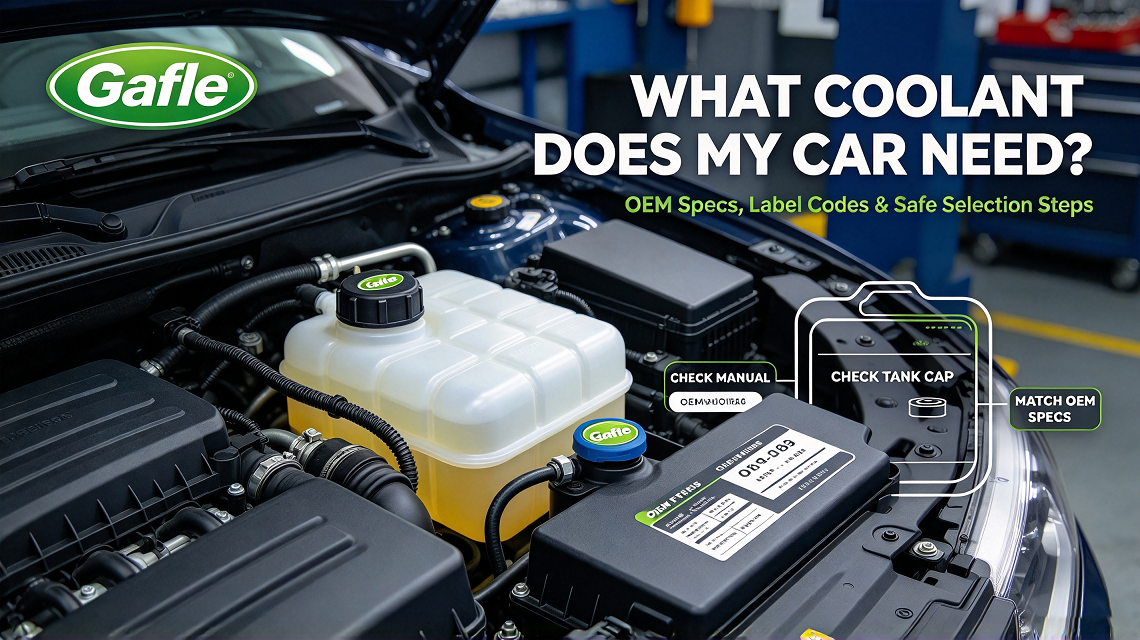
1. If you lose the manual, the second fast check point is the expansion tank cap or reservoir label inside the engine bay. Many European and Asian automakers print coolant standards directly there. 2. Vehicle brand and manufacturing year serve as a helpful secondary reference when you cannot access manual or tank labels. Different auto groups have long-standing coolant preferences. 3. Once you know the required specification, verify the aftermarket coolant label carefully, and tell the difference between equivalent replacement and formal OEM approved coolant. 4. When you cannot confirm the original coolant type at all, the safest practice is full cooling system flush and refill with universal OAT coolant, instead of randomly topping up unknown fluid. 5. Gafle supports B2B auto parts clients with coolant fitment reference materials, helping your team quickly match the correct coolant type for your repair and retail customers.

What is the best coolant for cars?

What is the best coolant for cars?

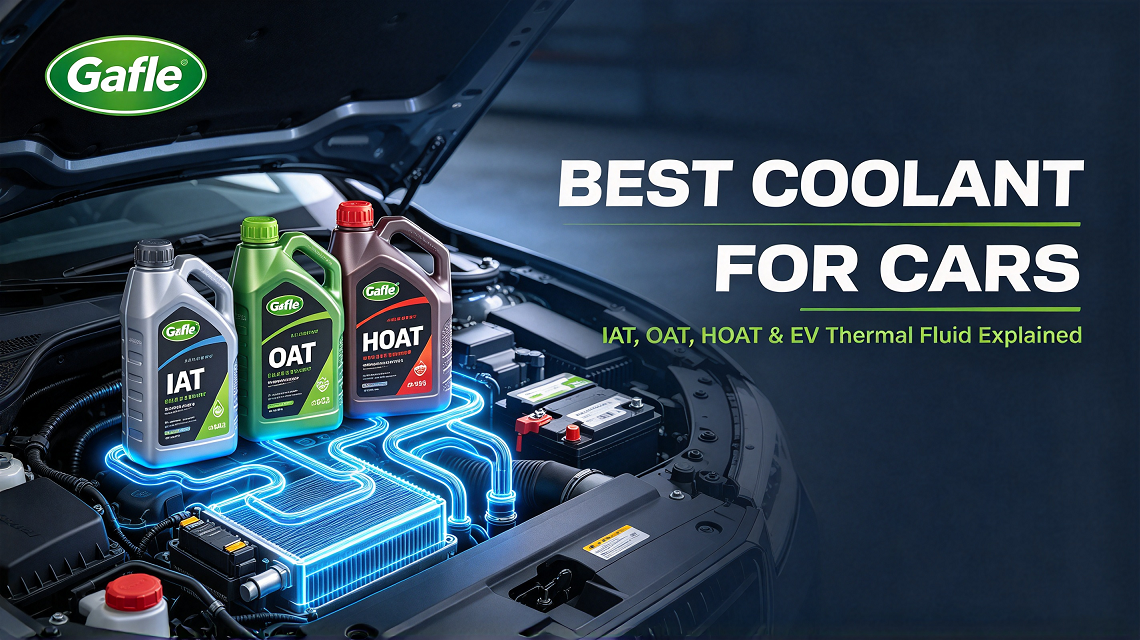
1. Three mainstream coolant technologies dominate the aftermarket: conventional IAT, long-life OAT, and hybrid HOAT, built for different generations of passenger cars. 2. EV and hybrid vehicles form a separate category. They require special low-conductivity coolant for battery thermal management, instead of ordinary combustion-engine antifreeze. 3. Key buying mistakes you need to avoid: never match coolant only by color, never mix different chemistry families casually, and always verify OEM compatibility approvals on product labels. 4. For auto parts wholesalers, organize your inventory by coolant chemistry and vehicle application. Gafle’s coolant lineup covers conventional gasoline cars, hybrid models and new energy electric vehicles.

What is the difference between antifreeze and coolant?

What is the difference between antifreeze and coolant?

1. Concentrated antifreeze cannot be poured directly into the radiator. It must be diluted with deionized water to reach the designed freezing and boiling protection level. 2. Pre-mixed coolant is antifreeze concentrate blended with deionized water at factory. It is ready for direct filling, perfect for repair shops, while concentrated antifreeze suits bulk fleet buyers with on-site mixing capacity. 3. Beyond freezing protection, antifreeze and finished coolant share three core duties: overheat boil-over prevention, multi-metal corrosion inhibition and scale deposit control. Many buyers only check freezing point and ignore these vital functions. 4. For bulk purchasers, match your stock type to your end users. Gafle supplies both concentrated antifreeze and factory pre-mixed coolant to meet different regional market demands.

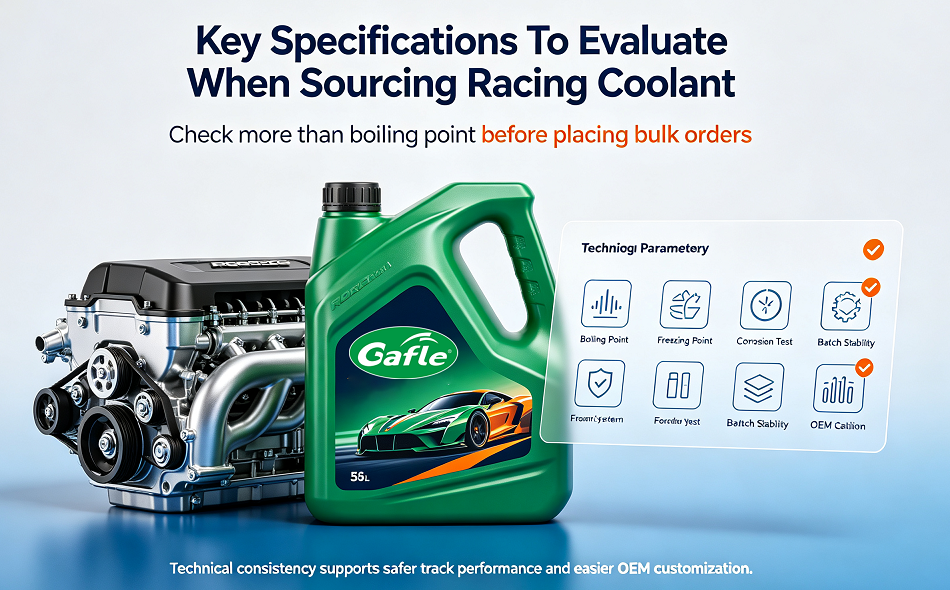
Key Specifications for Sourcing Racing Coolant: What Buyers Should Check

Key Specifications for Sourcing Racing Coolant: What Buyers Should Check

1. What buyers really mean when they ask for key specifications for sourcing racing coolant 2. The specification set that deserves attention first 3. Why batch stability matters in bulk sourcing 4. How to compare suppliers without getting lost in datasheets 5. Common buyer mistakes that cause avoidable problems 6. Practical sourcing advice for engineering and procurement teams 7. FAQ: quick answers buyers usually need 8. A sensible next step

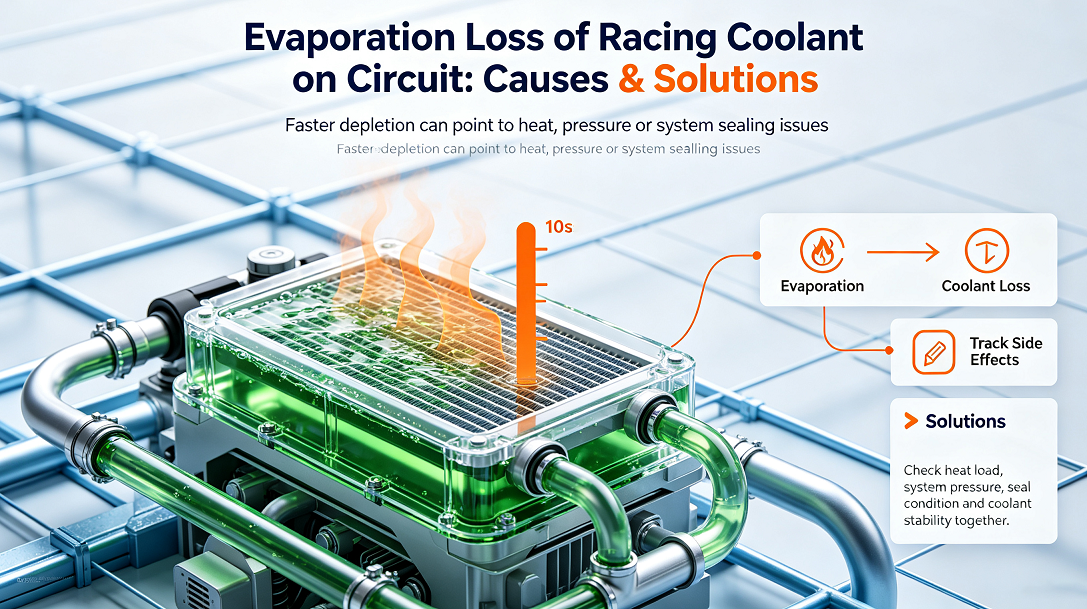
Racing Coolant Evaporation: Causes, Checks, and Fixes on Track

Racing Coolant Evaporation: Causes, Checks, and Fixes on Track

1. Why racing coolant evaporation becomes a real problem on track 2. What usually drives coolant loss in motorsport conditions 3. Quick reference: where the fluid is going 4. Motorsport coolant selection and system setup 5. Practical checks before changing parts 6. Solutions for high evaporation that actually hold up on track 7. Common mistakes engineers and buyers make 8. FAQ: short answers for track-side decisions 9. What to do next

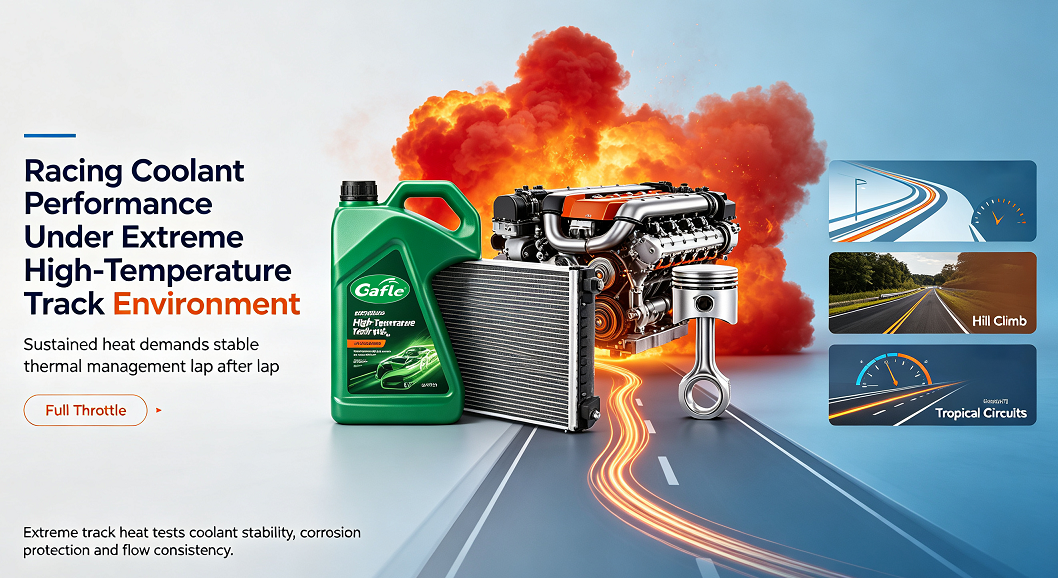
Racing Coolant Performance in Extreme High-Temperature Track Use

Racing Coolant Performance in Extreme High-Temperature Track Use

1. Why racing coolant performance matters when temperatures climb 2. What high heat does to a cooling system 3. What to look for in a high-temp racing coolant 4. Common mistakes teams make 5. Buyer advice for track and motorsport use 6. Practical takeaway 7. FAQ