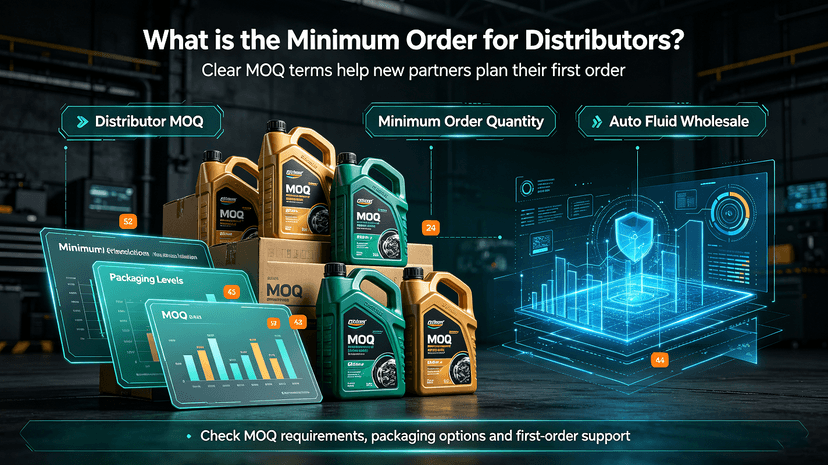
Understanding distributor MOQ in the auto fluid business
When buyers talk about distributor MOQ, they are usually trying to answer a very practical question: how much product do I need to commit to before a supplier will work with me? In the auto fluid category, that question matters more than it first appears. Brake fluid, coolant, and similar products are not simple shelf items. They are tied to packaging format, storage conditions, shipping weight, labeling, and often the way a distributor plans to move inventory through wholesale channels.
For sourcing managers and new distributors, MOQ is not just a number on a quotation. It shapes cash flow, warehouse space, freight efficiency, and the pace at which a product line can actually turn. A low minimum order for auto fluid distributors may look attractive on paper, but if the product arrives in awkward pack sizes or the line is too broad for your market, the purchase can still become expensive. The better decision is usually to match MOQ to demand, not to chase the smallest figure available.
Why MOQ matters more for auto fluids than for many other products
Auto fluids sit in a category where the logistics are less forgiving than they look. Brake fluid and coolant are both routine consumables, but they differ in chemical behavior, packaging, and end-user expectations. A wholesale buyer has to think about more than unit price. Once shipping, pallet utilization, regional demand, and shelf life are added in, the real cost per sold unit can shift quickly.
That is why an auto chemical distributorship often starts with a careful MOQ conversation rather than a price negotiation. If a supplier requires a larger commitment, they may be expecting a steadier replenishment pattern, mixed-carton efficiency, or a packaging run that supports cleaner production economics. From the buyer’s side, the question is whether the volume can move before inventory becomes stale or ties up too much working capital.
Quick comparison: what buyers should look at first
Volume commitment
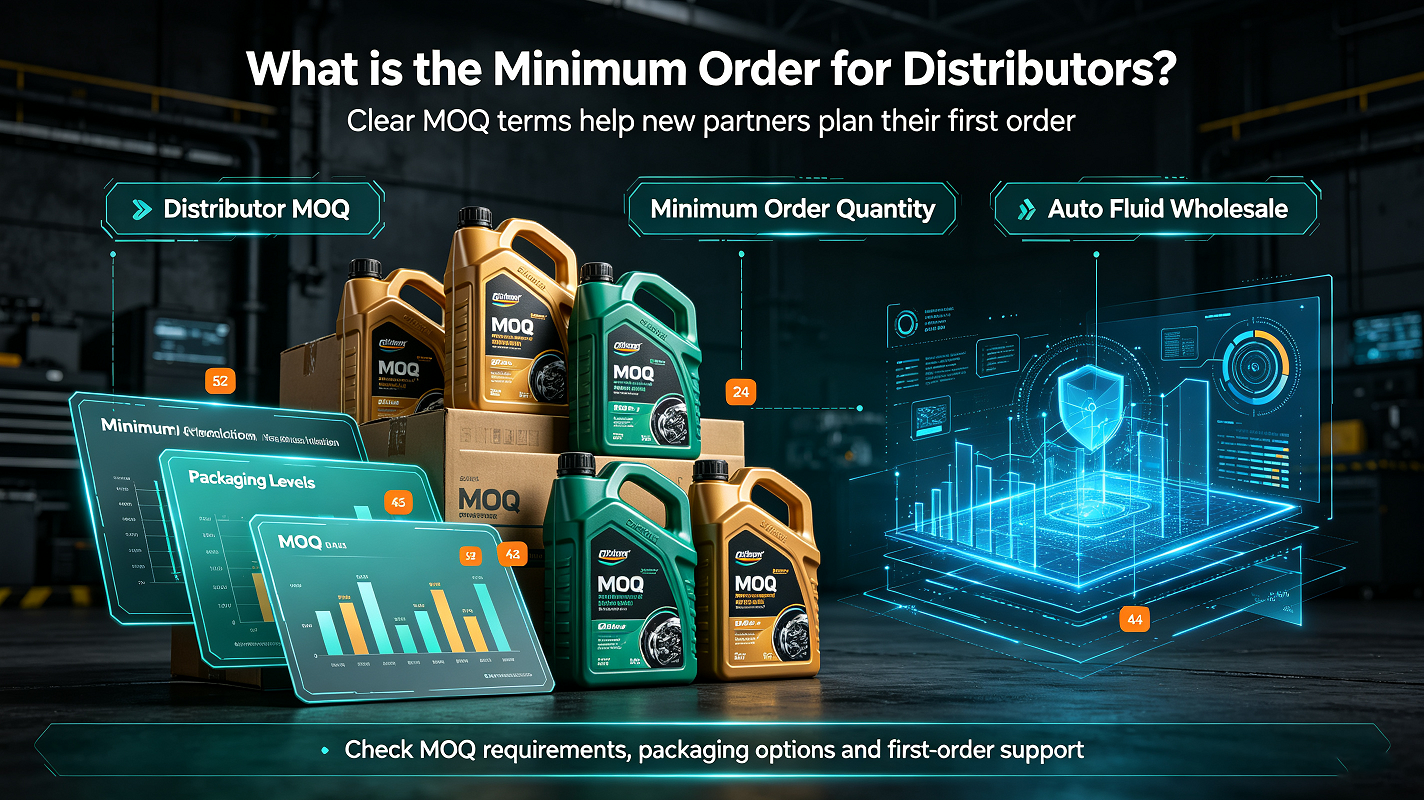
The headline MOQ tells you the entry point, but not the full story. Ask whether the minimum is by SKU, by case, by pallet, or by order value. Those details change the decision completely.
Packaging and handling
Brake fluid and coolant are often sold in bottles, jugs, or bulk formats. A smaller MOQ in a bulk format may still require more storage discipline than a larger MOQ in retail-ready packs.
Demand profile
Fast-moving, high-turn products can support a higher MOQ. Slower regional items may need a more flexible structure, even if the unit cost is slightly higher.
How wholesalers and distributors can evaluate MOQ intelligently
A common mistake is treating distributor MOQ as a purely supplier-driven issue. In practice, the buyer should run a simple internal test first. Estimate monthly sell-through, subtract realistic shrinkage, and then ask how much inventory you can hold without hurting replenishment or service levels. That sounds basic, but in wholesale operations, basic arithmetic often prevents the most expensive mistakes.
If you are considering a broader auto chemical distributorship, it helps to group products by turnover speed. High-frequency maintenance items may justify larger commitments, while niche fluids should be bought more conservatively. A mixed strategy often works better than one uniform MOQ target across the whole line.
There is also a practical caution here: some buyers focus too heavily on discount tiers and forget the hidden cost of slow stock. A slightly better purchase price does not help if the product sits too long or forces markdowns. In a category like coolant, where buyers may compare brands closely, the ability to replenish consistently can matter more than squeezing the first order.
Common mistakes buyers make with minimum order quantities
One common error is assuming every distributor can support the same MOQ structure. That is rarely true. Another is ignoring the difference between product families. Brake fluid and coolant may both fall under auto fluids, but they do not always move at the same rate or through the same customer channels.
Buyers also underestimate the role of packaging efficiency. If a supplier’s wholesale offer is built around case packs or pallet layers, the MOQ may reflect manufacturing and logistics reality rather than a hard sales policy. Pushing for a lower number without understanding that structure can lead to poor quoting, slower fulfillment, or product configurations that are harder to resell.
Practical buyer advice before you commit
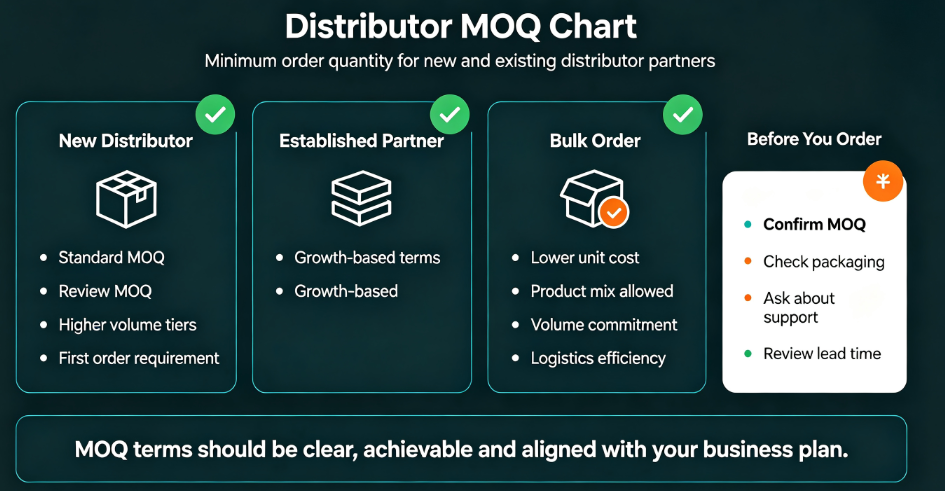
Before signing off on any MOQ, ask four questions: Can the inventory move within a reasonable sales window? Does the pack size match the customer base? Are the shipping terms compatible with your warehouse setup? And does the supplier offer enough flexibility to scale after the first order?
For many buyers, the best first step is a small pilot order that reflects real demand rather than an optimistic forecast. That approach is especially useful when entering a new wholesale channel or testing a new auto chemical distributorship model. It will not solve every problem, but it gives you cleaner data than a spreadsheet full of assumptions.
FAQ
Is a lower distributor MOQ always better?
Not necessarily. Lower MOQs reduce entry risk, but they can come with higher unit pricing or less efficient packaging.
Should brake fluid and coolant be treated the same when negotiating MOQ?
No. They may share the same distribution channel, but demand patterns, packaging, and storage concerns can differ.
What is the smartest way to compare suppliers?
Compare MOQ, order structure, packaging format, and replenishment flexibility together. Looking at one factor alone can be misleading.
Next step for sourcing teams
If you are building or expanding an auto fluid line, start by mapping actual sell-through and storage capacity before negotiating the minimum order for auto fluid distributors. That gives you a more realistic basis for wholesale buying decisions and helps you choose suppliers that fit your operating model, not just your initial budget.
Welcome to contact GAFLE for more information & cooperation!
peter
ZHEJIANG GAFLE AUTO CHEMICL CO.,LTD
Tel:86-579-8222 1665
Fax:86-579-8246 4690
Cel/Wechart:86-13335993986
E-mail:peter@gafle.net
Web:www.gafle.net