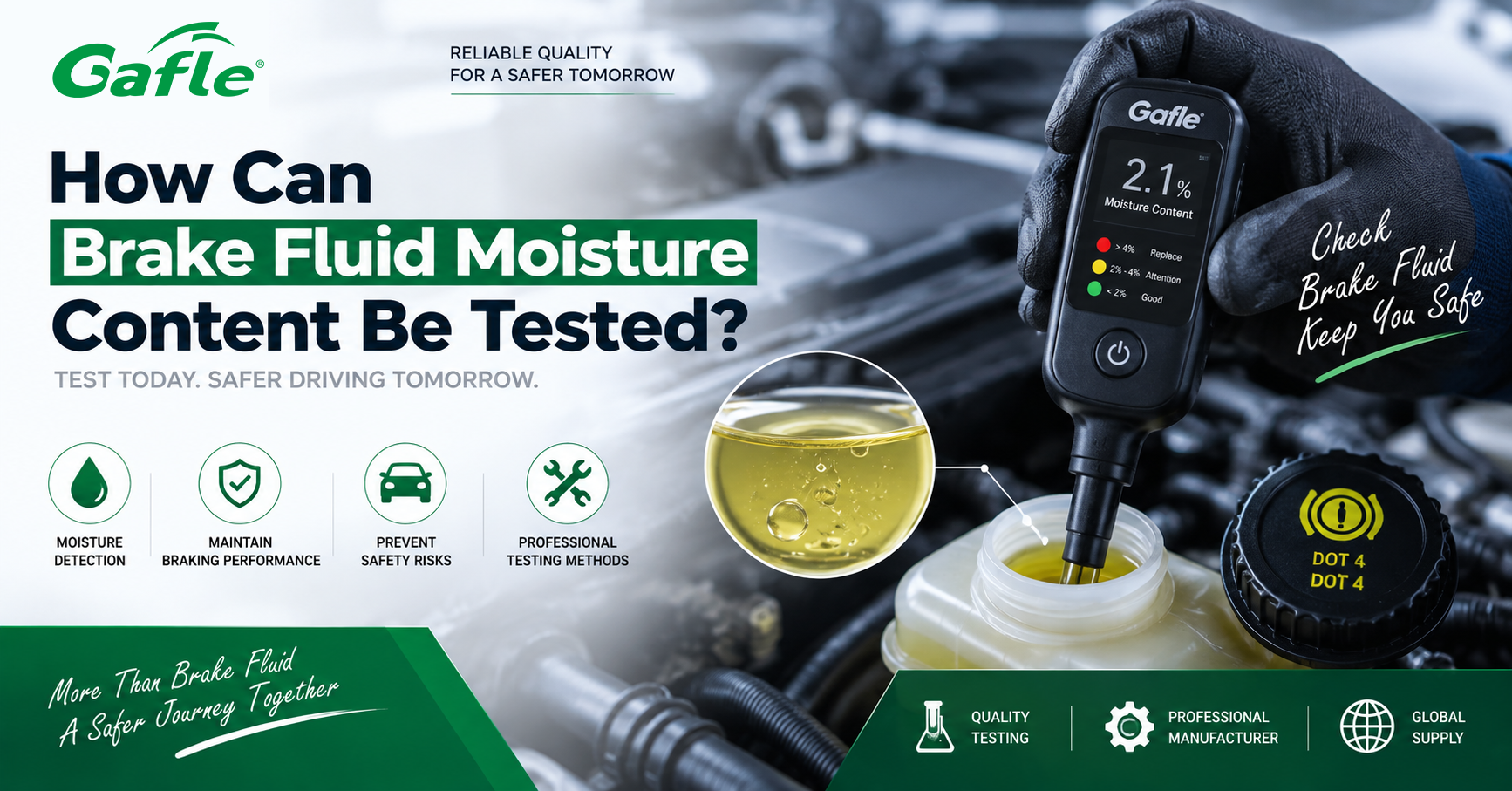
 How Can Brake Fluid Moisture Content Be Tested?
Brake fluid plays a vital role in every vehicle's braking system by transferring hydraulic pressure from the brake pedal to the brake components. However, unlike many other automotive fluids, brake fluid is hygroscopic, meaning it naturally absorbs moisture from the surrounding air over time.
As moisture content increases, the brake fluid's boiling point gradually decreases, which may reduce braking performance under demanding conditions. This is why monitoring Brake Fluid Moisture Content is an important part of routine vehicle maintenance and product quality control.
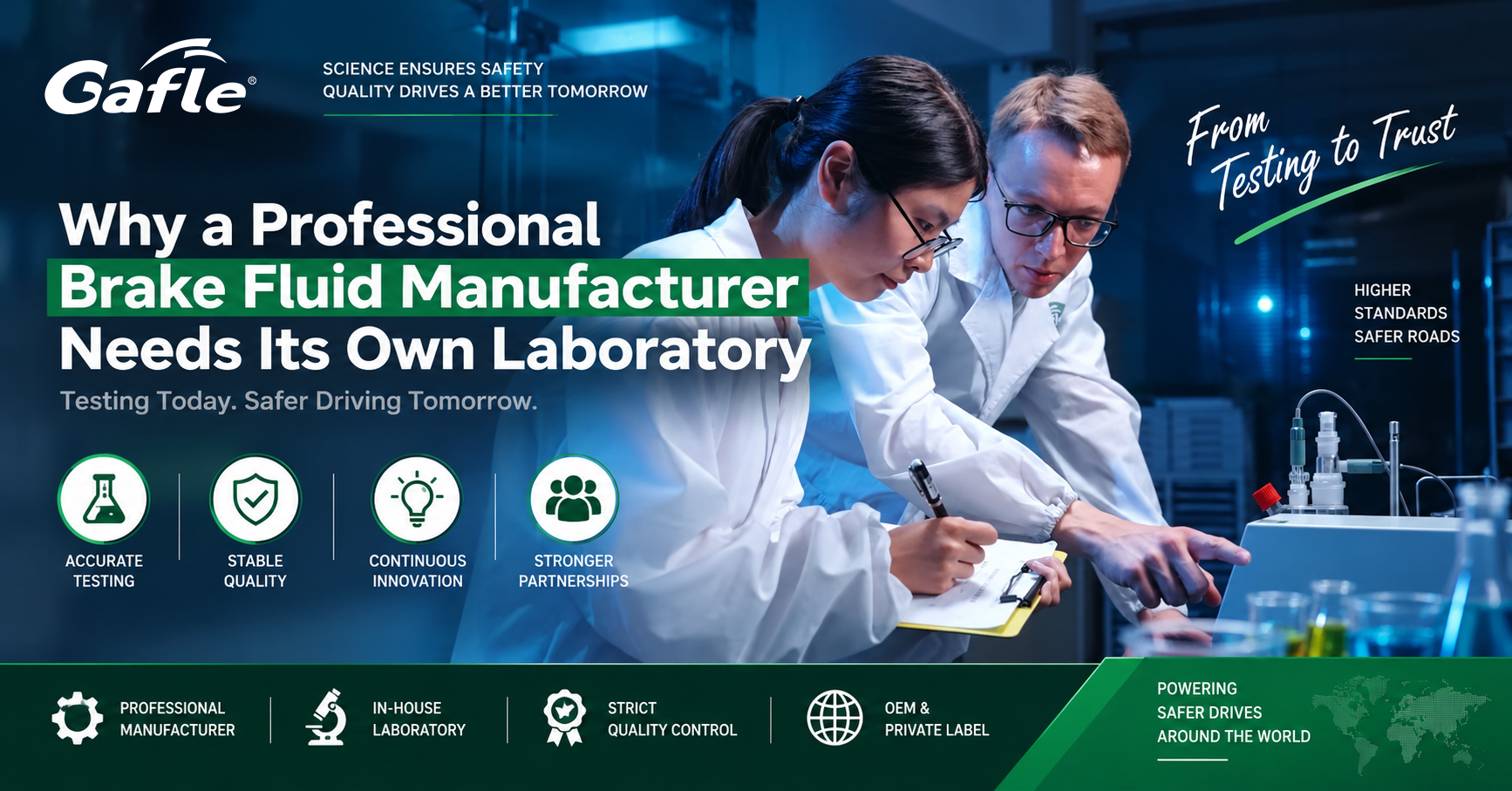
As a professional Brake Fluid Manufacturer, Gafle has more than 20 years of dedicated manufacturing experience, supported by an advanced laboratory and strict quality management system. In this guide, we'll explain how brake fluid moisture content is tested, why it matters, and how professional testing helps ensure safer and more reliable braking performance.
Why Does Brake Fluid Absorb Moisture?
Brake fluid is formulated to remain stable under high temperatures and hydraulic pressure. However, because it is hygroscopic, it slowly absorbs moisture from the atmosphere during normal vehicle operation.
Moisture can enter the braking system through:
- Brake fluid reservoir vents
- Rubber brake hoses
- Seals and connections
- Maintenance procedures
- Opening the brake fluid container
Even when the braking system appears completely sealed, small amounts of moisture can gradually accumulate over time.
Why Brake Fluid Moisture Content Matters
Monitoring Brake Fluid Moisture Content is important because excessive moisture can affect brake fluid performance.
Lower Wet Boiling Point
As water content increases, the brake fluid's wet boiling point decreases.
Under heavy braking conditions, lower boiling points increase the possibility of vapor formation inside the hydraulic system.
Reduced Braking Performance
When brake fluid contains excessive moisture, braking performance may become less consistent during demanding driving conditions such as:
- Long downhill roads
- Mountain driving
- Heavy traffic
- Commercial vehicle operation
- Frequent emergency braking
Maintaining proper moisture levels helps preserve reliable hydraulic performance.
Increased Risk of Corrosion
Moisture may also contribute to internal corrosion of brake system components, including:
- Master cylinders
- Brake lines
- Calipers
- ABS hydraulic components
High-quality brake fluid combined with regular maintenance helps reduce this risk.
Methods for Brake Fluid Testing
Professional Brake Fluid Testing involves several methods to evaluate brake fluid condition and moisture content.
Electronic Brake Fluid Tester
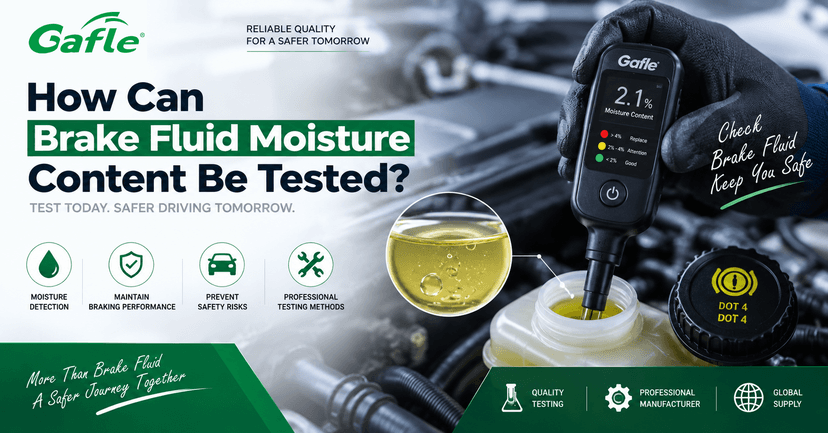
One of the most common tools used by automotive workshops is the Brake Fluid Tester.
Electronic testers estimate moisture content by measuring the electrical properties of the brake fluid.
Advantages include:
- Fast testing
- Easy operation
- Portable design
- Suitable for routine maintenance
Although convenient, electronic testers should be used according to the manufacturer's instructions and interpreted alongside maintenance history.
Laboratory Moisture Analysis
Professional manufacturers like Gafle use laboratory equipment to evaluate brake fluid quality with greater precision.
Laboratory testing provides more comprehensive data for product verification and quality control.
Boiling Point Testing
Because moisture directly affects boiling point, manufacturers also perform:
- Dry boiling point testing
- Wet boiling point testing
These tests help verify brake fluid performance under both new and simulated service conditions.
Comprehensive Product Evaluation
Professional laboratories often combine multiple tests, including:
- Moisture content analysis
- Boiling point verification
- Low-temperature viscosity testing
- Corrosion resistance testing
- Material compatibility testing
This comprehensive approach provides a more complete assessment of brake fluid performance.
How Often Should Brake Fluid Be Tested?
Regular inspection helps maintain braking safety.
Although maintenance schedules vary by vehicle manufacturer, brake fluid should generally be inspected during routine service intervals.
More frequent testing may be appropriate for vehicles operating under demanding conditions, such as:
- Mountain driving
- Commercial transportation
- High-performance vehicles
- Heavy towing
- Frequent stop-and-go traffic
Following the vehicle manufacturer's maintenance recommendations is always the best practice.
How Gafle Ensures Accurate Brake Fluid Testing
At Gafle, product quality begins long before brake fluid reaches the customer.
Our professional laboratory supports comprehensive Brake Fluid Testing throughout the manufacturing process.
Raw Material Inspection
Every incoming raw material is inspected before production begins to help ensure consistent product quality.
In-Process Quality Monitoring
Production samples are regularly evaluated throughout manufacturing to verify process stability.
Finished Product Testing
Before shipment, each production batch undergoes multiple laboratory tests, including:
- Dry boiling point
- Wet boiling point
- Low-temperature viscosity
- Corrosion resistance
- Material compatibility
- Product appearance
Only products that successfully pass all quality inspections are approved for delivery.
Batch Traceability
Every production batch is fully traceable, allowing quality records to be reviewed whenever necessary and supporting continuous improvement.
Why Accurate Testing Matters for OEM Customers
For OEM customers, product consistency is essential.
Professional testing helps provide:
Stable Product Performance
Routine testing verifies that every production batch performs consistently.
Better Brand Protection
Reliable quality helps OEM customers maintain customer confidence and strengthen their brand reputation.
Lower Business Risk
Comprehensive testing reduces the possibility of product variation and quality-related issues.
Long-Term Partnership
Manufacturers with advanced laboratory capabilities can better support product development and long-term cooperation.
How to Choose the Best Brake Fluid Manufacturer in China
Many international buyers searching for the Best Brake Fluid Manufacturer in China understand that product quality depends on more than manufacturing equipment.
When evaluating suppliers, consider:
- Professional laboratory facilities
- Advanced Brake Fluid Testing capabilities
- Comprehensive Brake Fluid Quality Control
- Manufacturing experience
- Quality management systems
- OEM manufacturing expertise
- Stable production capacity
- Export experience
- Technical support
A manufacturer with strong laboratory capabilities is better equipped to deliver consistent quality and reliable performance.
Why Global Customers Choose Gafle
As a trusted Brake Fluid Manufacturer, Gafle combines advanced manufacturing technology with rigorous testing procedures to provide dependable brake fluid solutions for customers around the world.
Our strengths include:
- 20+ Years of Dedicated Brake Fluid Manufacturing Experience
- Professional Brake Fluid Laboratory
- Advanced Brake Fluid Testing Equipment
- Comprehensive Brake Fluid Quality Control
- Modern Manufacturing Facilities
- IATF 16949 Quality Management System
- OEM Brake Fluid Manufacturing
- Private Label Solutions
- Customized Bottles, Labels, and Cartons
- Stable Large-Scale Production
- Global Export Experience
- Participant in Drafting China's National Brake Fluid Standards
These capabilities enable us to consistently deliver premium brake fluid products that meet the expectations of distributors, importers, and automotive brands worldwide.
Frequently Asked Questions
How can brake fluid moisture content be tested?
Brake fluid moisture content can be evaluated using electronic brake fluid testers for routine inspections or through professional laboratory analysis for more precise measurements.
What is a brake fluid tester?
A brake fluid tester is a portable device commonly used by automotive workshops to estimate the moisture content of brake fluid and help determine whether further inspection or replacement may be necessary.
Why does brake fluid absorb moisture?
Brake fluid is hygroscopic, meaning it naturally absorbs moisture from the air through normal vehicle operation, reservoir vents, hoses, seals, and maintenance procedures.
How often should brake fluid be tested?
Brake fluid should be checked during routine vehicle maintenance and more frequently if the vehicle operates under severe driving conditions. Always follow the vehicle manufacturer's recommended service schedule.
How should buyers choose the Best Brake Fluid Manufacturer in China?
Buyers should evaluate laboratory capabilities, testing equipment, quality management systems, manufacturing experience, OEM expertise, production consistency, and technical support rather than focusing solely on price.
Conclusion
Monitoring Brake Fluid Moisture Content is essential for maintaining reliable braking performance and supporting vehicle safety. Because brake fluid naturally absorbs moisture over time, regular testing helps identify changes in fluid condition before they affect braking performance.
Whether using a Brake Fluid Tester for routine inspections or relying on advanced laboratory analysis during manufacturing, professional Brake Fluid Testing plays a critical role in ensuring product quality and consistency.
For distributors, importers, and automotive brands searching for the Best Brake Fluid Manufacturer in China, partnering with a manufacturer that combines advanced laboratory facilities, rigorous quality control, and extensive OEM experience provides long-term confidence and reliable product performance.
With more than 20 years of manufacturing experience, Gafle continues to deliver premium brake fluid solutions through professional testing, strict quality management, and continuous innovation.
At Gafle, every batch is carefully tested because we believe that accurate moisture analysis today helps ensure safer braking performance tomorrow.