logo

What type of coolant does my car need?

logo

Published

Oct 26 2026

  • Antifreeze / Coolant
  • Buying Guide

Follow us

what-type-of-coolant-does-my-car-need-1

car coolant requirement

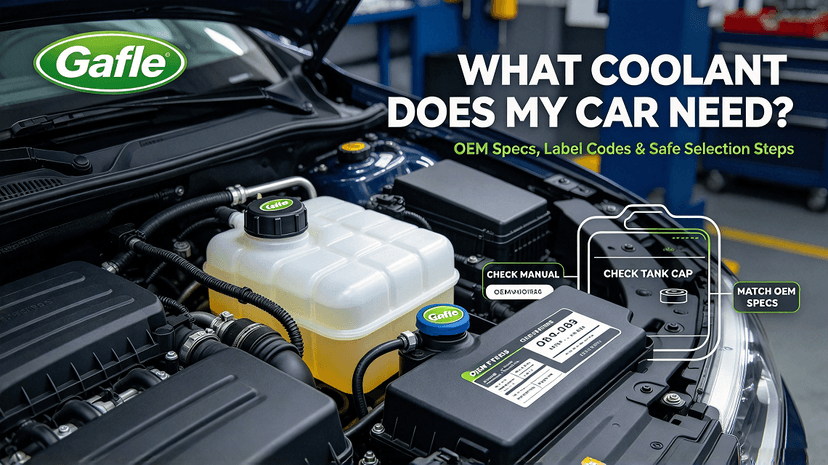
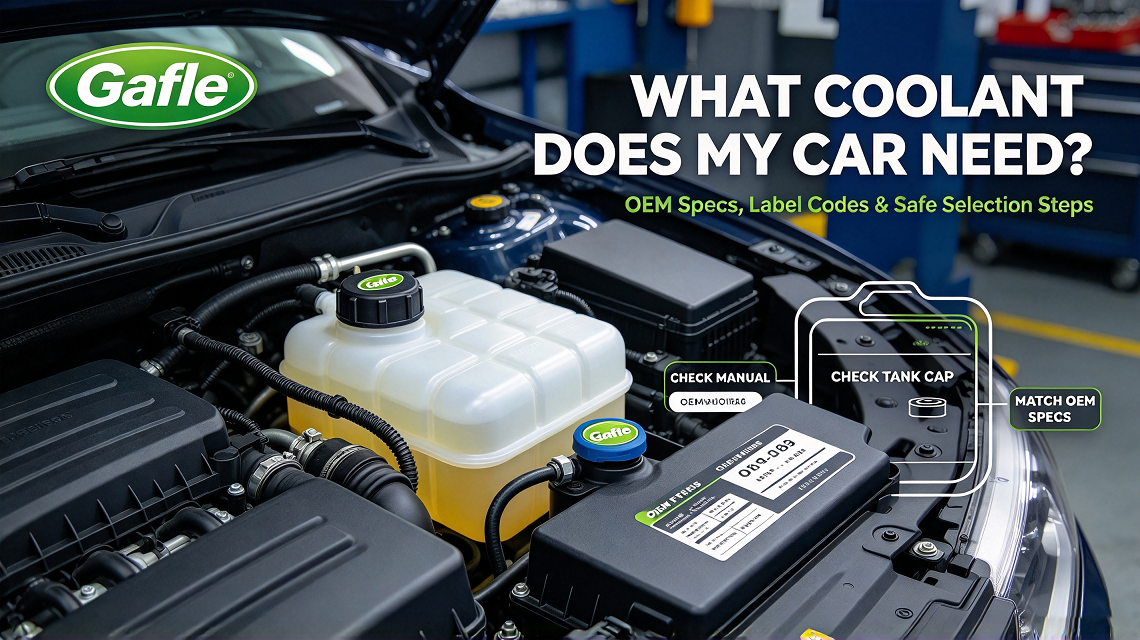
The most reliable source to confirm what coolant your car needs is the official owner’s manual. It clearly states the required coolant chemistry, freezing point rating and recommended service interval.

The vehicle manufacturer designs the whole cooling system together with the coolant formula. Open the maintenance section of the owner manual, and look for keywords like “coolant specification”, “coolant type” or “antifreeze requirement”. This information overrides any guesswork based on coolant color or online casual advice. This rule applies for gasoline, hybrid and electric passenger vehicles.

If you lose the manual, the second fast check point is the expansion tank cap or reservoir label inside the engine bay. Many European and Asian automakers print coolant standards directly there.

European vehicles commonly mark G11, G12, G12++ or G13 codes on the coolant tank. These codes correspond to HOAT and advanced silicate-free OAT formulations. Read the warning text carefully, some tanks also remind users “do not mix different coolant types”. This is convenient for technicians doing on-site inspection.

Vehicle brand and manufacturing year serve as a helpful secondary reference when you cannot access manual or tank labels. Different auto groups have long-standing coolant preferences.

As a general reference: older European cars used G11 HOAT coolant; modern VAG group vehicles adopt G12++ / G13 long-life OAT; most Japanese and Korean passenger cars use silicate-free OAT coolant after 2005; older domestic American vehicles originally used traditional green IAT fluid. Remember this is only a reference, not a replacement for official specs.

Once you know the required specification, verify the aftermarket coolant label carefully, and tell the difference between equivalent replacement and formal OEM approved coolant.

Some aftermarket coolants claim “meets the requirement” which means matching the performance standard; others carry formal OEM approval numbers. For fleet customers and warranty-sensitive repair shops, OEM-approved coolant is the safer recommendation. Gafle coolant products list compatible standards clearly on drum and bottle labels for easy checking.

When you cannot confirm the original coolant type at all, the safest practice is full cooling system flush and refill with universal OAT coolant, instead of randomly topping up unknown fluid.

Adding unmatched coolant blindly is the top cause of cooling system failure. If the history of the car’s coolant is unknown, drain all old fluid, flush the radiator, block and heater core with clean deionized water, then refill a widely compatible OAT coolant. This eliminates cross-formula mixing risk.

Gafle supports B2B auto parts clients with coolant fitment reference materials, helping your team quickly match the correct coolant type for your repair and retail customers.

We organize specification guides sorted by vehicle brand and generation for our wholesale partners. With these supporting documents, your sales staff and cooperating repair shops can answer the question “what coolant does this car need” efficiently and avoid expensive cooling system failures caused by wrong fluid selection.

Welcome to contact GAFLE for more information & cooperation!
peter
ZHEJIANG GAFLE AUTO CHEMICL CO.,LTD
Tel:86-579-8222 1665
Fax:86-579-8246 4690
Cel/Wechart:86-13335993986
E-mail:peter@gafle.net
Web:www.gafle.net
Featured Blogs
What type of coolant does my car need?

What type of coolant does my car need?

1. If you lose the manual, the second fast check point is the expansion tank cap or reservoir label inside the engine bay. Many European and Asian automakers print coolant standards directly there. 2. Vehicle brand and manufacturing year serve as a helpful secondary reference when you cannot access manual or tank labels. Different auto groups have long-standing coolant preferences. 3. Once you know the required specification, verify the aftermarket coolant label carefully, and tell the difference between equivalent replacement and formal OEM approved coolant. 4. When you cannot confirm the original coolant type at all, the safest practice is full cooling system flush and refill with universal OAT coolant, instead of randomly topping up unknown fluid. 5. Gafle supports B2B auto parts clients with coolant fitment reference materials, helping your team quickly match the correct coolant type for your repair and retail customers.

What is the best coolant for cars?

What is the best coolant for cars?

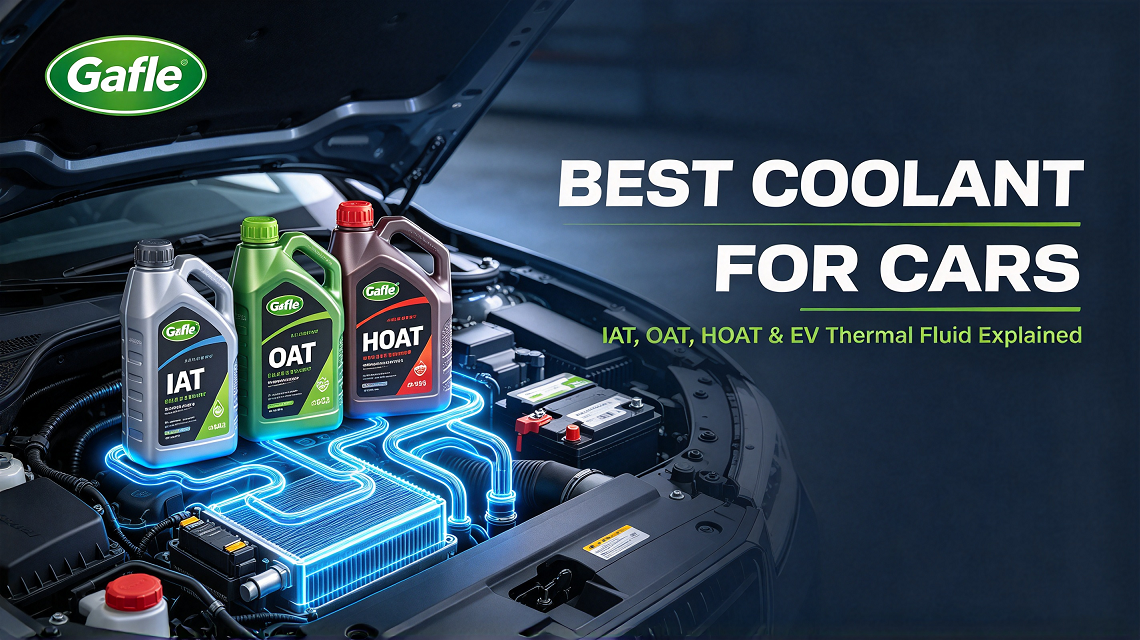
1. Three mainstream coolant technologies dominate the aftermarket: conventional IAT, long-life OAT, and hybrid HOAT, built for different generations of passenger cars. 2. EV and hybrid vehicles form a separate category. They require special low-conductivity coolant for battery thermal management, instead of ordinary combustion-engine antifreeze. 3. Key buying mistakes you need to avoid: never match coolant only by color, never mix different chemistry families casually, and always verify OEM compatibility approvals on product labels. 4. For auto parts wholesalers, organize your inventory by coolant chemistry and vehicle application. Gafle’s coolant lineup covers conventional gasoline cars, hybrid models and new energy electric vehicles.

What is the difference between antifreeze and coolant?

What is the difference between antifreeze and coolant?

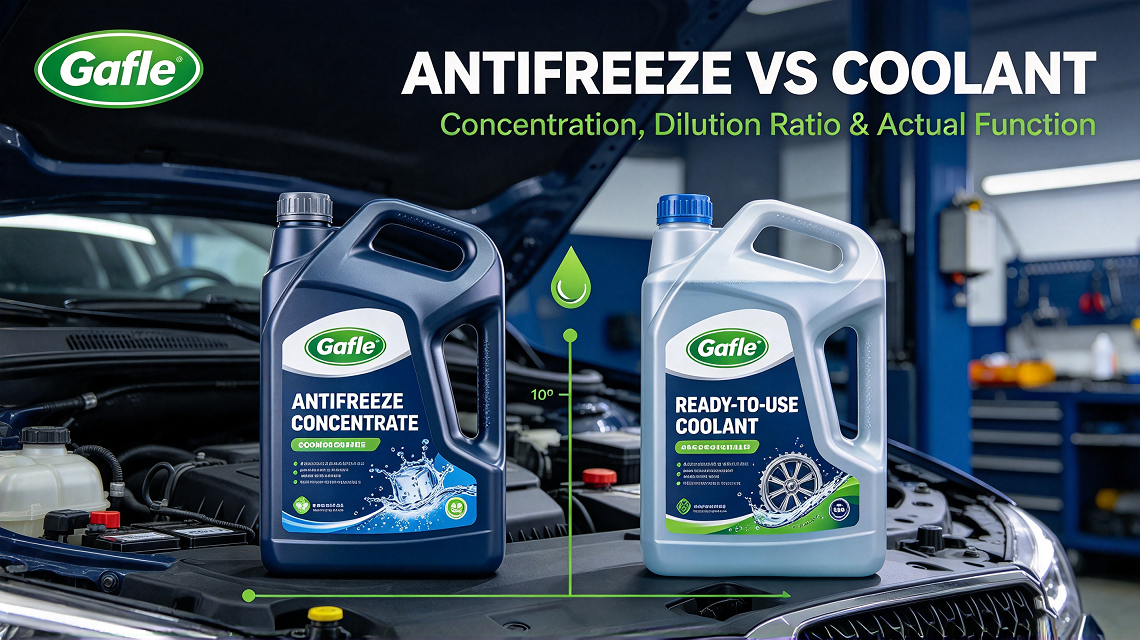
1. Concentrated antifreeze cannot be poured directly into the radiator. It must be diluted with deionized water to reach the designed freezing and boiling protection level. 2. Pre-mixed coolant is antifreeze concentrate blended with deionized water at factory. It is ready for direct filling, perfect for repair shops, while concentrated antifreeze suits bulk fleet buyers with on-site mixing capacity. 3. Beyond freezing protection, antifreeze and finished coolant share three core duties: overheat boil-over prevention, multi-metal corrosion inhibition and scale deposit control. Many buyers only check freezing point and ignore these vital functions. 4. For bulk purchasers, match your stock type to your end users. Gafle supplies both concentrated antifreeze and factory pre-mixed coolant to meet different regional market demands.

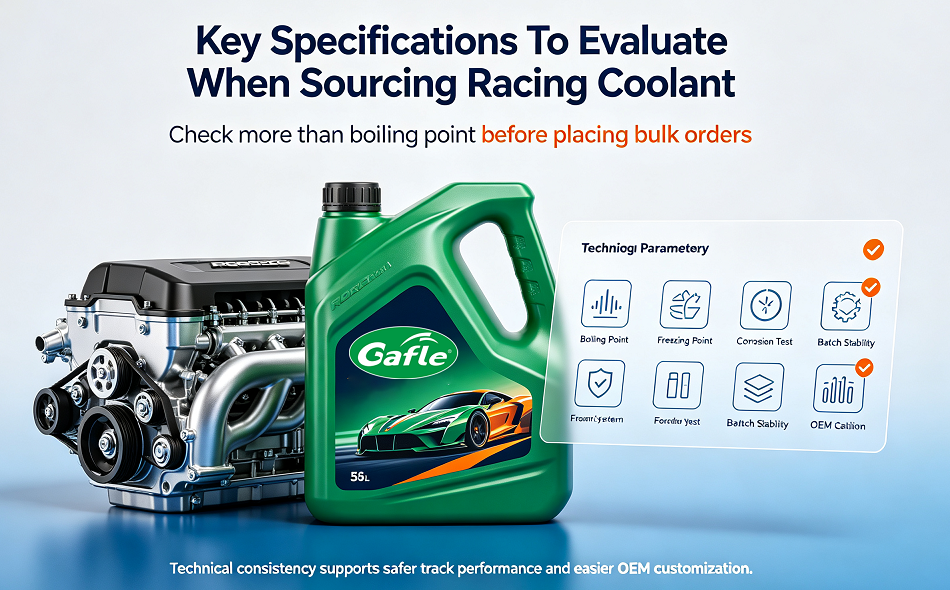
Key Specifications for Sourcing Racing Coolant: What Buyers Should Check

Key Specifications for Sourcing Racing Coolant: What Buyers Should Check

1. What buyers really mean when they ask for key specifications for sourcing racing coolant 2. The specification set that deserves attention first 3. Why batch stability matters in bulk sourcing 4. How to compare suppliers without getting lost in datasheets 5. Common buyer mistakes that cause avoidable problems 6. Practical sourcing advice for engineering and procurement teams 7. FAQ: quick answers buyers usually need 8. A sensible next step

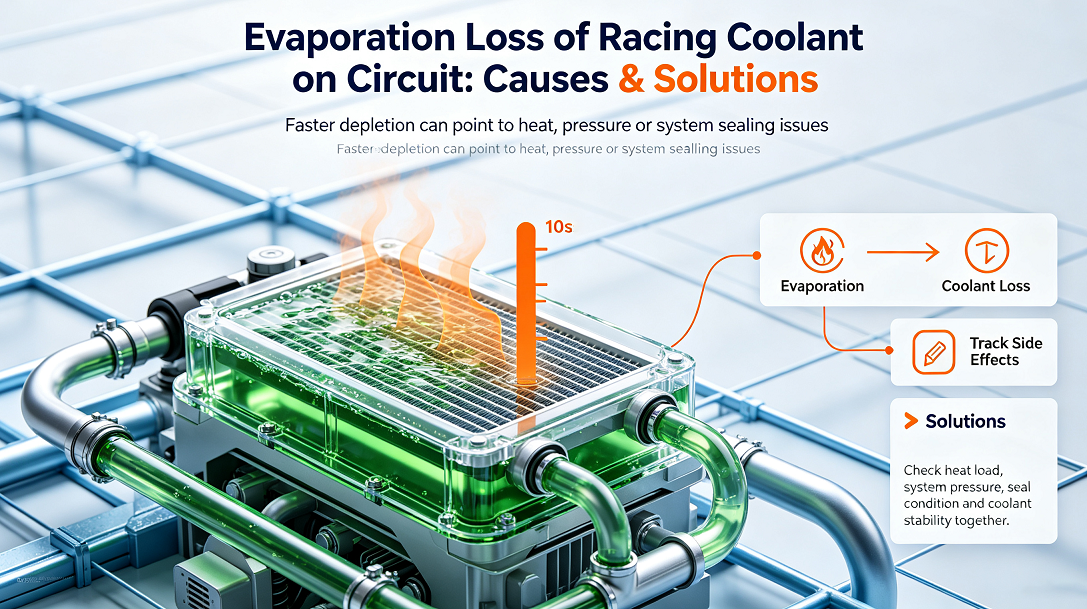
Racing Coolant Evaporation: Causes, Checks, and Fixes on Track

Racing Coolant Evaporation: Causes, Checks, and Fixes on Track

1. Why racing coolant evaporation becomes a real problem on track 2. What usually drives coolant loss in motorsport conditions 3. Quick reference: where the fluid is going 4. Motorsport coolant selection and system setup 5. Practical checks before changing parts 6. Solutions for high evaporation that actually hold up on track 7. Common mistakes engineers and buyers make 8. FAQ: short answers for track-side decisions 9. What to do next

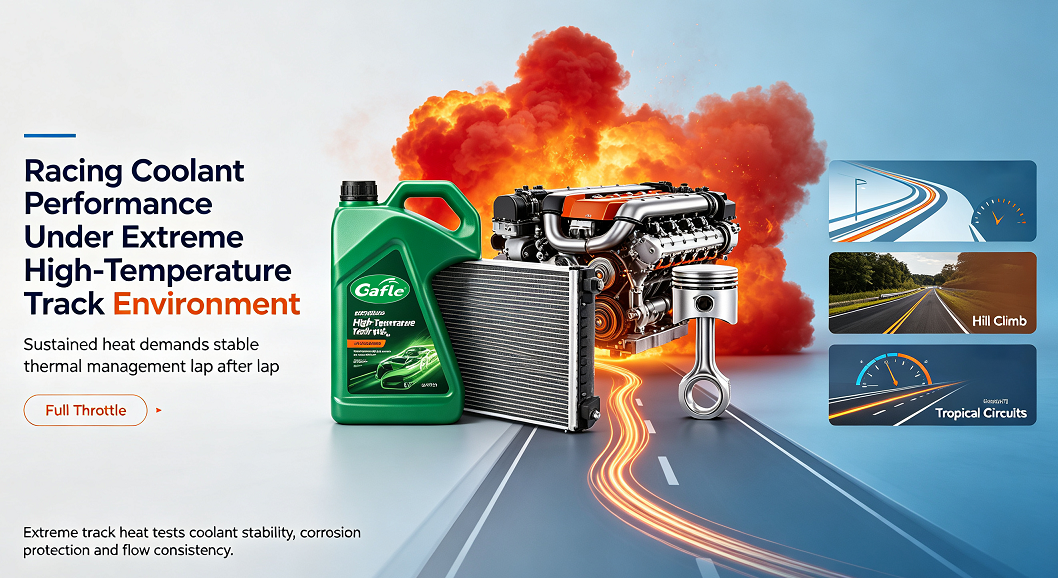
Racing Coolant Performance in Extreme High-Temperature Track Use

Racing Coolant Performance in Extreme High-Temperature Track Use

1. Why racing coolant performance matters when temperatures climb 2. What high heat does to a cooling system 3. What to look for in a high-temp racing coolant 4. Common mistakes teams make 5. Buyer advice for track and motorsport use 6. Practical takeaway 7. FAQ