logo

Why Brake Fluid Reservoir Cap Design Matters for Long-Term Fluid Quality

logo

Published

Oct 13 2026

  • Buying Guide

Follow us

why-brake-fluid-reservoir-cap-design-matters-for-long-term-fluid-quality
prevent moisture brake fluid cap
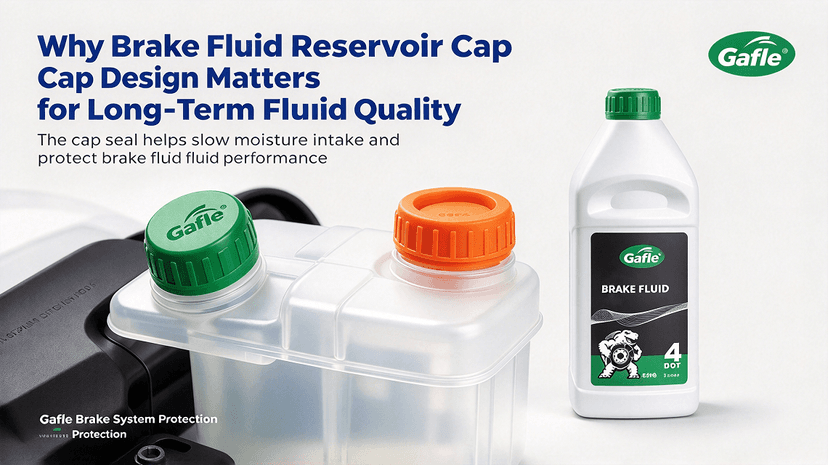
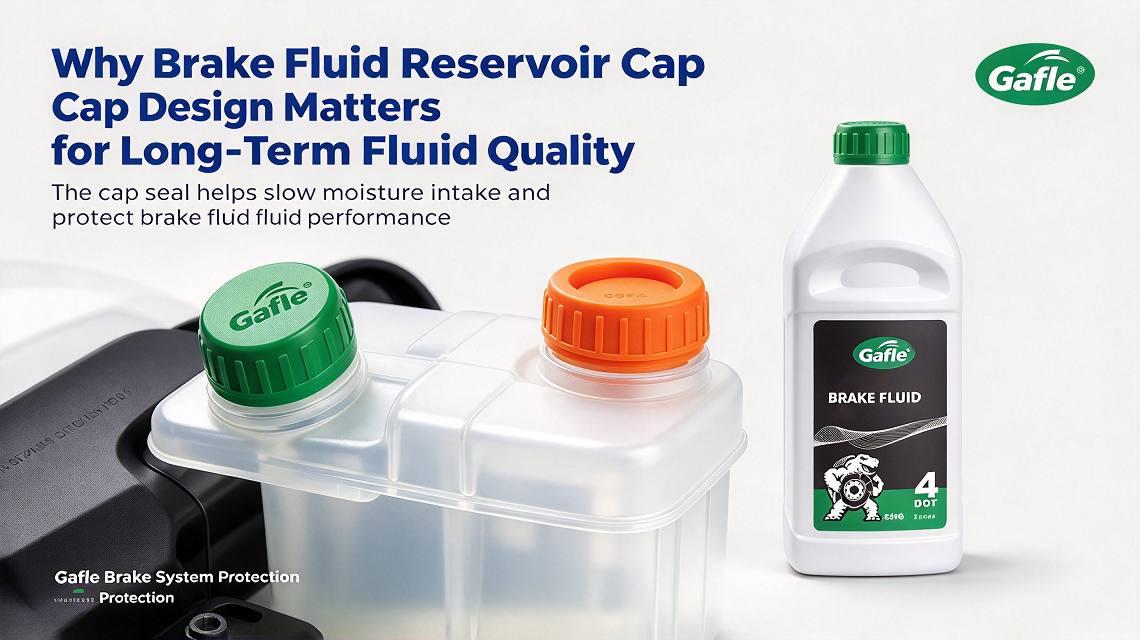
Most vehicle owners and technicians overlook the brake fluid reservoir cap, yet this small component plays a critical role in slowing moisture absorption of brake fluid.
Glycol-based brake fluid actively attracts water vapor from surrounding air. The reservoir cap is not just a dust cover. Its built-in rubber diaphragm seal is designed to equalize air pressure inside the reservoir while blocking water vapor from entering the tank. A failed cap seal accelerates fluid degradation dramatically, shortening service life of the whole brake fluid.
How the diaphragm seal inside reservoir caps works.
Brake fluid volume expands when heated and shrinks when cooled. Without pressure equalization, internal pressure changes could damage the reservoir or trigger false brake warning lights. The flexible rubber diaphragm inside the cap moves up and down to balance pressure. At the same time, it separates brake fluid from ambient humid air. If the diaphragm cracks, hardens or loses elasticity, humid air can freely enter the reservoir, letting water dissolve continuously into brake fluid.
Common signs of a faulty brake reservoir cap.
Visible cracks on cap plastic, hardened, torn or deformed rubber diaphragm, or corrosion around the cap threads. You may find moisture droplets inside the reservoir. In some cases, brake fluid ages much faster than expected, even on low-mileage vehicles. Technicians often replace brake fluid but ignore the worn reservoir cap. The new fluid quickly absorbs moisture again, leading to premature repeated fluid replacement and customer complaints.
Best practices for inspecting and maintaining reservoir caps during brake service.
Every time technicians open the reservoir cap for fluid checks or fluid top-up, examine the seal carefully. Clean the cap and reservoir neck to stop dirt falling into the fluid. Never operate a vehicle with a loose or missing reservoir cap. When performing a full brake fluid flush, recommend inspecting the cap and diaphragm, replacing the cap if any seal damage exists. This simple low-cost step greatly extends brake fluid service life.
For auto parts wholesalers and distributors.
This topic is excellent educational content for repair shop clients. Many garages only focus on brake fluid itself, ignoring reservoir cap maintenance. Sharing this knowledge helps your customers deliver more complete brake system inspections, reduce recurring brake fluid problems and increase trust. Pair high-performance Gafle brake fluid with proper reservoir cap maintenance for maximum brake system protection.
Welcome to contact GAFLE for more information & cooperation!
peter
ZHEJIANG GAFLE AUTO CHEMICL CO.,LTD
Tel:86-579-8222 1665
Fax:86-579-8246 4690
Cel/Wechart:86-13335993986
E-mail:peter@gafle.net
Web:www.gafle.net
Featured Blogs
Windshield Washer Fluid Guide: Choosing the Right Formula

Windshield Washer Fluid Guide: Choosing the Right Formula

1. Why windshield washer fluid deserves more attention than it gets 2. What buyers are really comparing 3. Common formulation types and how they differ 4. Selection criteria that matter in the real world 5. Buying mistakes that lead to complaints 6. Practical advice for sourcing managers and product teams 7. Quick FAQ 8. What to do next

EV Brake Fluid: What Buyers and Service Teams Should Know

EV Brake Fluid: What Buyers and Service Teams Should Know

1. EV brake fluid: why it deserves more attention than it usually gets 2. What changes in an EV braking system 3. Why viscosity and cold-flow behavior matter 4. Choosing brake fluid for EV regenerative braking system applications 5. What wholesale buyers and service centers should watch 6. Common mistakes in EV brake fluid selection 7. A practical buyer’s checklist 8. FAQs about EV brake fluid

Coolant Tap Water: What You Need to Know Before Mixing

Coolant Tap Water: What You Need to Know Before Mixing

1. Can You Use Coolant Tap Water? What Engineers and Maintenance Buyers Need to Know 2. Why tap water is not a neutral choice 3. Antifreeze dilution: the chemistry behind the warning 4. Where deionized water fits 5. Quick buyer guidance: when tap water is a bad bet 6. Common mistakes maintenance teams make 7. Practical decision rule 8. FAQ

Brake Fluid OEM Sourcing: What Buyers Should Check First

Brake Fluid OEM Sourcing: What Buyers Should Check First

1. Why brake fluid OEM sourcing deserves more attention than it usually gets 2. What buyers should look for first 3. How brake fluid OEM compares with other private-label chemical programs 4. Quality inspection: what can go wrong and where to catch it 5. Selection criteria that actually affect long-term performance 6. Common mistakes buyers still make 7. FAQ for sourcing teams 8. A practical next step

Coolant Selection Guide: Corrosion, Electrolysis, and System Life

Coolant Selection Guide: Corrosion, Electrolysis, and System Life

1. What coolant really has to do in an engine or industrial system 2. Coolant versus antifreeze: useful distinction, but not the whole story 3. Why corrosion control is the part buyers should not skim past 4. Coolant electrolysis risks in mixed-metal systems 5. What good coolant selection looks like in practice 6. Where heavy-duty formulations fit 7. Common buyer mistakes that cost more later 8. Buyer checklist before you source coolant 9. Final practical note for engineering and procurement teams

Brake Fluid Packaging for Ocean Shipping: How to Prevent Moisture Damage

Brake Fluid Packaging for Ocean Shipping: How to Prevent Moisture Damage

1. Why brake fluid packaging becomes a shipping issue, not just a storage issue 2. What makes brake fluid vulnerable in transit 3. Key packaging features buyers should look for 4. How to prevent brake fluid moisture during sea transport 5. What to ask before placing a bulk export order 6. Common mistakes that cause avoidable loss 7. FAQ: quick answers for sourcing teams 8. Choosing packaging that protects both product and reputation