 Can Different Coolants Be Mixed? The Practical Answer Buyers and Maintenance Teams Need
Can different coolants be mixed? The short answer is that it depends, but in a plant, fleet yard, or service workshop, “it depends” is rarely a comfortable place to be. Engine Coolant choices affect corrosion control, heat transfer, seal life, and long-term reliability, so mixing products without checking compatibility can turn a routine top-up into a maintenance headache. The question matters because people usually mix coolants for a simple reason: a low reservoir, an urgent service call, or a shortage in stock. That is exactly when a bad assumption costs the most.
For sourcing managers and maintenance engineers, the real decision is not whether two fluids are both green, orange, or pink. It is whether their additive packages, base chemistry, and OEM approvals are compatible enough to stay stable in service. Antifreeze Compatibility is a technical issue, not a color-matching exercise. That sounds obvious, but plenty of workshop failures start with a bottle chosen by color instead of specification.
Why mixing coolant can cause trouble
Coolant does more than stop freezing. It helps control boiling, resists corrosion, protects metals in the cooling circuit, and supports water pump and seal performance. When incompatible products are blended, the additive package can become less effective or unstable. In practical terms, you may see sludge, reduced corrosion protection, shortened service life, or deposits that make cleaning more expensive than the original top-up.
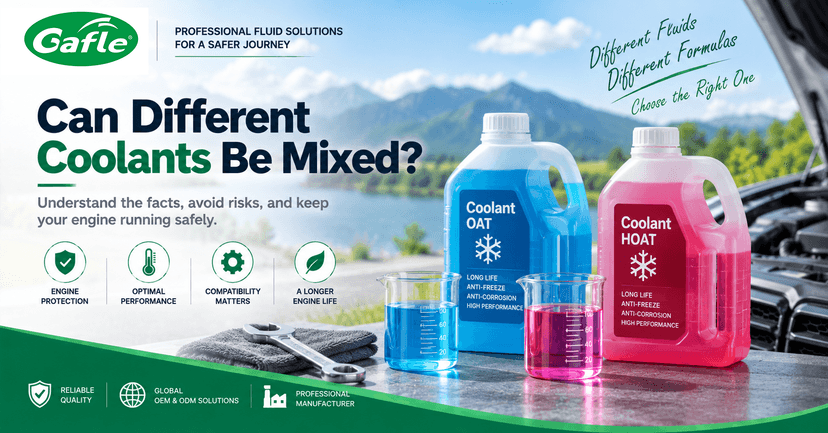
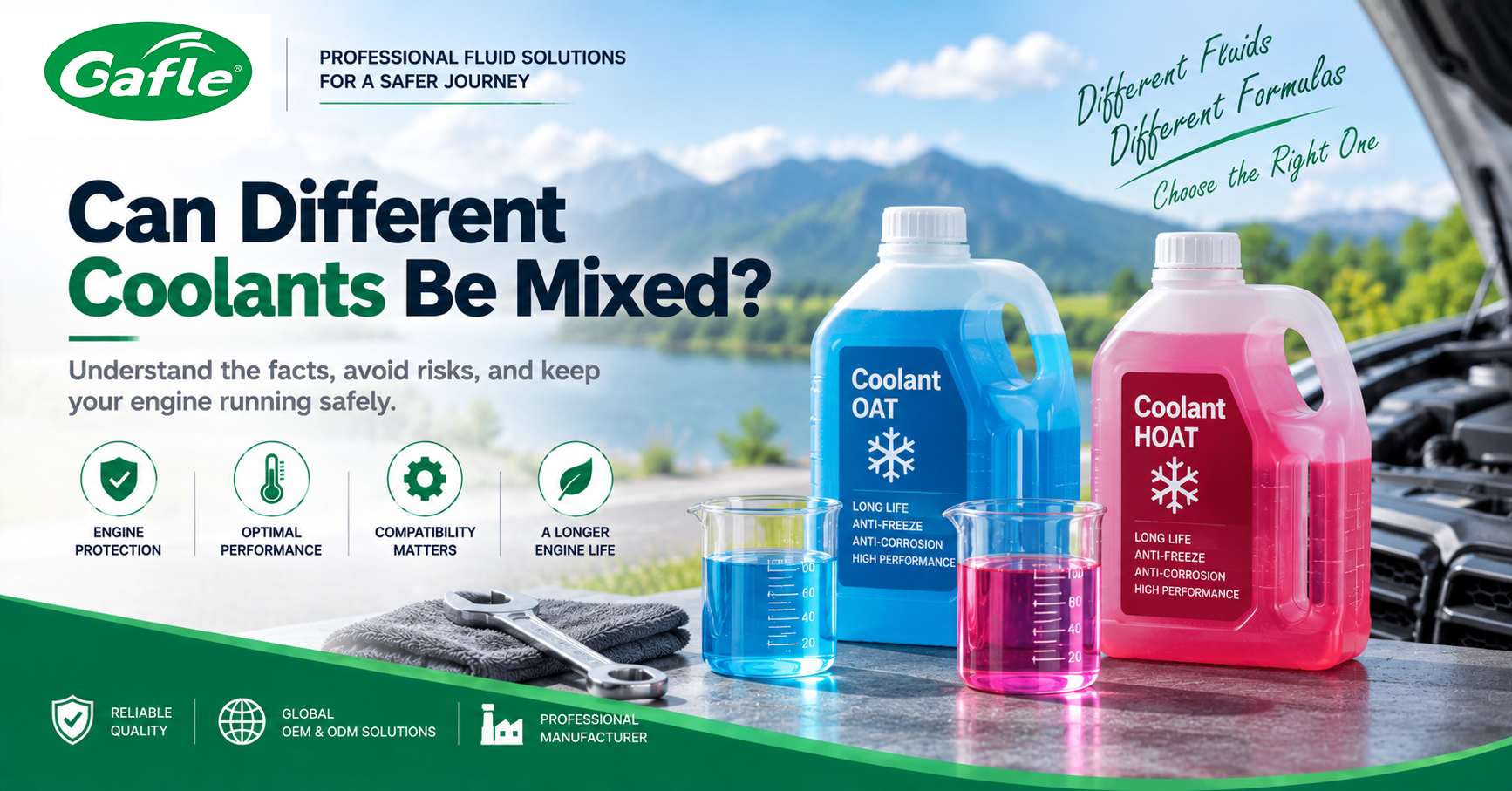
The risk is higher when an older conventional formula is mixed with an OAT, HOAT, or other extended-life formulation. These categories are not just marketing labels; they reflect different inhibitor systems. A coolant supplier worth listening to will usually tell you to follow the vehicle or equipment maker’s recommendation first, then choose a product that matches that chemistry rather than improvising with what happens to be on the shelf.
What to check before adding a different coolant
1. Base chemistry and inhibitor type
If the system already contains a specific coolant technology, the safest approach is to refill with the same type. If you cannot confirm what is inside, treat the system as uncertain rather than assuming a universal blend is acceptable.
2. OEM guidance
OEM coolant requirements matter because the vehicle or machine manufacturer has already balanced thermal performance, materials, and service interval expectations. If the manual calls for a certain formula, follow that instruction. A compatible product from an OEM Coolant Manufacturer or approved equivalent is generally a better choice than a generic replacement with vague claims.
3. Application severity
High-load engines, extended idling, hot climates, and mixed-duty fleets punish cooling systems more than light passenger use. In those cases, small compatibility problems can turn into expensive downtime. A workshop may get away with a minor mismatch once, but that is not the same as a reliable maintenance practice.
Quick buyer takeaway: when mixing is risky and when it may be acceptable
As a rule, same-spec coolant from the same chemistry family is safer than an unknown blend. A partial top-up of a closely matched product may be acceptable in an emergency, but it should not become the standard. If the system has already been mixed in the past, the cleanest fix is often a full drain, flush, and refill with one verified formulation.
That is the conservative answer, and in most industrial settings conservative is the smarter word. A few liters saved today can become a radiator issue, a service complaint, or a warranty dispute later.
Common mistakes buyers and technicians make
One common mistake is buying by color alone. Another is assuming “universal” means no compatibility checks are needed. It does not. Universal products may cover a broader range, but they still need to be verified against the application and service history.
A third mistake is treating coolant like brake fluid in procurement terms. The phrase Best Brake Fluid Manufacturer in China may appear in broader sourcing research, but brake fluid and coolant are entirely different products with different performance risks. Mixing up the purchase logic across fluid categories is how avoidable specification errors creep into the warehouse.
What a good supplier should help you verify
A capable Coolant Manufacturer should provide clear technical documentation, not just a sales sheet. Look for product identification, chemistry family, use guidance, and any OEM compatibility notes that are actually explained in plain language. If you work with an OEM Coolant Manufacturer, ask how the product aligns with your fleet mix, service intervals, and climate conditions. A serious supplier will be comfortable discussing these details.
For procurement teams, the better question is not “Which coolant is cheapest?” It is “Which formulation reduces the risk of cross-contamination, claims, and repeat service?” That mindset usually saves money over the full maintenance cycle.
Practical next step for maintenance teams
If you are unsure what is already in the system, do not guess. Confirm the existing fill, check the equipment manual, and ask your coolant supplier for a documented compatibility recommendation. If the current fluid is mixed or unknown, a flush-and-refill strategy is often the safest reset.
For buyers building a standardization program, the best move is to narrow coolant selection to one or two verified formulas across the fleet, then train service staff to stop treating color as a specification. That single discipline reduces errors, protects hardware, and makes inventory simpler to manage.
FAQ
Can different coolants be mixed in an emergency?
Sometimes, but only if you are dealing with closely compatible products and you can verify that later with a proper service. Emergency top-ups are a temporary fix, not a maintenance plan.
Is color a reliable guide?
No. Color is not a chemistry standard. Use the specification, not the dye.
What is the safest long-term approach?
Use one approved coolant type for the application, follow OEM guidance, and avoid casual mixing. That is the most dependable answer for equipment health and purchasing discipline.