What buyers really need from an automotive fluid manufacturer
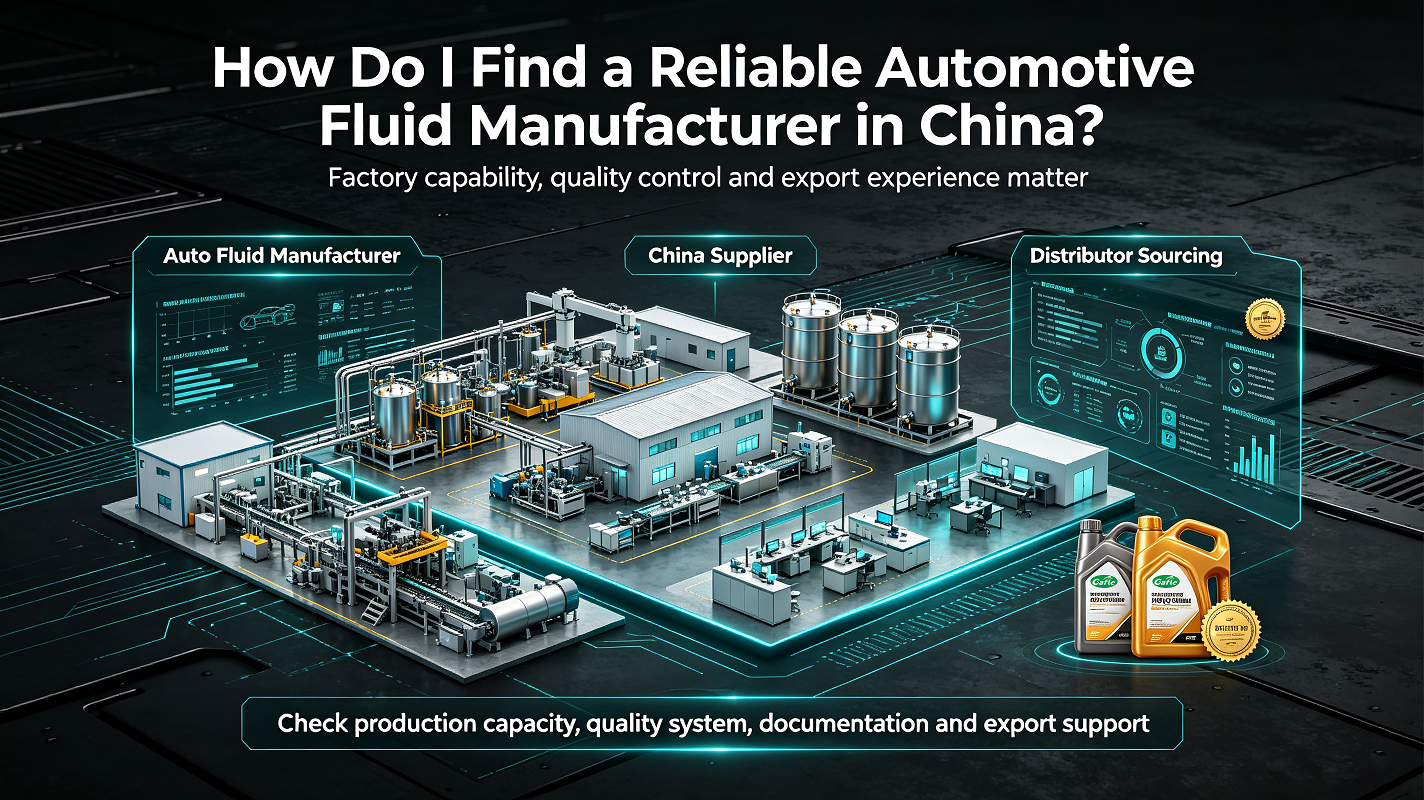
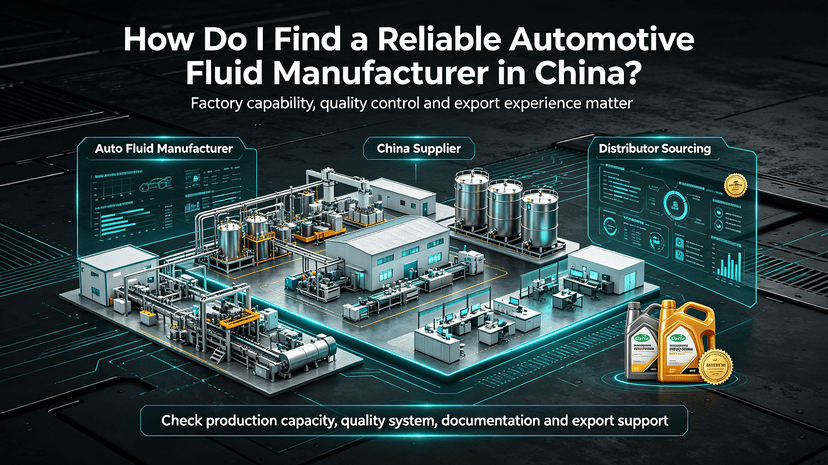
Choosing an automotive fluid manufacturer is not only about finding a plant that can fill bottles or drums. For engineers, sourcing managers, and distributors, the harder question is whether the supplier can consistently make fluids that match the vehicle application, perform under heat and pressure, and stay stable from batch to batch. That matters because a small formulation or contamination issue can become a warranty dispute, a service complaint, or a costly recall chain.
In practice, buyers are usually comparing three things at once: product fit, manufacturing discipline, and supply reliability. The right supplier may be a brake fluid supplier for one program and a coolant factory for another, but the underlying decision is the same. You need a partner that understands chemistry, packaging, and the realities of distribution without overpromising what the plant can actually do.
Why automotive fluids deserve more scrutiny than they often get
Fluids are easy to underestimate because they look simple on a shelf. They are not. Brake fluid, engine coolant, transmission fluid, and specialty service fluids all behave differently in storage, transport, and use. A fluid that seems fine in a sealed container may still lose performance if moisture control is poor, containers are incompatible, or the filling line introduces contamination.
That is why a reliable factory is not just a nice-to-have phrase. It usually means the supplier has stable production routines, consistent raw material handling, and packaging controls that reduce variation. Buyers should pay attention to the basics: how the material is blended, how batches are identified, how the company handles packaging formats, and whether it can support repeat orders without constant requalification.
Quick comparison: what to evaluate first
Product suitability
Start with the application. Brake fluids, for example, must be matched carefully to the required specification and vehicle system design. Coolants have their own formulation demands, especially around corrosion control and compatibility with metals and elastomers. A general automotive fluid supplier may offer a broad catalog, but broad does not automatically mean suitable.
Manufacturing control
Ask how the plant manages raw materials, blending, filtration, filling, and final packaging. Even when exact process details are not shared, a serious supplier should be able to explain its quality checks in plain language. If the answers feel vague, treat that as a warning sign rather than a minor sales issue.
Supply and distribution fit
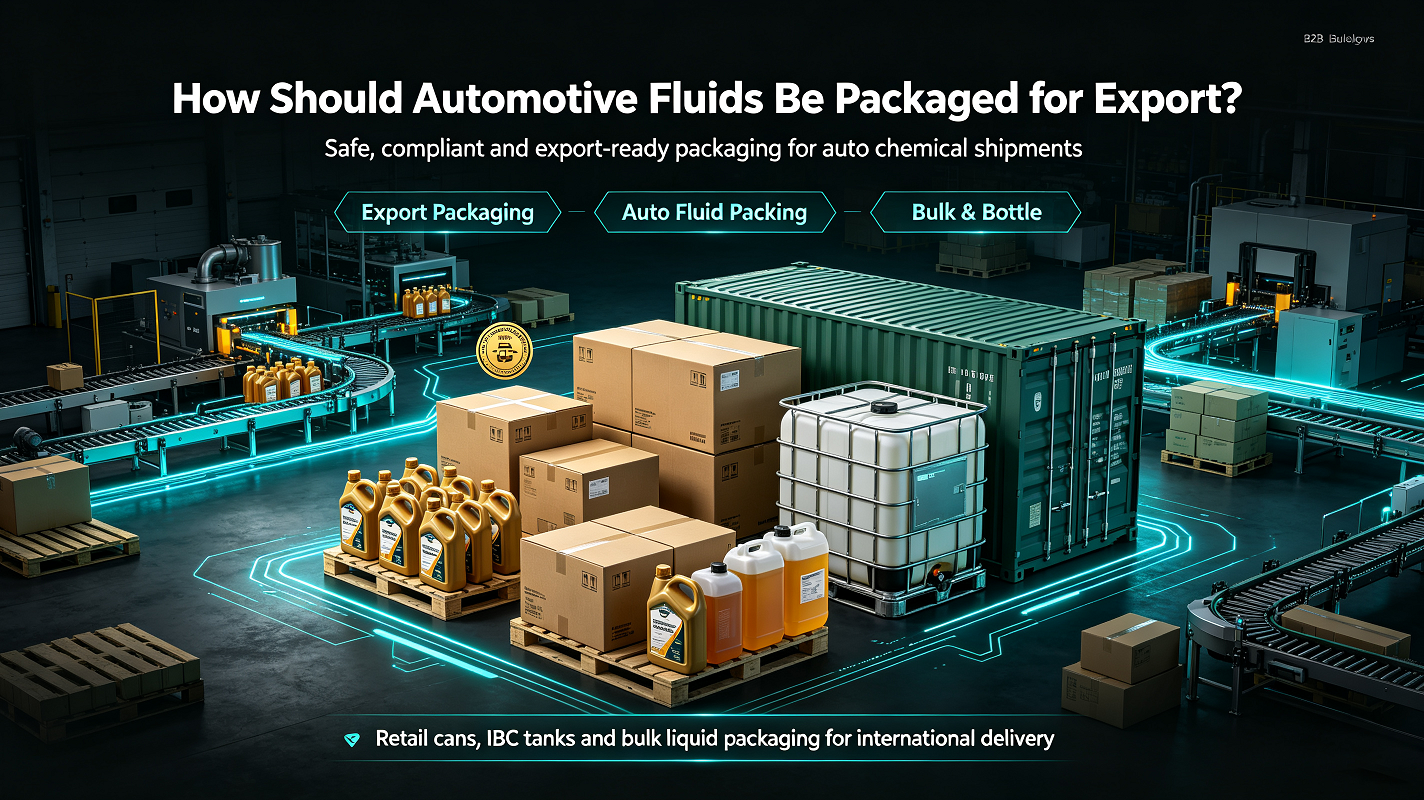
Distributors usually care about more than product chemistry. Carton configuration, pallet efficiency, labeling consistency, and order repeatability affect margin as much as unit price. An automotive fluid supplier for distributors should understand that small packaging errors can slow warehouse operations and create customer complaints downstream.
Common fluid categories and buyer concerns
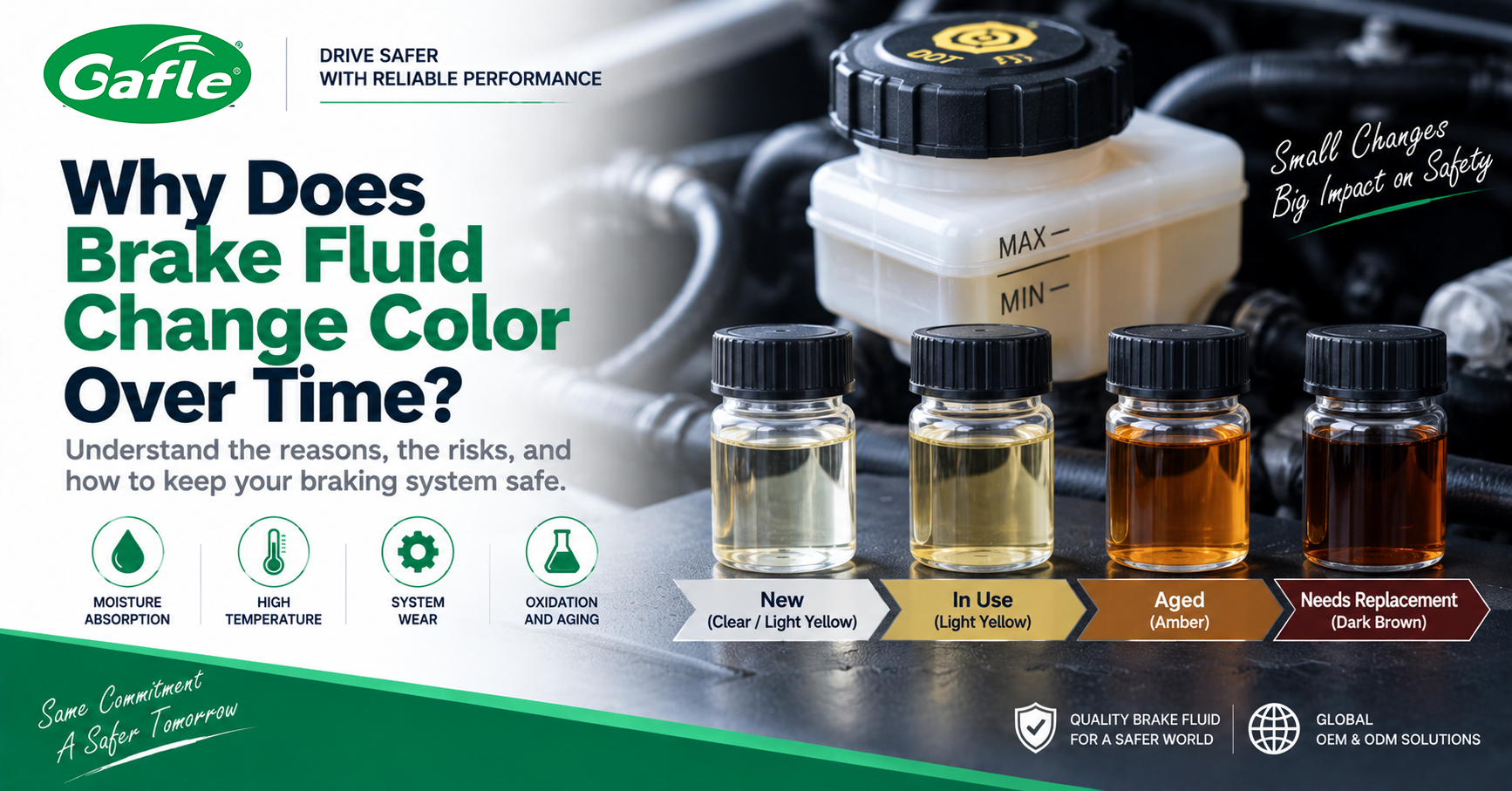
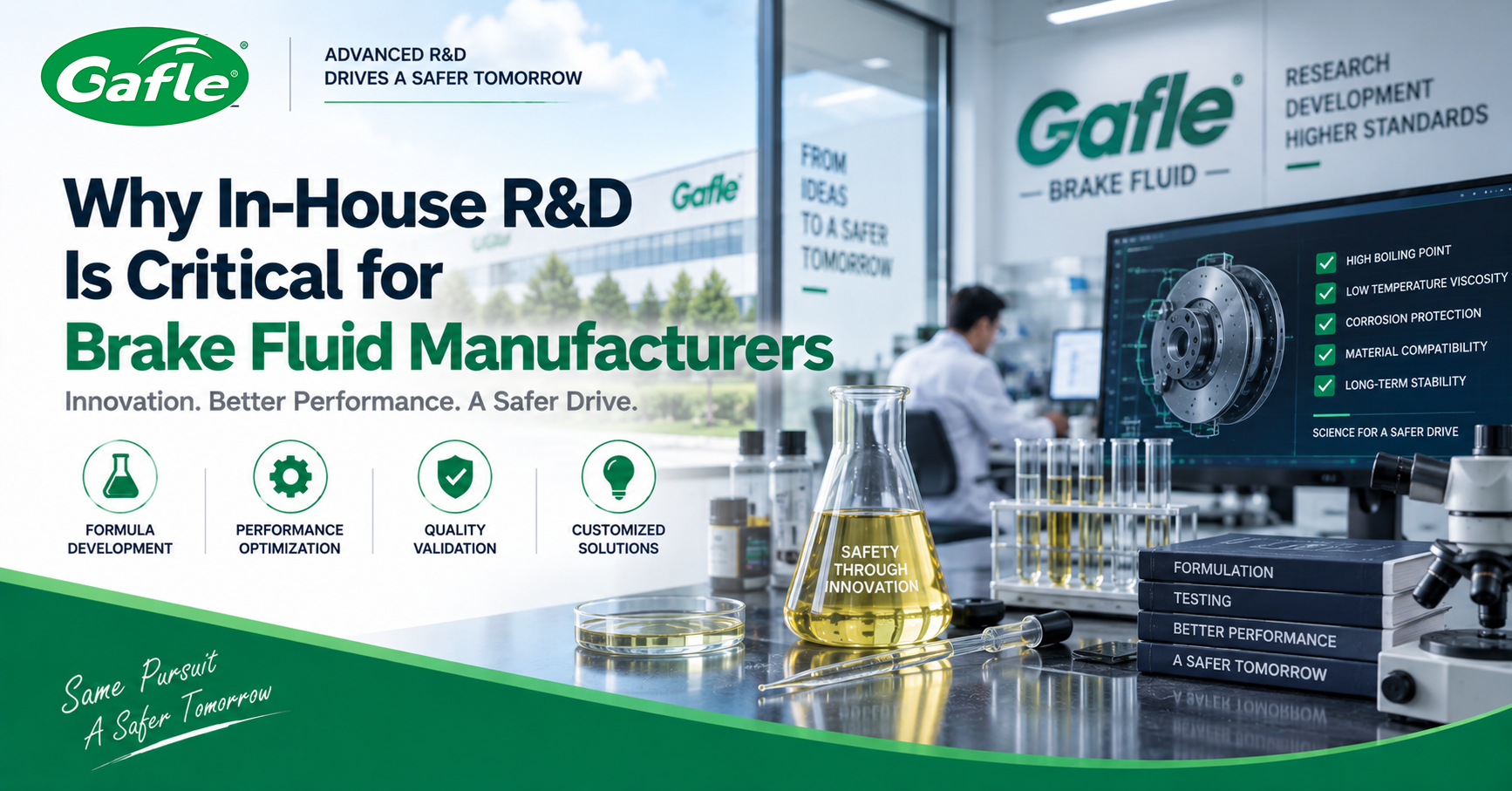
Brake fluid is often the most sensitive category from a sourcing perspective. Buyers want stable performance, clean filling, and packaging that resists moisture exposure. Because brake systems are safety-critical, the margin for error is small. The role of the brake fluid supplier is therefore more than supplying a commodity; it is helping preserve predictable field performance.
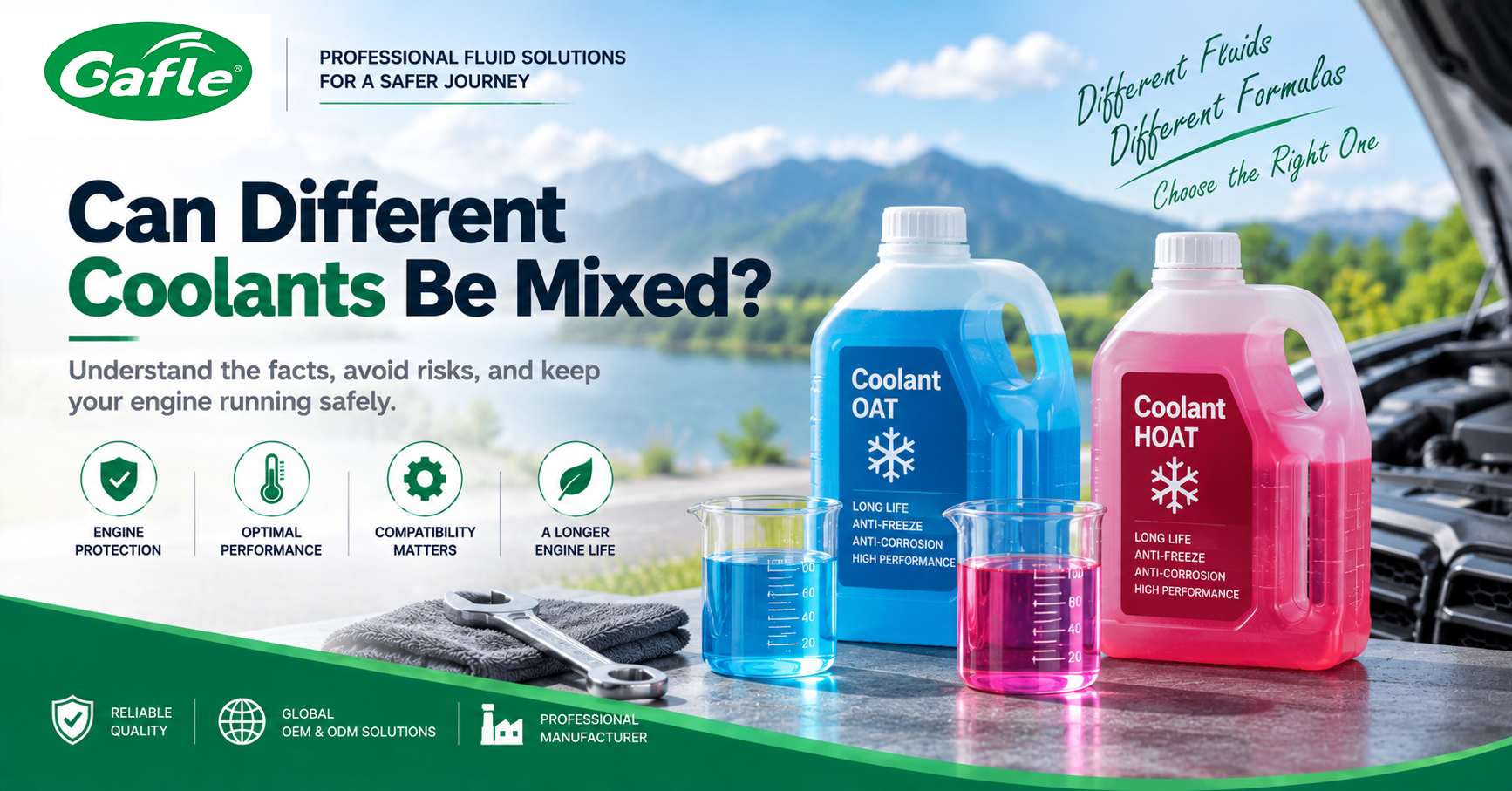
Coolant is a different challenge. A coolant factory must balance formulation stability, corrosion protection, and market-specific requirements. Coolants may be sold in concentrated or ready-to-use formats, and each format creates its own storage and handling questions. A buyer should also consider whether the product line is designed for passenger vehicles, light commercial vehicles, or mixed fleets, because those use cases do not always overlap neatly.
Other automotive fluids may be less discussed but no less important. Washer fluids, power steering fluids, and specialty maintenance fluids may not carry the same safety exposure as brake fluid, yet they still affect customer satisfaction and brand perception. A supplier that treats every fluid as interchangeable is usually not the supplier you want.
Selection criteria that matter in real procurement
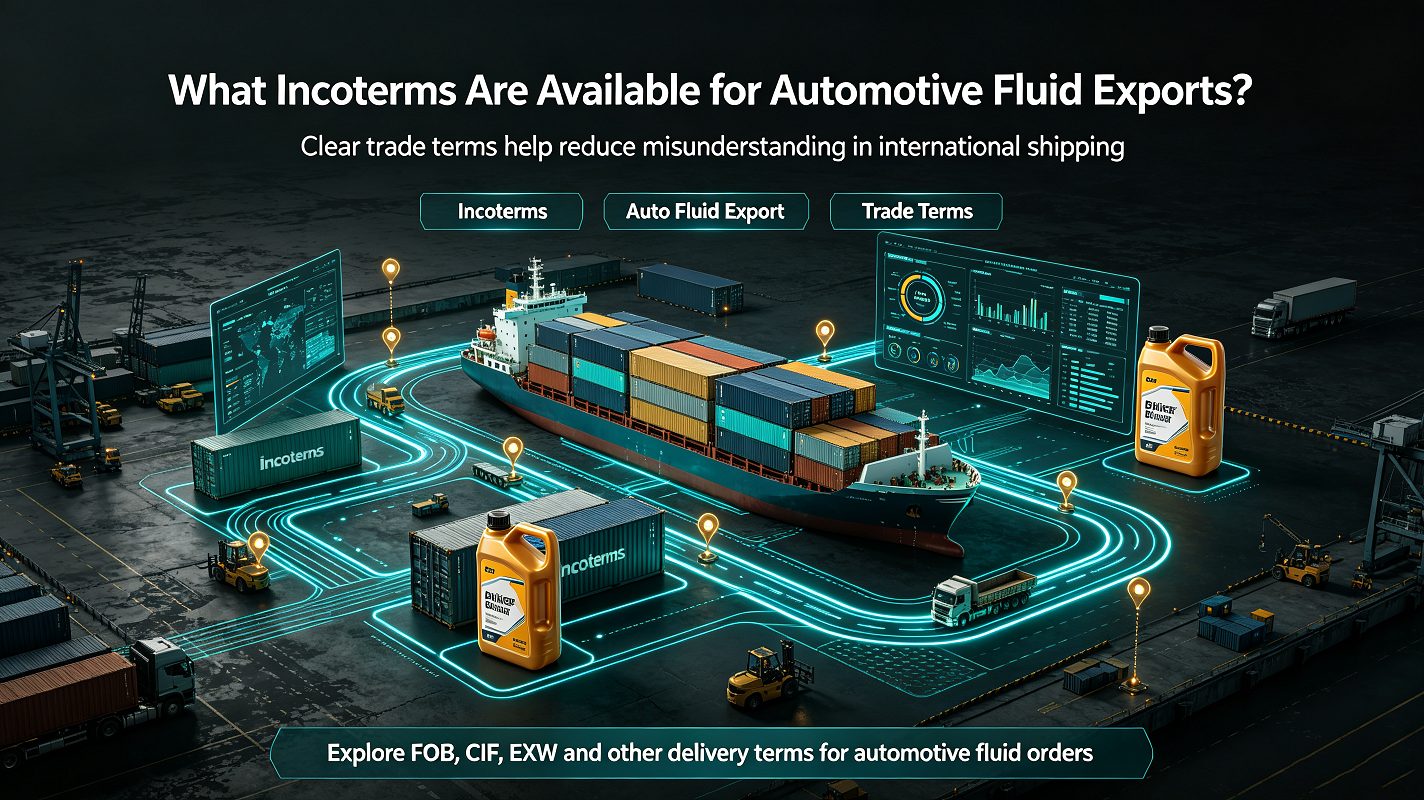
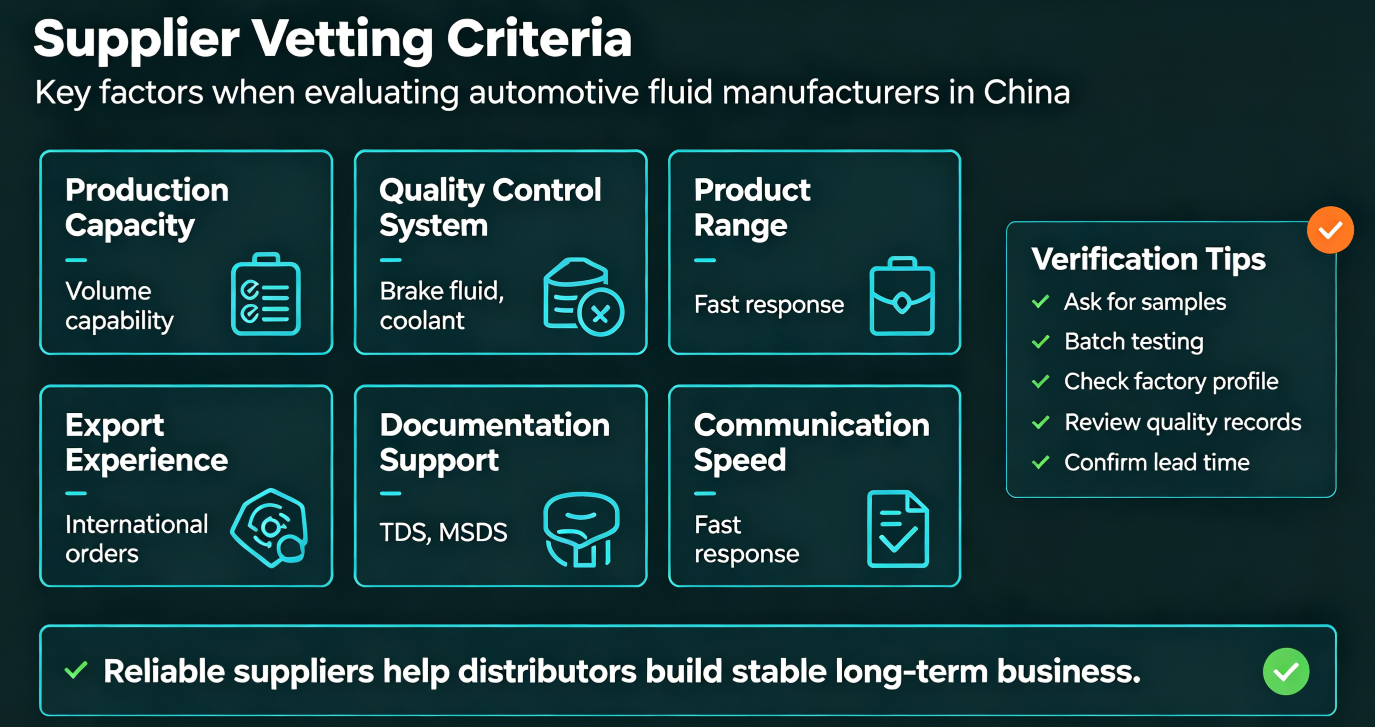
When comparing suppliers, it helps to separate claims from useful evidence. Look for a documented product range, clear packaging options, stable communication, and the ability to support repeat business. If you are sourcing for export or multi-market distribution, ask how labeling and documentation are handled for different regions. Details like this are easy to overlook during the first price conversation and annoying to fix later.
It is also worth asking whether the supplier can support private label or contract filling, if that matters to your channel strategy. Some buyers need a finished, market-ready product; others need a formulation partner who can work within their brand architecture. The best automotive fluid manufacturer for one company may be a poor fit for another if those expectations are not aligned early.
Practical mistakes buyers keep making
One common mistake is treating fluids like a simple packaging purchase. Another is assuming that every plant capable of blending liquid can handle automotive-grade requirements. That assumption can be expensive. Clean handling, batch traceability, and packaging integrity are not decorative features. They are part of the product.
Buyers also sometimes focus too heavily on the lowest bid and not enough on consistency. A slightly cheaper container or fill price does little good if the supplier cannot maintain the same quality across replenishment cycles. In distribution, inconsistency is often more costly than a modestly higher unit price.
What to ask before you place an order
Ask about product specifications, packaging formats, batch control, shelf-life handling, and whether the factory can support your forecast pattern. If you are buying through a brake fluid supplier or coolant factory, confirm the intended market, vehicle compatibility, and any storage conditions that could affect performance before shipment. Small questions here prevent large misunderstandings later.
If you are sourcing from an automotive fluid supplier for distributors, request samples, labels, and master carton details before scaling up. That sounds basic, but it is exactly the kind of basic step teams skip when the commercial terms look attractive.
FAQ for sourcing teams
Is a broad product catalog always better?
Not necessarily. A broad catalog can be useful, but only if the supplier maintains control across the range. Narrower specialization is often safer for technical fluids.
What matters most for repeat business?
Consistency. Product quality, packaging accuracy, and delivery reliability usually matter more over time than a single sharp quote.
Should distributors ask for technical documentation?
Yes. Even when the product is straightforward, documentation helps reduce claims, simplify onboarding, and support customer confidence.
A sensible next step
If you are reviewing an automotive fluid manufacturer now, build your shortlist around fit, process discipline, and distribution readiness. The right partner should be able to explain what it makes, how it packs it, and how it keeps batches consistent. That is the kind of supplier relationship that holds up after the first order, which is usually where the real test begins.
Welcome to contact GAFLE for more information & cooperation!
peter
ZHEJIANG GAFLE AUTO CHEMICL CO.,LTD
Tel:86-579-8222 1665
Fax:86-579-8246 4690
Cel/Wechart:86-13335993986
E-mail:peter@gafle.net
Web:www.gafle.net