
Why distributors ask for better product catalogs and technical datasheets
When distributors source industrial fluids, chemicals, or maintenance products, they usually need more than a sales sheet. They need product catalogs and technical datasheets for distributors that can be handed to buyers, used by sales teams, and filed for compliance review without a lot of back-and-forth. That sounds simple, but it often becomes the bottleneck in a buying process. If the catalog is vague, the technical datasheet is incomplete, or the supporting documents are scattered across emails, the distributor loses time and credibility.
This matters because distributors are not just reselling a product. They are answering customer questions about application, storage, compatibility, and safety. A clean technical datasheet helps them do that with confidence. A useful product catalog helps them compare SKUs, package sizes, and product families quickly. When both are organized properly, the distributor can move from inquiry to quotation faster and reduce avoidable mistakes.
What a distributor actually needs from documentation
A common mistake is assuming that a catalog alone is enough. In practice, buyers look for a set of documents that work together.
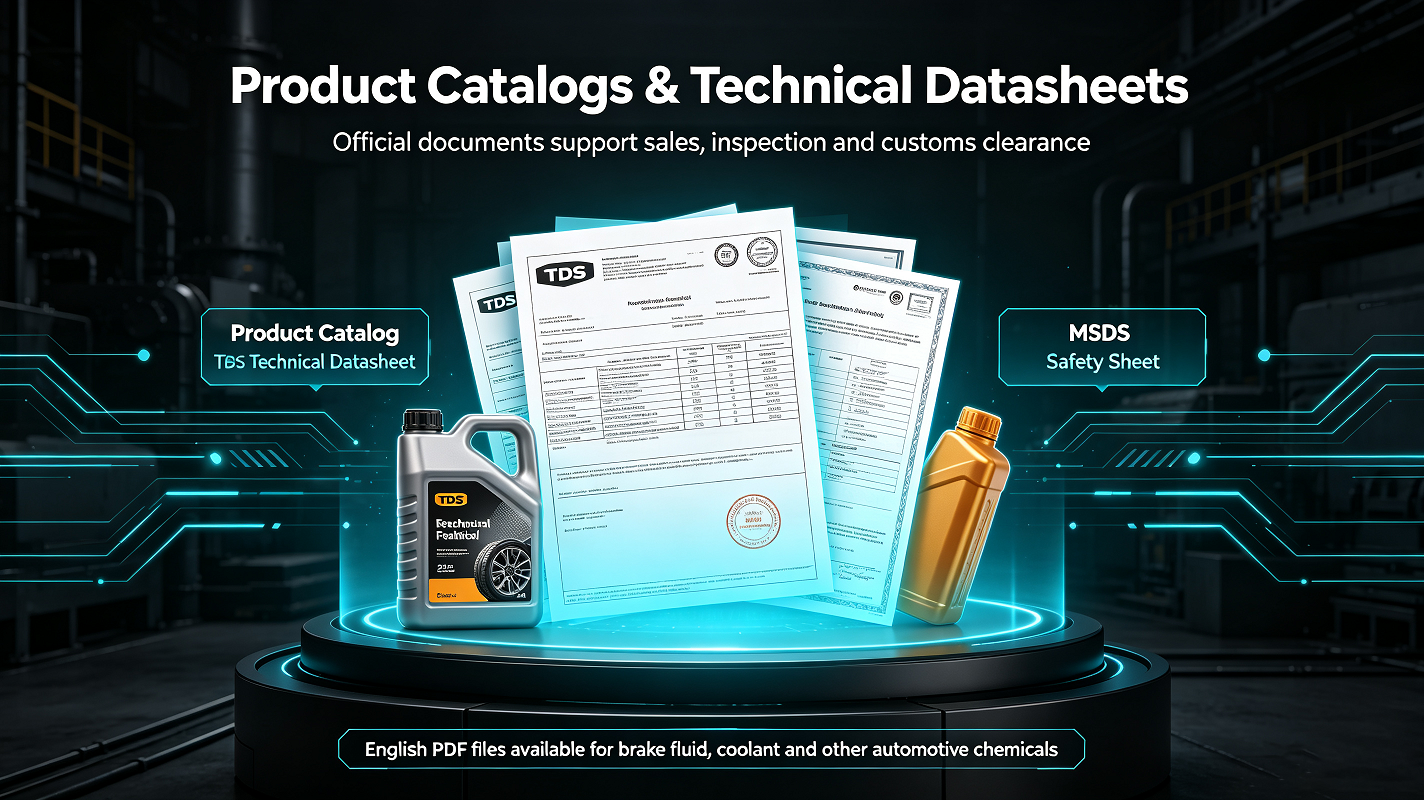
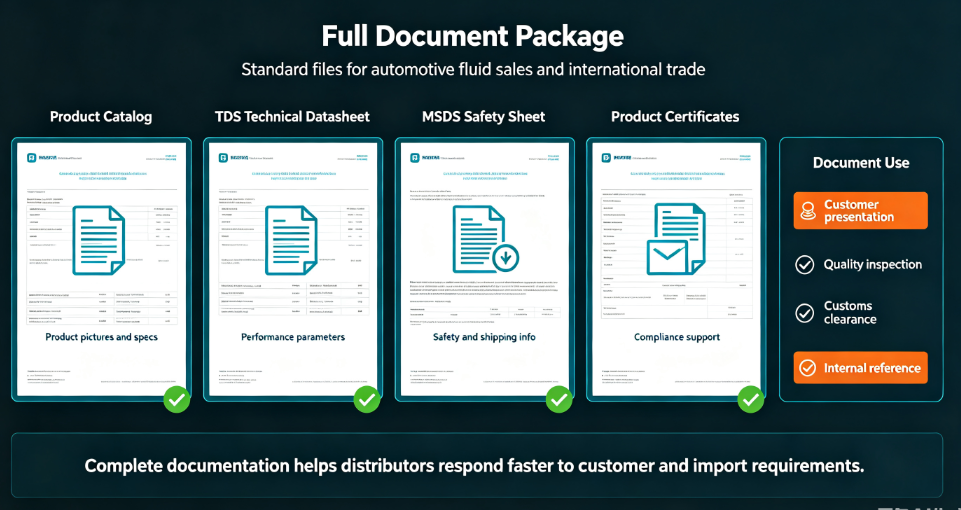
A product catalog should give a clear overview of the range: product names, intended uses, packaging options, and broad features. A technical datasheet should go deeper, listing key properties, application notes, handling guidance, and any relevant performance information the supplier is prepared to publish. For many industrial products, MSDS and TDS documents are also expected. The Safety Data Sheet supports safe handling and regulatory review, while the Technical Data Sheet supports product selection and application fit.
For distributors serving maintenance, automotive, or industrial channels, this is especially important. A buyer comparing coolant wholesale options, for example, may want to know whether the product is suitable for a specific system or operating environment. Someone evaluating Brake fluid needs the right product family information, but also enough technical detail to avoid mixing incompatible grades. The documents do not need to be overloaded; they do need to be dependable.
Quick reference: what each document should do
Product catalog
Use it for product range browsing, SKU comparison, and sales conversations. It should be easy to scan and consistent across the line.
Specification sheet
Use it when a buyer wants key values in a compact format. A specification sheet often sits between marketing copy and full technical documentation.
Technical datasheet
Use it to support technical evaluation. This is where engineers and product teams look for properties, application limits, and usage guidance.
MSDS and TDS documents
Use these for safety, compliance, and product support. They are not interchangeable, and buyers usually know the difference.
What makes these documents genuinely useful
The best distributor-ready documents are specific without becoming cluttered. They use the same product names across every file. They avoid vague claims such as “high performance” unless the document also explains what that means. They make revision control obvious, because a distributor should never circulate an outdated sheet by accident. That warning sounds minor until a customer asks for a document they already received six months ago, and nobody can confirm whether it is still current.
It also helps when the format is consistent. If every technical datasheet places product identification, core properties, handling notes, and packaging details in the same order, sales teams can answer questions faster. Engineers appreciate that too. They do not want to hunt through a glossy brochure for one critical number.
Common mistakes suppliers make
One frequent error is sending a catalog that looks polished but lacks the practical details distributors need to quote accurately. Another is attaching a technical datasheet that is too generic, especially when the product line includes several variants. Buyers notice that quickly.
Suppliers also sometimes bury key documents in different folders or send them as separate links with no clear naming convention. That creates friction for the distributor, who may be trying to serve several customer accounts at once. A simple file structure and clear document naming can save more time than most teams expect.
Practical buyer advice for distributors
If you are evaluating a supplier, ask whether they can provide product catalogs and technical datasheets for distributors in a format that is easy to reuse. The best answer is not just “yes.” It is whether the supplier can keep the content current, support multilingual needs if required, and separate sales material from technical documentation.
You should also check whether the document set covers the full product range or only selected items. Partial documentation is useful, but it can slow down channel growth if customers ask for adjacent products that are not yet documented.
What to request before placing a larger order
Before committing to broader distribution, request the core document pack for the products you plan to promote: the product catalog, the relevant technical datasheet, the applicable specification sheet, and any MSDS and TDS documents that go with the product family. Review whether the terminology is consistent and whether the documents answer ordinary buyer questions without requiring a follow-up call.
That small review can expose a lot. If the paperwork is clean, it usually reflects a supplier who understands distributor workflows. If the paperwork is messy, the operational headaches tend to show up later in customer service, claims handling, and quote revisions.
FAQ
Why are technical datasheets so important to distributors?
Because they support product selection, reduce quoting errors, and help distributors answer technical questions without guessing.
Is a product catalog enough for sales teams?
Usually not. A catalog is a starting point, but most distributors also need a technical datasheet and supporting safety documents.
Should every product have the same document package?
Ideally yes, but in reality some product families need different supporting documents. The key is consistency where it matters and clarity where products differ.
A practical next step
If you are building a channel program or reviewing a supplier relationship, start by asking for a sample document set. A good supplier should be able to provide product catalogs and technical datasheets for distributors that are organized, current, and usable by both sales and technical teams. The documentation will not close a deal on its own, but it can remove a surprising number of obstacles along the way.
Welcome to contact GAFLE for more information & cooperation!
peter
ZHEJIANG GAFLE AUTO CHEMICL CO.,LTD
Tel:86-579-8222 1665
Fax:86-579-8246 4690
Cel/Wechart:86-13335993986
E-mail:peter@gafle.net
Web:www.gafle.net