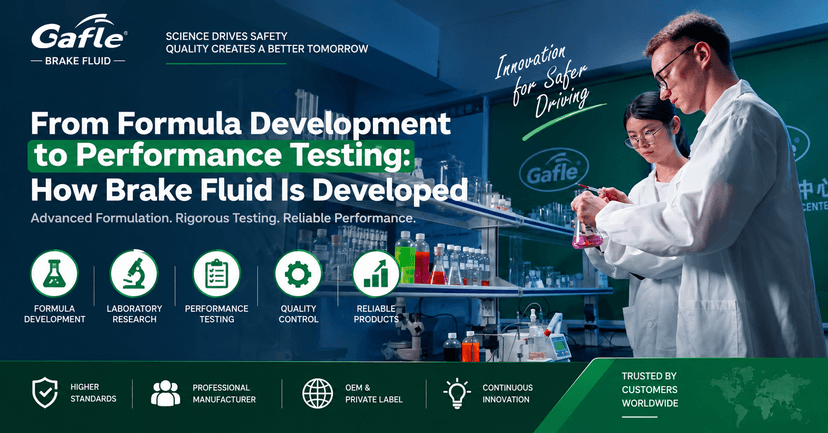
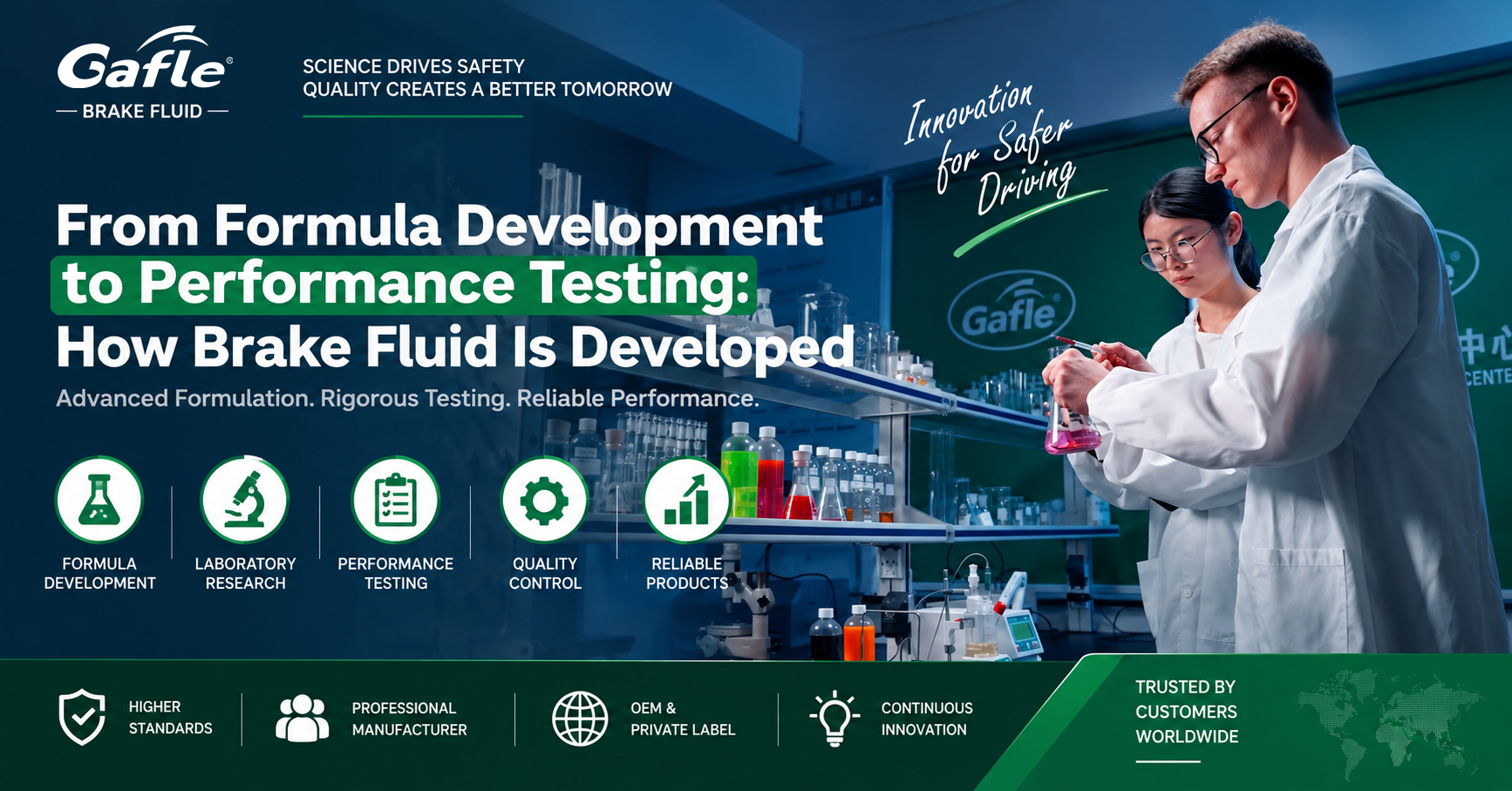
 From Formula Development to Performance Testing: How Brake Fluid Is Developed
Behind every high-quality brake fluid is a carefully engineered development process that combines chemical science, laboratory research, rigorous testing, and precision manufacturing. From selecting raw materials to validating performance under demanding conditions, every stage plays an essential role in ensuring reliable braking performance and long-term safety.
For OEM customers, distributors, and automotive brands, understanding how brake fluid is developed provides valuable insight into the capabilities of a professional manufacturer.
As a professional Brake Fluid Manufacturer, Gafle has more than 20 years of dedicated manufacturing experience. Supported by an advanced laboratory, experienced R&D engineers, and strict quality management, we continuously develop high-performance brake fluid solutions that meet the evolving needs of the global automotive market.
How Brake Fluid Development Begins
Successful Brake Fluid Development starts long before production begins.
Every new formulation is developed based on a combination of:
- Market requirements
- International standards
- Vehicle performance needs
- Environmental conditions
- Customer specifications
- OEM project requirements
Engineers evaluate these factors to determine the desired performance characteristics before laboratory development begins.
A well-planned development process ensures that every formulation is designed with safety, stability, and long-term reliability in mind.
Developing the Right Brake Fluid Formula
Creating an effective Brake Fluid Formula requires balancing multiple performance characteristics.
Rather than focusing on a single property, engineers optimize the formulation to deliver consistent performance across a wide range of operating conditions.
Key considerations include:
High Boiling Point Performance
Brake fluid must maintain excellent thermal stability during repeated braking and high-temperature operation.
A carefully designed formulation helps maintain both dry and wet boiling point performance.
Low-Temperature Fluidity
Brake fluid must remain capable of flowing efficiently even in extremely cold environments.
Proper formulation helps ensure smooth hydraulic response during winter operation.
Corrosion Protection
Brake systems contain numerous metal components that require long-term protection.
Specialized additives help reduce corrosion and contribute to longer component life.
Material Compatibility
Brake fluid must be compatible with seals, hoses, and other materials used throughout modern braking systems.
Compatibility testing is an important part of formula development.
Oxidation Stability
Brake fluid should maintain stable performance throughout its service life.
Formulation optimization helps improve resistance to oxidation and aging.
Brake Fluid Performance Testing
Developing a new formula is only the beginning.
Every formulation must undergo comprehensive Brake Fluid Performance Testing before entering production.
Dry Boiling Point Testing
Fresh brake fluid is tested to verify its maximum boiling point performance.
This confirms its ability to withstand demanding braking conditions.
Wet Boiling Point Testing
Because brake fluid naturally absorbs moisture during service, laboratory testing also evaluates performance after controlled moisture absorption.
This helps simulate real-world operating conditions.
Low-Temperature Viscosity Testing
Brake fluid is tested at low temperatures to verify proper hydraulic flow and responsiveness.
This ensures reliable braking performance in cold climates.
Corrosion Resistance Testing
Brake fluid is evaluated for its ability to protect internal brake system components from corrosion during long-term operation.
Material Compatibility Testing
Laboratory engineers verify compatibility with rubber seals, hoses, and metal components commonly used in braking systems.
Stability Testing
Long-term stability testing helps confirm that the formulation maintains consistent performance during storage and service.
Only formulations that successfully complete all required evaluations move to the next stage of development.
From Laboratory to Mass Production
Once laboratory testing confirms product performance, the development process continues toward manufacturing.
Pilot Production
Small-scale production verifies that the formulation performs consistently outside the laboratory.
This stage also helps optimize manufacturing parameters.
Process Verification
Production engineers evaluate:
- Mixing procedures
- Temperature control
- Filtration processes
- Filling accuracy
- Packaging performance
Each step is optimized to improve consistency.
Batch Consistency
Before full-scale production begins, multiple batches are produced and tested to verify repeatability.
This helps ensure customers receive the same product quality with every order.
How Gafle Ensures Consistent Quality
At Gafle, quality is built into every stage of product development and manufacturing.
Our production system combines scientific research with rigorous quality management.
Professional Research Laboratory
Our in-house laboratory supports:
- Formula development
- Product optimization
- Routine testing
- Customer project validation
- Continuous innovation
Advanced Testing Equipment
Every production batch undergoes multiple laboratory tests, including:
- Dry boiling point
- Wet boiling point
- Low-temperature viscosity
- Corrosion resistance
- Material compatibility
- Appearance inspection
These evaluations help verify that every product meets established performance requirements.
Strict Quality Management
Our manufacturing system operates under the IATF 16949 Quality Management System, ensuring standardized production and continuous improvement.
Continuous Innovation
Our research and development team continually improves formulations to meet changing vehicle technologies and customer requirements while maintaining stable product quality.
Why Research and Development Matters for OEM Customers
OEM customers require more than reliable production—they need manufacturers capable of supporting long-term product development.
A professional OEM Brake Fluid Manufacturer offers several important advantages.
Customized Formula Development
Manufacturers can develop formulations tailored to different markets, vehicle applications, and customer requirements.
Faster Product Validation
In-house laboratories allow engineers to evaluate product performance efficiently before mass production begins.
Stable Production Quality
Comprehensive testing throughout development and manufacturing helps ensure consistent product quality across every production batch.
Long-Term Technical Support
An experienced R&D team provides valuable technical assistance throughout product development, production, and market expansion.
How to Choose the Best Brake Fluid Manufacturer in China
Many international buyers searching for the Best Brake Fluid Manufacturer in China understand that advanced manufacturing begins with strong research and development capabilities.
When evaluating suppliers, consider:
- Professional Brake Fluid Development capability
- Advanced laboratory facilities
- Comprehensive Brake Fluid Performance Testing
- Formula development expertise
- Quality management systems
- OEM manufacturing experience
- Stable production capacity
- Global export experience
- Continuous technical innovation
- Long-term customer support
A manufacturer with strong R&D capabilities is better equipped to deliver reliable products and customized solutions.
Why Global Customers Choose Gafle
As a trusted Brake Fluid Manufacturer, Gafle combines scientific research, advanced manufacturing, and rigorous testing to deliver premium brake fluid products worldwide.
Our strengths include:
- 20+ Years of Dedicated Brake Fluid Manufacturing Experience
- Professional Brake Fluid Research and Development Team
- Advanced In-House Laboratory
- Comprehensive Brake Fluid Performance Testing
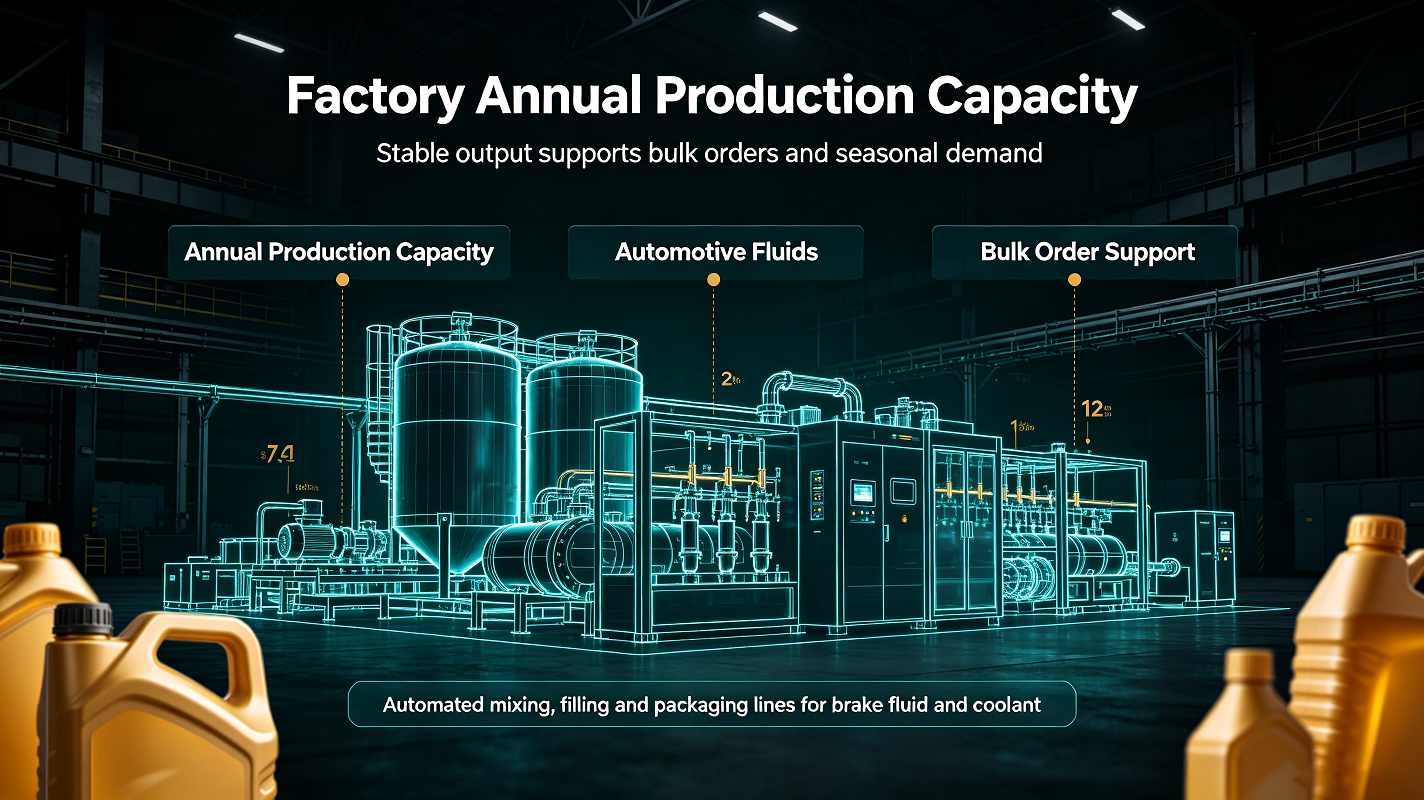
- Modern Manufacturing Facilities
- IATF 16949 Quality Management System
- OEM Brake Fluid Manufacturing
- Private Label Solutions
- Customized Bottles, Labels, and Cartons
- Stable Large-Scale Production
- Global Export Experience
- Participant in Drafting China's National Brake Fluid Standards
These capabilities enable us to support distributors, importers, and automotive brands with reliable products and long-term manufacturing partnerships.
Frequently Asked Questions
How is brake fluid developed?
Brake fluid is developed through a structured process that includes market research, formula design, laboratory testing, pilot production, performance validation, and large-scale manufacturing.
What is included in a brake fluid formula?
A brake fluid formula is carefully engineered to provide high boiling point performance, low-temperature fluidity, corrosion protection, material compatibility, oxidation stability, and long-term reliability.
Why is brake fluid performance testing important?
Performance testing verifies that the formulation meets required specifications before production, helping ensure safety, consistency, and reliable braking performance.
How does Gafle develop new brake fluid products?
Gafle combines professional laboratory research, advanced testing equipment, experienced R&D engineers, and strict quality management to continuously develop and improve brake fluid formulations for global markets.
How should buyers choose the Best Brake Fluid Manufacturer in China?
Buyers should evaluate research and development capability, laboratory facilities, performance testing procedures, manufacturing experience, OEM expertise, quality management systems, production consistency, and export experience—not simply compare prices.
Conclusion
Developing high-quality brake fluid is a scientific process that extends far beyond manufacturing. From initial Brake Fluid Development and formula optimization to comprehensive Brake Fluid Performance Testing, every stage contributes to delivering products that perform reliably under demanding driving conditions.
For distributors, importers, and automotive brands searching for the Best Brake Fluid Manufacturer in China, choosing a manufacturer with strong research and development capabilities, advanced laboratory facilities, and rigorous testing procedures is essential for long-term success.
With more than 20 years of manufacturing experience, Gafle continues to invest in innovation, advanced laboratory technology, and continuous product improvement to provide premium brake fluid solutions for customers around the world.
At Gafle, every formula is developed with precision, every batch is validated through rigorous testing, and every product reflects our commitment to safer braking, reliable performance, and lasting partnerships.