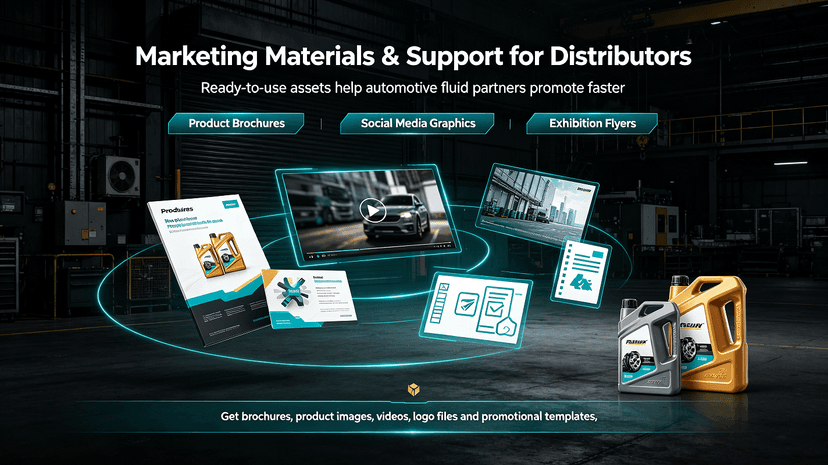
Why marketing materials matter for distributors and resellers
For many distributors, the product itself is only half the job. The other half is getting attention at the counter, in the warehouse, and online. That is where marketing materials come in. For a distributor or reseller, these assets shape how a buyer understands a product category, whether the customer trusts the brand, and how quickly a sale moves from question to purchase.
This is especially true in technical categories such as auto chemical products, where end buyers may not have the patience to compare every label detail. If the reseller cannot explain the difference between products clearly, the conversation stalls. Good marketing support helps close that gap without forcing every sales rep to become a product specialist.
What buyers usually need from marketing support
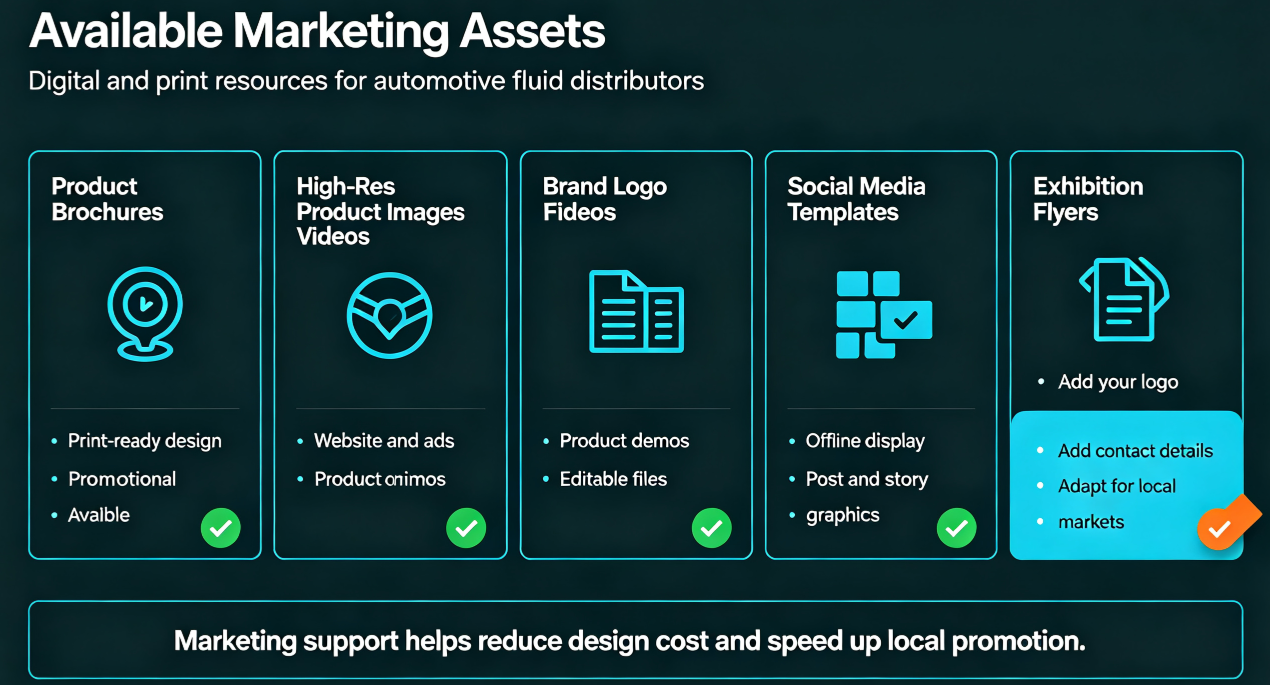
In practice, resellers tend to need a mix of printed and digital marketing assets. The exact format depends on the channel, but the purpose is consistent: make the product easier to understand, easier to present, and easier to sell.
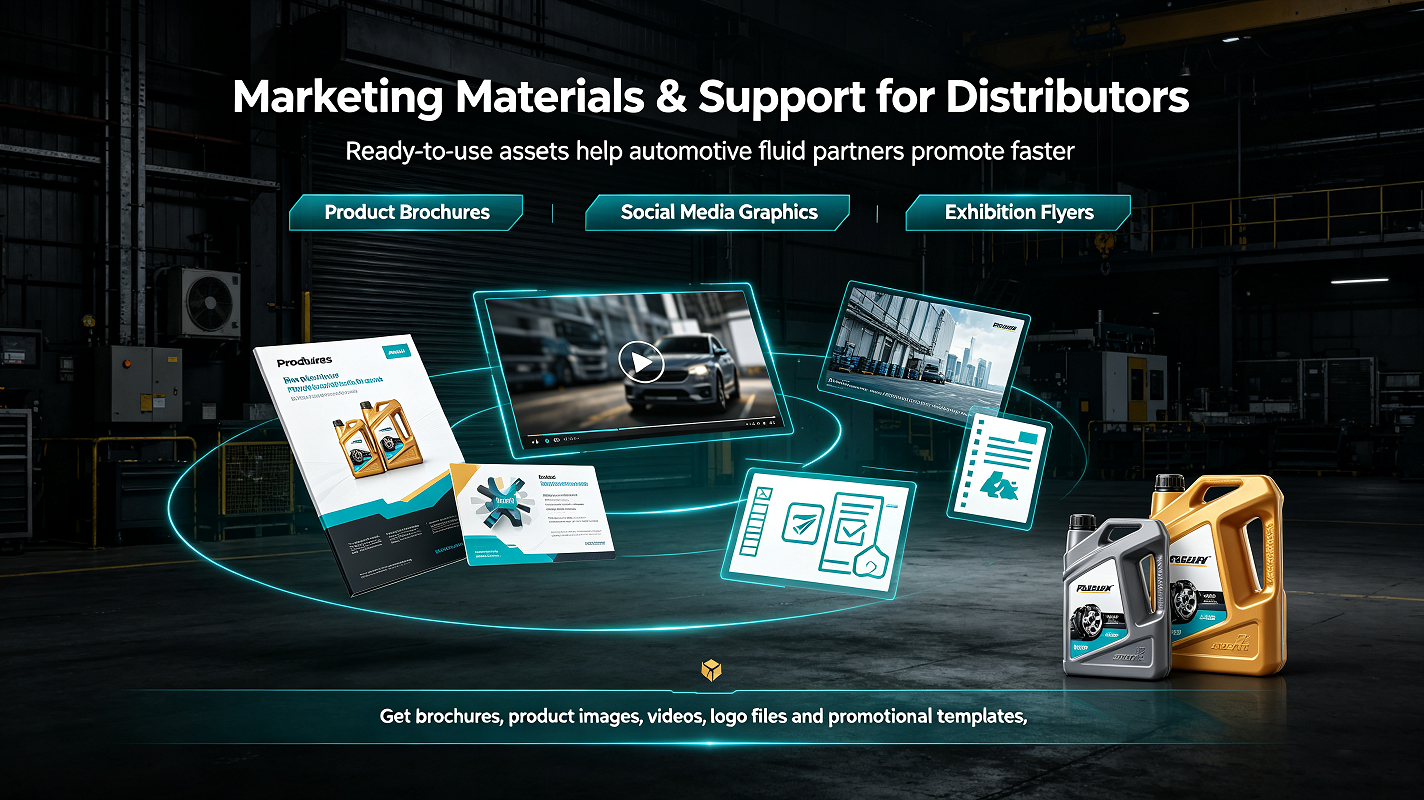
Common asset types
Some of the most useful marketing materials are simple ones: product brochures, shelf talkers, point-of-sale displays, sell sheets, and web-ready product images. For larger accounts, distributors often want comparison charts, technical one-pagers, and short training content for sales teams.
When the product is something as practical as brake fluid or coolant, clarity matters more than decoration. Buyers want to know what the product does, where it fits, and how it should be used. A flashy design without useful data rarely helps. In fact, it can slow down the decision if the sales rep has to keep explaining what the customer should already be seeing on the page.
Why technical product categories need stronger branding
Brand marketing is often discussed as if it only applies to consumer goods, but industrial and automotive channels rely on it too. In a crowded shelf environment, the distributor that presents a consistent brand story usually has a small but real advantage. Consistency makes the line look established. It also helps the sales team avoid contradictory messages from one campaign to the next.
For an auto chemical line, the challenge is not just visibility. It is credibility. Resellers need marketing assets for brake fluid and coolant resellers that explain product differences without oversimplifying them. If the wording is too vague, the buyer may assume the product is generic. If the wording is too technical, the retail customer may tune out. The best materials sit in the middle: straightforward, accurate, and easy to use in a hurry.
What makes distributor-facing materials effective
The most useful marketing support tends to share a few traits. It is easy to update, easy to localize, and easy for the distributor to use across channels. A sales sheet should not require a design team every time a line extension is added. A digital asset should work on a website, in email, and in a marketplace listing without looking awkward.
There is also a practical point that gets missed: the distributor is not always the end decision-maker. Often, the person using the material is a branch manager, sales rep, or purchasing team member who needs to move quickly. If the content is buried under brand language, they may skip it. If the layout is clean and the claims are specific, they are more likely to use it.
Things to check before approving assets
Before distributing any material, buyers should review whether the language matches the actual product positioning. Look for outdated packaging, inconsistent naming, and claims that cannot be supported by the product data you already have. These are small errors, but they create confusion later. A distributor may also want to confirm that the same product description is used across labels, brochures, and online listings.
Practical mistakes to avoid
One common mistake is treating marketing support as an afterthought. Another is making every asset look like a brand campaign while ignoring the sales process. Distributors usually need tools that help them quote, explain, and re-order. Pretty design alone does not do that.
It is also easy to overload a page with too many product benefits. In technical categories, too many claims can weaken the message. A better approach is to focus on a few attributes that matter to the buyer and make sure those attributes are repeated consistently across the channel.
A simple decision framework for sourcing teams
If you are evaluating a supplier or brand partner, ask a few direct questions: Do they provide ready-to-use marketing assets? Can the materials be adapted for distributors in different markets? Are the product messages clear enough for counter staff and online listings? Do they support brand marketing in a way that helps the reseller sell, not just decorate a page?
That may sound basic, but it saves time later. A product with weak support can still sell, but it usually costs more effort at every step. The right package of marketing materials reduces that friction.
FAQ: What distributors ask most often
Do marketing materials need to be highly technical?
Not always. They need to be accurate, but the level of detail should match the audience. Counter staff and retail buyers often need simpler language than engineering or procurement teams.
Should digital and printed assets say the same thing?
Yes, at least on the core product message. Channel differences are fine, but the basic positioning should not change from one format to another.
What is the best first asset to request?
For most distributors, a concise sell sheet or product overview is the best starting point. It can support sales calls, web listings, and branch training with relatively little adjustment.
What to do next
If you are working with a distributor network, review the current marketing support with fresh eyes. Look at the assets from the standpoint of the person who has to sell the product on a busy day. If the material makes that job easier, it is doing its work. If it only looks polished on a presentation slide, it probably needs revision.
For buyers handling auto chemical lines or broader industrial assortments, the right marketing materials are not cosmetic extras. They are part of the sales system, and in many cases they are the difference between a product that sits on the shelf and one that moves.
Welcome to contact GAFLE for more information & cooperation!
peter
ZHEJIANG GAFLE AUTO CHEMICL CO.,LTD
Tel:86-579-8222 1665
Fax:86-579-8246 4690
Cel/Wechart:86-13335993986
E-mail:peter@gafle.net
Web:www.gafle.net