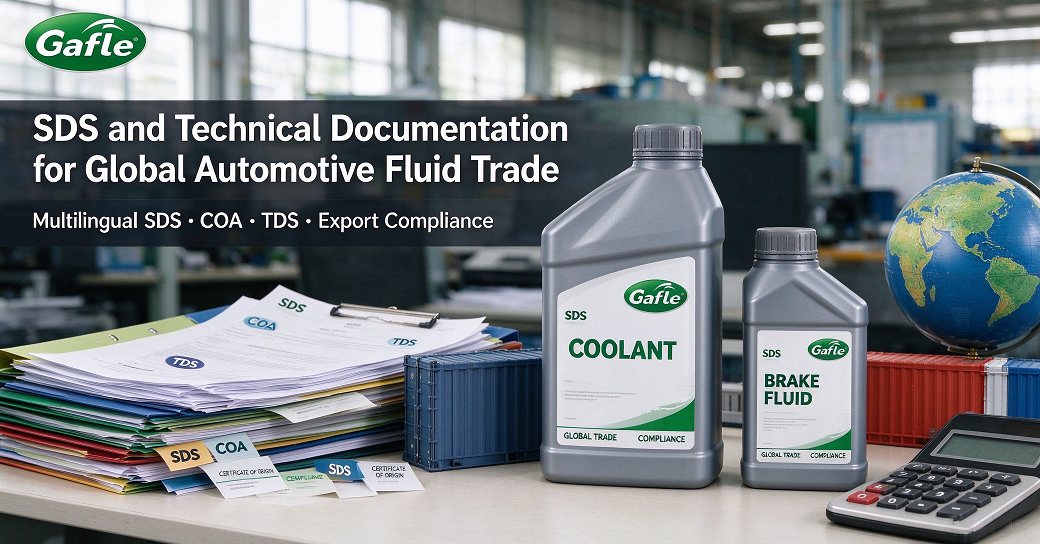
Quick Answer: Brake fluid EPDM seals are commonly used in hydraulic brake systems designed for compatible glycol-based fluids, but EPDM is a polymer family—not proof that a particular seal and fluid will function together. For an OEM or aftermarket approval, engineers should verify the vehicle's required fluid, identify the actual EPDM compound, examine immersion and material-change results, and validate the finished seal in the relevant hydraulic assembly before approving repeat production.
An importer may receive two reassuring documents: a DOT 4 brake fluid specification and a statement that the caliper seals are made of EPDM. Neither establishes that the precise fluid formulation and the finished seals were tested together. A seal's curing system, filler package, geometry and manufacturing consistency affect real-world performance; a fluid's base stock and additives also matter. The purchasing challenge is to connect these independent technical files into one reliable decision.
This article is for brake-component OEM engineers, purchasing managers, repair-parts distributors and private-label brake fluid brands. It focuses on part-level EPDM validation—from material identity to caliper and master-cylinder operation—rather than repeating a general discussion of rubber swelling. To begin an application-specific review, browse the GAFLE brake fluid range and contact GAFLE with your required grade and seal specifications.
1. Where Are EPDM Seals Used in Hydraulic Braking Systems?
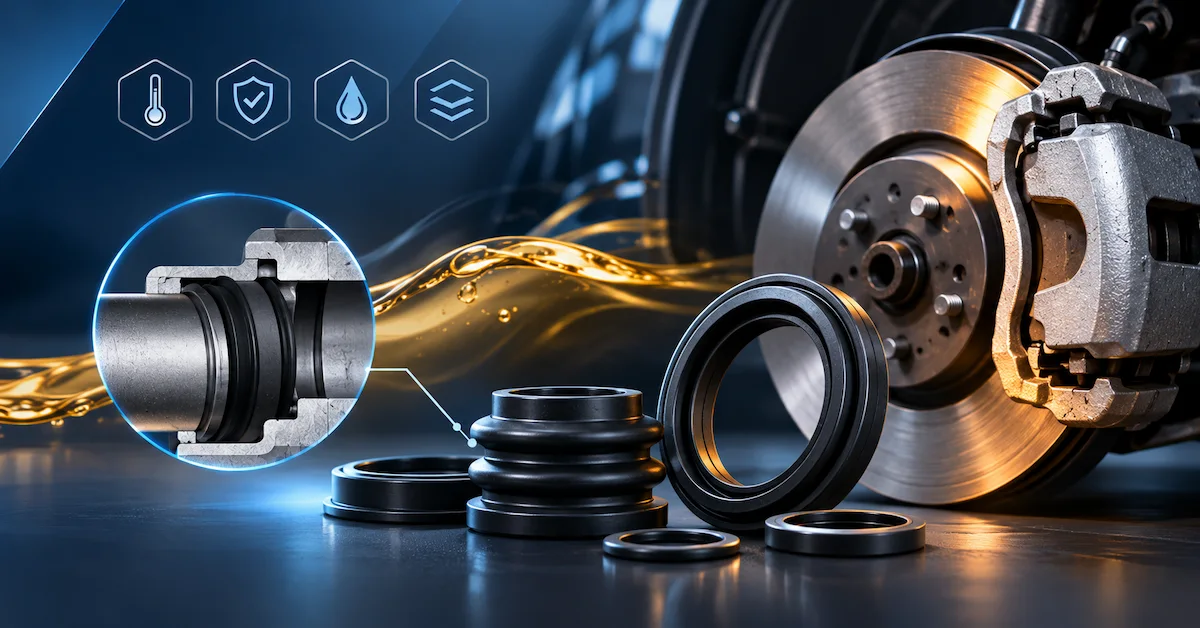
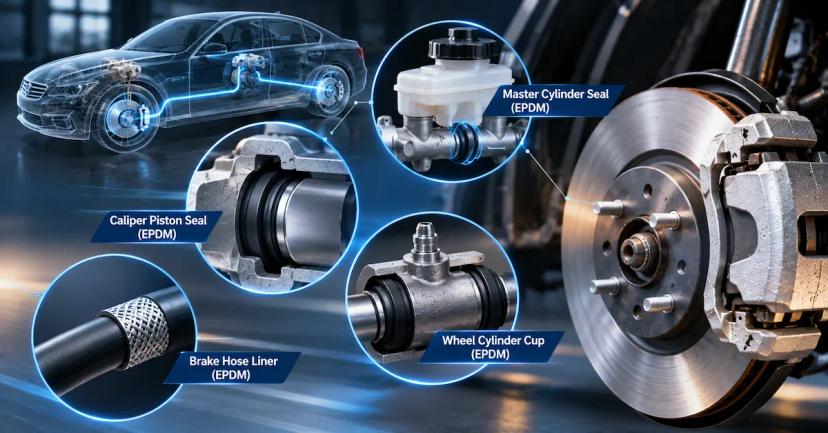
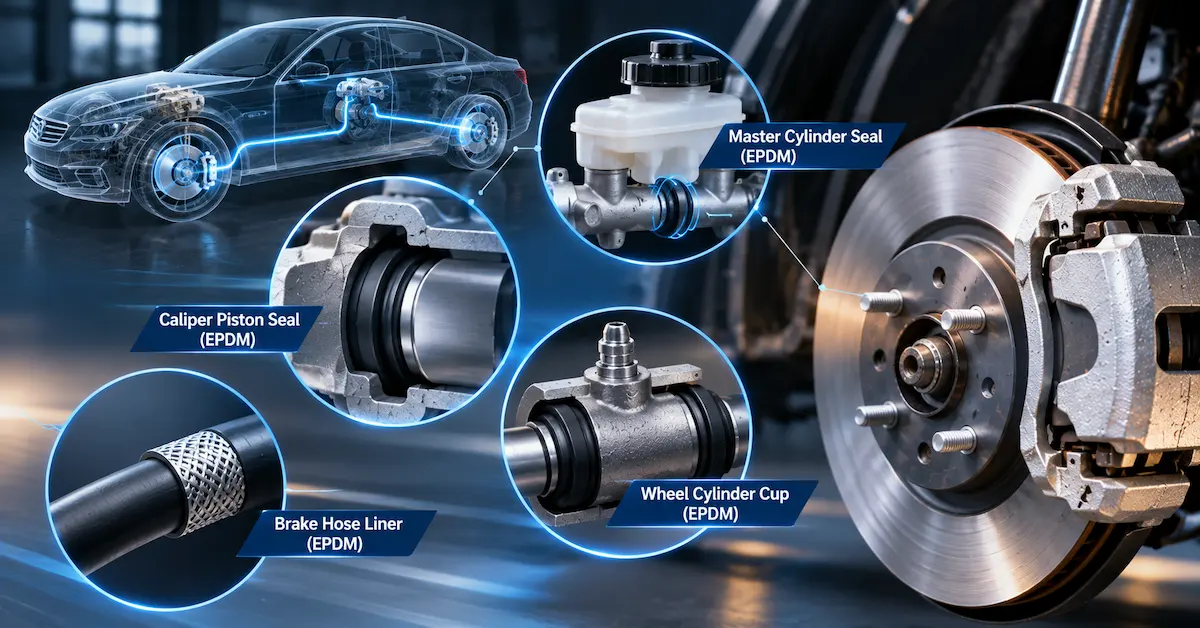
EPDM (ethylene-propylene-diene monomer rubber) is a widely used material family for seals in brake systems designed for compatible non-petroleum, glycol-based fluids. Its value comes from an engineered combination of fluid resistance, flexibility and aging behavior. However, the location of a rubber component matters: a sliding piston seal operates differently from a reservoir grommet or a flexible hose liner.
| Component location | Primary sealing job | Engineering checks before fluid approval |
|---|---|---|
| Master-cylinder primary or secondary cup | Maintain pressure and isolate hydraulic chambers | Lip dimensions, wet friction, leakage, recovery and pressure cycling |
| Caliper piston pressure seal | Hold hydraulic pressure and contribute to controlled piston retraction | Swelling, sliding behavior, compression, groove fit and heat cycling |
| Wheel-cylinder cup in applicable designs | Seal the piston against the cylinder bore | Reference cup evidence, component geometry and movement |
| Reservoir connection or grommet | Seal a low-pressure connection | Compression, dimensional stability, fluid exposure and aging |
| Brake hose inner layer | Contain hydraulic fluid within a reinforced hose assembly | Actual liner polymer, permeation, burst/impulse behavior and assembly approval |
| Dust boot or external protective part | Keep dirt and moisture away from moving components | Material identity, weather and heat exposure; not always the same compound as a pressure seal |
This is an application map, not a claim that every listed part in every vehicle is EPDM. Brake hoses, dust boots and historic brake components can use other compounds or material combinations. Ask the component maker for the actual part and compound identifiers rather than inferring them from appearance.
2. Why Does EPDM Usually Work With Glycol-Based Brake Fluid?
EPDM has a predominantly non-polar backbone and is commonly formulated for particular water/glycol-containing environments. In automotive braking, suitable EPDM compounds are used with compatible glycol-based fluids because their mechanical and sealing properties can be maintained within specified exposure conditions. The material's general suitability does not establish a universal claim for every EPDM compound, additive chemistry or service temperature.
A specialist seal manufacturer's automotive elastomer materials guide identifies EPDM as a typical material for glycol-based brake-fluid applications. That industry-level observation is useful when shortlisting materials; the actual design still needs compound-specific and component-specific validation.
The major chemistry boundary is petroleum/mineral oil. An EPDM seal engineered for conventional glycol-based brake fluid should not be assumed compatible with hydraulic mineral oil, fuel or petroleum-based lubricants. Likewise, an oil-compatible rubber in a different hydraulic system may not be suitable for glycol brake fluid. A vehicle or component maker's instructions take priority over generic chemical-resistance charts.
Three commercial statements should be treated differently:
-
“EPDM is commonly used in glycol-brake systems.” A material-selection observation.
-
“Our brake fluid meets the specified DOT or ISO performance class.” A formulation-level claim that needs appropriate test evidence.
-
“This fluid is approved for your exact caliper seal, vehicle and operating duty.” An application-level claim requiring the relevant approval or validation evidence.
Conflating them is a frequent cause of unsupported aftermarket compatibility marketing.
3. Which EPDM Seal Properties Actually Determine Performance?
The key question is not simply whether a rubber specimen looks intact after soaking. A hydraulic seal must deform enough to seal, recover sufficiently after movement, and remain functional throughout the prescribed environment. Its chemical and mechanical characteristics interact with groove design, piston surface finish, pressure and temperature.
Volume and dimensional change. Fluid exposure can change the dimensions of a compound. Excessive change may increase interference or friction; insufficient or adverse change can affect sealing contact. The acceptable range depends on the test and component design. More swelling is not automatically better, and zero swelling is not a universal requirement.
Hardness and mechanical retention. Changes in hardness, tensile characteristics and elongation can indicate that exposure altered the elastomer. A hardness result must identify the scale, conditioning and test procedure; a Shore A number should not be casually compared with an IRHD result.
Compression set and recovery. A ring compressed in a groove must maintain appropriate elastic response over time. A test that examines only an uncompressed specimen may miss permanent deformation under actual assembly conditions.
Surface condition and extraction. Stickiness, blistering, cracking or loss of material can reveal serious interaction. An engineer may also investigate whether the fluid extracts constituents from the compound, or whether contamination has changed the apparent behavior.
Dynamic friction and wear. In a caliper or master cylinder, excessive drag, poor return behavior, surface damage or leakage can matter more than a modest static property change. This is why a material coupon alone is not a complete hydraulic-component qualification.
To better understand how brake fluid chemistry affects EPDM and SBR rubber materials, including seal swelling, hardness changes, and laboratory testing methods, read our Brake Fluid Rubber Compatibility Testing Guide. This guide provides the material-level foundation for evaluating EPDM seals in hydraulic brake assemblies.
4. What Do ISO 4925, FMVSS No. 116 and ASTM D471 Prove?
These references answer different technical questions; none should be portrayed as a blanket GAFLE certification or a universal vehicle approval.
| Reference | Technical scope relevant to seals | Evidence a purchaser should obtain | Limitation |
|---|---|---|---|
| ISO 4925:2026 | Non-petroleum brake/clutch fluids for suitable systems with SBR and EPDM sealing components | Fluid-specific claim, relevant class/edition and test documentation | Standard scope does not prove every proprietary seal compound is approved |
| FMVSS No. 116 | Brake-fluid performance and defined tests, including effects on standard SBR cups and stroking behavior | Exact grade claim and identifiable standard-test results | Reference SBR cup data is not itself a finished-EPDM-caliper test |
| ASTM D471-16a(2021) | Comparative effects of liquids on specified rubber test pieces or finished articles | Actual EPDM compound identity, selected fluid, exposure and measured changes | Accelerated data cannot alone predict lifetime in all operating assemblies |
| OEM/component test plan | Actual pressure seal, hose or assembly under intended duty | Fit, friction, leakage, cycling, temperature and acceptance evidence | Must be agreed for the named project; no universal thresholds apply |
The official ISO 4925:2026 scope explicitly identifies hydraulic systems with styrene-butadiene rubber (SBR) and EPDM elastomer sealing components. The 2026 edition replaces the 2020 edition; purchasers should check the edition and class cited in any TDS or conformity statement.
The U.S. FMVSS No. 116 regulation includes an effects-on-cups method using standard SBR wheel-cylinder cups, rather than a general test of every production EPDM seal. The regulation also addresses hydraulic stroking properties. Buyers should not rename an SBR result “EPDM certified” in catalogues or RFQs.
The official ASTM D471 rubber–liquid test description explains how rubber specimens or appropriate finished articles can be assessed after controlled liquid exposure. It also cautions that accelerated results are comparative and may not correlate directly with real service. For a targeted EPDM seal program, agree the compound, fluid, method, conditions and pass/fail limits before testing.
5. Is DOT 4 Automatically Compatible With Every EPDM Seal?
No. DOT 4 identifies a brake-fluid performance category. It does not identify the formulation of every commercial bottle or prove approval with an unknown seal recipe. In systems designed for compatible glycol-based fluid, DOT 3, DOT 4 and non-silicone DOT 5.1 are important product categories, but the permitted grade must be confirmed from the vehicle manufacturer or component specification.
| Fluid or system | General relationship to EPDM brake seals | Buyer decision |
|---|---|---|
| DOT 3, non-silicone | Commonly used in systems designed for compatible glycol fluid | Confirm original specification and exact SKU evidence |
| DOT 4, non-silicone | Common category in EPDM-equipped hydraulic brake applications | Validate grade, compound, fluid and component requirements |
| DOT 5.1, non-silicone | Different performance classification; not silicone DOT 5 | Check manufacturer permission and relevant system tests |
| DOT 5, silicone-based | Separate fluid chemistry and use case | Do not infer interchangeability from the similar name |
| Mineral-oil hydraulic fluid | Different hydraulic-fluid family with other seal-material requirements | Do not substitute into a glycol/EPDM design without OEM authorization |
This distinction matters in motorcycles with hydraulic clutches, specialized racing systems, replacement master cylinders and mixed-brand workshop inventories. A retailer's generic compatibility chart cannot override a vehicle-specific instruction.
6. Four Validation Stages for a New EPDM Seal and Brake Fluid Pairing
For a new product launch, a controlled four-stage program can connect chemical properties to actual brake-component performance. The stages below are an engineering and procurement recommendation, not a claim that GAFLE uses this exact procedure for every customer.
Stage 1 — Define the actual fluid and EPDM compound
Record the brake fluid's product code, revision, chemistry family, claimed standard and destination market. Separately record the EPDM compound identifier, hardness specification, manufacturer, part drawing and intended service limits. If the seal supplier cannot identify the compound, the buyer should treat the application as unqualified until appropriate evidence is available.
This is also the moment to exclude incorrect chemistries. A seal planned for an ordinary glycol-based braking system should not be exposed to an unapproved mineral-oil product simply because the two fluids are both used in hydraulic circuits.
Stage 2 — Screen material specimens
Select representative compound specimens and an agreed test method. Record baseline mass, volume or relevant dimensions, hardness and other specified mechanical properties. Expose them to the actual candidate fluid under defined temperature and time conditions. Compare measured changes with project-defined acceptance limits, not invented generic EPDM thresholds.
If a test laboratory uses ASTM D471, specify the exact agreed procedure and reporting conditions. Distinguish a reference SBR cup result required for brake-fluid grading from a separate EPDM compound immersion report. Both may be relevant; they are not interchangeable.
Stage 3 — Test the finished seal in the component
Test representative production seals in the caliper, master cylinder or other intended assembly. Focus on installation interference, friction or release behavior, pressure integrity, leakage, temperature cycling and any necessary wear or service-life program. A passing coupon cannot reveal every consequence of groove tolerance, piston finish, assembly lubricant or hydraulic motion.
For a hose project, use hose-specific construction and hydraulic qualification data rather than treating a rubber strip as a complete hose assessment. Component and vehicle manufacturers should define the test matrix for the target system.
Stage 4 — Lock supplier, formula and batch controls
Once the pairing is approved, lock the fluid formula identity, seal compound revision, component specification, acceptance criteria and traceability requirements. Determine what changes trigger renewed evaluation—such as a replacement additive source, revised EPDM cure package, new hose liner or altered seal design. A sample pass is most useful when future orders can be related to that exact approved configuration.
7. A Practical EPDM Seal Approval Matrix for Engineering Buyers
A useful RFQ should request a matrix of evidence, not a marketing promise about “rubber safety.” The values below are data fields to agree with the engineering team; they are deliberately not universal acceptance limits.
| Test/record | Minimum information needed | Why it is important |
|---|---|---|
| Material identification | EPDM supplier, compound code, cure revision and seal drawing | Defines the actual tested elastomer |
| Fluid identification | Product code, formulation revision, fluid standard/class | Links test results to the purchased brake fluid |
| Static immersion | Specimen, temperature, time, fluid, method | Establishes controlled comparative exposure |
| Volume / dimensional change | Initial and final values, units, method, acceptance window | Evaluates fit and possible swelling or shrinkage |
| Hardness / mechanical changes | Test scale, initial/final results, relevant property retention | Assesses compound change after exposure |
| Functional assembly testing | Temperature, pressure, cycles, leakage and friction data | Tests the finished seal in its intended hydraulic setting |
| Contamination and cleanliness | Defined sampling, controls and investigation triggers | Helps distinguish chemistry effects from foreign materials |
| Release and change control | Lot IDs, COA scope, document versions, requalification rules | Makes approved performance reproducible |
Buyers can use an evidence status such as not provided / under review / verified / rejected for each row. A project may require more tests, while a routine reorder may require only the agreed lot-release checks and assurance that the qualified formula has not changed.
8. How Can EPDM Seals Fail Even When Fluid and Material Look Compatible?
Compatibility may deteriorate because of a system or processing issue, not simply an inherently unsuitable base fluid. Examples include contamination from an unapproved oil or cleaning agent, seal damage during assembly, misidentified rubber stock, poor piston finish, incorrect groove design, corrosion or wear in the cylinder, and an unauthorized change in the fluid or elastomer compound.
For an OEM buyer, the correct response is to separate material evidence, fluid evidence and component evidence. A swollen seal and poor piston return may appear together, but the observations do not establish the root cause by themselves. A leak could also result from abrasion, assembly damage or an unrelated mechanical defect. A qualified technical investigation must examine the actual parts and fluid lot.
Illustrative case: increased caliper drag after fluid replacement
A workshop reports that a caliper retracts poorly after a service. The distributor's first task is to preserve the product lot, service information, manufacturer fluid requirement and any suspect parts. It should then ask a qualified technician or laboratory to investigate the system. Possible explanations include an incorrect fluid, pre-existing contamination, damaged hardware, a seal-compound problem or service-procedure errors. This is a hypothetical troubleshooting scenario, not a documented GAFLE failure or customer case.
Illustrative case: EPDM coupon passes, assembled seal leaks
An EPDM coupon passes a controlled exposure test, yet an assembly leaks during a pressure-cycle trial. The mismatch shows why coupon data cannot replace final geometry and functional testing. Inspect material identity, tolerances, compression, surface finish and the agreed assembly procedure before concluding the fluid is acceptable or unacceptable.
9. What Records Should a Brake Fluid Supplier Provide for EPDM Projects?
A buyer seeking EPDM brake-seal compatibility evidence should request an organized technical file. Begin with the TDS for the exact fluid, the relevant SDS, and applicable standard qualification reports. Where the project requires it, request an EPDM-material test report or a targeted technical declaration and the actual assembly-level validation from the responsible component engineer.
Next, confirm which results appear in the Certificate of Analysis (COA) or routine lot-release file. Not every time-consuming qualification test must appear on every production batch record; what matters is that the supplier and buyer agree which tests establish formulation qualification, which are repeated during manufacture, and how product changes are controlled.
The documentation should answer five concrete questions: Is this the same formula that was tested? Was the tested EPDM representative of the part being purchased? Were methods and conditions appropriate? Who approved the result? What happens if the fluid or component changes after approval?
10. GAFLE Products and OEM Sourcing: Where to Begin
GAFLE, operated by Zhejiang Gafle Auto Chemical Co., Ltd., publishes a brake-fluid product portfolio and describes manufacturing and private-label support. The GAFLE brake fluid collection and DOT407 DOT 4 product page are relevant entry points for an importer or brake-system purchasing project.
The DOT407 page discusses suitability for common brake-system materials, including rubber seals and hoses. That is a manufacturer's public product description; it is not independent proof that DOT407 passed a specified test on every proprietary EPDM compound or was approved for a named caliper design. Ask GAFLE for the current, exact-SKU technical documentation and any available elastomer test evidence before repeating a vehicle-specific claim.
For a procurement inquiry, include the intended DOT or ISO grade, target vehicle or hydraulic system, EPDM component description, destination market, desired packaging, approximate first-order quantity and available engineering acceptance criteria. This lets the supplier distinguish an existing catalogue product from a new technical validation request.
Explore GAFLE DOT 4 Brake Fluid | Request an EPDM Seal Compatibility Review
11. OEM and Private Label: How to Preserve Approval Across Repeat Orders
Private-label buyers frequently manage two approval processes simultaneously: selecting a brake fluid and creating its finished packaging. For an EPDM compatibility claim, keep the fluid's qualification documents linked to the exact formulation even if a label, bottle or carton changes. The packaging itself may need separate checks for container integrity, labeling and transport.
Define in the purchase agreement which items require technical reapproval. Relevant triggers could include a changed base stock or additive package, a different manufacturing location, altered test specifications or a new elastomer compound in a customer's brake assembly. A label-color change may not require the same validation as a fluid-formula change, but should still follow document and artwork control.
Do not invent MOQ, development lead time, guaranteed EPDM compatibility or customer approvals. Ask GAFLE to confirm available services and conditions in writing for the specific project. For wholesale buyers, this often results in a more useful quotation than requesting one undifferentiated “EPDM-safe brake fluid” price.
12. Copy-Ready RFQ for EPDM Seal and Brake Fluid Qualification
Subject: EPDM Brake Seal Compatibility and DOT Brake Fluid Sourcing — [Market / Product Grade]
Dear GAFLE Technical and Sales Team,
We are an [automotive importer / brake-system component buyer / private-label distributor] serving [country or market]. We are evaluating [DOT 3 / DOT 4 / DOT 5.1 / specified ISO class] fluid for a system using [master-cylinder cups / caliper piston seals / brake hoses], with the EPDM compound or component reference [identifier, if available].
Please identify the proposed GAFLE product code, current formula/TDS revision, relevant FMVSS or ISO classification and available standard-test evidence. We would also like to know whether you have test results on the actual EPDM compound, or whether additional application-specific testing should be planned with the component supplier. Please distinguish SBR reference-cup tests, EPDM material immersion studies and hydraulic assembly validation records.
Our intended packaging is [size and format], first-order volume [quantity per SKU], annual forecast [volume], and destination [country]. Please confirm sample availability, available TDS/SDS/COA records, private-label options, indicative MOQ and lead-time assumptions, quotation terms and notification rules for relevant formulation changes.
We will complete technical approval before making any vehicle-specific compatibility claims.
Kind regards,
[Company / Contact / Email / Phone]
Send an EPDM Project RFQ to GAFLE →
13. Common Purchasing Mistakes to Avoid
-
Calling EPDM a universal seal specification. Different compounds and final geometries require their own qualification.
-
Assuming a DOT 4 label proves any seal is approved. Product grade is not an OEM component approval.
-
Calling FMVSS SBR-cup test results EPDM tests. Identify the actual specimen in the report.
-
Using ASTM immersion data as a complete service-life guarantee. Material testing and assembly testing answer different questions.
-
Assuming silicone DOT 5 equals non-silicone DOT 5.1. They are distinct fluid categories.
-
Treating mineral-oil hydraulic fluid as a substitute for glycol brake fluid. Follow the original system's chemistry requirements.
-
Comparing quotations without an agreed EPDM validation scope. Two suppliers may be pricing different levels of evidence and development work.
-
Approving a sample without future change controls. The approved formulation must remain traceable through production and repeat orders.
14. Frequently Asked Questions About Brake Fluid EPDM Seals
FAQ 1. Are EPDM seals compatible with DOT 4 brake fluid?
EPDM compounds are commonly used in hydraulic brake systems designed for compatible glycol-based DOT 4 fluid. However, the exact compound, finished seal design, fluid formulation and manufacturer requirements must be checked before making a specific compatibility or approval claim.
FAQ 2. What does EPDM stand for in braking systems?
EPDM means ethylene-propylene-diene monomer rubber, a family of elastomer compounds. Its common uses include certain seals in glycol-compatible brake systems. The polymer designation by itself does not identify the cure system, compound recipe, hardness or finished-part qualification.
FAQ 3. Can DOT 3, DOT 4 and DOT 5.1 all be used with EPDM?
They are non-silicone brake-fluid categories relevant to many systems using appropriately designed elastomers. Do not infer unrestricted interchangeability. Consult the original vehicle or component requirements and validate the exact fluid and intended assembly.
FAQ 4. Will mineral oil damage EPDM brake seals?
Petroleum or mineral-oil products are generally unsuitable for EPDM compounds engineered for glycol brake-fluid service. Do not experiment with fluid changes in a safety-critical brake system; use the exact fluid chemistry and replacement procedures specified by the manufacturer.
FAQ 5. How is EPDM seal swelling measured?
Engineers may use an agreed immersion method on defined rubber specimens, recording mass, volume or dimensions before and after exposure. The procedure must specify fluid identity, conditioning, temperature, duration and acceptance limits. Final assembled-seal performance may require additional tests.
FAQ 6. Does FMVSS No. 116 test EPDM caliper seals?
Its specific effects-on-cups procedure uses standard SBR reference cups. It also includes other fluid and functional test requirements, but a standard SBR-cup result is not the same as testing an OEM's proprietary finished EPDM caliper seal.
FAQ 7. Why is ASTM D471 relevant to EPDM brake seals?
ASTM D471 provides methods for assessing how specified rubber specimens or suitable finished articles respond to liquid exposure. It supports comparative material evaluation but cannot, by itself, replace a component's required pressure, wear, friction and functional validation.
FAQ 8. Which data should an OEM buyer request from a brake fluid manufacturer?
Start with the exact fluid TDS, relevant SDS, claimed standard, qualification reports, formula identity and batch controls. For a specific EPDM application, request available compound test data and work with the component supplier to define the required assembly tests and acceptance limits.
FAQ 9. Can GAFLE supply EPDM-compatible brake fluid for a private-label brand?
GAFLE markets DOT brake-fluid products and private-label services and describes material compatibility in public product information. Buyers should request product-specific evidence and have the fluid and intended EPDM seal or hydraulic system technically approved for their project before making application claims.
FAQ 10. What should be checked before a repeat order?
Confirm the approved fluid formula, TDS revision, packaging version, supplier lot records, available COA fields and any formulation or component changes. Changes that could alter the validated fluid–elastomer interaction should trigger technical review under the agreed change-control procedure.
Conclusion
Brake fluid EPDM seals should be treated as an engineering system, not a simple chemical-resistance label. EPDM is widely used in braking systems designed for compatible glycol-based fluids, but the actual compound, seal geometry, service conditions and fluid formula determine whether a proposed pairing can be approved. A useful evidence chain moves from fluid classification to material immersion data, then to finished-seal and hydraulic-component validation.
ISO 4925:2026, FMVSS No. 116 and ASTM D471 provide complementary information, not interchangeable certificates. Their value for overseas buyers comes from understanding what was tested and what remains to be proven. Importers and OEM brand owners can then lock approved formulations, specify batch controls and avoid unsupported compatibility claims in distributor catalogues or private-label packaging.
To begin a documented supplier review, examine the GAFLE brake fluid collection, consider the DOT407 DOT 4 product as a candidate when its grade matches your requirements, and contact GAFLE with your EPDM material and application details. Approve the actual fluid–seal pairing before scaling the order.