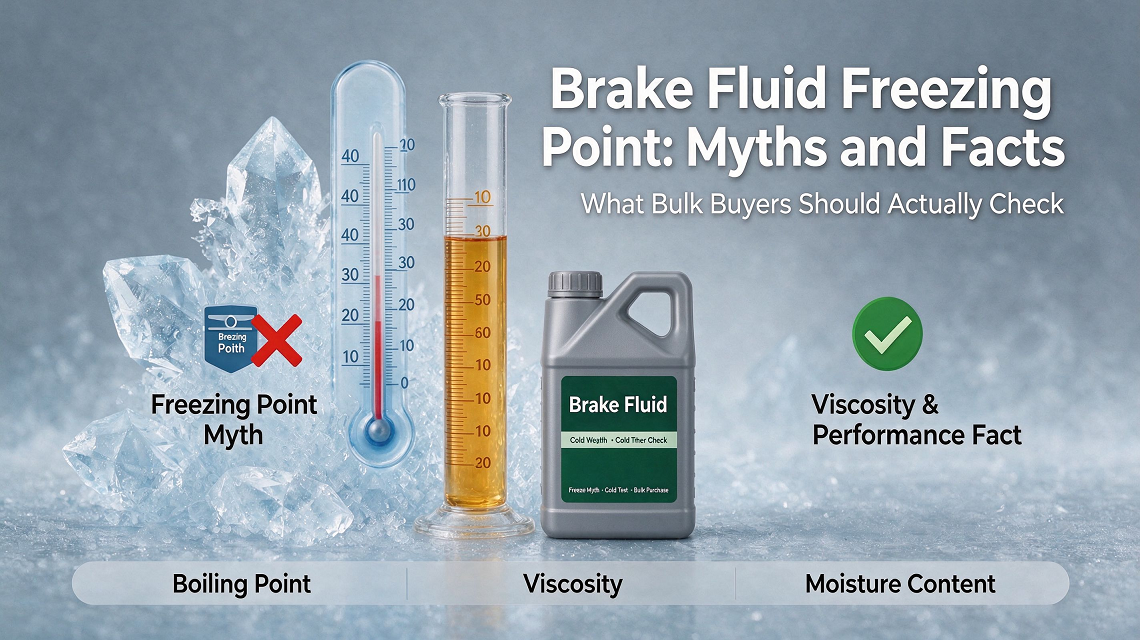
The Real Physics of Hydraulic Systems in Sub-Zero Climates
When temperatures plummet well below zero, fleet operations and heavy transport maintenance managers routinely check battery health, fuel gelling thresholds, and coolant ratios. Yet a persistent question arises every winter across shop floors: does brake fluid freeze in cold weather? The short chemical answer is that virgin hydraulic fluid does not freeze solid into ice under standard terrestrial winter conditions. However, the operational reality inside an active braking circuit is considerably more nuanced—and potentially hazardous if ignored.
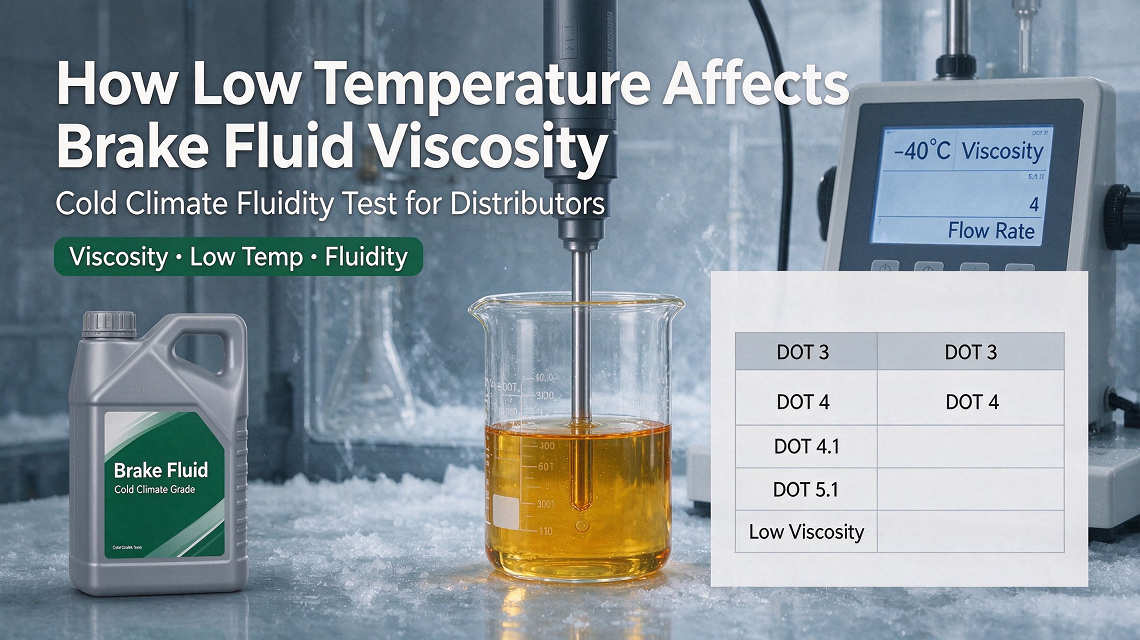
Rather than transitioning abruptly from liquid to solid, standard glycol-ether formulations experience an exponential rise in kinematic viscosity as ambient temperatures dive toward -30°C and -40°C. The fluid thickens into a sluggish, syrup-like gel. In modern vehicles equipped with electronic stability control (ESC) and anti-lock braking systems (ABS), this flow resistance directly impairs response times. Modulator valves with pinhole-sized orifices struggle to cycle quickly, creating a delayed, wooden pedal feel that catches operators off guard.
The Water Factor: Why Contaminated Fluid Actually Can Freeze
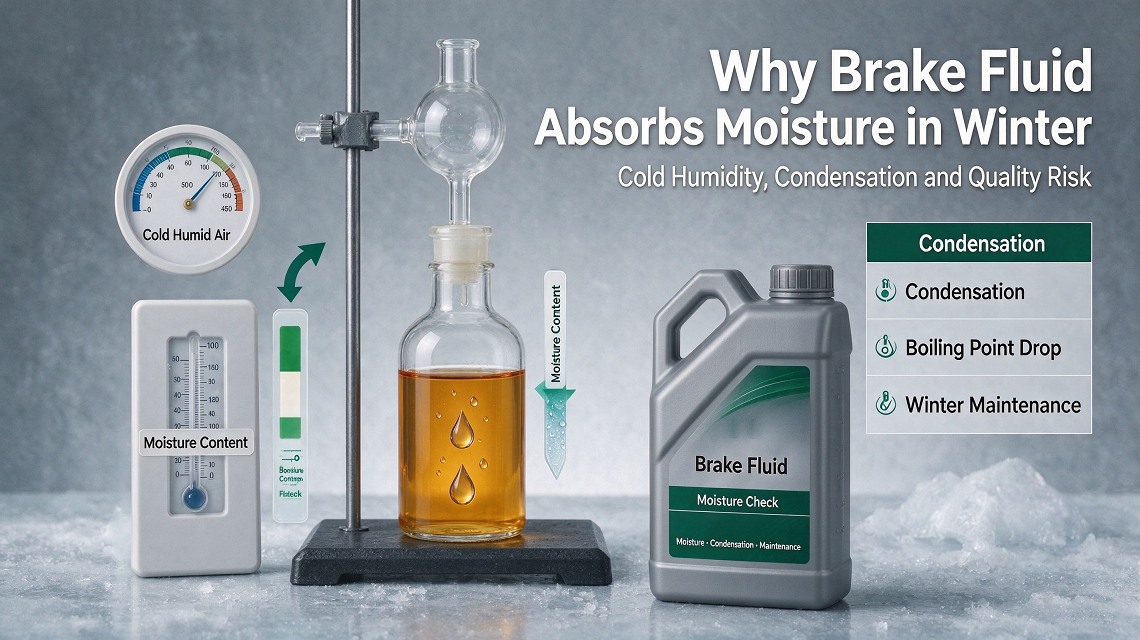
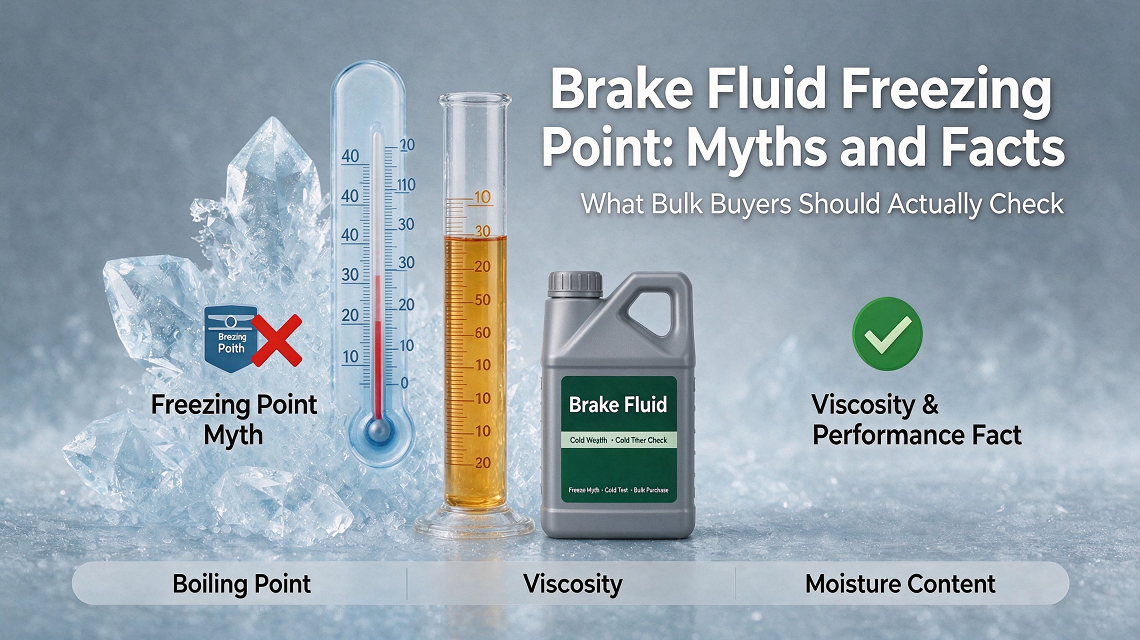
Under normal conditions, the chemical Freezing Point of virgin, uncompromised DOT 3 or DOT 4 fluid sits safely below -50°C (-58°F). The real threat in municipal fleets and transport yards is hygroscopy—the continuous absorption of atmospheric moisture through reservoir vent holes, micro-cracks in flexible rubber hoses, and worn caliper piston seals.
Over twelve to twenty-four months of regular duty, glycol-based systems typically accumulate between 2% and 4% water by volume. While glycol bonds with moisture to keep it in solution, cold ambient temperatures reduce this solubility. If water contamination becomes severe enough, localized moisture pockets separate out within the lines. While the bulk hydraulic medium remains a heavy gel, these free moisture droplets reach their individual freezing threshold at 0°C. The resulting microscopic ice crystals lodge inside internal solenoid valves, brake fluid proportioning units, and caliper channels, causing localized pressure blockages or total mechanical lockups.
Breaking Down Common Myths About Brake Fluid Freezing
Misconceptions surrounding cold-weather hydraulic performance routinely lead maintenance supervisors to implement ineffective or counterproductive winter prep routines. Examining common myths about brake fluid freezing helps separate mechanical reality from garage folklore:
Myth 1: Cold fluid will freeze solid and rupture metal lines
Engineers familiar with ruptured domestic water pipes often assume frozen brake lines undergo identical mechanical burst stresses. Because glycol-based fluids contract rather than expand when shifting through high-viscosity phases toward their glass transition point, they do not burst steel or copper-nickel tubing. The risk is never line rupture from expansion; the risk is complete hydraulic hydraulic lock caused by excessive flow resistance or localized ice slugs.
Myth 2: DOT 5 silicone fluid is the ideal winter upgrade
Because DOT 5 silicone does not absorb atmospheric moisture, maintenance teams sometimes assume it provides the ultimate cold-climate solution. In truth, silicone fluid's hydrophobic nature is its main liability in sub-zero applications. Any ambient moisture entering the master cylinder cannot disperse across the chemical base; it settles to the lowest operational points—usually the brake calipers. When winter hits, this pooled water freezes solid at 0°C directly behind the pistons, leading to total brake failure.
Bulk Brake Fluid Buying Guide for Winter Fleet Sourcing
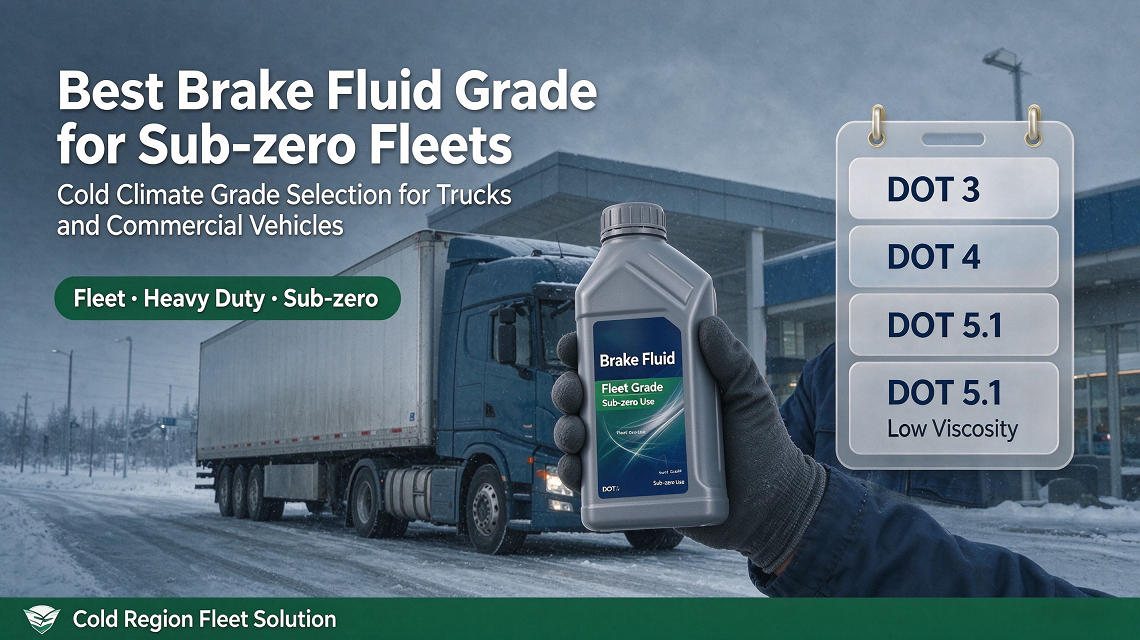
Procurement managers sourcing lubricants and operating chemicals ahead of harsh weather must look beyond basic nominal specs. Sourcing low-viscosity (LV) formulations engineered explicitly for dynamic stability systems in freezing conditions saves both shop labor and vehicle downtime.
Key Selection Metrics
- Kinematic Viscosity at -40°C: Standard DOT 4 permits maximum viscosity up to 1,800 mm²/s at -40°C. For severe-duty winter logistics, procurement should insist on DOT 4 Class 6 (often labeled DOT 4 LV), which caps viscosity at 750 mm²/s under identical conditions. This drop in resistance preserves rapid ABS response times during sub-zero braking events.
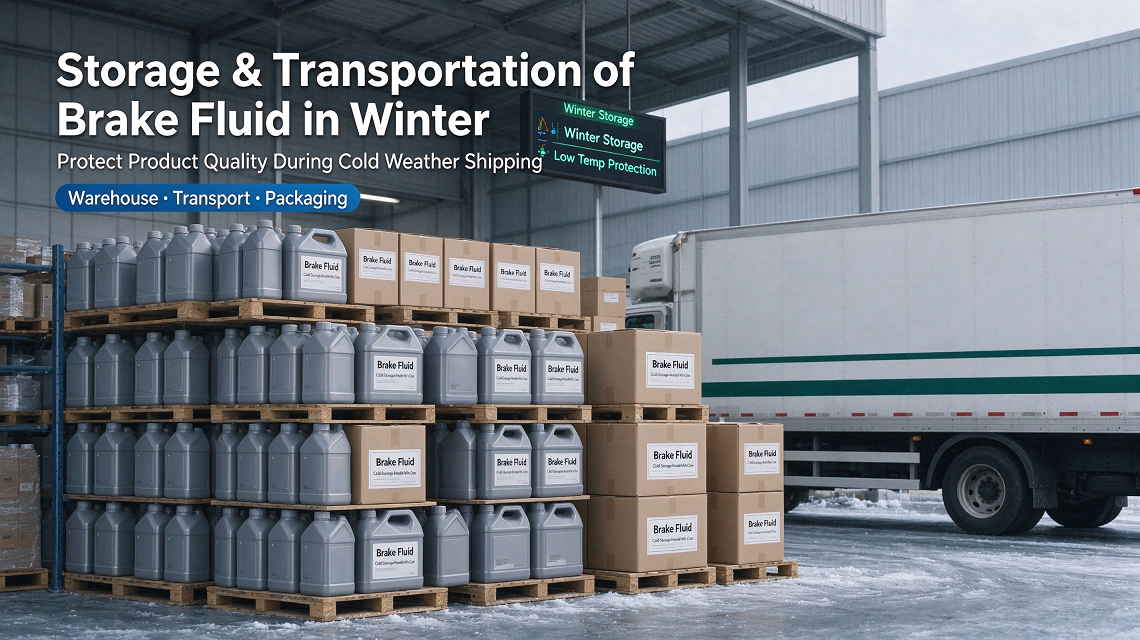
- Packaging Integrity: When developing a bulk brake fluid buying guide for winter, consider drum management carefully. Polyethylene totes and standard 55-gallon steel drums breathe moisture during ambient temperature swings in unheated storage bays. For commercial shops, purchasing palletized, hermetically sealed 1-liter or 5-liter steel cans often delivers better operational purity than buying bulk drums that sit tapped for months.
- Equilibrium Reflux Boiling Point (ERBP): Do not ignore thermal performance for cold weather. Rapid thermal cycling—climbing a steep mountain pass followed by an icy descent—demands high wet and dry boiling points even while the fluid retains sub-zero fluidity.
Frequently Asked Questions
At what exact temperature does virgin glycol hydraulic fluid gel?
Most unadulterated DOT 3 and DOT 4 formulations begin severe gelling around -45°C (-49°F), reaching a glass-like amorphous state below -55°C. However, operational degradation begins much earlier, around -20°C, as the fluid's thickening slows down ABS cycling.
Can I use an optical refractometer to test winter fluid condition?
Refractometers accurately check coolant glycol-to-water ratios, but they are not calibrated for the complex polyglycol ester blends inside braking circuits. Rely instead on conductivity pens for rough shop diagnostics, or better yet, a boiling-point tester that measures moisture-induced performance drops directly.
Should our maintenance department switch to DOT 5.1 for winter operations?
DOT 5.1 is a glycol-ether-borate ester formulation that combines the low viscosity of specialized cold-weather fluids with high boiling thresholds. It is chemically compatible with existing DOT 3 and DOT 4 seals, making it an excellent high-performance option for fleets operating in regions that experience severe, sustained arctic cold.
Operational Next Steps for Winter Fleet Readiness
Rather than waiting for drivers to report sluggish pedals during the first major freeze, implement scheduled pre-winter hydraulic flushes using high-flow pressure bleeders. Specify low-viscosity DOT 4 Class 6 formulations across all electronic-braking platforms, audit your bulk chemical storage to eliminate airborne moisture contamination, and replace standard calendar-based flushes with objective moisture testing before the freeze sets in.
Welcome to contact GAFLE for more information & cooperation!
peter
ZHEJIANG GAFLE AUTO CHEMICL CO.,LTD
Tel:86-579-8222 1665
Fax:86-579-8246 4690
Cel/Wechart:86-13335993986
E-mail:peter@gafle.net
Web:www.gafle.net