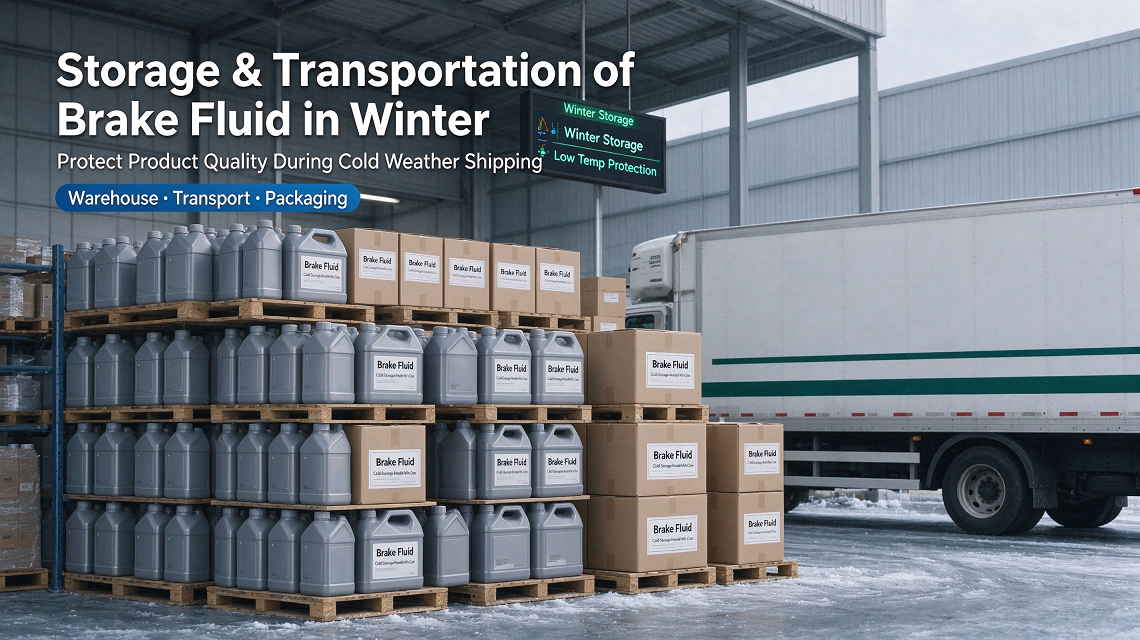
Winter supply chains present unique hurdles for hydraulic chemical management, particularly when dealing with hygroscopic formulations. The storage & transportation of brake fluid in cold winter conditions requires precise thermal and packaging discipline, as sub-zero weather directly impacts container pressures, product viscosity, and moisture absorption rates. For plant managers, chemical distributors, and automotive assembly facilities, failing to account for low ambient temperatures often leads to stalled bottling operations, off-spec fluids at the filling station, or compromised packaging integrity before the chemical ever reaches a master cylinder.
The Physical Impact of Low Temperature on Hydraulic Fluids
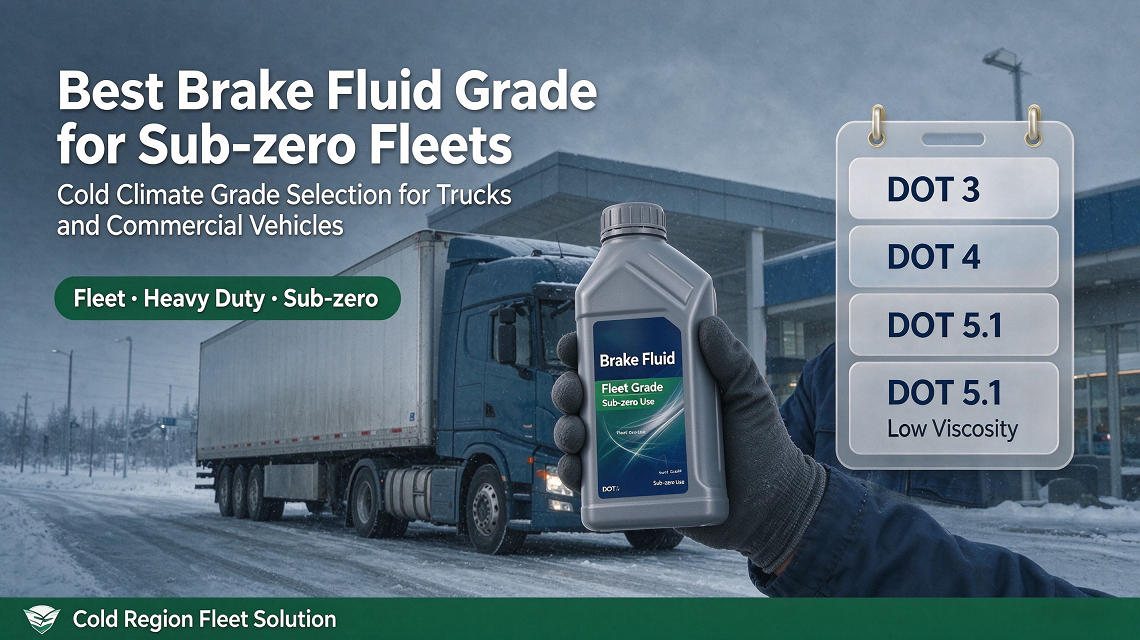
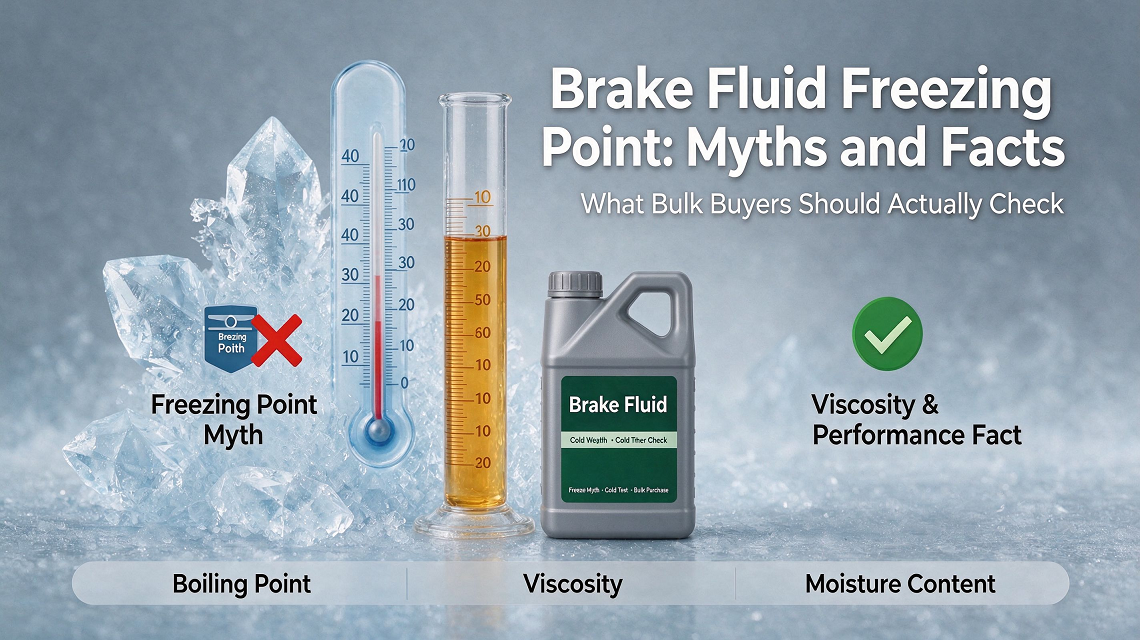
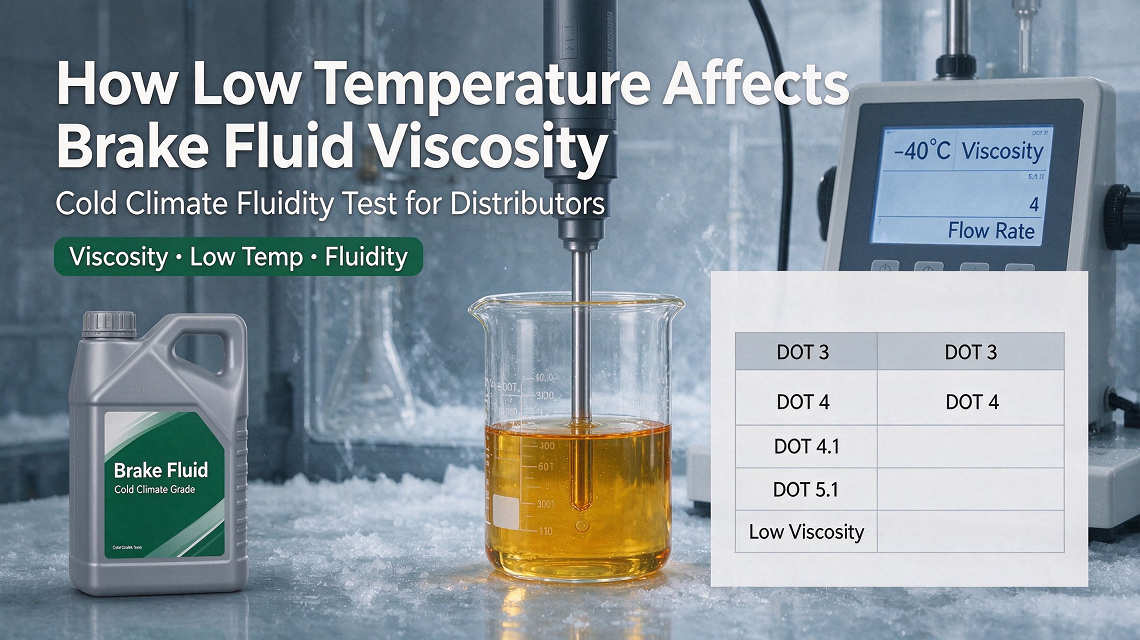
Most commercial automotive fluids—predominantly glycol-ether and borate ester blends like DOT 3, DOT 4, and DOT 5.1—do not freeze into rigid crystalline blocks at standard terrestrial winter temperatures. Instead, their kinematic viscosity escalates dramatically. Standard specifications (such as SAE J1703 and ISO 4925) benchmark cold kinematic viscosity at -40°C, where fluids must remain below 1,500 to 1,800 mm²/s depending on the grade. Silicone-based DOT 5 behaves somewhat differently, yet it too suffers from cold-thickening.
When drums, intermediate bulk containers (IBCs), or retail bottles sit in unheated cross-dock terminals or uninsulated trailers, the fluid thickens to a syrup-like consistency. While this viscosity shift is technically reversible upon thawing, it introduces immediate downstream risks:
- Pumping and dosing issues: Automated fluid-fill equipment on automotive assembly lines or high-speed contract packaging lines cannot accurately meter high-viscosity chemicals, leading to false volumetric readings or pump cavitation.
- Suspension of additives: Extended exposure to deep freeze can occasionally cause borderline solubility issues in complex additive packages (corrosion inhibitors, anti-foaming agents), requiring thorough re-homogenization prior to dispensing.
Packaging Dynamics: Headspace Breathing and Moisture Ingress
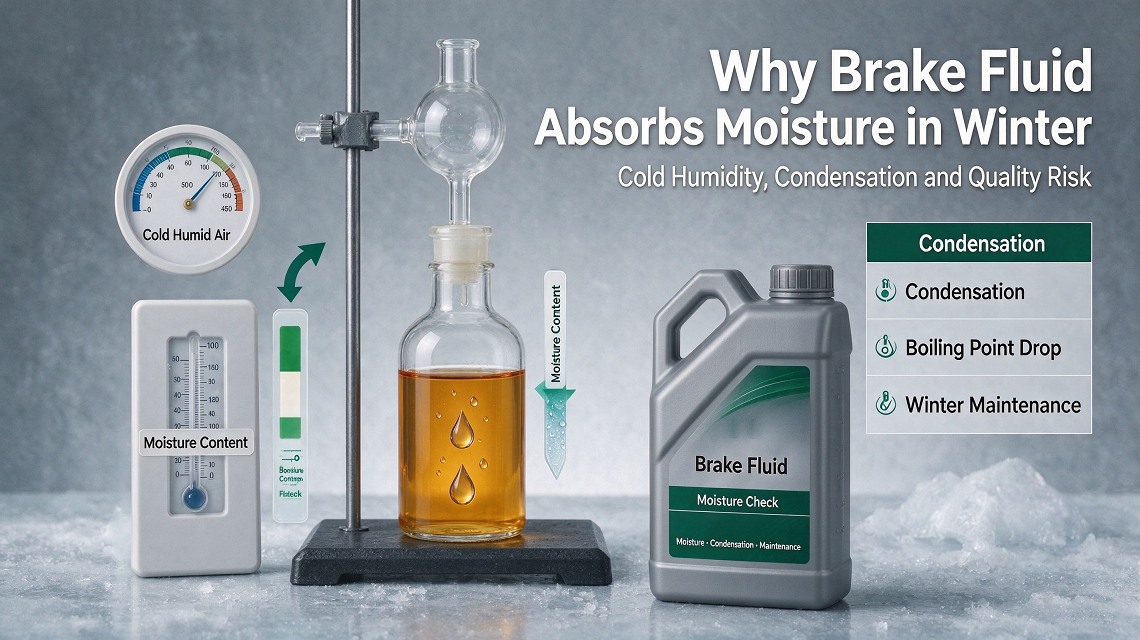
The primary danger during cold weather transit is not solidification; it is hygroscopic contamination. Polyglycol-based brake fluid aggressively pulls moisture out of the air. When ambient temperatures drop sharply, the air inside the container’s headspace contracts, generating a negative pressure differential (partial vacuum).
If drums or totes have micro-crevices in their bungs, or if standard plastic bottle cap liners lack adequate elasticity under low temperature, ambient air is sucked inward. As the container later re-warms during transit or upon warehouse intake, ambient moisture trapped inside the container condenses into the fluid. A moisture increase of even 1% to 2% severely depresses both the equilibrium reflux boiling point (ERBP) and wet boiling point, effectively downgrading the batch or rendering it completely out of spec before delivery.
Transit Logistics: Evaluating Your Cold Weather Shipping Solution
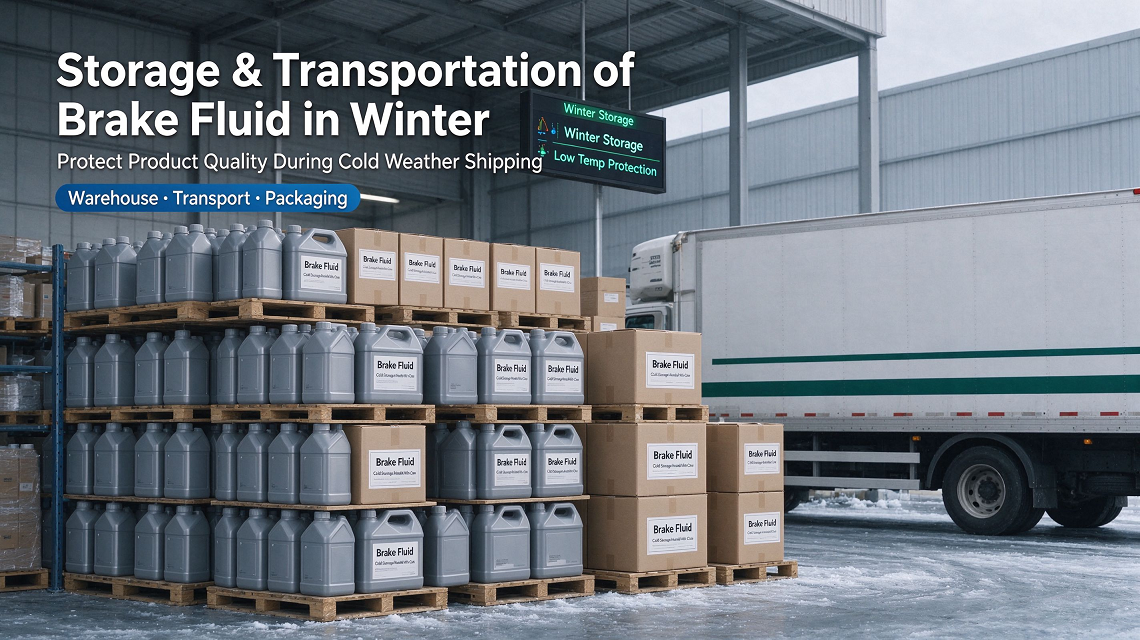
Managing freight between November and March requires proactive carrier negotiation. Standard dry van transit across northern corridors frequently exposes cargo to prolonged sub-zero dwell times during rail intermodal moves or weekend yard layovers. Sourcing and logistics teams should evaluate specific shipping requirement standards for every chemical route:
Protect from Freeze (PFF) vs. Standard Dry Van
While brake fluid does not rupture metal drums via volumetric ice expansion like water-based chemistries do, standard PFF (Protect from Freeze) or temperature-controlled (reefer set to heat) trailers are often specified. This is rarely about preventing drum rupture; it is about preventing the viscosity spikes that stall dockside handling and eliminating the extreme thermal swings that trigger headspace breathing. If temperature-controlled freight is cost-prohibitive, palletized loads should at least be wrapped with thermal pallet blankets and routed on dedicated, direct-transit runs to minimize yard staging.
Loading and Bracing Precautions
Cold temperatures make common packaging materials brittle. High-density polyethylene (HDPE) containers and standard plastic bung plugs lose impact resistance below -10°C. Pallets loaded directly onto cold metal trailer decks absorb shock loads more aggressively. Incorporating heavy corrugated slip-sheets, ensuring pallet overhang is zero, and utilizing corner-boards are simple measures that stop cracked jugs and punctured lower drum rims during rough, frozen transit.
Best Practices for Warehouse Brake Fluid Storage
Once cargo reaches a distribution center or manufacturing plant, cold-chain discipline must continue until the fluid enters the vehicle or production stream. Proper brake fluid storage in cold climates centers on thermal stabilization:
- Establish an Acclimatization Staging Zone: Never bring frozen drums straight into a hot, humid production room and open the bungs immediately. Rapid heating expands the metal while the dense fluid remains cold, and ambient humidity will instantly condense on the exposed cold fluid surface. Allow sealed containers to equilibrate gradually in a dry holding area maintained at 15°C to 20°C for at least 24 to 48 hours.
- Keep Drums Off Cold Concrete: Bare warehouse floors act as massive heat sinks. Always rack inventory or store containers on wooden or composite pallets off the ground, well clear of frequently cycling dock doors.
- Inspect Bung Torque Post-Transit: Temperature swings cause thermal contraction of metal drum threads and rubber/PTFE gaskets. Logistics teams should routinely re-torque drum bungs upon receipt to guarantee airtight seals remain intact throughout seasonal storage.
Common Pitfalls in Cold-Weather Chemical Management
One frequent oversight is using external heating bands or open-flame heaters to rapidly lower fluid viscosity in drums. Localized overheating can scorch glycol compounds, breakdown anti-corrosion additives, and damage drum coatings. If heating is required to accelerate pumping, use only certified, low-watt-density full-wrap silicone drum heaters equipped with accurate thermostats, or stage the inventory inside an engineered hot box.
Another mistake involves staging bulk totes outdoors under tarps. Snow melt pooling on top of an IBC lid will inevitably migrate through vent threads once the container pulls a slight vacuum during a nighttime freeze. Totes and drums must remain under a covered, dry roof.
Frequently Asked Questions
Does glycol-based brake fluid actually freeze solid?
Under normal winter conditions, no. DOT 3, DOT 4, and DOT 5.1 fluids have freezing points well below -40°C, and some do not form solid crystals until approaching -50°C. However, they become extremely viscous, which poses severe handling and pumping challenges.
Can high viscosity from cold storage permanently damage the fluid?
Cold alone generally does not alter the chemical structure of the fluid. Once slowly brought back to standard working room temperatures (around 20°C), viscosity returns to baseline. The real permanent damage comes from moisture ingress occurring during the thermal cycle, which permanently reduces the boiling point.
How can assembly plants check if incoming cold fluid is compromised?
Quality teams should draw an acclimatized sample from the top and bottom of randomly selected drums to test both kinematic viscosity and water content via Karl Fischer titration or an approved boiling point tester before releasing the batch into production lines.
Next Steps for Operations and Logistics Teams
Before the next sub-zero front impacts your shipping lanes, audit your packaging specifications and freight lanes. Review your incoming carrier contracts to confirm whether a heated transit or insulated liner shipping requirement is justified based on your production turnaround times. Simple preventative adjustments at the loading dock and inside the warehouse staging area will reliably safeguard product quality throughout the winter months.
Welcome to contact GAFLE for more information & cooperation!
peter
ZHEJIANG GAFLE AUTO CHEMICL CO.,LTD
Tel:86-579-8222 1665
Fax:86-579-8246 4690
Cel/Wechart:86-13335993986
E-mail:peter@gafle.net
Web:www.gafle.net