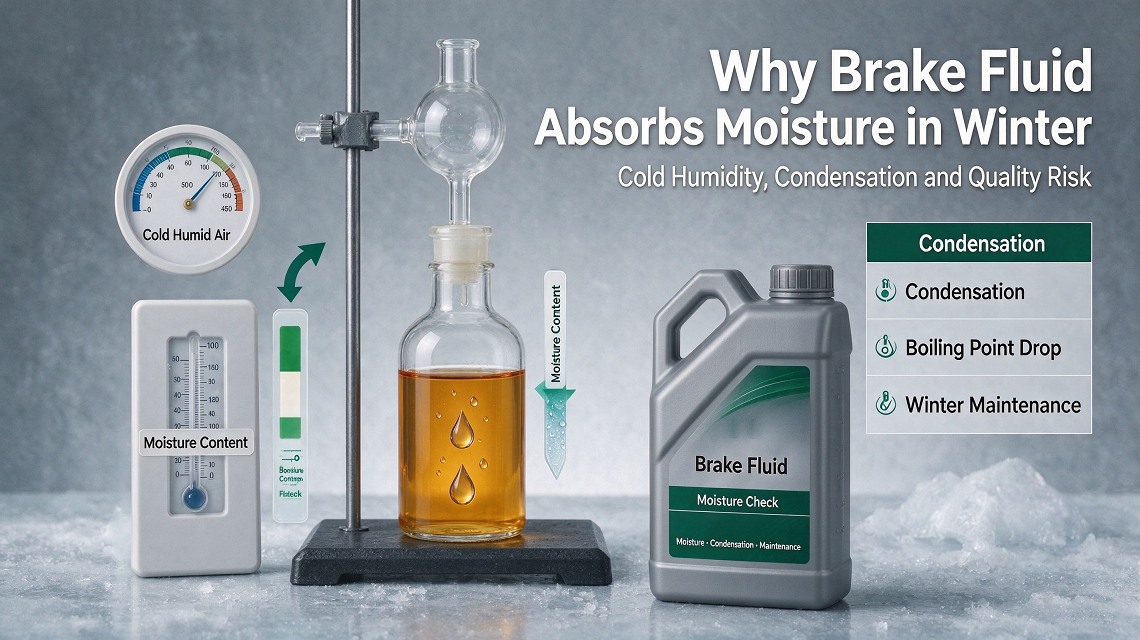
Why Brake Fluid Absorbs Moisture Faster in Cold Humid Winter
Fleet operators and service managers often notice a sharp uptick in hydraulic brake complaints just as late autumn turns into sub-freezing weather. Pedals feel spongy on cold mornings, ABS valves act sluggishly, and internal caliper corrosion spikes during teardowns. The root issue is straightforward: Why Brake Fluid Absorbs Moisture Faster in Cold Humid Winter comes down to the aggressive thermodynamic cycling that vehicles endure during wet, low-temperature months. Ambient air holds near 100% relative humidity, while vehicle braking systems swing from freezing rest states to high operating temperatures multiple times a day.
The Thermodynamics Behind Winter Moisture Ingress
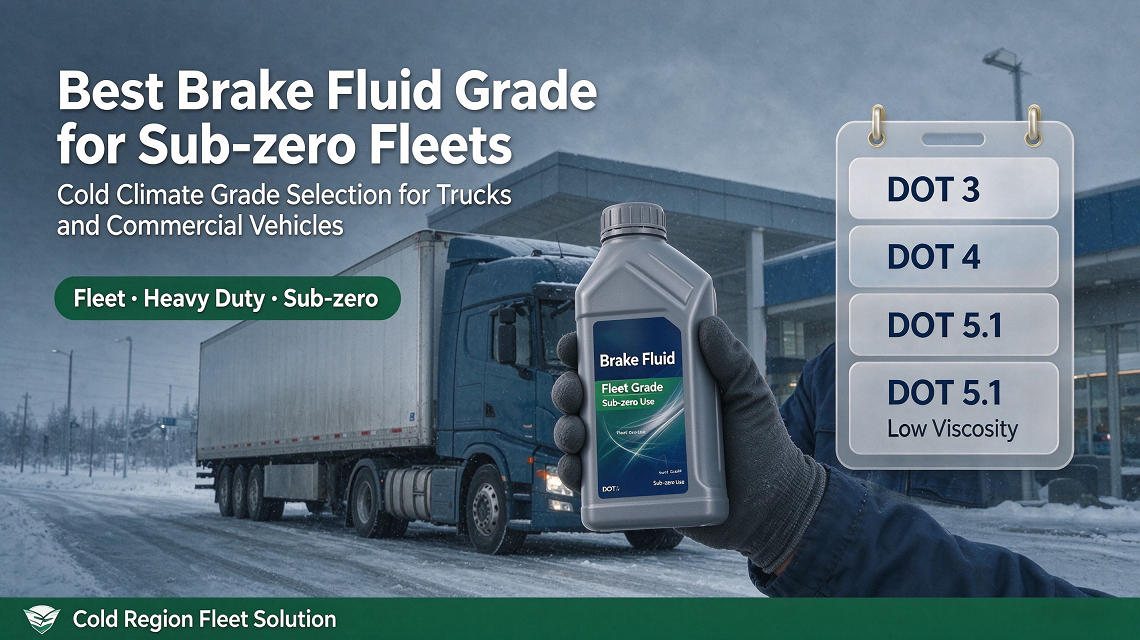
Conventional hydraulic fluids—namely DOT 3, DOT 4, and DOT 5.1 formulations—are built around polyglycol ethers and borate esters. By chemical design, these compounds are aggressively hygroscopic. They actively scavenge water molecules directly from the atmosphere to keep free water from pooling in low points of the braking circuit.
Under warm, dry conditions, moisture absorption occurs at a slow, predictable permeation rate through flexible EPDM rubber brake lines and microscopic gaps in reservoir diaphragm seals. In cold, humid winter weather, an entirely different physical mechanism takes over: severe thermal breathing.
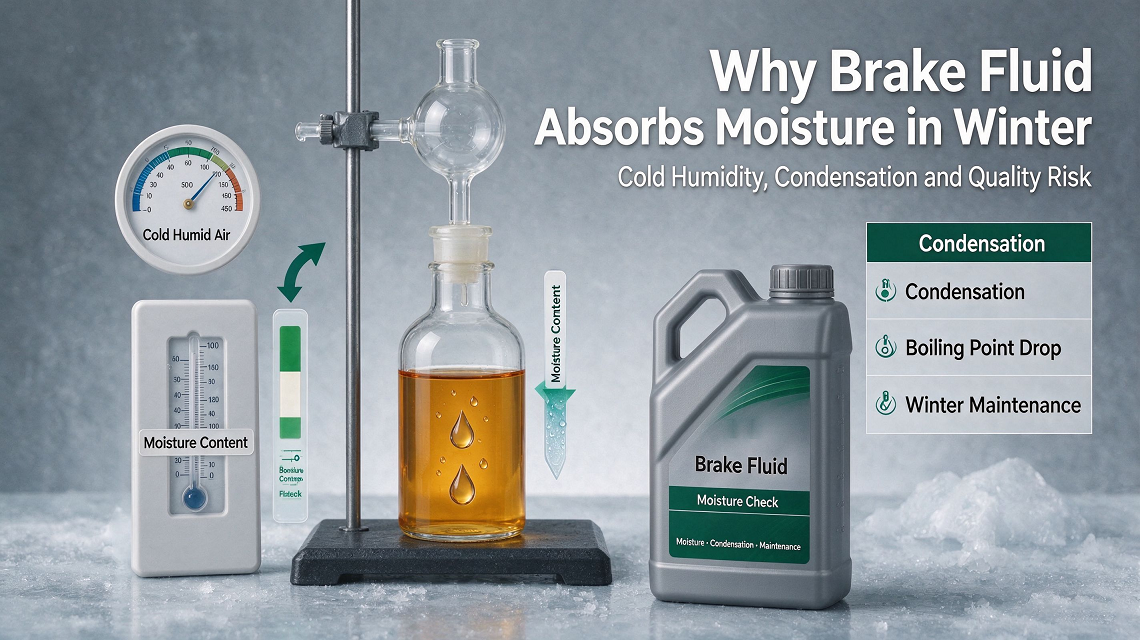
- Thermal contraction creates negative pressure: When a vehicle runs, friction can elevate caliper fluid temperatures well above 100°C, warming the master cylinder reservoir. Once parked overnight in freezing conditions, the fluid and trapped air volume contract rapidly, pulling damp ambient air past reservoir cap gaskets and piston dust boots.
- Reaching the local dew point: Winter ambient air often sits near its saturation point. As warm moist air trapped in the master cylinder reservoir cools against the plastic walls, the water vapor quickly condenses into liquid droplets on the inner reservoir lid and mixes directly into the fluid bath.
- Accelerated permeation via standing road slush: Brake flex hoses remain coated with wet, salty slush for weeks on end. The presence of continuous liquid contact on hose exteriors accelerates microscopic diffusion through rubber compounds compared to dry summer driving.
How Condensation Affects Brake Fluid Quality and Safety
Understanding how condensation affects brake fluid quality requires looking at both ends of the operational temperature spectrum. While most engineers worry about vapor lock—where trapped moisture flashes to steam under heavy load—winter introduces severe cold-temperature hazards long before fluid ever boils.
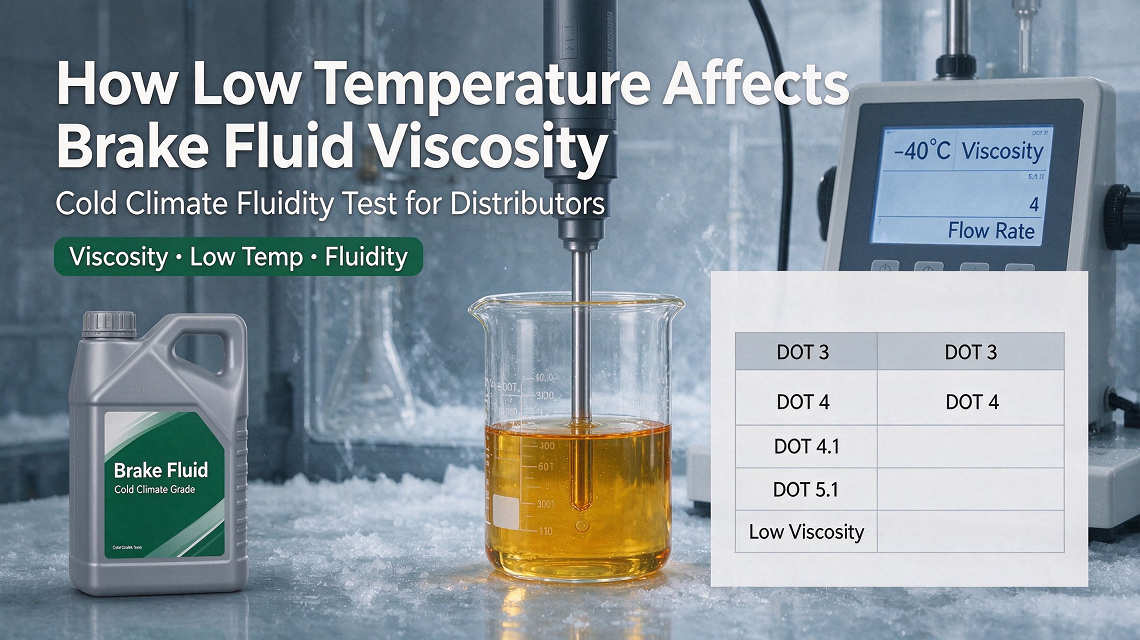
Glycol-based brake fluid with elevated water content experiences a dramatic rise in kinematic viscosity at sub-zero temperatures. Pure, dry fluid flows smoothly through tiny solenoid orifices within modern anti-lock braking (ABS) and electronic stability control (ESC) modulators. However, when contaminated with dissolved water, the fluid thickens significantly at -20°C to -40°C. This thickening causes delayed valve response times, meaning stability control intervention may lag by crucial milliseconds during an emergency skid on black ice.
Furthermore, internal corrosion inhibitors deplete rapidly when combating persistent moisture absorption. Once dissolved water separates locally or overwhelms passivating additives, galvanic corrosion attacks the steel pistons, copper alloy washers, and internal master cylinder bores, creating micro-pitting that permanently damages seal lips.
Dry vs. Wet Boiling Points: The Water Content Threshold
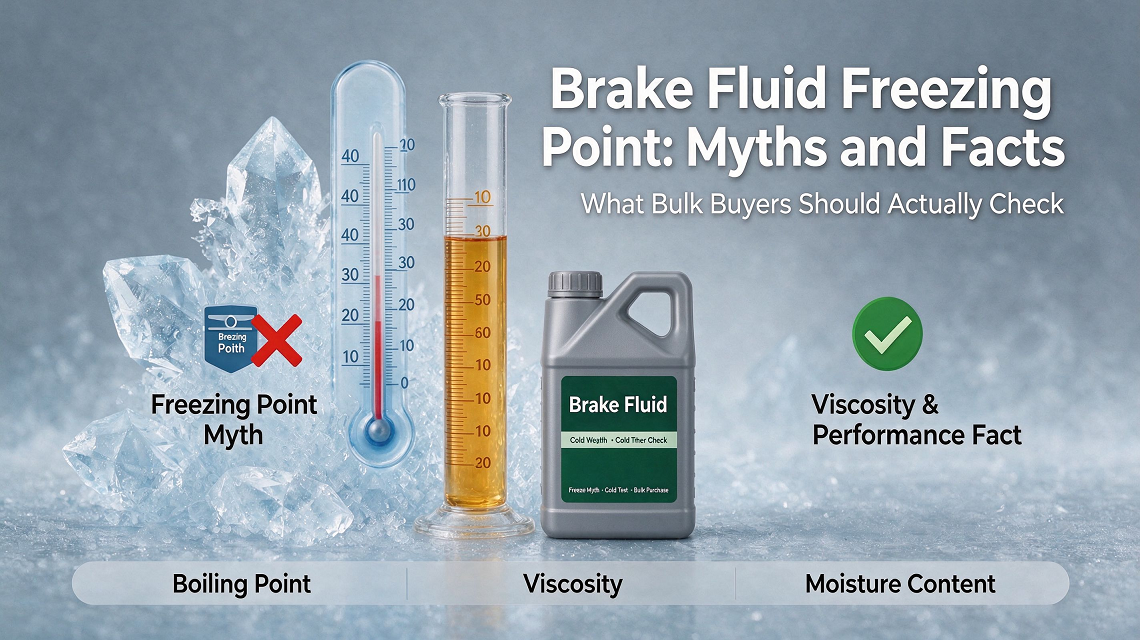
Standards bodies like the Department of Transportation (DOT) and SAE set strict minimum dry boiling points (uncontaminated) and wet boiling points (measured at approximately 3.7% water by volume). Winter condensation can bridge that gap far faster than summer operation.
| Fluid Grade | Minimum Dry Boiling Point | Minimum Wet Boiling Point (~3.7% H2O) | Winter Freezing Risk Profile |
|---|---|---|---|
| DOT 3 | 205°C (401°F) | 140°C (284°F) | Moderate viscosity increase; high water absorption rate. |
| DOT 4 | 230°C (446°F) | 155°C (311°F) | Faster initial absorption than DOT 3, but maintains higher wet boiling point. |
| DOT 5.1 | 260°C (500°F) | 180°C (356°F) | Lowest kinematic viscosity at -40°C; best choice for complex ABS systems in extreme cold. |
Practical Winter Brake Fluid Maintenance for Fleets and Shops
Relying solely on visual fluid clarity is a common operational mistake. Brake fluid can look amber and clear while holding dangerous moisture levels, or turn dark purely due to carbon dust leaching from rubber hoses without holding excessive water. Proper winter brake fluid maintenance requires empirical measurement.
Conductivity test pens (the pocket-sized 5-LED indicators) are convenient for a rapid pass/fail screen, but they infer water volume by measuring electrical resistance. Because additives, road salts, and dissolved metals also alter conductivity, boiling point testers that heat a sample to boil provide far more dependable data for mission-critical industrial fleets. A measured water content exceeding 2.5% to 3.0% warrants a complete flush prior to deep freeze conditions.
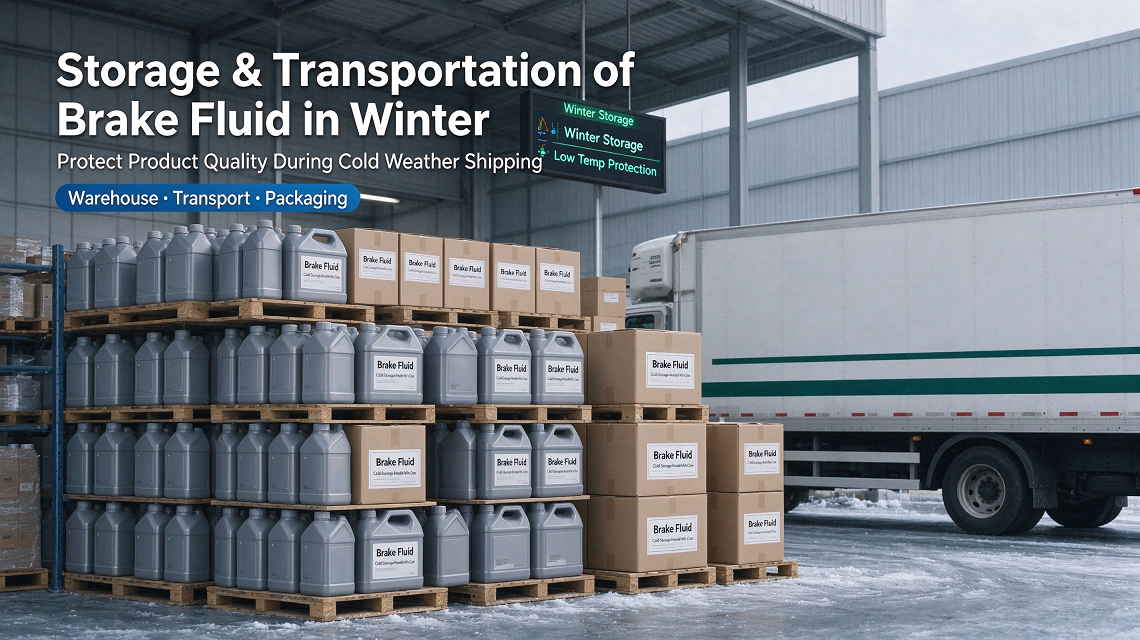
When bleeding hydraulic systems in winter, avoid leaving fresh fluid barrels open on the shop floor. Glycol fluid exposed to an unheated, humid repair bay can absorb noticeable moisture directly from the shop air in just a few hours. Keep containers tightly sealed until the exact moment of transfer into pressure-bleeding tanks.
Frequently Asked Questions
Can brake fluid freeze inside the calipers in severe winter?
Pure glycol fluid will not freeze solid into crystalline ice under standard winter conditions, but it turns into a thick, sludgy gel. However, if excess water separates within the lines or caliper housings rather than remaining fully dissolved, localized water pockets can freeze, causing mechanical line blockage or dragging brakes.
Is DOT 5 silicone fluid immune to cold humid winter issues?
Silicone DOT 5 fluid is hydrophobic, meaning it does not absorb water. While that sounds ideal, any moisture that enters the system cannot dissolve into the fluid and instead settles at the lowest physical points—typically inside the calipers. In sub-freezing weather, that free water freezes into ice or causes severe localized corrosion. For this reason, DOT 5 is rarely specified for standard road fleets with ABS.
How often should commercial vehicles flush brake fluid?
Most manufacturers recommend a complete flush every two years regardless of mileage. In regions characterized by high humidity and heavy winter salting, inspecting and potentially flushing the hydraulic circuit every 12 to 18 months prevents cold-weather ABS valve sticking and premature caliper failure.
Next Steps for Seasonal Preparation
Before winter weather sets in, evaluate your hydraulic testing protocol. Prioritize boiling-point sampling across your oldest vehicles and ensure shop technicians adhere to sealed-container handling practices. Taking fluid testing off the back burner protects braking response times and avoids expensive winter downtime.
Welcome to contact GAFLE for more information & cooperation!
peter
ZHEJIANG GAFLE AUTO CHEMICL CO.,LTD
Tel:86-579-8222 1665
Fax:86-579-8246 4690
Cel/Wechart:86-13335993986
E-mail:peter@gafle.net
Web:www.gafle.net