Brake fluid’s hygroscopic nature does not only work after installation in vehicles.
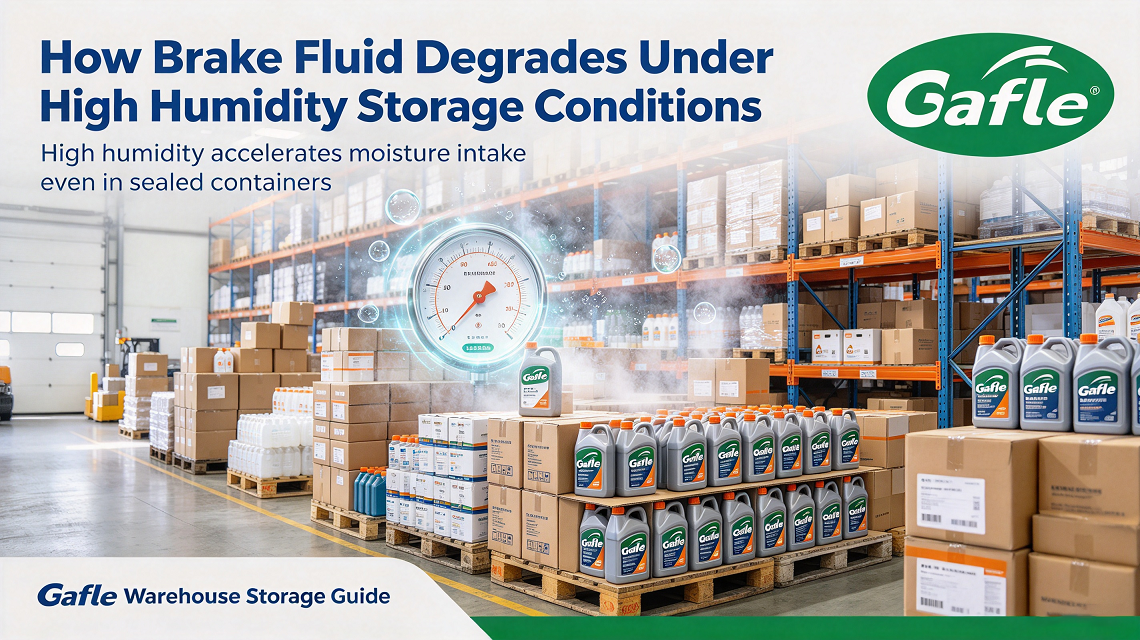
Many distributors and repair shop owners hold a common misunderstanding: sealed brake fluid bottles can be stored anywhere without quality loss. In reality, brake fluid’s core chemical characteristic is absorbing water molecules from the surrounding air. Even unopened containers will slowly take in moisture if placed in a persistently humid environment. Plastic bottles and caps offer good sealing performance, but they are not 100% impermeable over long storage cycles. Damp warehouses, coastal storage yards, basement stock rooms and cargo containers with condensation all create ideal conditions for moisture penetration. For bulk importers and wholesalers, stock may sit for months before sale, meaning hidden quality risks build up quietly long before the product reaches end users.
Moisture entering brake fluid lowers its boiling point gradually.
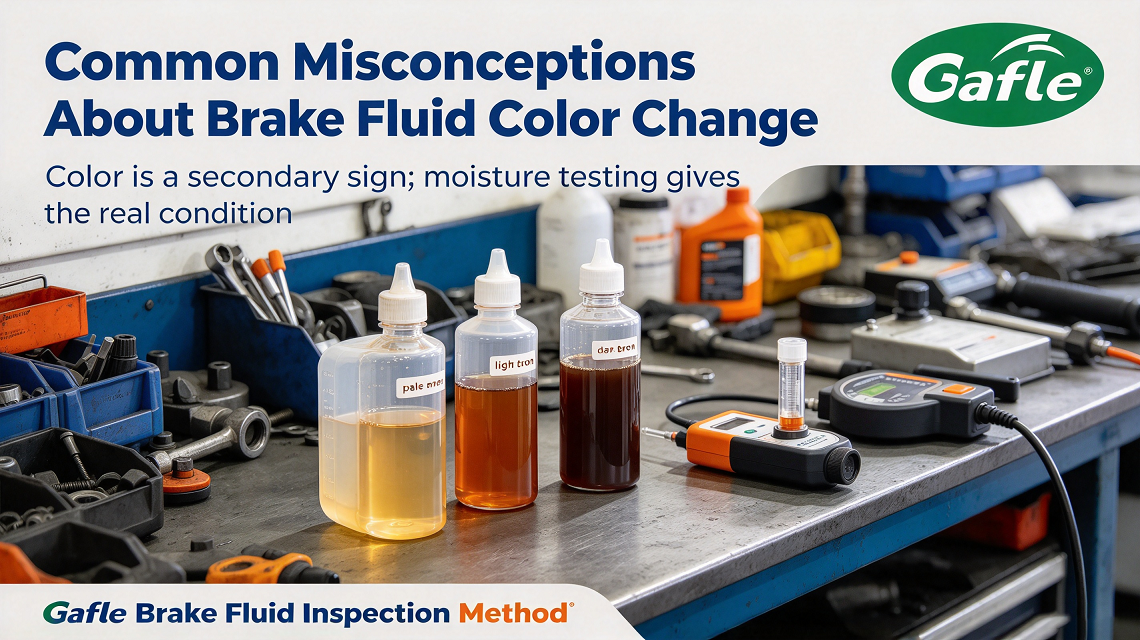
Dry glycol-based brake fluid maintains a high boiling point to resist vapor lock during heavy braking. Once water mixes into the fluid, the boiling point drops sharply. When brake temperature rises during downhill driving, repeated hard braking or track use, water inside the fluid turns into steam vapor. Vapor is compressible, which creates spongy brake pedals and reduced braking power. This safety hazard is especially dangerous for commercial vehicles and performance cars. The worst part is that moisture contamination cannot be identified by visual inspection. Bottles still look clean and clear, yet the fluid performance has already failed to meet standard requirements.
There are clear standards for brake fluid storage environment.
The ideal storage space should keep relative humidity below 60%, away from direct sunlight and extreme temperature swings. UV rays from sunlight accelerate additive degradation, while large temperature fluctuations create condensation on packaging surfaces. All containers must remain tightly sealed at all times. After partial use, caps need to be screwed back immediately and securely. Avoid stacking brake fluid pallets against cold exterior walls, where temperature differences easily form water droplets on packaging. For customers importing brake fluid via sea freight, high humidity inside shipping containers is a major concern. Extra moisture barrier packaging and container dehumidification solutions are recommended for long ocean transit.
Gafle brake fluid is manufactured with stable raw materials and quality packaging.
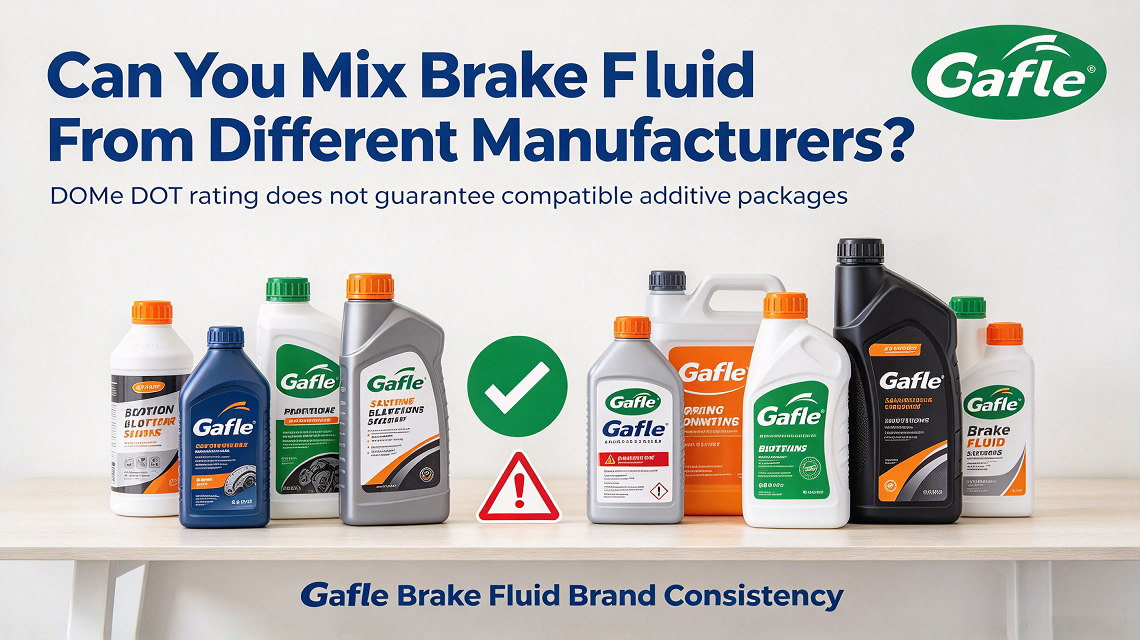
Our product line including DOT3, DOT4, DOT4 EV608 and Racing325 adopts reinforced bottle sealing design to slow moisture ingress. However, premium packaging can only reduce the speed of water absorption, not stop it completely. We compile detailed storage guidelines for all bulk clients to preserve brake fluid performance throughout its shelf life. Working with reliable suppliers and following standardized storage rules helps wholesalers deliver consistent, safe brake fluid to every repair shop and vehicle owner. Proper storage management also reduces product waste, after-sales complaints and potential safety liability for your business.
Welcome to contact GAFLE for more information & cooperation!
peter
ZHEJIANG GAFLE AUTO CHEMICL CO.,LTD
Tel:86-579-8222 1665
Fax:86-579-8246 4690
Cel/Wechart:86-13335993986
E-mail:peter@gafle.net
Web:www.gafle.net
peter
ZHEJIANG GAFLE AUTO CHEMICL CO.,LTD
Tel:86-579-8222 1665
Fax:86-579-8246 4690
Cel/Wechart:86-13335993986
E-mail:peter@gafle.net
Web:www.gafle.net