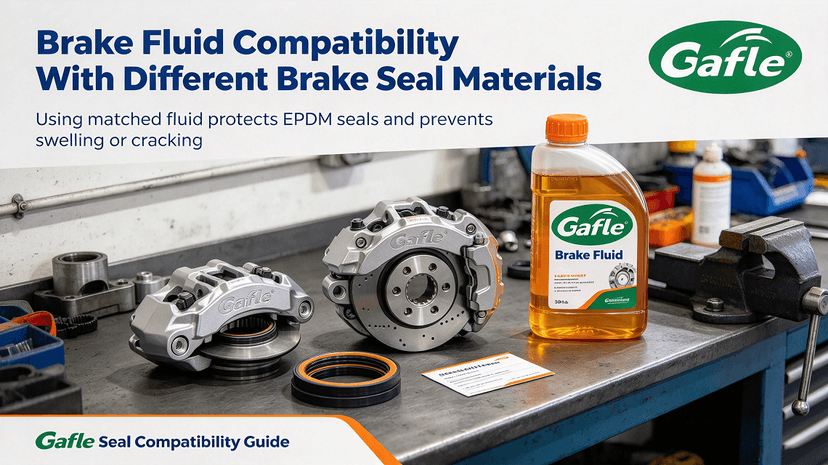
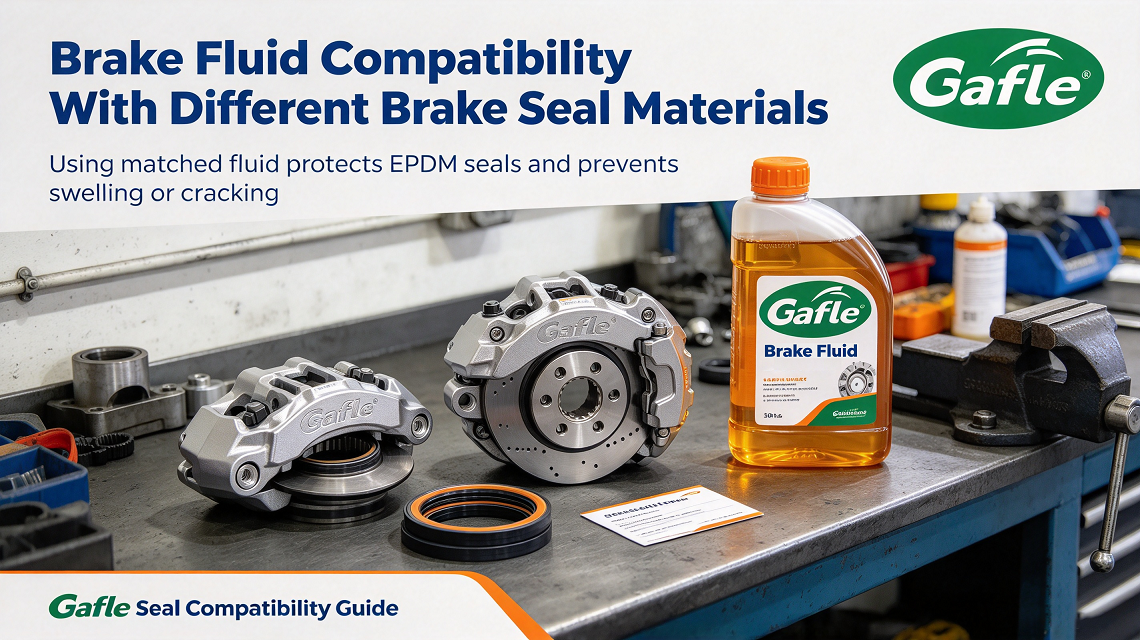
Not all brake fluids work well with every type of rubber seal in braking systems.
The hydraulic brake system relies on rubber seals, O-rings and gaskets inside master cylinders, wheel cylinders and brake calipers to maintain stable hydraulic pressure. These rubber components are the weakest link when mismatched brake fluid is used. Different vehicle generations and regional markets adopt different rubber formulas, with EPDM and SBR being the two most common types. Some classic vehicles and specialty machinery even use other rubber compounds. Using incompatible brake fluid triggers slow chemical reactions on seal surfaces, which may not show obvious symptoms within hundreds of kilometers.
Incompatible brake fluid can lead to seal swelling, cracking or hardening.
If rubber seals swell, the piston will stick inside the caliper bore, resulting in permanent brake drag. Brake drag causes continuous brake overheating, faster pad wear and increased fuel consumption. If the rubber material turns brittle and cracks, hydraulic leakage occurs. Minor leaks create wet marks around calipers; severe leakage directly leads to sudden brake pressure loss. Many repair cases show technicians replace leaking seals repeatedly without finding the root cause: mismatched brake fluid continues to destroy new rubber parts after replacement. This leads to repeated customer returns and extra maintenance costs.
Glycol-based DOT brake fluids, including Gafle DOT3, DOT4 and Racing325, are formulated for EPDM seals.
EPDM rubber is widely adopted in most modern passenger cars, racing vehicles and light commercial vehicles around the world. It is resistant to glycol brake fluid and maintains stable elasticity over years. On the contrary, mineral oil brake fluid is designed for special hydraulic systems such as some classic motorcycles. Mineral oil must never mix with glycol DOT brake fluid, as it will quickly dissolve and destroy EPDM seals completely. Technicians must confirm the seal material and vehicle specification before selecting brake fluid for replacement.
For wholesale buyers, seal compatibility knowledge reduces after-sales trouble.
Distributors and auto repair shops face frequent technical questions from vehicle owners about brake fluid replacement. Gafle provides detailed technical datasheets listing material compatibility for all brake fluid grades. Your team can reference our data sheets to recommend correct brake fluid for different vehicle models and brake system configurations. Understanding seal compatibility helps your business avoid costly repair claims, build professional reputation among local mechanics and strengthen long-term customer trust.
Welcome to contact GAFLE for more information & cooperation!
peter
ZHEJIANG GAFLE AUTO CHEMICL CO.,LTD
Tel:86-579-8222 1665
Fax:86-579-8246 4690
Cel/Wechart:86-13335993986
E-mail:peter@gafle.net
Web:www.gafle.net
peter
ZHEJIANG GAFLE AUTO CHEMICL CO.,LTD
Tel:86-579-8222 1665
Fax:86-579-8246 4690
Cel/Wechart:86-13335993986
E-mail:peter@gafle.net
Web:www.gafle.net