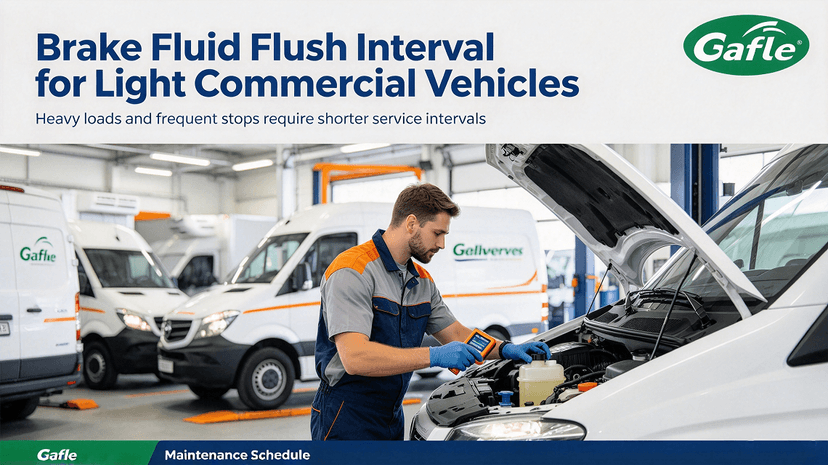
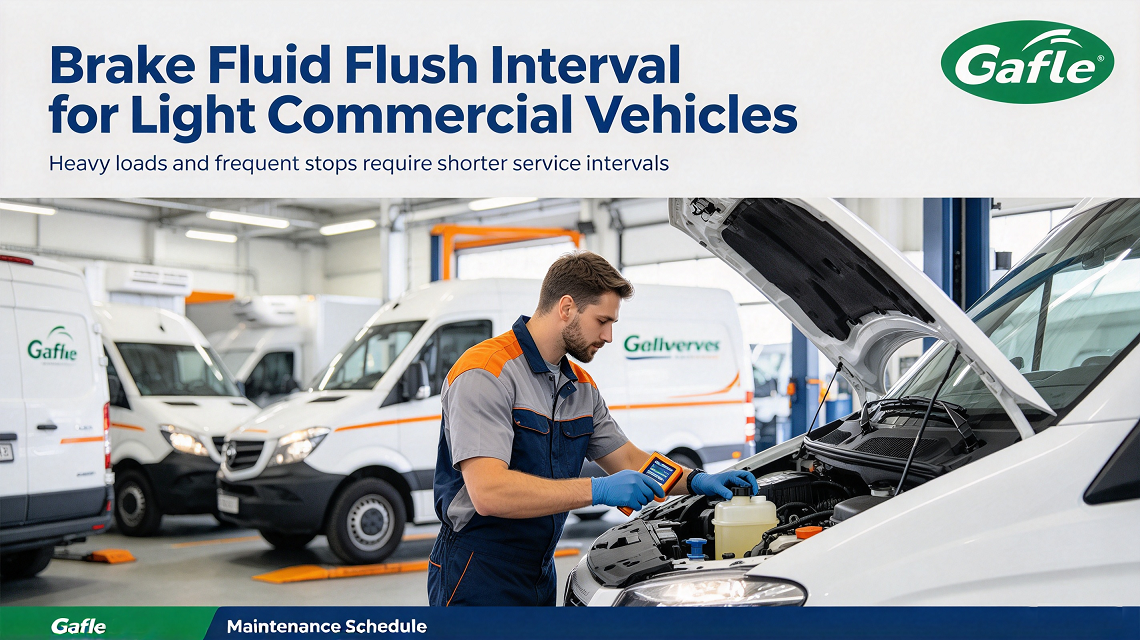
Light commercial vehicles experience heavier brake load than ordinary passenger cars.
Delivery vans, pickup trucks and small cargo vehicles carry heavy payloads and operate with frequent stop-and-go driving in urban areas. Repeated braking generates continuous heat inside brake calipers and brake lines. Higher working temperature speeds up brake fluid aging and accelerates moisture absorption. Many fleet managers apply passenger car maintenance rules to their light commercial fleet, which leads to delayed brake fluid service and hidden safety risks. Delivery vehicles operate daily, so brake system wear accumulates much faster than private cars.
Most light commercial vehicle manufacturers suggest brake fluid flush every 2 years.
However, heavy-use fleets need shorter replacement cycles, around 12–18 months. If your fleet runs mountain routes, carries maximum cargo loads or operates in humid coastal regions, the recommended interval should be reduced further. Waiting for soft brake pedal symptoms means the brake fluid has already absorbed excessive moisture and lost key performance. Brake pedal sponginess is a late warning sign, and driving with degraded brake fluid puts drivers, cargo and other road users at risk. Proactive scheduled maintenance is the best strategy for fleet safety management.
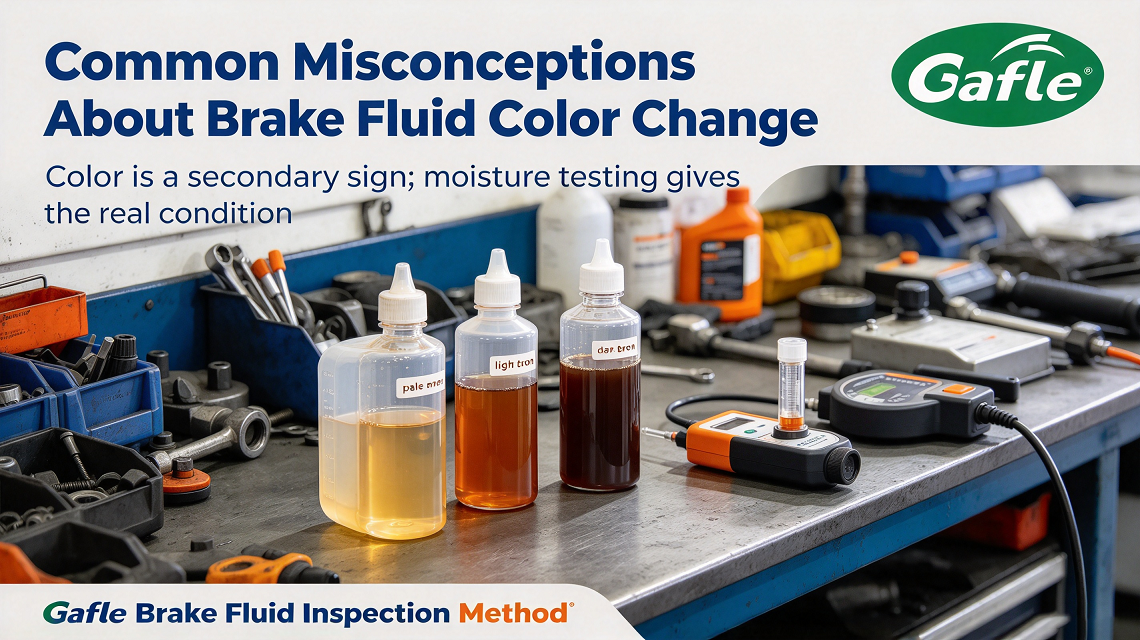
Fleet maintenance teams can test brake fluid moisture content easily with brake fluid tester.
Portable brake fluid moisture meters are affordable tools for any repair workshop or fleet maintenance station. If the measured moisture level exceeds 3%, arrange brake fluid flush right away. During fluid service, technicians must fully bleed air from all four wheels. Partial draining cannot remove contaminated fluid trapped deep inside calipers and long brake lines. Only complete flushing ensures all old, moisture-contaminated fluid is removed before refilling with new brake fluid. Technicians should also inspect brake lines, seals and calipers for corrosion or leakage during the service.
Gafle supplies bulk brake fluid tailored for light commercial fleets.
Our stable DOT4 brake fluid fits most light-duty commercial hydraulic brake systems. We support bulk packaging options, including drums and large containers customized for fleet maintenance centers. Fleet owners can order large volumes with stable supply lead times. Establishing a standardized brake fluid maintenance schedule across your whole fleet reduces unexpected vehicle breakdowns, cuts downtime and improves operational safety for your commercial vehicle fleet. Regular brake maintenance also helps fleets pass official vehicle inspections smoothly.
Welcome to contact GAFLE for more information & cooperation!
peter
ZHEJIANG GAFLE AUTO CHEMICL CO.,LTD
Tel:86-579-8222 1665
Fax:86-579-8246 4690
Cel/Wechart:86-13335993986
E-mail:peter@gafle.net
Web:www.gafle.net
peter
ZHEJIANG GAFLE AUTO CHEMICL CO.,LTD
Tel:86-579-8222 1665
Fax:86-579-8246 4690
Cel/Wechart:86-13335993986
E-mail:peter@gafle.net
Web:www.gafle.net