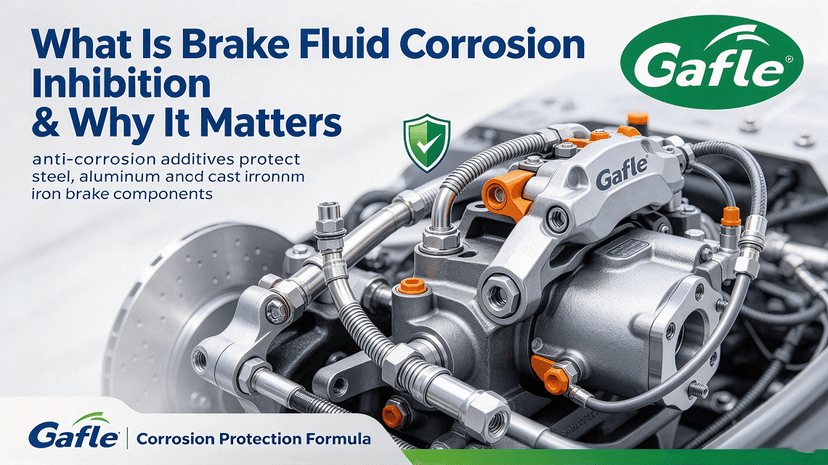
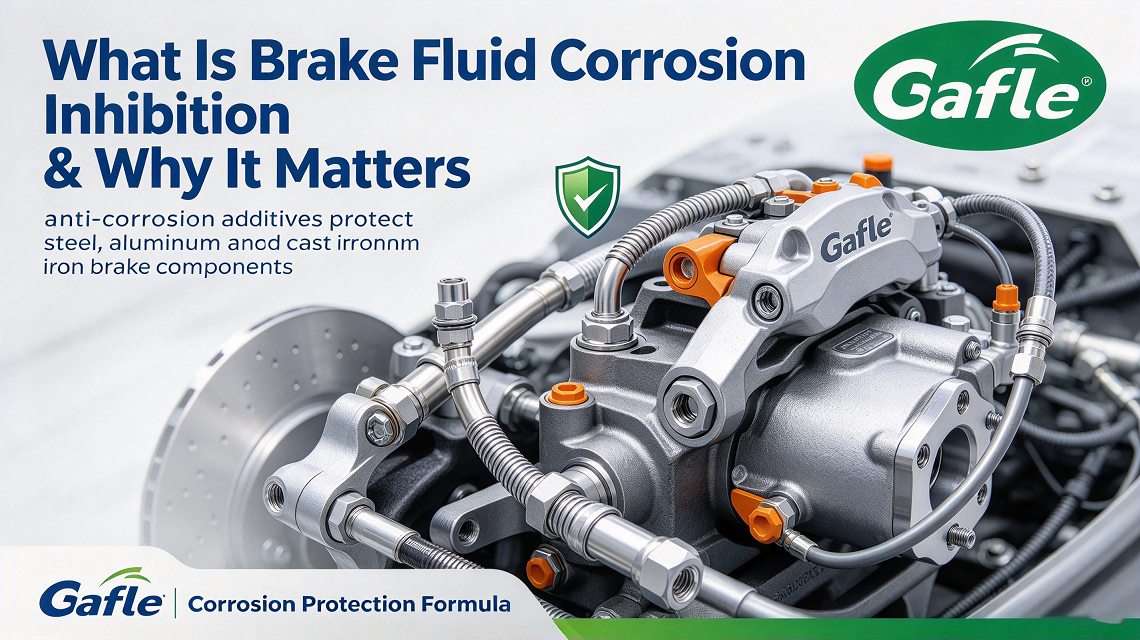
Brake fluid does more than transfer hydraulic pressure; it also protects metal brake parts from corrosion.
A hydraulic brake system combines multiple metal materials: steel brake lines, aluminum caliper bodies, cast iron wheel cylinders and brass fittings. These metals have different electrochemical properties. When water enters the brake circuit, galvanic corrosion starts between dissimilar metals. High-quality brake fluid contains carefully balanced anti-corrosion inhibitor additives to suppress rust formation on all these metal surfaces. This protective function is just as critical as boiling point performance, yet many buyers overlook it when sourcing brake fluid.
When brake fluid absorbs water, its anti-corrosion capacity weakens.
Water molecules dilute the anti-corrosion additives and create an electrolyte environment inside the brake lines. Tiny rust particles peel off metal surfaces and circulate within the brake fluid loop. These abrasive particles scratch cylinder walls, wear down seal edges and score internal valve components. Over time, wear accumulates and shortens the whole brake assembly service life. In severe cases, corrosion eats through steel brake lines and creates pinhole leaks. Brake line leakage leads to sudden pressure loss, which is a life-threatening safety fault during driving.
High-performance brake fluid like Gafle Racing325 and DOT4 EV608 contains enhanced corrosion inhibitor packages.
Our R&D team tunes the additive system to deliver stable protection for steel, aluminum, cast iron and copper materials commonly found in modern passenger cars, EVs and racing brake systems. The anti-corrosion additives remain effective as long as the fluid stays within its recommended service cycle. Inferior low-cost brake fluid reduces the dosage of expensive anti-corrosion additives to cut manufacturing cost. Cheap fluid may meet basic boiling point tests, but it cannot provide long-term metal protection and causes expensive component damage.
Repair shops and fleet managers should evaluate brake fluid by corrosion protection performance.
Boiling point alone cannot represent the overall quality standard of brake fluid. Anti-corrosion properties directly determine the long-term service life of brake hardware. Gafle’s laboratory test reports show stable anti-corrosion performance for all brake fluid grades, supporting bulk customers with reliable brake maintenance solutions. Choosing brake fluid with reliable corrosion inhibition reduces component replacement frequency, cuts long-term maintenance budgets and improves vehicle safety for your clients.
Welcome to contact GAFLE for more information & cooperation!
peter
ZHEJIANG GAFLE AUTO CHEMICL CO.,LTD
Tel:86-579-8222 1665
Fax:86-579-8246 4690
Cel/Wechart:86-13335993986
E-mail:peter@gafle.net
Web:www.gafle.net
peter
ZHEJIANG GAFLE AUTO CHEMICL CO.,LTD
Tel:86-579-8222 1665
Fax:86-579-8246 4690
Cel/Wechart:86-13335993986
E-mail:peter@gafle.net
Web:www.gafle.net