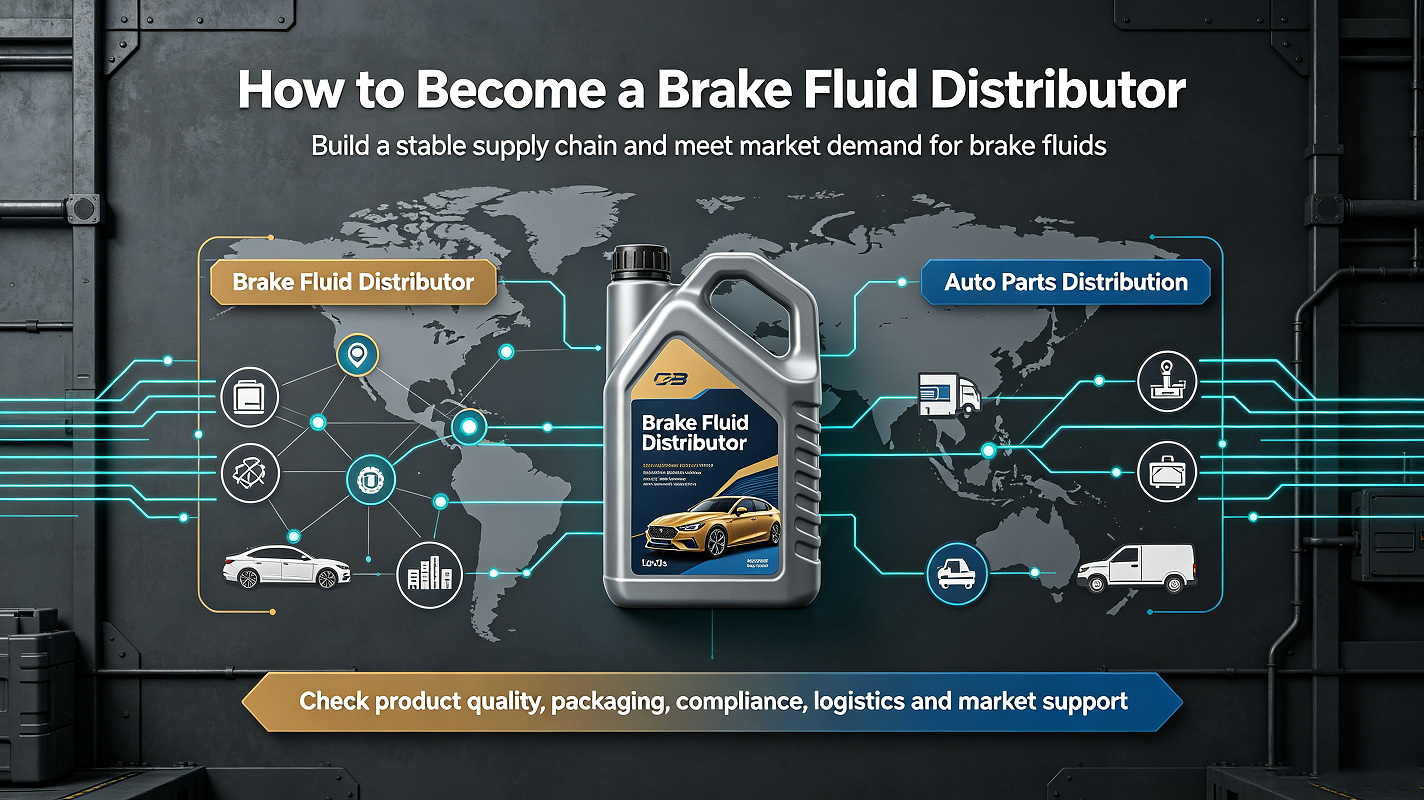
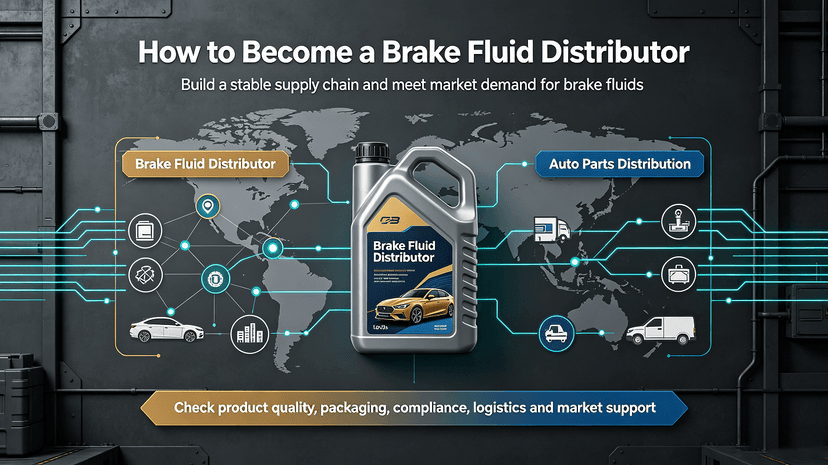
How to Become a Brake Fluid Distributor: What the Job Really Involves
If you are researching how to become a brake fluid distributor, you are probably looking at more than a simple resale opportunity. Brake fluid sits in a category where product selection, buyer trust, and supply consistency matter as much as price. A distributor is not just a middle link; in practice, you are helping shops, warehouses, and auto parts buyers choose a fluid that fits the vehicle, the market, and the local compliance environment.
That is why this business deserves a careful setup. Brake fluid is a technical automotive chemical, and buyers will ask questions about compatibility, packaging, storage stability, and whether the product suits passenger cars, commercial vehicles, or mixed auto parts channels. If you plan to enter the wholesale market or develop an overseas market, you need a clear view of the product range and the commercial risks before you place your first order.
What a Brake Fluid Distributor Actually Does
A distributor usually purchases brake fluid from a supplier or manufacturer and resells it through retail, workshop, industrial, or regional wholesale channels. The role may include stock management, channel development, local promotion, and after-sales support when buyers have packaging or application questions.
In some markets, an auto chemical distributor may also carry related products such as engine coolants, cleaners, or other maintenance chemicals. That can help with account size and logistics efficiency. Still, brake fluid should be treated as its own category because the stakes are higher than with many general auto parts items. If a customer uses the wrong grade or stores the product badly, the consequences can be serious.
Start With the Product, Not the Sales Pitch
Before you negotiate with any supplier, learn the basic product differences that matter to buyers. Brake fluid is commonly sold in formulations that serve different performance needs, and the market may reference specifications such as DOT classifications. Buyers in the auto parts channel usually care about whether the fluid matches vehicle requirements, climate conditions, and workshop habits.
Ask practical questions: Is the packaging suitable for wholesale handling? Does the bottle design minimize leaks? Can cartons survive overseas shipping? Is the labeling clear enough for local resellers and mechanics? These are not minor details. In distribution, packaging problems often create more headaches than the product chemistry itself.
Key points buyers often compare
Typical comparison points include price per unit, packaging size, shelf presentation, product consistency, and the reliability of supply. Some customers want a premium-looking retail bottle; others prefer plain, cost-efficient bulk packaging for workshop use. If you serve an overseas market, you may also need to think about language on labels, carton strength, and whether your supplier can support mixed-container shipments.
Choose the Right Supplier Relationship
A good supplier is more than a source of inventory. For a brake fluid distributor, the supplier should be able to support repeat orders, stable quality, and documentation that helps you sell into your chosen market. You do not want to rebuild your product story every time a buyer asks the same basic questions.
When evaluating suppliers, ask for the details that matter to a wholesale operation: product range, packaging options, MOQ flexibility, and whether they can support private labeling if that is part of your plan. If you are sourcing for export, confirm how the supplier handles export packaging and whether they are used to dealing with auto parts buyers in different regions. A cautious buyer would also request samples and review them under real storage and transport conditions, not just in a showroom.
Understand the Channel Before You Buy Inventory
Distribution works best when the channel is clear. Some distributors sell to repair shops and independent garages. Others focus on auto parts wholesalers or regional importers. A few pursue online sales, though that route can be more demanding because buyers expect quick answers and visible product differentiation.
The channel determines the packaging size, branding style, and margin structure. For example, a workshop-oriented buyer may prefer practicality and price. A retail-oriented buyer may care more about shelf appearance and brand story. If your target is the overseas market, you should study whether that market leans toward branded retail, private-label wholesale, or mixed channels. That decision affects everything from stock levels to carton configuration.
Common Mistakes New Distributors Make
One common mistake is treating brake fluid like a generic commodity. It is not. Buyers know the difference between an acceptable supplier and a careless one, especially when they have warranty concerns or reputation risk on the line.
Another mistake is overbuying too early. It is tempting to chase unit price, but slow-moving inventory ties up cash and storage space. A better approach is to start with a manageable range, then expand after you understand what local buyers actually reorder.
It is also easy to overlook basic operational issues: damaged bottles, mixed labels, poor pallet stacking, or shipping delays. Any of these can erase margin quickly. In this business, logistics discipline is often more valuable than aggressive marketing.
Practical Buyer Advice for First-Time Distributors
If you are serious about learning how to become a brake fluid distributor, begin with a narrow market test. Select a small set of products, talk to a few workshops or auto parts buyers, and compare how they respond to package size, brand presentation, and pricing. You will learn more from ten real buyer conversations than from a month of desk research.
Also, keep your claims conservative. Brake fluid buyers do not respond well to vague promises. They want clear product positioning, sensible order terms, and a supplier who can respond when a shipment needs attention. A measured, reliable distributor often wins more repeat business than an aggressive one.
What Success Looks Like in This Business
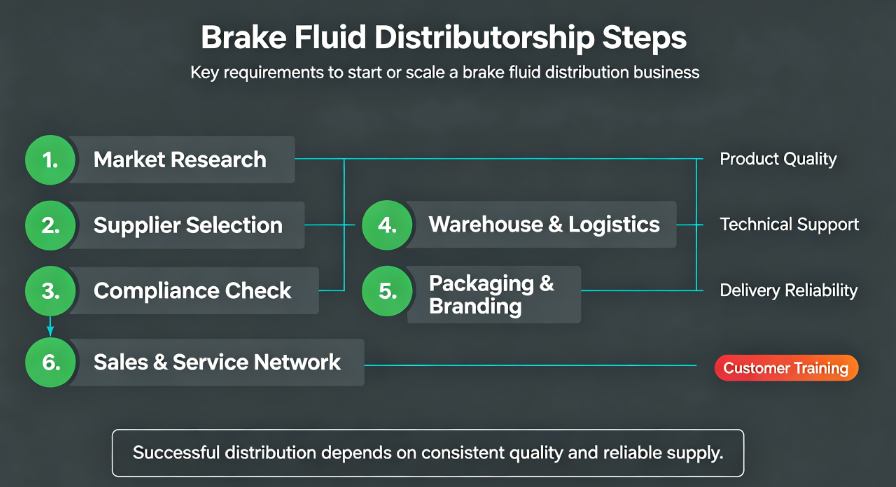
Successful brake fluid distribution usually comes down to consistency: stable sourcing, workable packaging, dependable delivery, and a sales channel that understands the product. The best distributors build trust by making the buyer’s job easier. That means fewer surprises, fewer damaged cartons, and fewer arguments about what the fluid is meant to do.
If you are preparing to enter the market, focus on supplier selection, channel fit, and product presentation before you scale. That sequence is slower than rushing into wholesale, but it is usually cheaper in the long run.
Next Step
If you are building a distributor program, define your target channel first, then request product samples, packaging details, and wholesale terms from a short list of suppliers. Once you can compare real products side by side, the business decision becomes much clearer.
Welcome to contact GAFLE for more information & cooperation!
peter
ZHEJIANG GAFLE AUTO CHEMICL CO.,LTD
Tel:86-579-8222 1665
Fax:86-579-8246 4690
Cel/Wechart:86-13335993986
E-mail:peter@gafle.net
Web:www.gafle.net