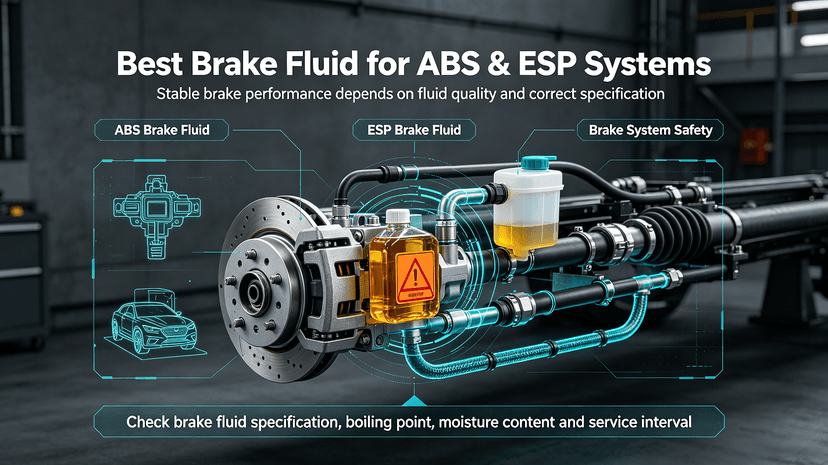
Choosing the best brake fluid for ABS and ESP systems
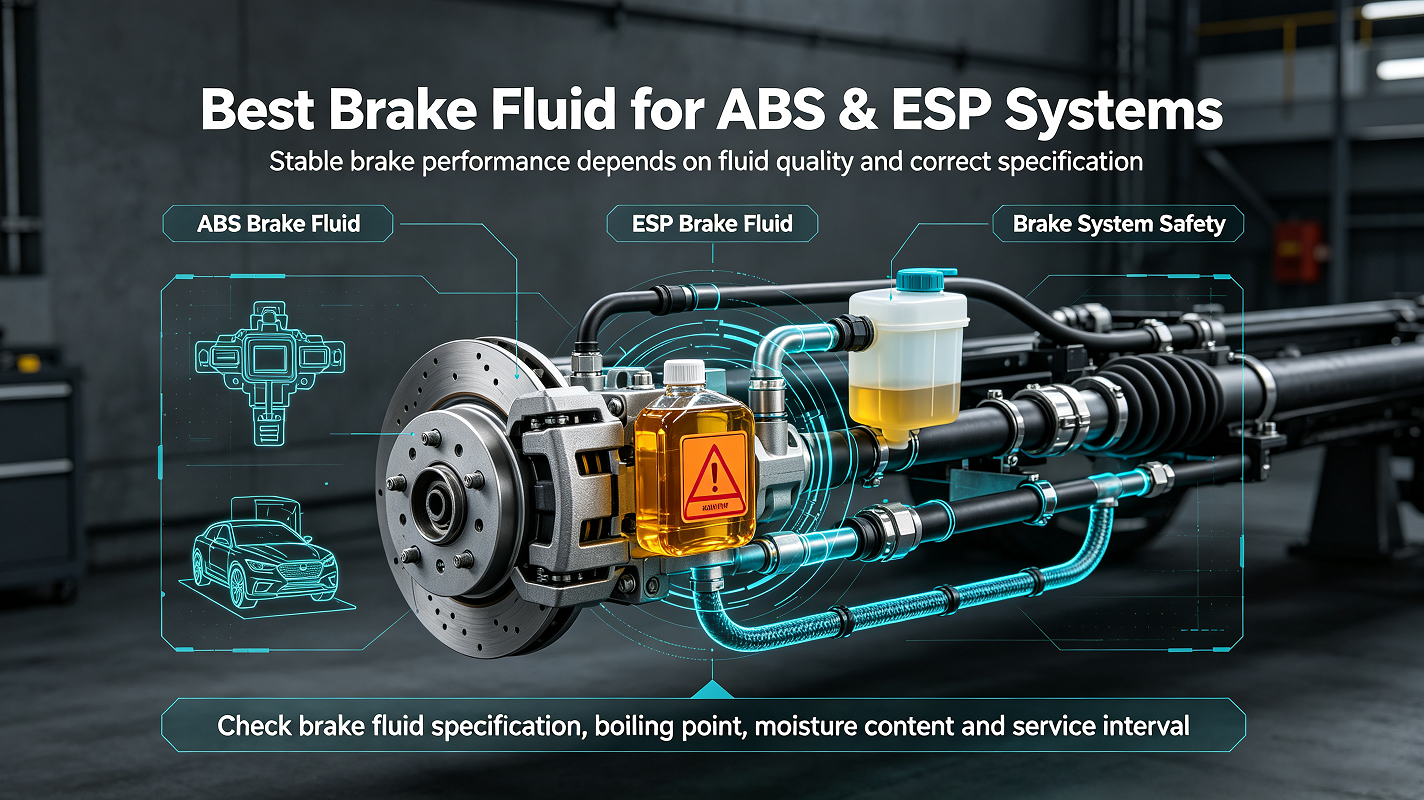
Drivers and fleet managers often start looking for the best brake fluid for ABS ESP vehicles only after a warning light, a soft pedal, or a service interval reminder forces the issue. That is usually the wrong moment to make a decision. ABS and ESP systems depend on brake fluid that can transmit pressure quickly, resist moisture, and behave consistently under repeated heat cycles. If the fluid is wrong, old, or contaminated, the electronic safety systems may still function, but they will not feel as sharp or predictable as they should.
For engineers, sourcing teams, and workshop buyers, the real question is not simply which bottle has the strongest marketing claim. The question is which fluid specification fits the vehicle platform, operating environment, and maintenance plan without creating compatibility or warranty risk. That means understanding how ABS brake fluid and ESP brake fluid demands overlap, and where a high-performance brake fluid may make sense — or where it may be unnecessary.
Why ABS and ESP place stricter demands on brake fluid
ABS works by rapidly pulsing hydraulic pressure to prevent wheel lock. ESP uses brake intervention, sometimes on a single wheel, to help stabilize the vehicle. Both systems rely on quick, repeatable fluid response. A brake fluid that has absorbed too much moisture, or one that starts to compress more than expected at high temperature, can dull that response.
That does not mean every vehicle needs a racing-grade product. It does mean the fluid must match the OEM specification and the operating conditions. In passenger cars, light commercial vehicles, and many fleet applications, the key challenge is consistency over time. The fluid must keep its boiling performance and hydraulic feel stable enough that the control unit can do its job without delay or mushiness at the pedal.
Quick reference: what buyers should look for
Before comparing brands, check the basics.
First, confirm the required DOT or OEM specification in the vehicle manual or service data. Second, verify compatibility with ABS and stability under repeated brake events. Third, consider moisture resistance and service interval discipline, because brake fluid absorbs water gradually whether the vehicle is used hard or not. Fourth, avoid mixing fluids unless the manufacturer explicitly allows it.
In practice, the best brake fluid for ABS ESP vehicles is usually the one that meets the correct specification, comes from a reliable source, and is changed on schedule. That sounds plain, but it saves more problems than most “premium” claims ever will.
Brake fluid types and where they fit
DOT 3 and DOT 4
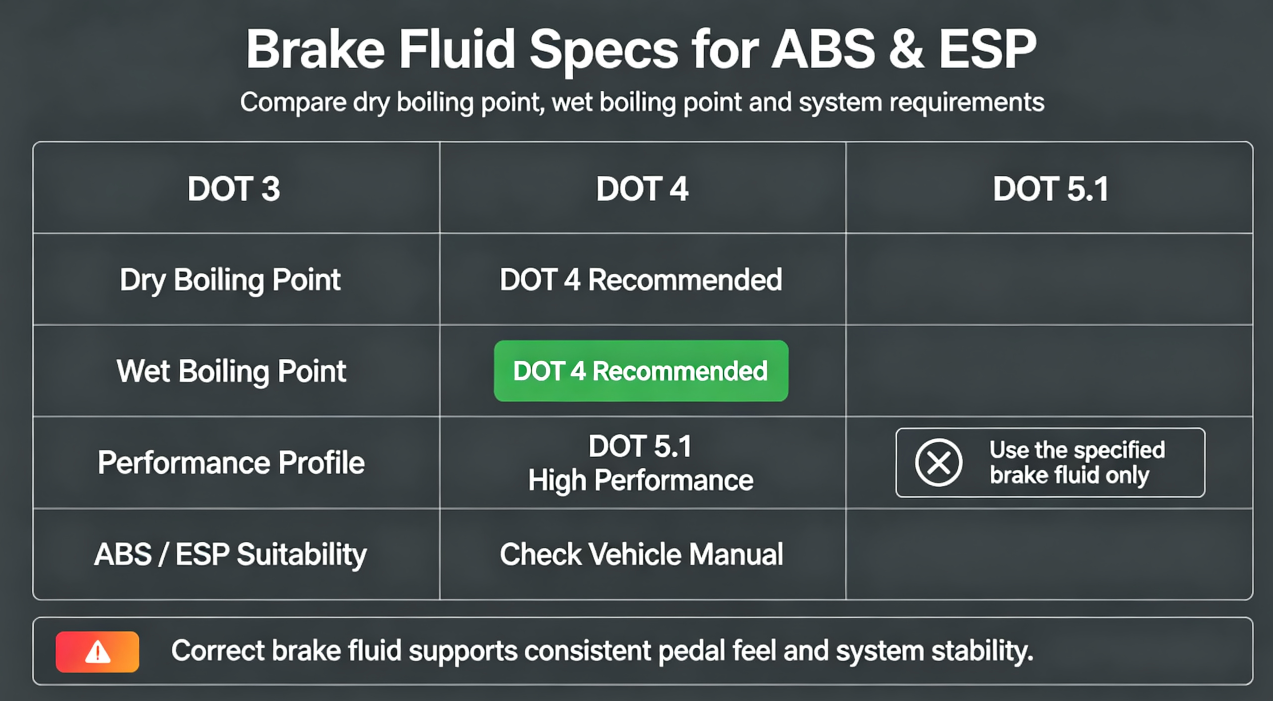
These are common in many everyday vehicles. DOT 4 generally offers a higher boiling margin than DOT 3, which is useful for cars with ABS and ESP that see city traffic, highway driving, towing, or repeated braking in warm climates. For many buyers, DOT 4 is the practical default, provided the OEM approves it.
DOT 5.1
DOT 5.1 is often chosen when higher thermal performance is needed while still staying in the glycol-based family used by most modern braking systems. It can be a sensible choice for vehicles that experience frequent heavy braking, but it should not be used just because the number looks more advanced. The label matters less than the fit.
Silicone-based DOT 5
This is a different chemistry and is not interchangeable with glycol-based fluids. It is not the usual answer for ABS or ESP-equipped road vehicles. Buyers should be cautious here, because a wrong substitution can create service headaches that are expensive to unwind.
How to choose for real-world use
The right choice depends on how the vehicle is used. A family SUV with light commuting needs a stable, OEM-approved fluid with good moisture tolerance and predictable pedal feel. A delivery van that makes stop-start runs all day needs the same, but with closer attention to heat buildup and service intervals. A performance car or mountain-route vehicle may benefit from a higher boiling point fluid, though even then the correct spec and system compatibility come first.
For workshops and distributors, packaging integrity matters too. Brake fluid absorbs moisture from the air once opened, so sealed containers, clear batch identification, and disciplined stock rotation are not minor details. A quality fluid stored badly is still a poor fluid.
Common mistakes that cause avoidable problems
One common mistake is treating all brake fluid as interchangeable. It is not. Another is topping up instead of flushing, which may hide contamination but does not remove it. A third is assuming that ABS or ESP fault symptoms always come from the electronics; sometimes the hydraulic side is simply overdue for service.
There is also a tendency to overbuy on performance claims. High boiling point numbers can matter, but only if the rest of the fluid chemistry and service plan are right. In an ordinary road vehicle, a well-chosen standard-spec fluid often outperforms a premium product that was installed late or mixed carelessly.
Practical buyer advice
If you are sourcing for service work, build the decision around specification compliance, supply consistency, and storage discipline. If you are choosing for a single vehicle, start with the owner’s manual and the brake system label, then select the closest approved option from a reputable brand. When in doubt, use the fluid that the OEM intended rather than chasing a higher number on the bottle.
For mixed fleets, it helps to standardize where possible, but only within the bounds of approved specifications. That keeps inventory simpler and reduces the risk of someone reaching for the wrong product during a busy repair window.
FAQ: short answers buyers usually need
Can I use any brake fluid in an ABS car?
No. ABS systems are not forgiving of wrong specifications or contaminated fluid.
Is ESP more demanding than ABS?
In practical terms, yes, because ESP may intervene more often and expects consistent hydraulic response.
Is a high-performance brake fluid always better?
Not always. It is better only when the vehicle, climate, and driving profile justify it.
How often should brake fluid be changed?
Follow the vehicle maker’s interval. Brake fluid ages even if mileage is low.
What to do next
For anyone selecting the best brake fluid for ABS ESP vehicles, the safest path is simple: check the OEM spec, match the use case, and avoid shortcuts during storage or mixing. If you are buying for a workshop or distribution channel, build your shortlist around consistent supply and clear labeling, not just claims of performance. The right fluid is the one that keeps the braking system predictable when the driver most needs it.
Welcome to contact GAFLE for more information & cooperation!
peter
ZHEJIANG GAFLE AUTO CHEMICL CO.,LTD
Tel:86-579-8222 1665
Fax:86-579-8246 4690
Cel/Wechart:86-13335993986
E-mail:peter@gafle.net
Web:www.gafle.net