What Buyers Need to Know Before an Antifreeze Import
An antifreeze import looks simple from a distance: source a glycol-based coolant, clear customs, move it into storage, and sell it onward. In practice, the job is less forgiving. Antifreeze is a chemical product with shipping, labeling, transport, and compliance questions that can quickly slow a shipment or create downstream liability if they are handled casually. For sourcing managers and product teams, the real decision is not just where to buy, but how to import safely, legally, and with the right paperwork in place.
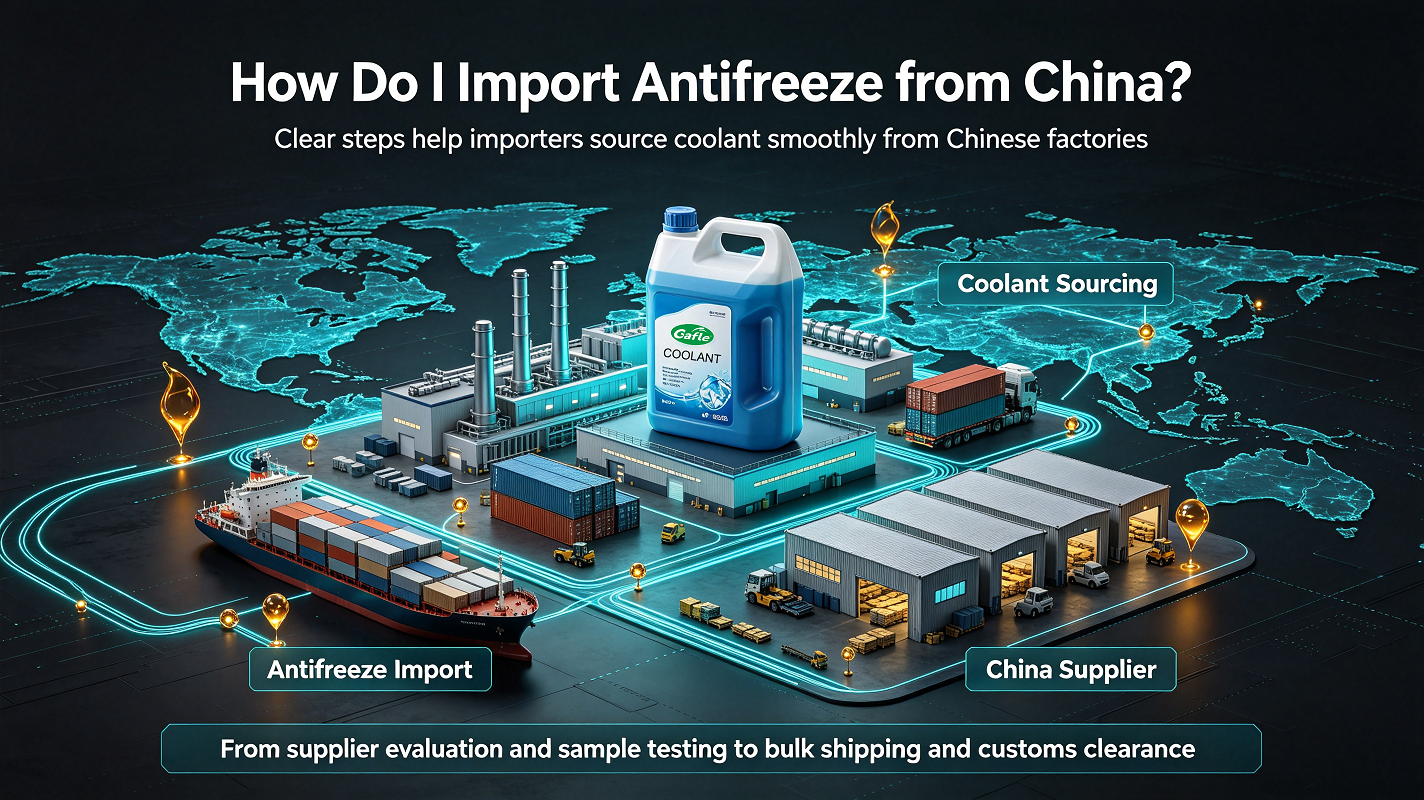
That matters even more when the supply chain runs through Asia. Many buyers ask how to import antifreeze from China because the market is broad and pricing can be competitive, but a lower unit cost does not remove the need to verify formulation, packaging, labeling language, and transport classification. A smooth coolant import depends on getting those basics right before the cargo leaves the factory gate.
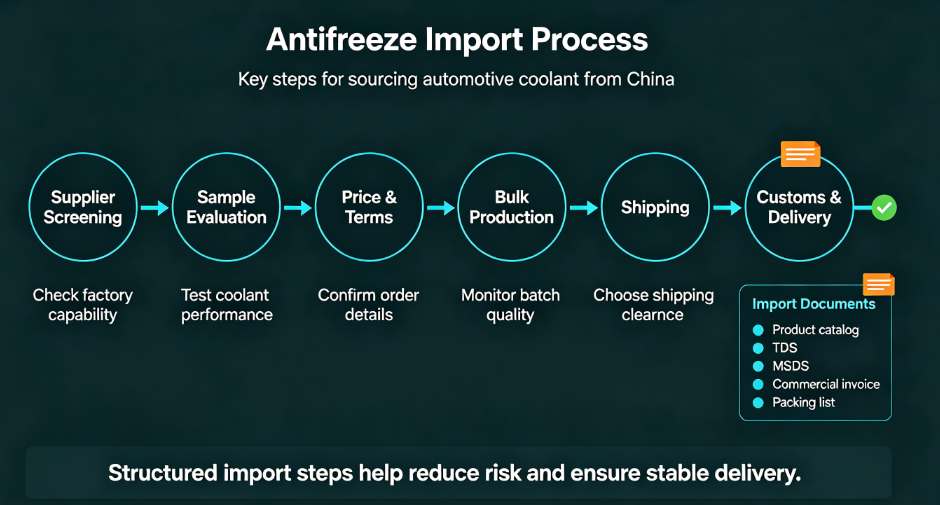
Why Antifreeze Is Not a Routine Commodity Shipment
Antifreeze and engine coolant products can vary by chemistry and end use. Some are designed for automotive systems, while others are formulated for industrial heat transfer or specialty applications. The label may say “ready to use” or “concentrate,” but that alone does not tell you whether the product is fit for your market, your climate range, or your customer’s equipment. Buyers should also remember that some formulations may fall under hazardous materials rules depending on ingredients, concentration, and destination-country requirements.
That means customs documents, transport documents, and safety documentation need to line up. A product may be commercially acceptable yet still delayed because the invoice description is vague, the SDS is missing, or the packaging declaration does not match the actual contents. These are the kinds of issues that turn a routine purchase into an expensive hold at the port.
Key Documents and Controls Buyers Usually Need
Antifreeze import requirements and documentation vary by country, but the same core discipline usually applies: identify the product accurately, document its composition, and make the shipment traceable from supplier to consignee. Buyers should expect to review commercial invoices, packing lists, safety data sheets, and transport documentation appropriate to the shipping mode.
Depending on the destination, additional items may be required, such as product labels in the local language, ingredient declarations, tariff classification support, or proof that the supplier’s packaging meets transport standards. If the antifreeze is going into retail channels, the compliance burden often becomes heavier than for industrial use. That is one reason it helps to separate the commercial question from the regulatory one. A supplier may be able to produce a competitive price on Chinese antifreeze, but your import team still needs to check whether the product can be legally sold and transported in your market.
What to Check When Comparing Suppliers
Formulation and use case
Start with the application. Automotive coolant, industrial coolant, and niche heat-transfer fluids are not interchangeable just because they are all called antifreeze. Ask for the base chemistry, operating range, dilution guidance if it is concentrated, and any compatibility notes with aluminum, rubber seals, or mixed-metal systems.
Packaging and transport readiness
Drums, pails, IBCs, and retail containers all create different handling demands. Even a sound formulation can become a problem if the packaging is weak, the closures leak, or the palletization is poor. For importers, packaging quality is not cosmetic; it affects claims, customs inspections, and warehouse safety.
Documentation discipline
Suppliers who ship frequently tend to understand document consistency. That said, buyers should still verify every shipment. A common mistake is assuming that last month’s paperwork will work for this month’s order. It often does not, especially if the batch, packaging, or consignee details have changed.
Common Mistakes in Antifreeze Import Programs
One recurring mistake is buying on price alone and discovering too late that the product description is too broad for customs clearance. Another is treating safety documents as a formality. If the SDS is generic, outdated, or translated poorly, the shipment may be questioned by freight forwarders or authorities. Buyers also underestimate storage concerns. Antifreeze may not seem dramatic compared with solvents or fuels, but it still deserves controlled handling, clear labeling, and a warehouse team that knows what arrived.
There is also a commercial mistake that shows up often: importing a formula that works in one climate or vehicle fleet and assuming it will suit another. A buyer should confirm whether the product is intended as concentrate or premix, whether it meets the customer’s fill procedure, and whether the color or labeling conventions match market expectations. Small mismatches can create avoidable returns.
Practical Buying Advice for Engineers and Sourcing Teams
Before placing a purchase order, ask for a full technical description, current documentation set, and packaging specification. If you are comparing suppliers, request the same information from each one so you are not comparing apples to oranges. For larger programs, it is worth aligning procurement, quality, logistics, and regulatory teams early. That cross-check takes time, but it is cheaper than fixing a blocked container or reworking a noncompliant label.
If your team is evaluating how to import antifreeze from China, build in one practical checkpoint: confirm who is responsible for classification and what evidence backs that classification. In many cases, the supplier knows the product best, but the importer carries the final responsibility in the destination market. That division should be written down, not assumed.
FAQ: Antifreeze Import Basics
Is every antifreeze shipment treated the same?
No. Chemistry, packaging, destination rules, and end use can all change the import treatment.
Can I rely on a supplier’s paperwork without review?
Not safely. Review the documents for consistency, product accuracy, and destination-market fit.
What matters most in a coolant import program?
Accurate product identity, complete documentation, suitable packaging, and a clear compliance check before shipping.
A sensible next step
If you are planning an antifreeze import program, the best next step is to build a supplier checklist that covers formulation, packaging, documentation, and regulatory review in one place. That keeps the conversation technical instead of vague, and it usually exposes problems early enough to solve them. In this category, early scrutiny is not red tape; it is basic cost control.
Welcome to contact GAFLE for more information & cooperation!
peter
ZHEJIANG GAFLE AUTO CHEMICL CO.,LTD
Tel:86-579-8222 1665
Fax:86-579-8246 4690
Cel/Wechart:86-13335993986
E-mail:peter@gafle.net
Web:www.gafle.net