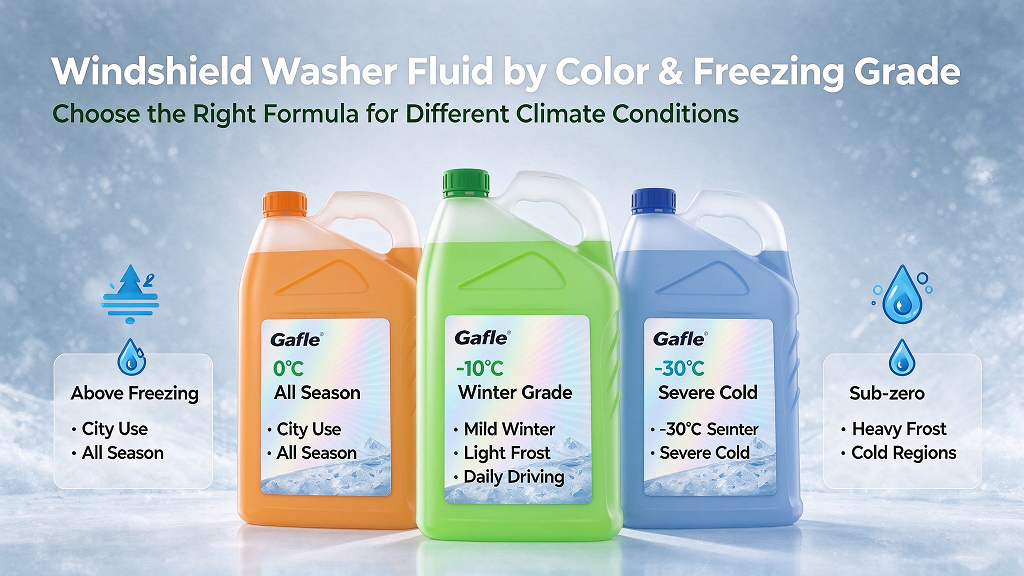
Why Fleet and Retail Supply Chains Are Pivoting Away from Methyl Alcohol
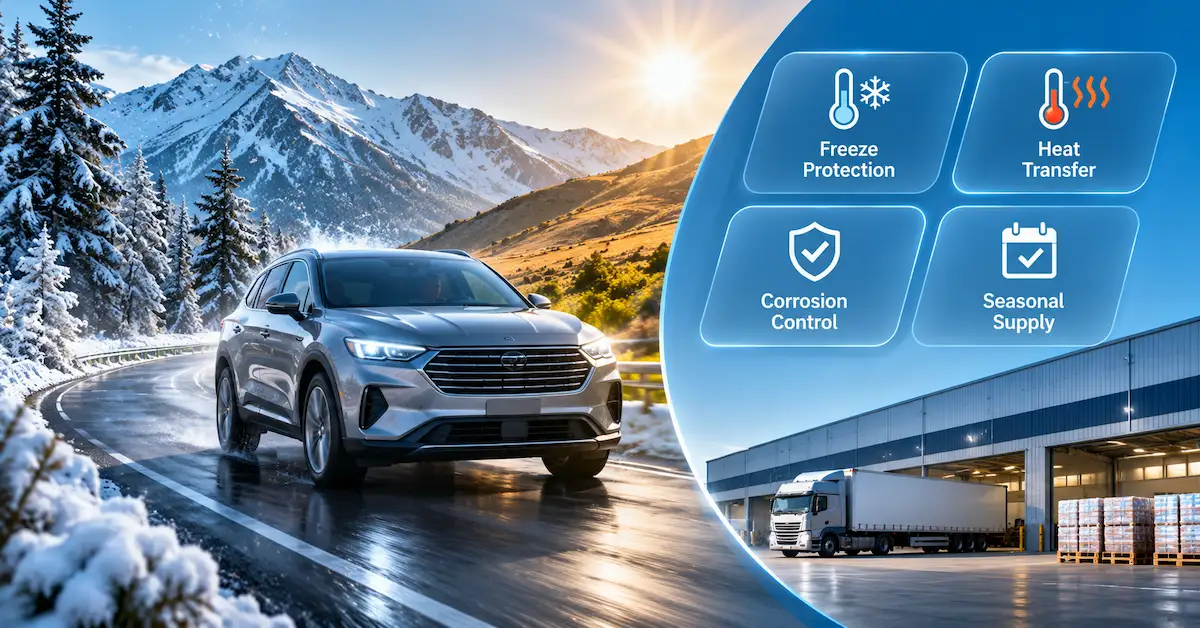
For decades, commercial screenwash formulations have relied almost exclusively on methyl alcohol. It is inexpensive, easily synthesized, and drops freeze points dramatically with relatively low dosage. Yet for chemical distributors, fleet operations, and private-label brand managers, procuring a Methanol-Free Windshield Washer Fluid has shifted from a niche sustainability initiative to an urgent operational priority. The chemical realities of conventional formulations—severe toxicity, strict regional VOC caps, and elevated freight liabilities—are catching up with commercial margins.
When selecting washer fluids at scale, purchasing decisions extend well beyond simple freeze protection. Handling drums, IBC totes, or finished retail jugs requires auditing supply chain touchpoints against workplace safety thresholds, transit classifications, and evolving regional compliance.
The Chemical Trade-offs: Formulating Without Toxic Methanol
Methanol performs one task exceptionally well: depressing the freezing point of water. However, formulating without toxic methanol requires blenders to balance alternative solvents without driving up viscosity or leaving a film across windshield glass.
Commercial chemical blenders generally rely on three primary alternatives to achieve acceptable de-icing and road-grime dissolution:
- Denatured Ethanol: Sourced from agricultural fermentation or synthetic hydration, ethanol delivers a significantly improved toxicological profile while maintaining comparable solvency. Its primary operational caveat is volatile odor management and varying excise regulations depending on the denaturant package used.
- Isopropanol (IPA): Often blended as a secondary solvent, isopropanol offers superior cut-through on oil-based road film and bug splatter. However, high concentrations can accelerate the degradation of natural rubber wiper blades if plasticizers are stripped over time.
- Propylene Glycol: Frequently incorporated into a Safe Formula as a freeze-point co-solvent, USP-grade or technical-grade propylene glycol exhibits negligible toxicity. The technical trade-off is viscosity; at sub-zero temperatures, glycol heavy mixtures can become sluggish in narrow washer nozzles unless balanced with low-molecular-weight alcohols.
Comparing Common Base Solvents in Screenwash Manufacturing
For technical evaluators and procurement teams, comparing physical solvent attributes helps explain why replacement fluids behave differently in field applications:
| Solvent Base | GHS Hazard Profile | Freeze Depression Efficiency | Material Compatibility |
|---|---|---|---|
| Methanol | Acute Toxicity (Cat 3), Target Organ (STOT SE 1) | High | Aggressive to certain soft plastics and gaskets |
| Denatured Ethanol | Flammable Liquid (Cat 2), Eye Irritant | Moderate to High | Generally gentle on modern EPDM wiper profiles |
| Propylene Glycol Blends | Non-hazardous / Minimal irritant | Moderate (higher viscosity at sub-zero) | Excellent compatibility with clearcoats and plastics |
Regulatory Pressures and Logistics Overhead
The regulatory trajectory against methyl alcohol is steep. In regions governed by the California Air Resources Board (CARB) and various European regulatory bodies under REACH, washer fluid VOC limits for non-freezing regions sit as low as 1% by weight, and winter formulas face intense scrutiny. Methanol carries a GHS toxic skull-and-crossbones hazard designation, which triggers strict storage permits, personal protective equipment (PPE) requirements on maintenance shop floors, and reportable spill limits under environmental protection frameworks.
For a high-volume Bulk Buyer, these compliance layers represent tangible overhead. Shipping finished goods that carry hazardous materials surcharges inflates freight bills significantly, especially across less-than-truckload (LTL) deliveries. Moving to a methanol free base often lowers shipping classifications or eliminates hazmat placarding entirely, depending on the final flash point of the ethanol or glycol matrix.
Sourcing Audit: What to Demand from a Contract Manufacturer
If you are qualifying a toll blender or chemical manufacturer for non-methanol windshield fluids, chemical composition sheets do not tell the whole story. Real-world performance depends heavily on the surfactant and water quality utilized during production.
First, verify water treatment parameters. A bulk washer fluid blended with hard well water creates mineral precipitation inside washer reservoir pumps and inline check valves. Inquire specifically about reverse osmosis (RO) or deionization steps prior to batch mixing.
Second, request material compatibility documentation. Ethanol-heavy blends require stable dye systems and surfactant packages that will not cause stress crazing on polycarbonate headlamp lenses or degrade automotive clear coats under direct UV exposure.
Frequently Asked Questions
Can a methanol-free formula achieve true sub-zero freeze protection?
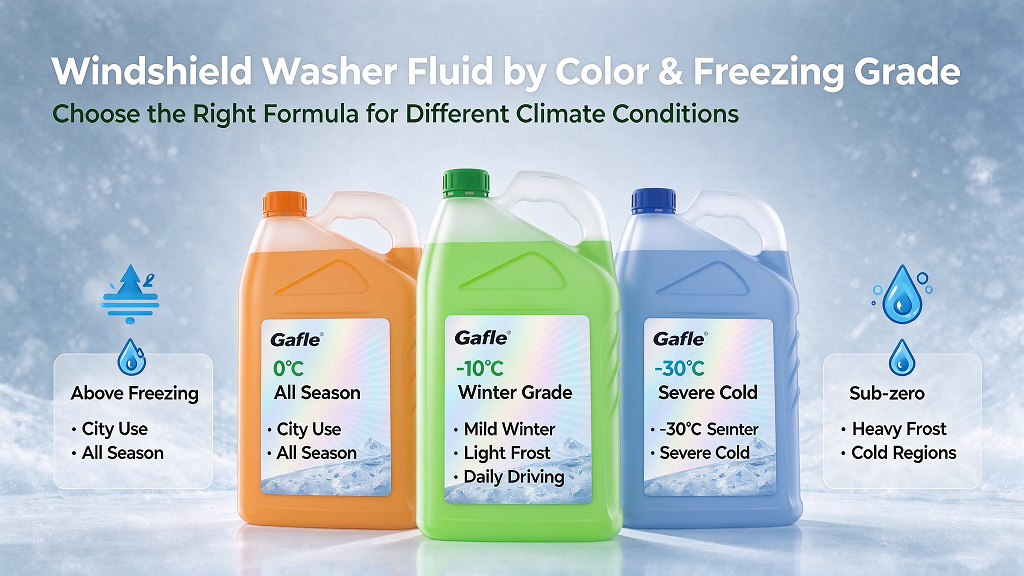
Yes. Commercial ethanol and glycol formulations can be blended to handle temperatures below -20°F (-29°C). However, the volume fraction of ethanol needed is higher than methanol, which can marginally increase base raw material costs.
Does a non-toxic formula require dedicated dispensing equipment?
Standard HDPE storage tanks, poly drum pumps, and standard fleet dispensing lines are fully compatible. In fact, removing methyl alcohol typically reduces seal swelling and valve seat failure across pneumatic transfer pumps.
Next Steps for Procurement Teams
Transitioning away from hazardous chemistry requires rigorous bench testing before issuing purchase orders for railcars or truckload totes. Request technical data sheets (TDS), certificates of analysis (COA), and ASTM D1882 test results (effect of cooling system chemical solutions on automotive organic finishes) directly from your blending partner to validate seasonal field stability.
Welcome to contact GAFLE for more information & cooperation!
peter
ZHEJIANG GAFLE AUTO CHEMICL CO.,LTD
Tel:86-579-8222 1665
Fax:86-579-8246 4690
Cel/Wechart:86-13335993986
E-mail:peter@gafle.net
Web:www.gafle.net