Washer fluid exports fail for boring reasons. The product is fine, the packaging is fine, and then the container sits at the terminal because the tariff code does not match the invoice description, or because the fluid was declared as general cargo when its flash point required a different classification. Both issues are decided long before shipment, at the formula and documentation stage, and both are cheap to fix early and expensive to fix late. GAFLE factory handles export documentation for washer fluid shipments to multiple markets, and the guidance below covers the decisions that determine whether a container moves.
Classification follows composition and function
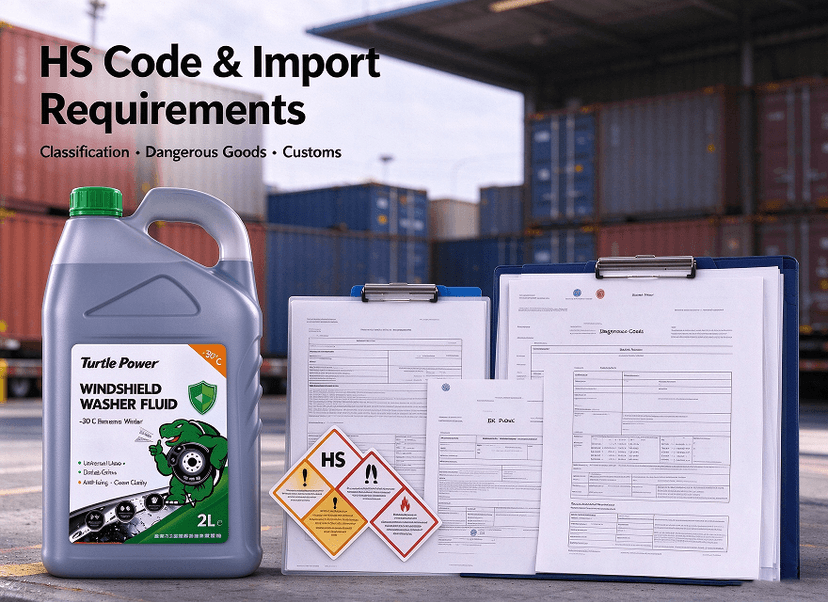
The correct tariff classification follows composition and function, not the product name printed on the label. Washer fluid is a prepared chemical product used for cleaning and freeze protection, and its classification depends on what it contains: the solvent system, the surfactant content and whether it is a surface-active preparation or a general chemical preparation.
Two buyers importing what looks like the same product can therefore hold different codes, because one formula is methanol-based and another is a surfactant-rich preparation with a different composition. Classification should be confirmed against the actual formula, and it should be confirmed with a customs broker or the destination authority rather than decided internally.
The invoice description must match the code. A shipment declared as "cleaning preparation" with a code that covers a different product family invites inspection, and inspection invites delay even when nothing is wrong.
Dangerous goods determination
Dangerous goods status depends on the alcohol system and its flash point, which is why formula decisions have shipping consequences. A fluid with a low flash point and high alcohol content may fall within a flammable liquid class, requiring specific packing, marking, documentation and sometimes a different freight rate.
A fluid below the relevant flash point threshold is usually shipped as general cargo, but the determination must be documented rather than assumed. The flash point should be measured on the finished product, not calculated from the alcohol percentage, because surfactant and glycol content changes the result.
Three practical consequences follow. Packaging must be UN-certified where the classification requires it. The transport document must state the correct proper shipping name, class and packing group. And the price quoted to the buyer should include any dangerous goods surcharge, or the buyer will discover it at booking.
Formula choices interact here. A methanol-free, higher-flash-point product can be easier to ship, which is one reason some buyers specify it even in markets where methanol is permitted.
Sea freight options
Sea freight choices for washer fluid are driven by weight limits and packaging strength more than by sailing schedules. Ready-to-use fluid is dense, so a twenty foot container may reach its weight limit before it fills its volume. That makes the loading plan a commercial document, not a logistics detail.
Full container loads suit repeat buyers with predictable volume, and they protect the cargo from handling by third parties. Less than container loads suit trial orders, but consolidated cargo is handled more often and bottle damage rates rise.
Pallet configuration and carton compression strength decide whether the load arrives sellable. A container that is loaded above the carton's stacking tolerance will produce deformed bottles at the bottom of each pallet, and the importer will attribute the damage to the supplier.
US import requirements
US importers face composition disclosure, labelling and state-level VOC requirements that vary by destination. Federal requirements cover customs entry, correct classification and, for chemical products, hazard communication in line with the standard used by occupational safety regulators.
State level rules add complexity. Some states regulate the volatile organic compound content of consumer products including washer fluid, and a formula acceptable in one state may not be sellable in another. Retail buyers frequently ask for documentation on VOC content before listing a product.
Labelling requirements for consumer products also apply, covering net contents, hazard warnings where relevant and manufacturer identification. A label designed for another market often fails on one of these points.
EU import requirements
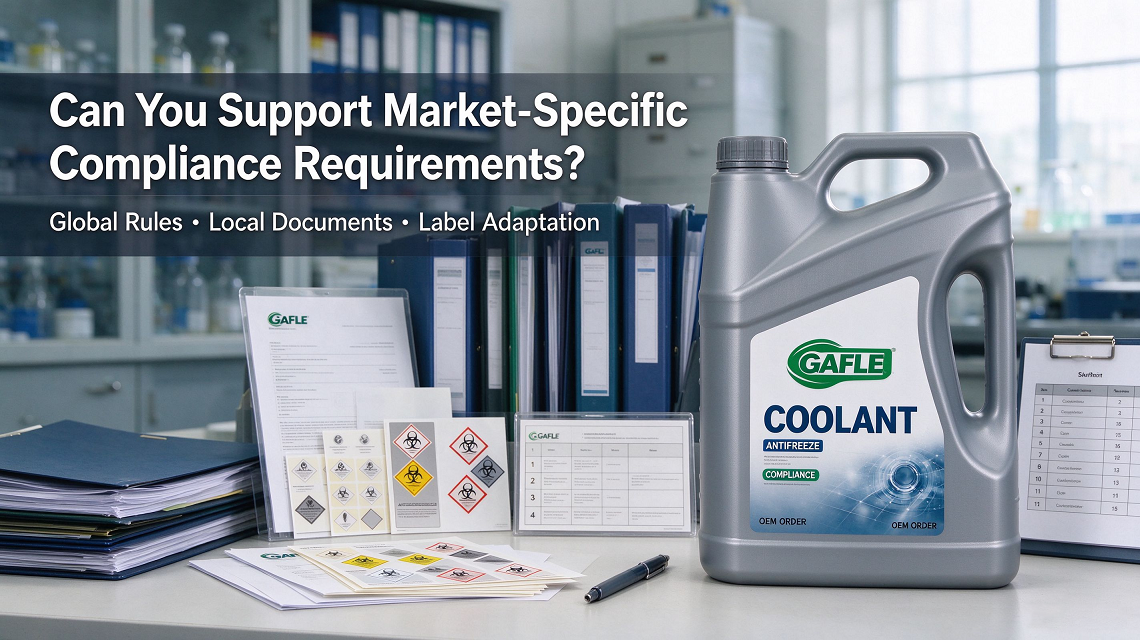
EU importers face REACH obligations, CLP labelling rules, local-language SDS requirements and a responsible entity inside the union. REACH places duties on the importer for the substances in the product, including registration obligations where the volumes and substances require it.
CLP governs classification, labelling and packaging, and the label must carry the correct hazard pictograms, signal words and statements for the actual composition. An SDS prepared for another jurisdiction rarely satisfies CLP without revision.
Language is a practical blocker: the SDS and label must be in the official language or languages of the member state where the product is sold. And an EU-based responsible entity is normally needed for the importer's obligations, which is a commercial arrangement rather than a document.
Documents and the reasons shipments stall
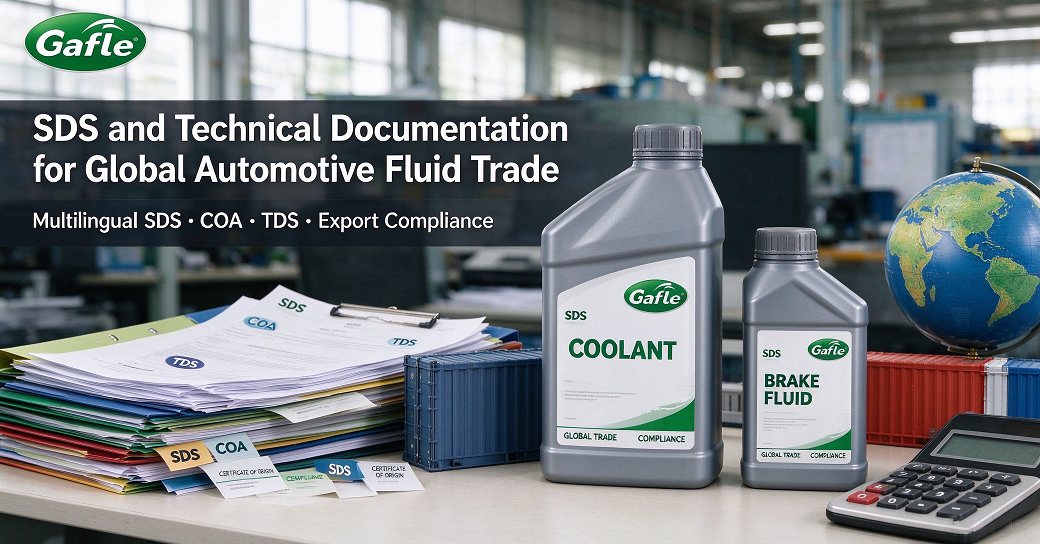
Clearance delays usually come from document inconsistencies rather than from cargo problems, and the inconsistencies are preventable. The common failures are an invoice description that does not match the tariff code, a packing list that does not match the actual carton count, a certificate of origin with a misspelt consignee, and a dangerous goods declaration that contradicts the SDS.
A second category is missing certifications: a test report requested by the importer's customer, a declaration on restricted substances, or a label approval that was assumed rather than obtained.
The preventive step is a document cross-check before booking. Every document should agree on product name, code, quantity, weight, consignee and marks. This takes an hour and avoids a week.
FAQ
Q1: What HS code applies to windshield washer fluid? A1: It depends on the composition and function of the specific formula, and it should be confirmed with a customs broker against the actual product rather than taken from a similar product's paperwork.
Q2: Is windshield washer fluid dangerous goods? A2: It depends on the alcohol system and the measured flash point of the finished product. Low flash point, high alcohol formulas may require flammable liquid classification.
Q3: Does methanol-free fluid ship more easily? A3: Often yes, because higher flash point systems may fall outside flammable liquid classes. The determination still has to be documented.
Q4: What does a US importer need for washer fluid? A4: Correct classification and entry documentation, compliant labelling and, for some states, evidence of VOC content compliance for consumer products.
Q5: What does an EU importer need? A5: REACH compliance for the substances involved, CLP-compliant labelling, an SDS in the local language and an EU-based responsible entity.
Q6: What documents should accompany each shipment? A6: Commercial invoice, packing list, certificate of origin, bill of lading, SDS and, where applicable, the dangerous goods declaration and test reports requested by the buyer.
Welcome to contact GAFLE for more information & cooperation!
peter
ZHEJIANG GAFLE AUTO CHEMICL CO.,LTD
Tel:86-579-8222 1665
Fax:86-579-8246 4690
Cel/Wechart:86-13335993986
E-mail:peter@gafle.net
Web:www.gafle.net