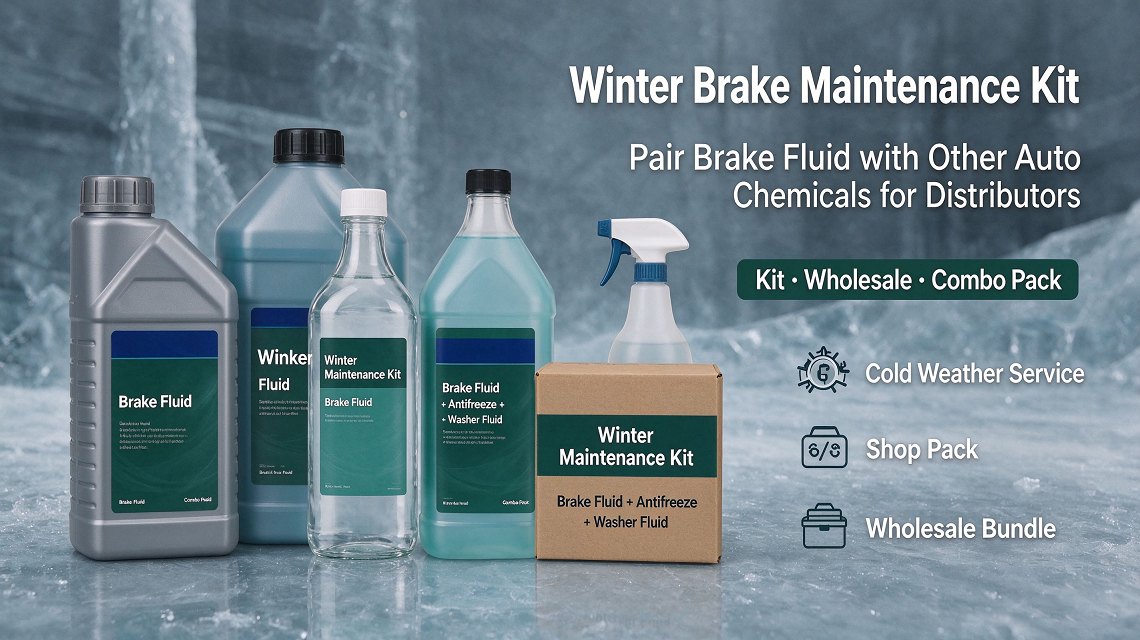
For automotive distributors, commercial fleet managers, and private-label chemical brands, seasonal procurement is rarely as simple as reordering last month's stock. Sub-zero temperatures radically shift the physical and chemical demands placed on automotive operating fluids. While commercial buyers routinely bulk-order de-icers and coolants ahead of the first freeze, braking hydraulics often get treated as a year-round afterthought. Creating a specialized winter brake maintenance kit: pair brake fluid with other auto chemicals to streamline technician bay time, reduce customer warranty claims from frozen calipers, and capture higher margin per SKU during pre-winter service peaks.
Every autumn, service networks see an influx of vehicles suffering from moisture-laden brake lines and seized caliper pins. Bundling glycol-ether fluids with complementary thermal and de-icing formulations addresses a genuine engineering failure point while solving an inventory headache for aftermarket parts retailers.
The Cold-Weather Failure Mode: Why Brake Fluid Demands Winter Pairing
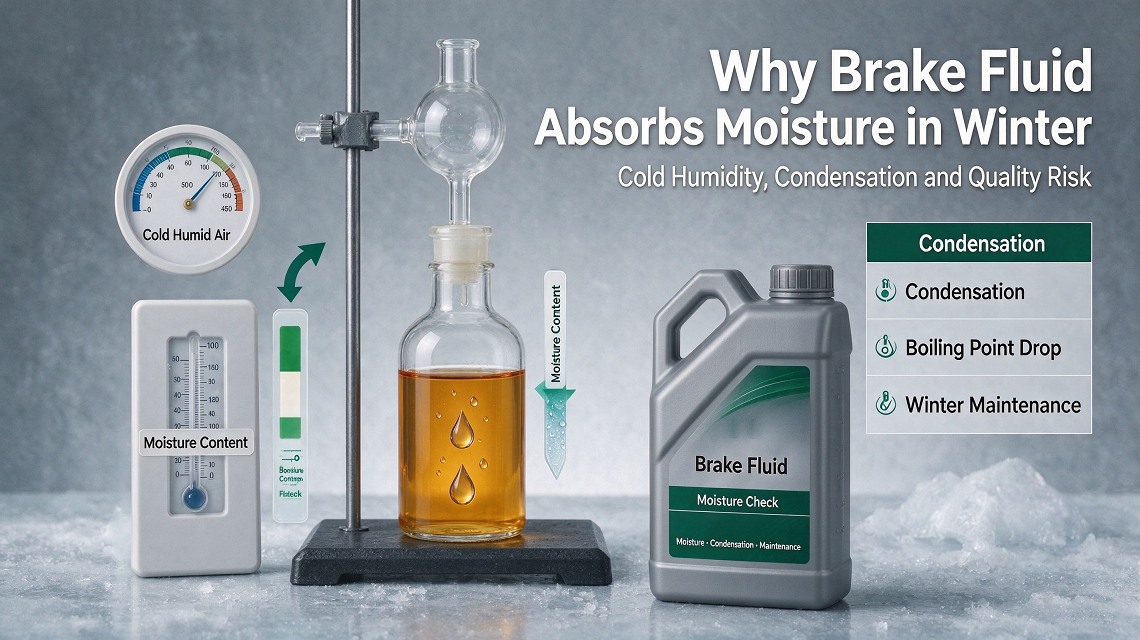
Brake fluid is hygroscopic by design. Over 12 to 24 months, standard polyglycol-based fluids (DOT 3 and DOT 4) absorb atmospheric moisture through rubber flex hoses and master cylinder reservoir seals. While wet boiling point is the primary concern in summer braking under heavy friction loads, winter flips the risk profile entirely.
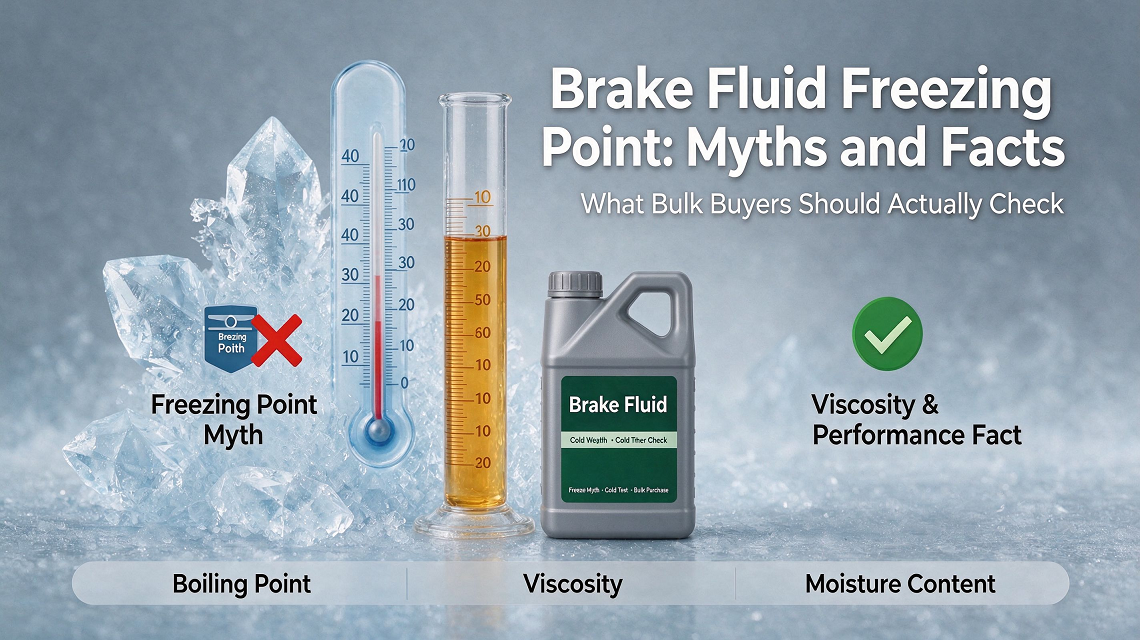
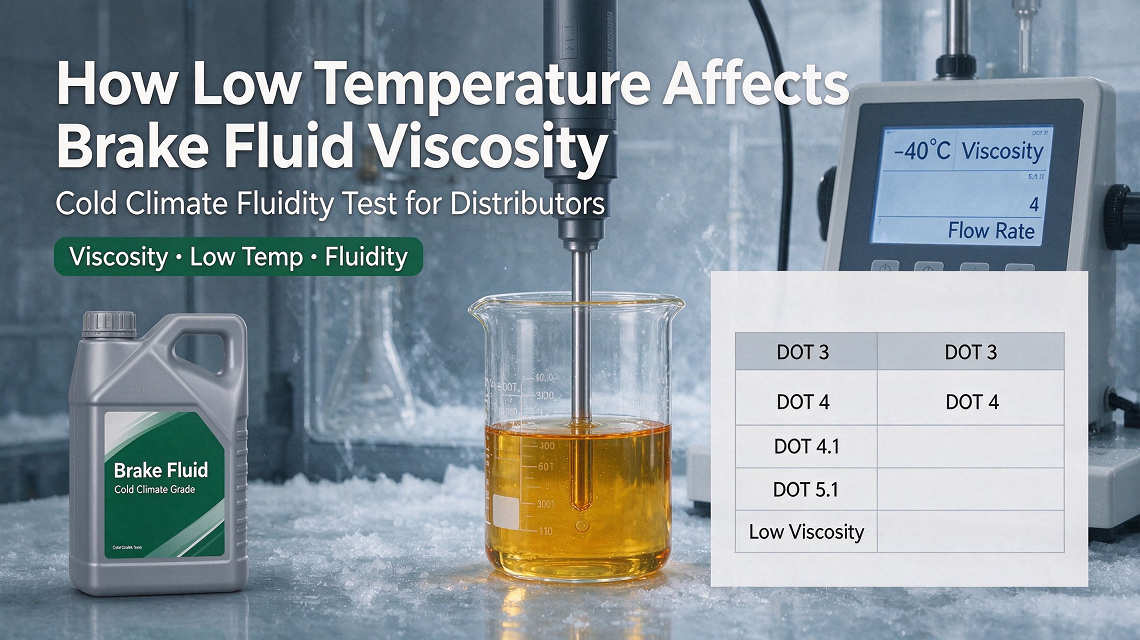
Water suspended in the hydraulic system separates and freezes at 0°C (32°F), leading to ice crystal formation inside ABS/ESC modulation valves. Even before ice forms, the kinematic viscosity of moisture-saturated brake fluid climbs dramatically at low temperatures. Under ISO 4925 specifications, standard DOT 4 allows a maximum kinematic viscosity of 1,800 mm²/s at -40°C. If fluid has absorbed 3% moisture, that viscosity spikes, causing sluggish pedal return and delayed anti-lock brake cycling.
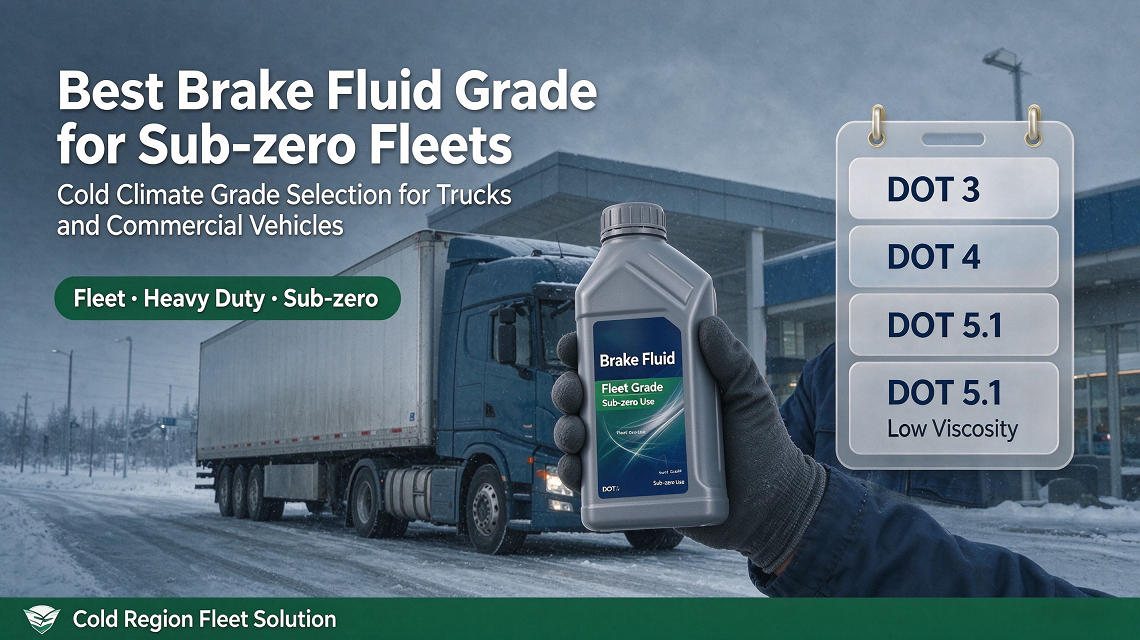
To correct this, high-performance winter service protocols call for low-viscosity formulations—often classified as DOT 4 LV or Class 6 fluids—which maintain a viscosity under 750 mm²/s at -40°C. Sourcing teams assembling an OEM winter brake fluid combo pack must account for this baseline spec rather than defaulting to standard commodity drums.
Structuring the Kit: Strategic Chemical Pairings
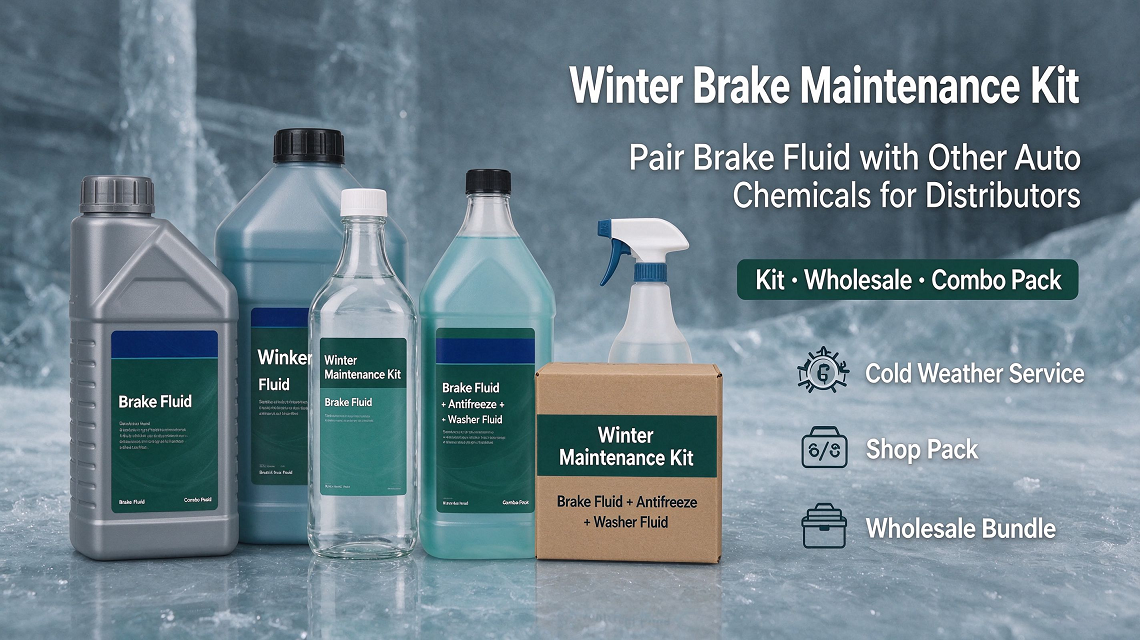
When formulating a winter maintenance kit, product development teams need to pair complementary fluids that address the entire underbody and cooling environment rather than treating systems in isolation.
1. Low-Viscosity Brake Fluid + Synthetic Caliper Pin Grease
Hydraulic fluid only addresses the internal side of braking. The exterior hardware faces road brine, magnesium chloride, and slush. Pair the low-viscosity brake fluid bottle with a 10g to 15g sachet of high-load polyalphaolefin (PAO) or silicone-based brake grease. Petroleum-based lubricants degrade EPDM rubber dust boots in cold weather, causing caliper slide pins to bind. A non-curing, cold-resistant silicone lubricant ensures the mechanical assembly actuates as smoothly as the hydraulic side.
2. Antifreeze and Coolant Co-Packaging
Cooling systems and brake hydraulic systems operate in parallel thermal cycles during winter warm-up. Ethylene glycol-based antifreeze (typically conforming to ASTM D3306 or OEM-specific organic acid technology/OAT standards) is the logical companion SKU. While antifreeze protects the engine block and radiator core from thermal expansion cracking, it also serves as a cross-sale benchmark: if a vehicle's coolant concentration has drifted below 50/50, its hydraulic fluids have almost certainly exceeded their two-year service window.
3. Windshield Washer Fluid (Sub-Zero Formulations)
No winter prep cycle is complete without freeze-rated windshield washer fluid. Formulations rated to -30°C or -40°C rely on precise methanol or ethanol-isopropanol ratios. When organizing wholesale winter car care chemicals for distributors, combining bulk wash fluid shipments with palletized brake fluid helps balance shipping freight classes, provided flammability regulations are managed.
Technical Comparison: Winter Fluid Properties
| Chemical Product | Primary Formulation Base | Critical Winter Metric | Operational Function |
|---|---|---|---|
| Low-Viscosity DOT 4 / Class 6 | Borate Ester / Glycol Ether | Viscosity ≤ 750 mm²/s at -40°C | Maintains rapid ABS valve actuation in extreme cold |
| Standard DOT 3 | Triethylene Glycol Monomethyl Ether | Viscosity ≤ 1,500 mm²/s at -40°C | Budget replacement; prone to sluggish pedal feel in sub-zero climates |
| Antifreeze / Coolant (50/50) | Ethylene Glycol + OAT Inhibitors | Freeze point ≤ -37°C (-34°F) | Prevents engine cavitation, freezing, and core block cracking |
| De-Icing Windshield Washer Fluid | Alcohol (Methanol / Ethanol) + Surfactants | Freeze point -25°C to -45°C | Clears road salt spray without line or nozzle freeze-up |
Supply Chain and Packaging Pitfalls for Sourcing Teams
Consolidating multiple auto chemicals into a unified offering introduces several operational hurdles that engineering and supply managers must navigate early in the procurement cycle.
First, mind the Dangerous Goods (DG) shipping classifications. Standard brake fluid is generally treated as non-hazardous for standard road freight (unless specified by local jurisdiction or flash point), but alcohol-heavy windshield washer fluid and aerosolized brake parts cleaners carry Class 3 flammable liquid or Class 2.1 aerosol designations. If your OEM winter brake fluid combo pack physically ships inside one master retail box, the entire box takes on the regulatory classification of the most hazardous component. This inflates pallet rates and restricts carrier options.
A practical workaround used by major distributors is virtual bundling: maintaining individual UN-rated master cases in regional warehouses and consolidating the items on pick-and-pack fulfillment orders rather than co-packing them on the factory line.
Second, keep an eye on bottle barrier materials. Brake fluid is exceptionally sensitive to moisture ingress even while sitting on a warehouse shelf. High-density polyethylene (HDPE) bottles without an EVOH barrier or inductive foil cap seal allow ambient moisture permeation over an 18-month storage cycle, degrading the dry boiling point before the product ever reaches a vehicle's master cylinder.
Frequently Asked Questions
Can standard DOT 3 fluid simply be topped off with low-viscosity DOT 4 in winter?
While DOT 3 and DOT 4 glycol-ether fluids are chemically compatible and will miscible without separating, mixing them dilutes the specialized cold-weather performance of low-viscosity formulations. To gain the rapid ABS response benefits of a winter maintenance kit, technicians should execute a complete fluid flush rather than a reservoir top-off.
What regional regulations affect bundled auto chemicals?
Windshield wash chemistries face strict volatile organic compound (VOC) limits in regions like California (CARB regulations) and parts of Europe, where allowable methanol percentages are restricted. If you manage wholesale winter car care chemicals for distributors operating across multiple territories, ensure wash formulations comply with the strictest local environmental limits or offer tiered SKUs tailored to cold-weather versus temperate zones.
Next Steps for Seasonal Sourcing
Winter chemical programs should be finalized no later than late spring to accommodate raw material batch compounding, HDPE container molding lead times, and DOT transit requirements. Review your regional sales mix from the prior season: identifying service centers with high warranty or return rates on caliper components is often the clearest indicator that your network needs a standardized winter fluid bundle. Request technical data sheets for low-viscosity DOT formulations and begin pallet testing to ensure packaging integrity across cold-chain logistics.
Welcome to contact GAFLE for more information & cooperation!
peter
ZHEJIANG GAFLE AUTO CHEMICL CO.,LTD
Tel:86-579-8222 1665
Fax:86-579-8246 4690
Cel/Wechart:86-13335993986
E-mail:peter@gafle.net
Web:www.gafle.net